INDIA: ‘Civil Society Organisations Are at the Forefront of the Fight Against Gender-based Violence’

Asia-Pacific, Civil Society, Crime & Justice, Featured, Gender Violence, Headlines, Health, TerraViva United Nations, Women’s Health

Sep 5 2024 (IPS) –  
CIVICUS discusses the recent wave of protests against gender-based violence (GBV) in India with Dr Kavitha Ravi, a member of the Indian Medical Association (IMA).


Protests erupted across India after a 31-year-old female medical trainee was raped and murdered in a Kolkata hospital on 9 August. The IMA called a strike, with protests held in major cities including Kolkata and Mumbai. While the official strike has ended, many doctors, particularly junior doctors, remain on strike and protests continue to demand justice, accountability and safer working conditions for women.

Kavitha Ravi

What triggered the recent protests against GBV in India?

Protests erupted after the tragic rape and murder of a young female doctor at the R G Kar Medical College in Kolkata on 9 August. This horrific incident shocked the nation and sparked widespread outrage. In response, a coalition of doctors, medical associations such as the IMA and various resident and faculty associations joined together in a nationwide strike to demand justice for the victim and better safety measures for health workers, particularly women who face significant risks in the workplace.

Protesters are calling for major reforms, including the adoption of a Hospital Protection Act, which would designate hospitals as safe zones and introduce measures to create a safer environment for health workers. Their demands are part of a larger movement to comprehensively address GBV, prevent similar tragedies in the future and create a safer and more supportive working environment for everyone in the health sector.

What steps have been taken so far to ensure justice and the safety of female health workers?

The judicial system has acted swiftly by transferring the case to a higher authority to ensure a thorough investigation after concerns were raised about the police’s initial inquiry, which was not accepted by the students or the victim’s family. They were sceptical, believing the police might be favouring the college authorities and supporting the accused.

This decision aims to ensure a detailed investigation so justice can be done. The Supreme Court of India is also overseeing the case to monitor its progress, address any issues that may arise and ensure all necessary steps are taken to uphold justice.

In parallel, several initiatives are underway to improve the safety of female health workers. The Ministry of Health has proposed establishing a committee to review and improve safety protocols in health facilities. There are also plans to increase security in hospitals and establish a new national taskforce dedicated to improving safety through better infrastructure, advanced technology and additional security measures. However, despite these efforts, more needs to be done to combat GBV and ensure that these measures effectively protect female health workers.

How have the authorities responded to the protests?

The authorities have taken a mixed approach to the nationwide strike, combining concessions with new measures to address immediate concerns. The Health Ministry has drawn up a detailed plan to increase security in central government hospitals. This includes installing high-resolution CCTV cameras, monitoring access points with identification badges, deploying trained security personnel for constant patrolling and securing duty rooms for female staff. Hospitals are also encouraged to develop and regularly update emergency response plans and conduct mock drills.

In response to these measures, the IMA suspended its strike. However, other doctors’ associations have continued to protest for more substantial reforms. Many people remain dissatisfied, particularly after recent incidents of police violence. While the Supreme Court’s intervention may have temporarily eased the tensions, protesters remain concerned about the new measures’ effectiveness and full implementation.

Why is GBV so prevalent in India, and what’s being done about it?

Deep-rooted cultural, social, economic and legal factors account for the high prevalence of GBV in India. This is a patriarchal country where traditional gender roles and the subjugation of women are deeply entrenched. Women tend to be economically dependent on men, which traps them in abusive relationships that make it difficult for them to seek help or escape. Intergenerational cycles of violence perpetuate the problem, as children who witness or experience abuse may come to see such behaviour as normal.

Low literacy rates, particularly in rural areas, further limit women’s understanding of their rights and the available support. When they do seek justice, the system often fails to protect the victims or hold perpetrators accountable. Systemic failures in law enforcement and justice help perpetuate GBV.

Many initiatives and campaigns have helped highlight and address this issue. But it has not been easy. A lack of consistent political will and weak implementation of policies have hindered substantial change. Feminist and social justice movements often face resistance from conservative parts of society, making it difficult to change these deeply entrenched cultural norms.

To combat GBV effectively, we need a comprehensive approach that includes better education, legal reform, economic empowerment and cultural change. Civil society organisations are at the forefront of this fight, actively advocating for stronger laws, better enforcement and increased public awareness. Continued and robust efforts are essential to address this widespread problem and ensure meaningful change.

Civic space in India is rated ‘repressed’ by the CIVICUS Monitor.

Get in touch with the Indian Medical Association through its website or Facebook page, and follow @IMAIndiaOrg on Twitter.
  Source

New Zealand: Māori Rights in the Firing Line

Asia-Pacific, Civil Society, Economy & Trade, Education, Environment, Featured, Headlines, Health, Human Rights, Indigenous Rights, TerraViva United Nations

Opinion

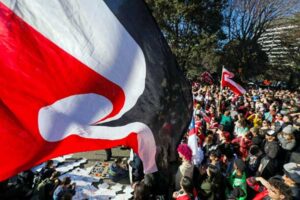
Credit: Dave Lintott / AFP via Getty Images

LONDON, Sep 2 2024 (IPS) – A New Zealand bill that would roll back Indigenous rights is unlikely to pass – but it’s emblematic of a growing climate of hostility from governing politicians. A recent survey shows that almost half of New Zealanders believe racial tensions have worsened under the right-wing government in power since December 2023.


The Treaty Principles Bill reinterprets the principles of the 1840 Treaty of Waitangi. New Zealand’s founding text, this agreement between the British government and Indigenous Māori chiefs established British governorship over the islands in return for recognition of Māori ownership of land and other property.

The treaty was controversial from the start: its English and Māori versions differ in crucial clauses on sovereignty. Māori people lost much of their land, suffering the same marginalisation as Indigenous people in other places settled by Europeans. As a result, Māori people live with higher levels of poverty, unemployment and crime, and lower education and health standards, than the rest of the population.

From the 1950s, Māori people began to organise and demand their treaty rights. This led to the 1975 Treaty of Waitangi Act, which defined a set of principles derived from the treaty and established the Waitangi Tribunal to determine breaches of the principles and recommend remedies.

In recent years, right-wing politicians have criticised the tribunal, claiming it’s overstepping its mandate – most recently because it held a hearing that concluded the bill breaches treaty principles.

Change in direction

The bill resulted from a coalition agreement forged after the 2023 election. The centre-right National party came first and went into government with two parties to its right: the free-market and libertarian Act party and the nationalist and populist NZ First party. Act demanded the bill as a condition of joining the coalition.

The election was unusually toxic by New Zealand standards. Candidates were subjected to racial abuse and physical violence. A group of Māori leaders complained about unusually high levels of racism. Both Act and NZ First targeted Māori rights, promising to reverse Labour’s progressive policies, including experiments in ‘co-governance’: collaborative decision-making between government and Māori representatives. Act and NZ First characterised such arrangements as conferring racial privilege on Māori people, at odds with universal human rights.

NZ First leader Winston Peters – who’s long opposed what he characterises as special treatment for Māori people despite being Māori himself – pledged to remove Māori-language names from government buildings and withdraw New Zealand’s support for the UN Declaration on the Rights of Indigenous Peoples. He’s compared co-governance to apartheid and Nazi racial theory. He’s now New Zealand’s deputy prime minister.

New Zealand, though far from Europe and North America, has shown it isn’t immune from the same right-wing populist politics that seek to blame a visible minority for all a country’s problems. In the northern hemisphere the main targets are migrants and religious minorities; in New Zealand, it’s Indigenous people.

Bonfire of policies

If the bill did succeed, it would preclude any interpretation of the treaty as a partnership between the state and Māori people. It would impose a rigid understanding that all New Zealanders have the same rights and responsibilities, inhibiting measures to expand Māori rights. And without special attention, the economic, social and political exclusion of Māori people will only worsen.

The problems go beyond the bill. In February, the government abolished the Māori Health Authority, established in 2022 to tackle health inequalities. In July, a government directive ordered Pharmac, the agency that funds medicines, to stop taking treaty principles into account when making funding decisions. This is part of a broader attack on treaty principles, which the government has pledged to remove from most legislation.

Government departments have been ordered to prioritise their English-language names and communicate primarily in English, unless they’re specifically focused on Māori people. The government has pledged to review the school curriculum – revised last year to place more emphasis on Māori people – and university affirmative action programmes. It’s ceased work on He Puapua, its strategy to implement the UN Declaration.

The government has cut funding for most of its initiatives for Māori people. In all, over a dozen changes are planned, including in environmental management, health and housing.

What’s bad for Māori people is also bad for the climate. The intimate role the environment plays in Māori culture often puts them on the frontline of combating climate change. This year a Māori activist won a ruling allowing him to take seven companies to court over their greenhouse gas emissions, based in part on their impact on places of customary, cultural and spiritual significance to Māori people..

But the new government has cut funding for many projects aimed at meeting New Zealand’s Paris Agreement commitments. It plans to double mineral exports and introduce a law to fast-track large development projects, without having to navigate environmental safeguards. The draft law contains no provisions about treaty principles. Māori people will be disproportionately affected by any weakening of environmental standards.

Out in numbers

This is all shaping up to be a huge setback for Māori rights that can only fuel and normalise racism – but campaigners aren’t taking it quietly. The threat to rights has galvanised and united Māori campaigners.

Civil society groups are taking to the courts to try to halt the changes. And people are protesting in numbers. In December, when parliament met for the first time since the election, thousands gathered outside to condemn anti-Māori policies. At the swearing-in ceremony, Te Pāti Māori politicians broke with convention by dedicating their oaths to the Treaty of Waitangi and future generations.

That same month, 12 people were arrested following a protest in which they defaced an exhibition on the treaty at the national museum. Protesters accused the exhibition of lying about the treaty’s English version.

On 6 February, Waitangi Day, over a thousand people marched to the site where the treaty was agreed, calling for the bill to be rejected. At the official ceremony, people heckled Peters and Act leader Peter Seymour when they spoke.

Most recently, Māori people had a chance to show their discontent at a ceremony held in August to commemorate the coronation of the Māori King. Although normally all major party leaders attend, Seymour wasn’t invited, and a Māori leader told Prime Minister Christopher Luxon that the government had ‘turned its back on Māori’. The Māori King also called a rare national meeting in January, and the turnout – 10,000 people – further showed the extent of concern.

Wasted potential

At the same time, the Māori population is growing quickly – it recently passed the million mark – and is youthful. Compared to previous generations, people are more likely to embrace their Māori identity, culture and language. Māori people are showing their resilience, and activism has never been stronger. But this growing momentum has hit a political roadblock that threatens to throttle its potential – all for the sake of short-term political gain.

New Zealand’s positive international reputation is on the line – but it doesn’t have to be this way. The government should start acting like a responsible partner under the Treaty of Waitangi. It must abide by the treaty principles, as developed and elaborated over time, and stop scapegoating Māori people.

Andrew Firmin is CIVICUS Editor-in-Chief, co-director and writer for CIVICUS Lens and co-author of the State of Civil Society Report.

  Source

VIETNAM: ‘Human Rights Conditions Will Likely Worsen as the Country Descends into a Police State’

Asia-Pacific, Civil Society, Crime & Justice, Environment, Featured, Global Geopolitics, Headlines, Human Rights, Labour, TerraViva United Nations

Aug 29 2024 (IPS) –  
CIVICUS discusses recent leadership changes in Vietnam with David Tran, coordinator of the Alliance for Vietnam’s Democracy, a civil society platform that promotes democracy in Vietnam and the region through international cooperation and the strengthening of local civil society.


On 3 August, President Tô Lâm was confirmed as General Secretary of the Communist Party, Vietnam’s top position, following the death of long-serving General Secretary Nguyễn Phú Trọng. Lâm, who has been president since May, is known for leading an aggressive anti-corruption campaign that has seen many officials jailed and others forced to resign. He will continue as president while assuming the duties of general secretary, potentially enabling him to consolidate power ahead of the 2026 party congress, which will choose Vietnam’s top leaders for the next five years. Civil society fears the regime could become even more autocratic and repressive if Lâm retains both positions.

David Tran

What’s Vietnam’s political system like, and what’s the likely impact of the recent leadership change?

Vietnam is an authoritarian one-party state led by the Vietnamese Communist Party (VCP). There are four key positions of authority: the president, who is the ceremonial head of state, the prime minister, who heads the government, the chair of the National Assembly, the unicameral legislature, and the most powerful, the general secretary of the VCP.

Although the president is elected by the National Assembly, this body is overwhelmingly made up of VCP members, who usually approve all incumbents unopposed. On 3 August, following the death of the last VCP general secretary, Nguyễn Phú Trọng, Tô Lâm was confirmed as the new VCP leader.

This appointment is particularly significant because it puts a lot of power in the hands of one person. His dual role gives Tô Lâm considerable influence over the state and party, as well as greater control over the public security apparatus. While he appears set to continue the policies of his predecessor, there are several cracks beneath the surface. His power is likely to be challenged by several VCP members who’ve been forced into retirement by his ‘anticorruption’ campaign, effectively an initiative to eliminate competing factions. We can expect this infighting to continue and intensify.

What does Tô Lâm’s rise mean from a human rights perspective?

Tô Lâm has had a long career, including stints as minister of public security and a member of the politburo. The key role he played in the previous general secretary’s ‘anticorruption’ campaign saw him elected president in May, after his investigations into several high-profile politicians and businesspeople led to the resignation of his predecessor and other top officials.

The accumulation of power in the hands of the architect of a purge is unlikely to lead to improvements in civic space or human rights. Tô Lâm has been closely associated with the worsening human rights situation, as the Formosa and the Trinh Xuan Thanh cases clearly illustrate.

In April 2016, the Formosa company caused an environmental disaster when it discharged heavily polluted waste off Vietnam’s central coast. This caused widespread damage in at least four provinces and sparked protests. Instead of prosecuting Formosa, Tô Lâm, then minister of public security and in charge of the environmental police, suppressed peaceful protests and had 220 people sentenced to a total of 133 years in prison, not including probation after release. He said he was protecting Formosa from what he called ‘hostile forces’ – essentially anyone who criticised the company.

The second case involves Trinh Xuan Thanh, a former vice chair of Hau Giang Province, who fled to Germany in 2016 after being accused of ‘deliberately violating state regulations, causing serious consequences’. He was abducted on German soil by the Vietnamese secret service, which is under the Ministry of Public Security, and returned to Vietnam. Tô Lâm was directly involved in this operation, which Germany condemned as a ‘scandalous violation’ of its sovereignty and a ‘gross breach of international law’.

Given Tô Lâm’s track record, we expect human rights conditions to worsen under his leadership as Vietnam descends into a police state where human rights and the rule of law are ignored. The already limited space for civil society in Vietnam has shrunk under his watch, and we expect this trend to continue.

What are the challenges facing civil society in Vietnam?

Tô Lâm’s rise to power has been marked by his consistent efforts to stifle dissent. Under his leadership, the authorities, particularly the Ministry of Public Security, have increasingly tightened their grip on civil society organisations (CSOs). They have implemented new decrees that overregulate the registration and management of foreign CSOs and applied stricter rules to domestic organisations.

They have also weaponised tax laws and the criminal code to target civil society leaders, charging them with offences such as tax evasion and ‘abuse of democratic freedoms’. This has led to the imprisonment of prominent activists, including environmental and labour rights advocates.

Independent CSOs are subject to strict surveillance, with some being dismantled or forced to reorganise to conform to the authorities. This was exacerbated by the COVID-19 pandemic, which the authorities used as a pretext to impose further restrictions on civil society under the guise of public health measures.

Despite this repressive environment, some social service CSOs and philanthropic groups continue to operate and strive to make a positive impact. But their independence is severely restricted as they and their activists are constantly targeted.

What international support does Vietnam’s civil society need?

Human rights organisations and international bodies have raised concerns about the shrinking space for civil society in Vietnam. They have called for respect for freedoms of assembly, association and expression and urged the authorities to ease restrictions. While these statements are important, they must be accompanied by trade sanctions and other enforcement mechanisms. Words alone are not enough.

Unfortunately, human rights in Vietnam are also falling victim to geopolitics. As tensions with China escalate, the USA is increasingly seeing Vietnam as a counterweight to China. In this context, human rights and civic space are often sidelined, if not ignored altogether. We believe that a democratic Vietnam would be the best partner and ally in promoting a peaceful, open and stable Indo-Pacific region.

Even if Tô Lâm has a long way to go before he reaches a position comparable to Xi Jinping’s in China, consolidation of power is a general trend we’re seeing among the region’s communist states. Oddly enough, given how these two leaders came to power, it could be a sign that pressure for human rights and civic space, both domestically and internationally, is working. If the authorities feel compelled to respond by consolidating power and positioning figures like Tô Lâm to counter these movements, there is still hope we are on the right track.

Civic space in Vietnam is rated ‘closed’ by the CIVICUS Monitor.

Get in touch with the Alliance for Vietnam’s Democracy through its webpage or Facebook page.

  Source

Bangladesh Students, Community Moves to Protect Minorities Following Fall of Hasina Government

Active Citizens, Asia-Pacific, Civil Society, Crime & Justice, Featured, Freedom of Expression, Headlines, Human Rights, Humanitarian Emergencies, Religion, TerraViva United Nations

Active Citizens

Students and youth groups in Bangladesh stand guard outside temples and churches to protect those from vandalism during unrest after the Awami League government ouster. Credit: Rafiqul Islam/IPS

Students and youth groups in Bangladesh stand guard outside temples and churches to protect those from vandalism during unrest after the Awami League government ouster. Credit: Rafiqul Islam/IPS

DHAKA, Aug 28 2024 (IPS) – Immediately after the fall of the Sheikh Hasina government on August 5, 2024, following weeks of deadly demonstrations staged by students, people carried out attacks on the houses and temples of the Hindu community in Dacope of Khulna, about 225 kilometres from Dhaka. They particularly attacked and vandalized the houses of minorities believed to be involved in the politics of the ousted Awami League government.


At least 11 Hindu houses in Dacope were attacked and vandalized, with attackers claiming these were acts of political revenge.

But, in Dacope, local Muslim and Hindu students and the community soon joined together to guard the houses and temples of the minorities so that they would no longer be victimized due to the political changeover.

Beginning in mid-June 2024, peaceful student protests in Bangladesh turned violent, resulting in hundreds of people killed, including at least 32 children, and thousands injured. The protests were the result of the reinstatement of a quota system for the distribution of civil service positions.

The government resigned in response to the protests, and a civilian interim government took its place.

In other areas too, attacks were carried out on the offices of the Awami League (AL) and residences and establishments of the AL leaders and temples, churches and houses of minority communities across Bangladesh during unrest.

Nur Nabin Robin, a resident of Chattogram City, said many people from minority communities, including Hindus, Buddhist and ethnic people, live in the port city in harmony.

But when the Sheikh Hasina government fell on August 5, people of the minority communities began to feel insecure in Chattogram since attacks on minorities were reportedly being carried out in different parts of the country, he said.

“So, we patrolled in the city for two to three nights in groups and guarded the temples and houses of the minorities so that none could attack them. We also asked them to call us via mobile phone if they can sense any clue of attack on them,” Robin told IPS.

Their concerns were exacerbated because most police stations across the country ceased operating after the fall of the previous government.

General students and even madrasa students came forward to protect the houses and places of worship as the leaders of the Anti-Discrimination Student Movement asked supporters to guard temples and churches, responding to concerns voiced over reports of attacks on minority groups.

Jasim Uddin, a resident of Kuliarchar in Kishoreganj, told IPS that after the fall of Sheikh Hasina’s government, mobs torched and vandalized houses of many AL leaders in his locality, but members of the Hindu community remained safe during the political turmoil as local people voluntarily safeguarded their temples and properties.

While national monuments and government buildings in the capital, Dhaka, were looted, there were no reports of attacks on temples or churches there during the recent political turmoil.

In Dhaka, Muslim students were found guarding the Dhakeshwari National Temple, a Hindu place of worship. A Muslim was spotted offering prayers in front of Dhakeswari temple so nobody would attack the temple.

Professor Muhammad Yunus, Chief Adviser to the interim government of Bangladesh, visited Dhakeshwari National Temple on August 13, 2024, to express his solidarity with the Hindu community. During his visit, he called upon the minorities to keep patience and remain united.

Yunus condemned the attacks on minority communities in the country as “heinous.”

Religious harmony is the long tradition of Banglalees, while people from different religions—Islam, Hindu, Buddhist, Christian—have been living together from generation to generation.

“Over 90 percent people in Bangladesh do not believe in communalism. Attacks were carried out on minorities due to political reason or gaining personal interest. Those who carried out looting and vandalism were not involved in the student movement,” adviser to interim government Syeda Rizwana Hasan told a function recently in Dhaka.

She said madrasa students had safeguarded temples in many places of Bangladesh, which showed an example of the country’s religious harmony.

Barrister Sara Hossain, the honorary executive director of the Bangladesh Legal Aid and Services Trust (BLAST), said once miscreants carry out any attack on minorities, all should protect them.

CONCERN REMAINS

Following the fall of the Sheikh Hasina government, there was chaos across the country, with law enforcement officials retreating in many places for fear of retaliation.

According to a report of the Office of the High Commissioner for Human Rights (OHCHR) of the United Nations released on August 16, 2024, attacks were conducted against minorities, including Hindus, especially in the days immediately after the change of government.

The OHCHR report recognized the role of the student organizations and other ordinary people who were forming groups to protect the minorities.

It details some of the attacks against minorities, including Hindus, especially in the days immediately after the change of government. On August 5 and 6, Hindu houses and properties were reportedly attacked, vandalized and looted in 27 districts. A number of places of worship were also damaged, including an ISKCON temple in Meherpur, Khulna division, which was vandalized and set on fire.

On August 5 and 6, Hindu houses and properties were reportedly attacked, vandalized and looted in 27 districts, while many temples were also damaged, including an ISKCON temple in Meherpur, Khulna division, which was vandalized and set on fire.

The Bangladesh Hindu Buddhist Christian Unity Council (BHBCUC) claimed that around 200-300 Hindu homes and businesses were vandalized since August 5 last while 15-20 Hindu temples were damaged.

IPS UN Bureau Report

  Source

UN Efforts for a Resilient Iraq

Civil Society, Climate Action, Climate Change, Editors’ Choice, Environment, Featured, Headlines, Middle East & North Africa, Sustainable Development Goals, TerraViva United Nations

Opinion

UN agencies are working together to integrate traditional knowledge with modern technology, optimizing water use for agriculture. Credit: FAO Iraq

BAGHDAD, Iraq, Aug 28 2024 (IPS) – Climate change and water scarcity pose significant threats to Iraq’s stability, prosperity, and the well-being of its people. The environmental challenges facing the nation are complex and interconnected, requiring a comprehensive and coordinated response.


In Iraq, the United Nations Country Team (UNCT), under my leadership, has been at the forefront of addressing these critical issues, working tirelessly to build a more sustainable and resilient future for all Iraqis.

Through the Resident Coordinator’s Office (RCO), we aim to leverage the diverse expertise and resources of different UN agencies, fostering a coordinated and integrated approach to development challenges.

Through this collaborative model, we can maximize our impact and deliver holistic solutions to tackle the interconnected web of factors that contribute to climate change and water scarcity.

This includes not only mitigating the immediate effects of these environmental threats but also addressing their underlying causes, such as unsustainable water management practices and overreliance on fossil fuels.

United Nations Resident Coordinator in Iraq Ghulam Isaczai visiting a water project site. Credit: UN in Iraq

The UN in Iraq has made a lasting impact in Iraq through a number of key initiatives. These include:

1) Forging climate resilience

Iraq is highly vulnerable to climate change impacts, including rising temperatures, droughts, and desertification severely impacting agricultural productivity and social stability. To address this, the UNCT, in cooperation with the Iraqi Government, organized Iraq’s first Climate Conference in Basra in 2023. This event resulted in the “Basra Declaration” with key government commitments and initiatives like an afforestation campaign, aimed at enhancing Iraq’s climate resilience.

These efforts led to increased national and international awareness and cooperation on climate issues, establishing a framework for future environmental and policy planning, including the National Adaptation Plan (NAP) and Nationally Determined Contributions (NDC).

The Basra Declaration aims at strengthening Iraq’s institutional, technical, and financial capacities to tackle climate change by mainstreaming medium- to long-term adaptation strategies into national and local planning.

2) Advancing water security

Iraq suffers from a critical water crisis due to reduced rainfall and over-utilization of the Tigris and Euphrates rivers. These challenges are exacerbated by inefficient water management and agricultural practices.

Last year, Iraq was the first country in the Middle East to join the UN Water Convention, underscoring the country’s commitment to boosting regional cooperation and ensuring equitable water use, essential for the stability and prosperity of the region.

In alignment with these national objectives, the RCO is leading a ‘Water Task Force’ that brings together UN agencies in Iraq to enhance water governance, boost agricultural resilience, and improve sustainable water usage.

For instance, the UN Educational, Scientific and Cultural Organization (UNESCO) and the Food and Agriculture Organization (FAO) are working together to integrate traditional knowledge with modern technology, optimizing water use for agriculture—an essential step for bolstering Iraq’s food security.

Meanwhile in the Sinjar district, a United Nations Office for Project Services (UNOPS) initiative, funded by the Italian government is transforming local water access, in-line with the need to ensuring safe water for all Iraqis. Similarly, in Ninewa Governorate, the UN Children’s Fund (UNICEF) installed water desalination systems in seven villages, significantly improving living conditions.

3) Preserving the Mesopotamian Marshes

The Mesopotamian Marshes, a unique ecosystem and a UNESCO World Heritage Site, are threatened by climate change, pollution, and unsustainable water management practices, leading to severe ecological and human impacts.

The RCO coordinated efforts across UN agencies to conserve the marshes by developing environmental strategies, supporting afforestation projects and facilitating community-based adaptation plans to improve the livelihoods of local communities.

For example, the World Food Programme (WFP) is undertaking afforestation projects in both southern Iraq and the Kurdistan Region, aligning with the government objective of planting five million trees by 2029. These efforts are directly contributing to the national climate change strategy through the Local Adaptation Plan, focusing on areas most impacted by climate change.

Furthermore, the UN has led legislative advancements in natural resource management, including the adoption of the Environmental Strategy and the National Sustainable Land Management Strategy and Action Plan, which are crucial for agriculture and marshland conservation.

These initiatives have helped restore ecological balance, supported local livelihoods, and bolstered the marshlands’ resilience to environmental pressures, thereby securing their status as a UNESCO World Heritage Site.

4) Developing renewable energy policies

Iraq’s heavy reliance on fossil fuels not only constrains its economic stability but also contributes to substantial greenhouse gas emissions. The country has significant potential for renewable energy development but faces challenges in attracting investment and developing necessary infrastructure.

To address this gap, the UN facilitated the revision and adoption of Iraq’s Renewable Energy Law, a pivotal move towards boosting renewable energy investment and development. The revised Renewable Energy Law has created a more favourable environment for renewable energy investment.

Similarly, an initiative by the United Nations Development Programme (UNDP) is supporting Iraq’s shift away from oil-dependence, through the NAP – which outlines efforts to reduce emissions and prepare for the effects of climate change. The UN is also assisting Iraq develop its NDCs for 2025, which is the country’s commitment to reduce emissions and adapt to climate change as part of the Paris Agreement.

These efforts have opened avenues for increased investment in renewable energy, promoting sustainable economic growth and reducing the country’s carbon footprint.

A sustainable and resilient future for Iraq

The collective work of the UN in Iraq has set the country on a promising trajectory towards climate sustainability and resilience. Our upcoming United Nations Sustainable Development Cooperation Framework (UNSDCF) for 2025-2029 will outline our efforts to help Iraq mitigate and adapt to climate change, manage water resources sustainably, and protect its unique environmental and cultural heritage.

As we look to the future, the UN in Iraq remains committed to supporting the government and people of Iraq in their pursuit of a sustainable and resilient future.

Ghulam Isaczai is United Nations Resident Coordinator in Iraq. To learn more about the work of the UN in Iraq visit iraq.un.org.

IPS UN Bureau

  Source

Nicaragua, China, India among 55 Nations Restricting Freedom of Movement

Civil Society, Democracy, Featured, Global, Global Governance, Headlines, Human Rights, IPS UN: Inside the Glasshouse, Latin America & the Caribbean, Press Freedom, TerraViva United Nations

Opinion

Credit: Freedom House

WASHINGTON, Aug 27 2024 (IPS) – At least 55 governments in the past decade have restricted the freedom of movement for people they deem as threats, including journalists, according to a Freedom House report published last Thursday.


Governments control freedom of movement via travel bans, revoking citizenship, document control and denial of consular services, the report found. All the tactics are designed to coerce and punish government critics, according to Jessica White, the report’s London-based co-author.

“This is a type of tactic that really shows the vindictive and punitive nature of some countries,” White said. This form of repression “is an attempt to really stifle peoples’ ability to speak out freely from wherever they are.”

Belarus, China, India, Nicaragua, Russia, Rwanda and Saudi Arabia are among the countries that engage in this form of repression, the report found. Freedom House based its findings in part on interviews with more than 30 people affected by mobility controls.

Travel bans are the most common tactic, according to White, with Freedom House identifying at least 40 governments who prevent citizens leaving or returning to the country.

Revoking citizenship is another strategy, despite being prohibited by international law. The Nicaraguan government in 2023 stripped more than 200 political prisoners of their citizenship shortly after deporting them to the United States.

Among them were Juan Lorenzo Holmann, head of Nicaragua’s oldest newspaper, La Prensa. “It is as if I do not exist anymore. It is another attack on my human rights,” he told VOA after being freed. “But you cannot do away with the person’s personality. In the Nicaraguan constitution, it says that you cannot wipe out a person’s personal records or take away their nationality. I feel Nicaraguan, and they cannot take that away from me.”

Before being expelled from his own country, Lorenzo had spent 545 days in prison, in what was widely viewed as a politically motivated case.

Blocking access to passports and other travel documents is another tactic. In one example, Hong Kong in June canceled the passports of six pro-democracy activists who were living in exile in Britain.

In some cases, governments refuse to issue people passports to trap them in the country. And in cases where the individual is already abroad, embassies deny passport renewals to block the individual from traveling anywhere, including back home.

Myanmar’s embassy in Berlin, for instance, has refused to renew the passport of Ma Thida, a Burmese writer in exile in Germany. Ma Thida told VOA earlier this year she believes the refusal is in retaliation for her writing.

White said Ma Thida’s case was a classic example of mobility restrictions. For now, the German government has issued a passport reserved for people who are unable to obtain a passport from their home country — which White applauded but said is still rare.

“Our ability to freely leave and return to our home country is something that in democratic societies, people often take for granted. It’s one of our fundamental human rights, but it’s one that is being undermined and violated across many parts of the world,” White said.

Mobility restrictions can have devastating consequences, including making it difficult to work, travel and visit family. What makes matters even worse is the emotional toll, according to White.

“There is a huge psychological impact,” White said. “A lot of our interviewees mention especially the pain of being separated from family members and not being able to return to their country.”

In the report, Freedom House called on democratic governments to impose sanctions on actors that engage in mobility controls.

White said that democratic governments should do more to help dissidents, including by providing them with alternative travel documents if they can’t obtain them from their home countries.

https://freedomhouse.org/sites/default/files/2024-02/FIW_2024_DigitalBooklet.pdf

Source: Voice of America (VOA)

IPS UN Bureau

  Source