Social Movement Voices Fall on Deaf Ears of Governments at COP26

Active Citizens, Civil Society, Climate Action, Climate Change, Conferences, Editors’ Choice, Environment, Featured, Global, Global Governance, Headlines, Human Rights, Indigenous Rights, IPS UN: Inside the Glasshouse, Regional Categories
Climate Change

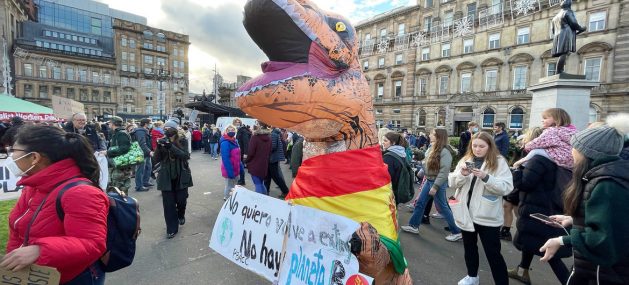
The climate summit COP26 was accompanied by protests by social movements, with demonstrators arriving in Glasgow from all over the world and expressing themselves in their own language or dressing up as dinosaurs to symbolize their criticism. But government delegates did not listen to their demands for ambitious and fair action to contain the global warming crisis. CREDIT: Laura Quiñones/UN

GLASGOW, Nov 11 2021 (IPS) – One element that runs through all social movement climate summits is their rejection of the official meeting of the United Nations Framework Convention on Climate Change (UNFCCC) and the low ambition of its outcomes – and the treaty’s 26th Conference of the Parties (COP26) was no exception.


The leaders of the UNFCCC “gladly welcome those who caused the crisis. COP26 has done nothing but pretend and greenwash,” Mitzi Jonelle Tan, a member of the non-governmental organization Youth Advocates for Climate Action from the Philippines, told IPS during a rally at the Glasgow Screening Room, a few blocks from the venue where the official meeting is being held until Friday, Nov. 12.

The COP26 Coalition, the alternative summit to the climate conference, has been a motley crew of organizations and movements whose common demand was a real effort to fight the climate crisis through concrete and fair measures and whose 200 events in this Scottish city included workshops, forums, artistic presentations and protests, which ended on Wednesday, Nov. 10.

Among the demands with which the alternative meeting in Glasgow lobbied the 196 Parties to the UNFCCC were the abandonment of fossil fuels, the rejection of cosmetic solutions to the climate emergency, the demand for a just transition to a lower carbon economy and the call for reparations and redistribution of funds to indigenous communities and the global South.

The movement also called for a gender perspective in policies, climate justice – that those primarily responsible (developed nations) take responsibility and pay for their role -, respect for the rights of indigenous peoples, and a halt to air pollution.

Due to logistical issues and the limitations imposed by the covid-19 pandemic, which postponed the official summit for a year, the parallel sessions of the social movements were held in this Scottish city in a hybrid format, combining face-to-face and virtual participation. Exhibitors and online participants struggled with the quality of their internet connections.

One of the most unanimous and loudest criticisms from non-governmental social and environmental organizations focused on the exclusion of civil society groups from Latin America, Africa and Asia, due to the UK host government’s decision to modify the admission criteria according to the level of contagion in each country and the extent of vaccination.

In addition, they complained about the strict hurdles imposed by the COP26 presidency, held by the United Kingdom, supported by Italy, to the presence of NGO observers at the official negotiating tables, which undermined the transparency of the Glasgow process, whose agreements are to be embodied in a final declaration, which is weakening every day and whose final text will be released on Nov. 12 or 13, if the negotiations stretch out.

The alternative movement also had a formal but unofficial space in the so-called COP26 Green Zone, located in the same area as the official negotiations, in the center of Glasgow.
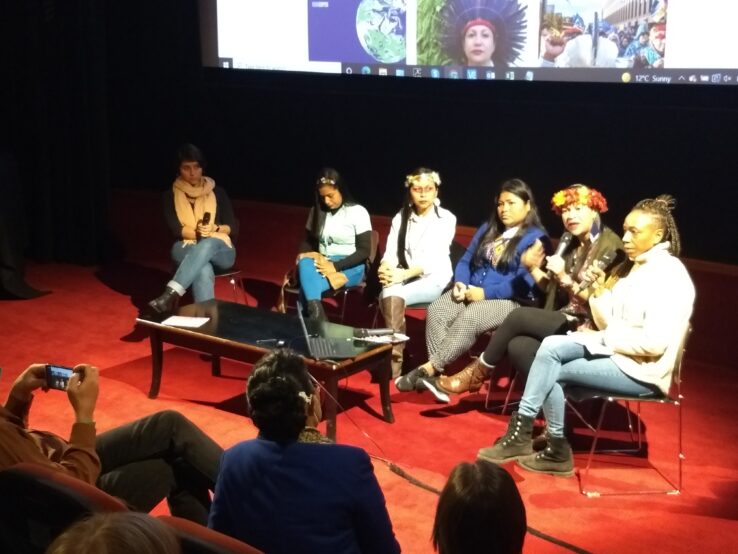
In the forums parallel to COP26 in Glasgow, indigenous women were major protagonists with their demands for respect for their rights and effective participation in the negotiations. In the picture, indigenous women delegates take part in a forum on women of the forest at the peoples' summit. CREDIT: Emilio Godoy/IPS

In the forums parallel to COP26 in Glasgow, indigenous women were major protagonists with their demands for respect for their rights and effective participation in the negotiations. In the picture, indigenous women delegates take part in a forum on women of the forest at the peoples’ summit. CREDIT: Emilio Godoy/IPS

In-depth solutions

One of their key proposals was for a Fossil Fuel Non-Proliferation Treaty aimed at moving towards the end of the era of coal, gas and oil, the consumption of which is primarily responsible for the growing planetary climate emergency.

The initiative, which imitates the name of the treaty against nuclear weapons, demands an immediate end to the expansion of fossil fuel production, a fair phase-out and a just energy transition.

Countries and corporations “continue to invest capital in the extraction of fossil fuels. We need to see efforts to phase them out, to stop the financing, subsidies and exploitation of fossil fuels,” Tzeporah Berman, the Canadian chair of the anti-fossil fuel initiative, told IPS.

The idea for the treaty emerged in 2015 from a call by leaders and NGOs from Pacific island states – whose very existence is threatened by the climate crisis – and it was formally launched in 2020.

So far it has received the support of some 750 organizations, 12 cities, more than 2,500 scientists, academics, parliamentarians from around the world, and religious leaders, indigenous movements and more than 100 Nobel Prize winners.

Climate policies are the focus of COP26 which has addressed carbon market rules, at least 100 billion dollars a year in climate finance, gaps between emission reduction targets and necessary reductions, strategies for carbon neutrality by 2050, adaptation plans, and the working platform on local communities and indigenous peoples.
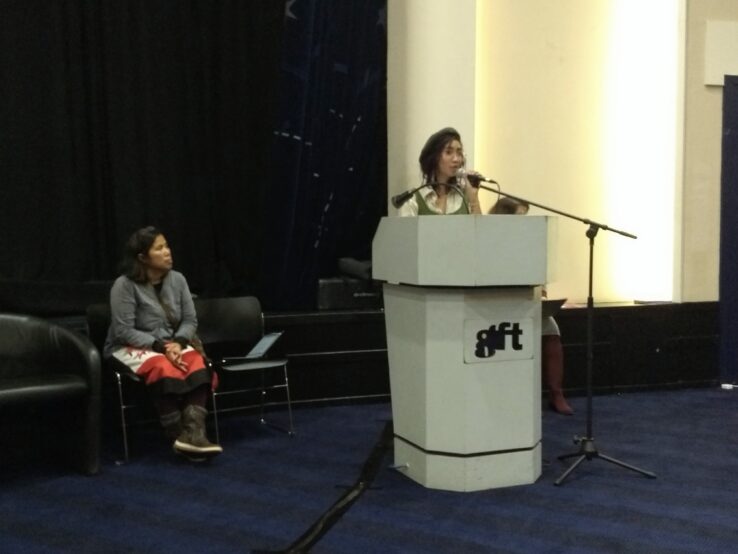
The International Rights of Nature Tribunal tried the United Nations Framework Convention on Climate Change (UNFCCC), parallel to COP26. In the case, Philippine activist Mitzi Jonelle Tan testified to the lack of effective action against the climate emergency. CREDIT: Emilio Godoy/IPS

The International Rights of Nature Tribunal tried the United Nations Framework Convention on Climate Change (UNFCCC), parallel to COP26. In the case, Philippine activist Mitzi Jonelle Tan testified to the lack of effective action against the climate emergency. CREDIT: Emilio Godoy/IPS

Indigenous people and rights of nature tribunal in the spotlight

Indigenous people, especially from the Amazon jungle, have been key participants at the latest edition of the alternative summit, with at least 40 activists present in Glasgow to complain about harassment by the government of far-right Brazilian President Jair Bolsonaro and demand more protection for the rainforest, whose destruction can have dramatic effects on the environmental health of the planet.

“Our main demand is demarcation of our territories,” because this guarantees a number of rights, Cristiane Pankararu, a member of the Pankararu people and leader of Brazil’s non-governmental National Association of Indigenous Women Warriors (ANMIGA), told IPS.

Her organization belongs to the Association of Indigenous Peoples of Brazil, whose demands are demarcation, climate solutions based on indigenous peoples’ knowledge and practices, and investment in forest protection.

One of the most symbolic activities of the counter-summit was the Fifth International Rights of Nature Tribunal, which tried the cases of “False solutions to the climate change crisis” and “The Amazon, a threatened living entity”.

In the first verdict, the tribunal, which sat for the first time in 2014 and was composed this time of seven judges from six countries, found the UNFCCC at fault for failing to attack the roots of the climate emergency.

In the second ruling, the jury, composed of nine experts from seven countries, accused developed countries and China, as well as agricultural, mining and food corporations, of destroying the Amazon, the planet’s main rainforest ecosystem, which is threatened by these extractive activities.

Nick Dearden, director of Global Justice Now, listed three serious problems: the role of large corporations, the protection of corporate intellectual property, and the power of corporations to sue states that want to protect the environment, in international arbitration tribunals.

“It is a profound symptom of how the global economy protects the interests of large corporations, especially extractive ones, and that has not been addressed at the COP,” he told IPS.

A dialogue of the deaf has prevailed between the UNFCCC and civil society, as the official summit has ignored the demands of social movements.

“They have not listened to us. We are here to demand action. We don’t need another COP to solve the climate crisis, we need change,” Tan complained.

Despite the obstacles, “we will not stop participating actively. The women’s movement is unifying. It is a slow process, because people are not used to being led by women,” Pankararu said.

IPS produced this article with the support of Iniciativa Climática of Mexico and the European Climate Foundation.
  Source

Indigenous Peoples Want to Move Towards Clean Energy Sovereignty

Civil Society, Climate Action, Climate Change, Conferences, Development & Aid, Editors’ Choice, Energy, Environment, Featured, Global, Global Governance, Headlines, Human Rights, Indigenous Rights, IPS UN: Inside the Glasshouse, Regional Categories

Climate Change

At an event in the so-called Green Zone, Canadian native leaders and the non-governmental Indigenous Clean Energy launched a global hub of social enterprises to pass on knowledge and advice during the Glasgow climate summit. In the picture, Mihskakwan James Harper (R) of the Cree indigenous community explains a mixed battery energy storage project built by a private firm and an indigenous company in the province of Ontario, Canada. CREDIT: Emilio Godoy/IPS

At an event in the so-called Green Zone, Canadian native leaders and the non-governmental Indigenous Clean Energy launched a global hub of social enterprises to pass on knowledge and advice during the Glasgow climate summit. In the picture, Mihskakwan James Harper (R) of the Cree indigenous community explains a mixed battery energy storage project built by a private firm and an indigenous company in the province of Ontario, Canada. CREDIT: Emilio Godoy/IPS

GLASGOW, Nov 9 2021 (IPS) – In the community of Bella Bella on Turtle Island in the western Canadian province of British Columbia, the indigenous Heiltsuk people capture heat from the air through devices in 40 percent of their homes, in a plan aimed at sustainable energy sovereignty.


“We use less energy, pay less, and that’s good for our health,” Leona Humchitt, a member of the Heiltsuk community, told IPS during a forum on indigenous micro-grids in the so-called Green Zone of the climate summit being hosted by Glasgow, Scotland since Oct. 31. “The project coincides with our view. We need to have a good relationship with nature.”

For native groups, these initiatives mean moving towards energy sovereignty to avoid dependence on projects that have no connection to local populations, combating energy poverty, paving the transition to cleaner sources and combating the exclusion they suffer in the renewable energies sector due to government policies and corporate decisions.

The modernisation process that began in the first quarter of 2021 lowered electricity rates from 2,880 dollars a year to about 1,200 dollars for each participating household.

In addition, the switch to heat pumps eliminates five tons of pollutant emissions per year and has reduced the community’s annual diesel consumption of 2,000 litres per household, which is usually supplied by a private hydroelectric plant.

Funded by the Canadian government and non-governmental organisations, the “Strategic Fuel Switching” project is part of the Heiltsuk Climate Action plan, which also includes measures such as biofuel and biomass from marine algae and carbon credits from marine ecosystems.

In 2017, more than 250 remote indigenous communities, out of 292 in Canada, relied on their own electricity microgeneration grids, dependent especially on diesel generators.

The venture in the Heiltsuk community, which is part of the three major Canadian native peoples, is included in a portfolio of indigenous transitional energy initiatives that have been incorporated into the non-governmental Indigenous Clean Energy (ICE) social enterprise in Canada.

A global hub for social entrepreneurship was one of the initiatives launched in the Green Zone, an open event held parallel to the 26th Conference of the Parties (COP26) to the United Nations Framework Convention on Climate Change (UNFCCC), whose annual session ends Nov. 12.

ICE has a list of 197 projects – 72 in bioenergy, 127 in energy efficiency, and 19 in other alternative sources – with more than one megawatt of installed capacity. These initiatives together represent 1.49 billion dollars in revenue over 10 years.

Mihskakwan James Harper, an indigenous man from the Cree people of Sturgeon Lake in the western Canadian province of Alberta, said it is not only about energy sovereignty, but also about community power to dispose of their own resources.

“We change our self-consumption and the communities benefit themselves from the energy, and the earth get benefits as well. Without us, we are not going to reach the climate goals. We show that indigenous peoples can bring innovations and solutions to the climate crisis,” Harper, who is development manager at the NR Stor energy company, told IPS.

NR Stor Inc. and the Six Nations of the Grand River Development Corporation in the Canadian province of Ontario are building the Oneida battery storage project – with a capacity of 250 MW and an investment of 400 million dollars – in the south of the province.

The facility, which will prevent some 4.1 million tons of pollutant emissions, the largest of its kind in Canada and one of the largest in the world, will provide clean and stable energy capacity by storing renewable energy off-peak for release when demand rises.

ICE estimates 4.3 billion dollars in investments are needed to underpin this energy efficiency that would create some 73,000 direct and indirect jobs and would cut carbon dioxide emissions by more than five million tons over 10 years.

Electric vehicles are still a pipe dream in many indigenous communities, due to their price and the lack of charging infrastructure. In the picture, an electric car is charged at a station in downtown Glasgow, near COP26. CREDIT: Emilio Godoy/IPS

Electric vehicles are still a pipe dream in many indigenous communities, due to their price and the lack of charging infrastructure. In the picture, an electric car is charged at a station in downtown Glasgow, near COP26. CREDIT: Emilio Godoy/IPS

Slow progress

The increase in clean sources plays a decisive role in achieving one of the 17 Sustainable Development Goals (SDGs) set out in 2015 by the international community in the 2030 Agenda, within the framework of the United Nations.

SDG 7 is aimed at affordable, modern energy for all.

But processes similar to Canada’s ICE are proceeding at a slow pace.

Two projects of the Right Energy Partnership with Indigenous Peoples (REP), launched in 2018 by the non-governmental Indigenous Peoples Major Group for Sustainable Development, are being implemented in El Salvador and Honduras.

In El Salvador, the project is “Access to photovoltaic energy for indigenous peoples”, carried out since 2020 in conjunction with the non-governmental National Salvadoran Indigenous Coordination Council (CCNIS).

It is financed with 150,000 dollars from the Global Environment Facility (GEF) Small Grants Programme to provide 24 solar power systems to three communities in the town of Guatajiagua, in the eastern department of Morazán.

In Honduras, the Lenca Indigenous Community Council and the Pro Construction Committee are installing a mini-hydroelectric plant to benefit two Lenca indigenous communities in the municipality of San Francisco de Opalaca, in the southwestern department of Intibucá.

The project “Hydroelectric power generation for environmental protection and socioeconomic development in the Lenca communities of Plan de Barrios and El Zapotillo”, launched in 2019, received 150,000 dollars in GEF funding.

Clean alternative sources face community distrust due to human rights violations committed by wind, solar and hydroelectric plant owners in countries such as Colombia, Honduras and Mexico, including land dispossession, contracts harmful to local communities and lack of free consultation and adequate information prior to project design.

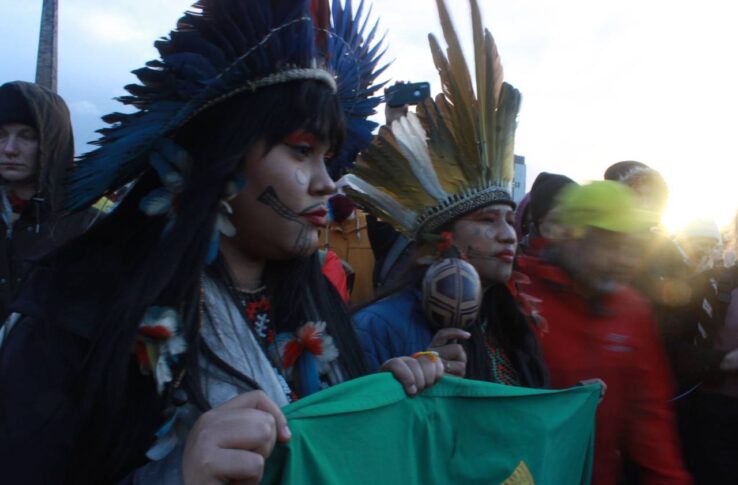
Amazonian indigenous people participate in protests by social movements in Glasgow, in which they claimed that their voices were not adequately heard at COP26. CREDIT: Arturo Contreras/Pie de Página

Amazonian indigenous people participate in protests by social movements in Glasgow, in which they claimed that their voices were not adequately heard at COP26. CREDIT: Arturo Contreras/Pie de Página

The evolution of energy initiatives has been slow, due to funding barriers and the limitations imposed by the covid-19 pandemic.

“Our main interest is to enable access to affordable renewable energy and for indigenous peoples to participate in the projects,” Eileen Mairena-Cunningham, REP project coordinator, told IPS.

“These processes should be led by indigenous organisations. Of course we are interested in participating in the global networks,” added the Miskita indigenous woman from Nicaragua.

After the always difficult first step, indigenous communities want to accelerate progress towards these goals.

In Bella Bella, Canada, the hope is to progressively replace diesel with biofuel in vehicles and in the boats that are vital to the fishing community.

“We are not going to electrify transportation overnight,” Humchitt said. “But we see an opportunity in biodiesel. We have to go forward on this issue.”

Harper concurred with that vision. “Of course we want EVs, as they become accessible and satisfy our own needs. We want to get rid of diesel. The communities have to lead the process of the local transition,” he said.

Mairena-Cunningham stressed that indigenous peoples attach primary importance to participating in global networks.

“Existing projects leave us with lessons of what can be done in our territory,” said the activist. “There is a need for policies that facilitate indigenous participation and special safeguards for access to the land. Capacity building is also needed.”

Renewable energies can be added to ecological measures that indigenous peoples already use, such as forest protection and biodiversity and water conservation. But their local implementation requires more than just willingness.

IPS produced this article with the support of Iniciativa Climática of Mexico and the European Climate Foundation.

 

As a Humanitarian Crisis Engulfs Afghanistan, Education Cannot Wait Makes Urgent Appeal for Access to Quality Learning for All Children

Civil Society, Development & Aid, Editors’ Choice, Education, Education Cannot Wait. Future of Education is here, Featured, Headlines, Human Rights, Humanitarian Emergencies, Inequity, Middle East & North Africa, TerraViva United Nations

Education Cannot Wait. Future of Education is here

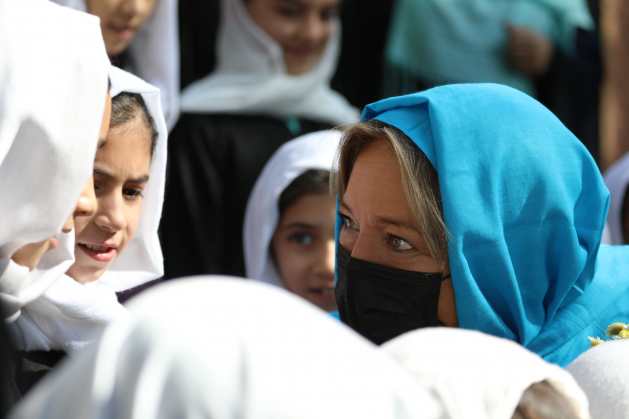
Yasmine Sherif, Director of Education Cannot Wait, is welcomed by teachers and students at a girls’ primary school in Kabul, Afghanistan.
Credit: Omid Fazel/ECW

New York, Nov 5 2021 (IPS) – After leading a landmark, first-ever all-women mission to Afghanistan last week, Yasmine Sherif, Director of Education Cannot Wait, the United Nations global fund for education in emergencies and protracted crises, says that schools must reopen for all children and that girls, in particular, must be able to return to secondary school classrooms.


Sherif visited a girls’ school in Kabul and spoke to students, female teachers, and administrators as part of her Afghan mission. She also met with the de facto education authorities at the Ministry of Education to advocate the right of all children to quality education. The ECW mission comes less than a month after ECW launched a US$4 million First Emergency Response grant to provide ‘quality, flexible learning and psychosocial support for children and adolescents caught in the escalating crisis.

“We need to act fast. When you are in the midst of a humanitarian emergency like Afghanistan, where there is no money in circulation, starvation is a very real fact and poverty is extreme,” Sherif told IPS. “Schools need to continue to reopen and education must be sustained. Not only at primary school levels but through secondary schools – and girls have to go back to secondary schools.”

Sherif, a human rights lawyer, worked in Afghanistan in the early 1990s. She was part of a mission to the country after the first Taliban takeover in 1999 and has visited the country periodically over the last 20 years. She spoke to IPS about her observations from this ground-breaking mission to Kabul a few days ago – the first of its kind since the Taliban take-over in August.

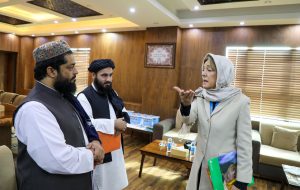
Yasmine Sherif, Director of Education Cannot Wait, meets with de facto education authorities in Afghanistan.
Credit: Omid Fazel/ECW

“There are more women on the streets of Kabul today. I even saw women demonstrating for health care. I visited a girls’ primary school whose teachers and administration were all women,” Sherif said.

“The school’s headmaster is a woman, the school’s doctor is a woman, administrators and teachers are women. There are educated, strong women who are working, but they do not get salaries, because there are no salaries for basic services as a result of the funding freeze to Afghanistan.”

The World Bank, the International Monetary Fund, and the European Union are just a few of the international bodies that have cut off Afghanistan’s access to financing. According to the World Bank, the country relies on grant funding for more than 75 percent of public spending, with expenditure of US$411 billion and government revenue of US$2.5 billion.

With that grant funding frozen, the country is on the brink of economic collapse.

Sherif is appealing for direct funding through UN agencies like ECW and UNICEF, which has the proven mechanisms in place to ensure that funds are used to support teachers and students.

“Teachers are not being paid. UNICEF has a very strong process on the ground. If money were to be given today or tomorrow to pay all teacher salaries, UNICEF has capacities in place to deliver on that funding, even if this would typically have been done through the World Bank or other development actors, but now we are in humanitarian crisis so you cannot use regular development aid approaches,” Sherif told IPS.

“The same goes for all UN agencies like the World Food Programme and UNHCR, the UN Refugees agency. Funding can be channeled through them directly to implement aid programmes. Nothing needs to, nor will go through, the de facto authorities.”

The ECW Director is cautiously optimistic following her meeting with the de facto education authorities, to whom she appealed for a return to secondary school for girls.

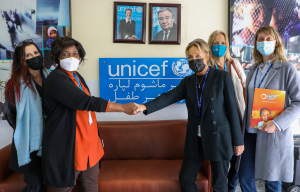
UNICEF Deputy Representative Alice Akunha and Chief of Education Jeannette Vogelaar greet the Education Cannot Wait all-women delegation to Afghanistan, led by Director Yasmine Sherif and her colleagues, Michelle May and Anouk Desgroseilliers.
Credit: Omid Fazel/ECW

“Primary schools have opened for girls’ education and for girls’ secondary education, the de facto authorities told us that they are developing a plan. I stressed that the girls have no time to lose and that the benefits of educating girls are crucial to the future of the country,” she said.

The ECW Director has commended international and national civil society organizations that now work with religious scholars as they negotiate the resumption of secondary school education at the grassroots level. “By bringing an Islamic scholar with them, these NGOs have actually managed to build trust. So secondary schools have opened in some provinces, a few in the north and a few in the south. It is important to stand firm on human rights and girls’ rights, but you must also have the ability to build trust as well,” she said.

ECW is already prepared to swiftly scale up its support and adapt its programming in Afghanistan. New challenges and more children in need of help demand pivoting and quick response. Sherif says ECW was created for crises like these.

“As the UN’s global fund for education in emergencies and protracted crises, we are agile, quick, and flexible. We use decades of lessons learned across the UN system to respond to crises. Traditional development aid modalities that are not crisis-sensitive are not going to work; not in this situation,” she said.

Sherif says that an estimated $1 billion is urgently required for United Nations agencies and international and local NGOs to meet the pressing education needs across the country.

“It’s about how can we save the Afghan population from a humanitarian catastrophe. How can we ensure that every Afghan girl and boy in the country can go to primary and secondary school? It’s about how we can ensure that teachers receive their salaries, so they are able to continue to teach. It is about providing teaching and learning materials and safe learning environments. It is about ensuring that the rights of adolescent girls to access education are fulfilled. That is why it was important for us to do an all-women mission to Afghanistan and to make clear where we stand on girls’ education.”

Sherif is hoping that the visit can give the world an open window view into life in Afghanistan and provide concrete recommendations for international aid to be immediately scaled up and invested to support quality education for both girls and boys.

“Afghanistan cannot wait. The girls of Afghanistan cannot wait. Education cannot wait.”

  Source

In Glasgow, Indigenous People Pound the Table for Their Rights

Civil Society, Climate Action, Climate Change, Conferences, Editors’ Choice, Environment, Featured, Global, Global Governance, Headlines, Human Rights, Indigenous Rights, IPS UN: Inside the Glasshouse, Regional Categories

Climate Action

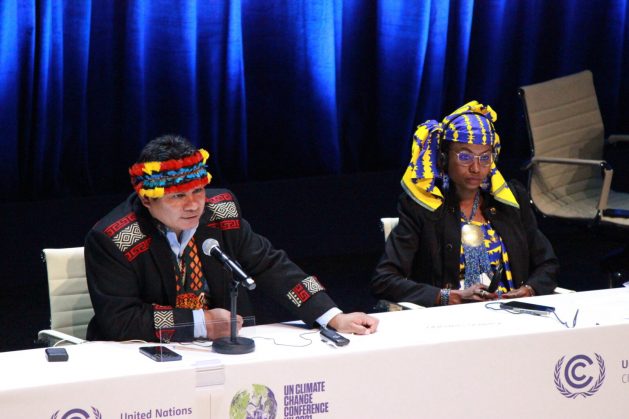
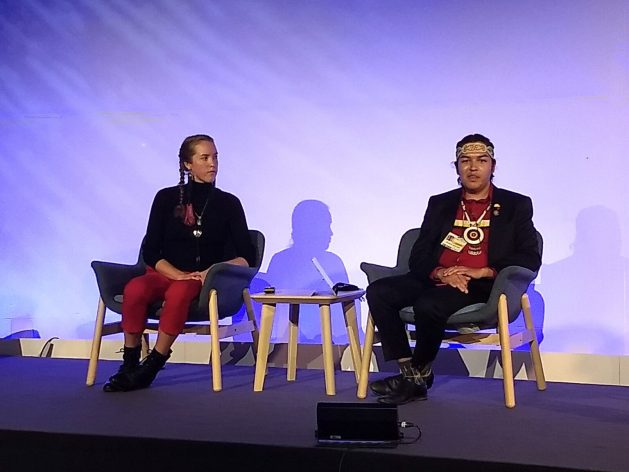
In the face of substantial international offers of funding for indigenous lands and forests at COP26, indigenous peoples are calling for specific schemes for their participation. Shuar leader Katan Kontiak (left) of Ecuador and Hindou Oumarou Ibrahim of Chad took part in a Nov. 2 forum on the indigenous peoples and local communities platform. CREDIT: Emilio Godoy/IPS

GLASGOW, Nov 4 2021 (IPS) – “For my people, the effects of climate change are a daily reality. The rainy season is shorter and when it rains, there are floods. And we have suffered from drought,” said Hindou Oumarou Ibrahim, a member of the Wodaabe or Mbororo pastoral people of Chad.


For the founder of the non-governmental Association of Indigenous Women and Peoples of Chad, one pernicious effect is the violence generated, because “when resources are lost, people fight for them – for water, for example,” she told IPS after a forum on the progress made by native groups at the climate summit in Glasgow, Scotland.

Around the world, indigenous peoples face the ambiguity of protecting ecosystems, such as forests or coastal zones, while at the same time suffering the onslaught of climate fury unleashed by humanity’s addiction to fossil fuels, like droughts, destructive storms and rising sea levels.

For decades, native peoples have insisted that their traditional knowledge can contribute to the fight against climate change. The emergence of the covid-19 pandemic in 2020 reaffirmed the results of treating nature as just another commodity.

Although in the last decade, indigenous representatives have gained a place at environmental summits, such as the 26th Conference of the Parties (COP26) of the United Nations Framework Convention on Climate Change (UNFCCC), which began on Sunday Oct. 31 in this city in the UK, now they want to be more than just token participants.

“We hope that the summit takes indigenous communities into account. We need funds that go directly to indigenous peoples,” Graciela Coy, an indigenous woman from Ak’Tenamit (our people, in the Q’eqchi’ language), a non-governmental organisation that works in northern Guatemala, told IPS.

Representatives of indigenous organisations have gained a place in every part of the COP. They participate as observers in the official sessions where the agreements are debated, in the parallel summit of social movements and in all the other forums held during the two weeks of the climate conference.

One of the expectations this year among indigenous people is the approval of the three-year working plan of the Local Communities and Indigenous Peoples Platform that emerged at COP21, which approved the Paris Agreement in 2015.

The proposal must be approved by the Facilitative Working Group, composed of seven indigenous and seven government representatives and endorsed at COP24, held in the Polish city of Katowice in 2018. It must then be ratified by the plenary of the 196 Parties to the COP and is to include capacity building activities for indigenous groups, the mapping of measures for their participation in the UNFCCC and financing.

Between 2019 and 2021, the group conducted 11 activities, with no physical sessions due to the pandemic.

Climate policies are the focus of COP26, which ends Nov. 12, after being postponed for a year as a result of the covid-19 pandemic.

Government delegates at COP26 are addressing carbon market rules, climate finance of at least 100 billion dollars per year, gaps between emission reduction targets and necessary reductions, strategies for carbon neutrality by 2050, adaptation plans and the working programme for the local communities and indigenous peoples platform.

Victoria Tauli-Corpuz, an indigenous activist from the Kankana-ey Igorot people of the Philippines, said the inclusion of human rights in the financing of emission reductions and adaptation to the effects of the climate crisis, as well as in the creation of carbon markets, is fundamental.

“Indigenous peoples also suffer from climate solutions, such as renewable energy projects. There must be effective safeguards that allow for the protection of indigenous peoples’ rights” in climate policies, the former U.N. Special Rapporteur on the Rights of Indigenous Peoples between 2014 and 2020 told IPS.

This respect has become urgent in areas such as the Amazon, the main jungle in Latin America shared by eight countries and a French territory, whose indigenous inhabitants have suffered the deterioration caused by the inroads made by agribusiness, livestock, soybean, hydrocarbon and mining companies, as well as the construction of dams, railroads, highways and river ports.

For this reason, Tuntiak Katan, a member of the indigenous Shuar people of Ecuador and general coordinator of the Global Alliance of Territorial Communities (GATC), told IPS that the removal of extractive activities from this ecosystem is a fundamental condition for making progress in protection of the climate.

“Indigenous peoples already protect 950 million hectares of land worldwide. What we are asking for is the protection of 80 percent of the Amazon by 2025. We are the voice of the women, children and elders” who suffer the impacts on the territories, said Katan, vice-coordinator of the non-governmental Coordinating Body of Indigenous Organisations of the Amazon River Basin (Coica).

The most recent scientific evidence shows that native peoples are the most effective protectors of tropical forests, which is why greater efforts are required for their conservation in the face of growing threats.

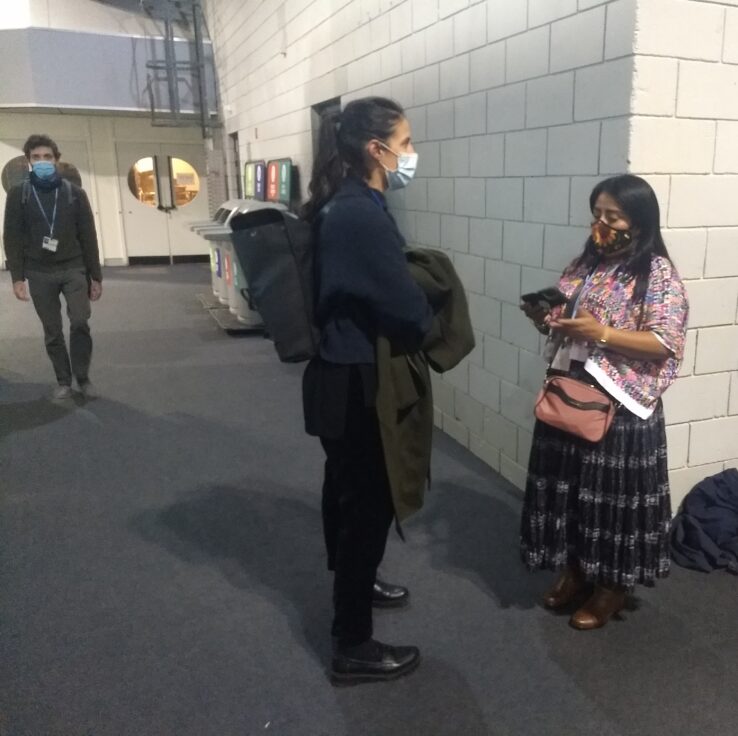
Q'eqchí' indigenous activist Graciela Coy (R) from Guatemala called during the Glasgow climate summit for the promised international funds to go directly to indigenous peoples. CREDIT: Emilio Godoy/IPS

Q’eqchí’ indigenous activist Graciela Coy (R) from Guatemala called during the Glasgow climate summit for the promised international funds to go directly to indigenous peoples. CREDIT: Emilio Godoy/IPS

More than empty promises

In the face of the abundant offers made during the first week of COP26 activities to promote indigenous land tenure and reforestation, indigenous peoples were skeptical and demanded direct participation in these schemes.

Oumarou Ibrahim and Coy agreed on the need to define mechanisms to ensure that the resources provided reach the territories directly.

World leaders “must be our partners. Funding must be tailored to the needs of the people. The question is how the resources are going to reach indigenous peoples directly,” said Oumarou Ibrahim.

In Coy’s opinion, the fight against climate change requires the allocation of funds, which should be transferred “to indigenous peoples, as there is a lot of international aid” that does not always materialise in local communities.

In an acceptance of what native peoples have been demanding for years, the governments of Germany, the Netherlands, Norway, the United Kingdom, the United States and 17 private funders announced on Nov. 1 the provision of 1.7 billion dollars to help indigenous and local communities preserve tropical forests between 2021 and 2025.

It is estimated that each year only 270 million dollars are allocated to forest care and just 46 million dollars go to the direct guardians of the forest: their ancestral inhabitants.

Direct multilateral funding to aboriginal populations has been a recurring barrier to efforts to protect natural resources.

For example, the Green Climate Fund (GCF), created at COP16 in Cancun in 2010, has financed 121 community livelihood projects and delivered a total of 1.4 billion dollars.

For a total of 190 projects, it has disbursed two billion dollars and another six billion are in the pipeline. In addition, it has committed another 10 billion for projects. It has also registered 113 institutions to receive funds, but none of them are indigenous.

Furthermore, on Nov. 2, more than 105 nations signed up to the “Glasgow Leaders’ Declaration on Forests and Land Use” which sets the target of zero deforestation by 2030.

Indigenous peoples are also demanding to be included in the Nationally Determined Contributions (NDCs), the voluntary commitments adopted by each country for 2030 and 2050 in order to comply with the Paris Agreement and on which the goal of containing global warming to 1.5 degrees Celsius is based.

“We just need a push,” said Katan. “We are sure of what we do and that is why it is good that they are offering financing. But what needs to be done is to abandon extractivism and get the oil, mining and agribusiness companies out of our territories, and apply a holistic vision, combined with the vision of the indigenous peoples.”

Even if COP26 does not produce the results desired by indigenous peoples, they will continue to care for natural resources and to demand climate justice.

IPS produced this article with the support of Iniciativa Climática in Mexico and the European Climate Foundation.
  Source

COP26: The Roadmap Plotting the Way to a Historic Meeting – Or Not

Civil Society, Climate Action, Climate Change, Conferences, Editors’ Choice, Environment, Featured, Global, Global Governance, IPS UN: Inside the Glasshouse, Regional Categories

Climate Change

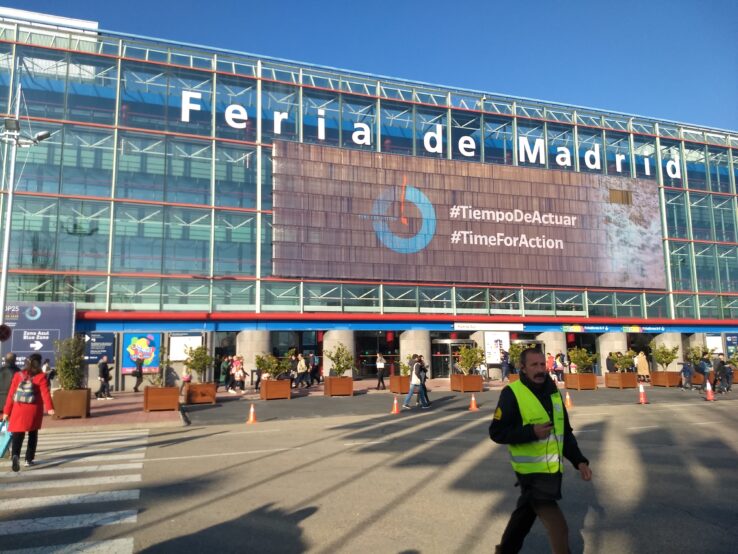
The Madrid climate summit in 2019, COP25, left important pending issues that the conference in Glasgow, which begins on Sunday Oct. 31, will have to resolve. CREDIT: Emilio Godoy/IPS

The Madrid climate summit in 2019, COP25, left important pending issues that the conference in Glasgow, which begins on Sunday Oct. 31, will have to resolve. CREDIT: Emilio Godoy/IPS

MEXICO CITY, Oct 29 2021 (IPS) – The climate summit in Glasgow, Scotland, the most important since 2015, may go down in history as a milestone or as another exercise in frustration, depending on whether or not it resolves the thorny pending issues standing in the way of curbing global warming.


If successful, it could be placed on a par with the 2010 Cancun meeting, which rescued the negotiations after the previous year’s failure in Copenhagen, and Paris, where an agreement was reached in 2015 which defined voluntary emission reductions and a limit to global warming.

But if the summit fails, it will be compared to Copenhagen (COP15), the 2009 conference, and Madrid (COP25), the 2019 summit, whose progress was considered more than insufficient by environmental organisations and academics.

Former Mexican climate negotiator Roberto Dondisch said it is difficult to predict success or failure at the 26th Conference of the Parties (COP26) of the United Nations Framework Convention on Climate Change (UNFCCC), which will take place in Glasgow in the northern UK Oct. 31 to Nov. 12.

“This time we are not seeking an agreement, but trying to work out unresolved issues. The same thing happened in Paris, but a space was created to solve it. The reports are not very promising in terms of where we are at and what we must do. The conditions are very complicated; the will is there, but not the results,” Dondisch, a distinguished fellow at the Washington, DC-based non-governmental Stimson Center, told IPS.

Climate governance has come a long way since the first COP.

Background

In 1992, the United Nations Conference on Environment and Development, held in Rio de Janeiro on the 20th anniversary of the first U.N. Conference on the Human Environment in Stockholm in 1972, brought together political leaders, scientists, representatives of international organisations and civil society to address the impact of human activities on the environment.

One of the results of the so-called Earth Summit was the creation of the UNFCCC, at a time when there was already evidence of global warming caused by human activity.

In fact, as early as 1990, the Intergovernmental Panel on Climate Change (IPCC), created by the U.N. General Assembly in 1988 and composed of scientists from all over the world entrusted with the responsibility of assessing the existing scientific knowledge related to climate phenomena, released its first report.

Report after report, the IPCC has become a key part of the global climate framework for understanding and addressing the crisis of rising temperatures and their impacts.

Seven years later, in 1997, the member states of the UNFCCC negotiated the Kyoto Protocol (KP), signed in that Japanese city during COP3, which established mandatory emission reduction targets for 36 industrialised countries and the European Union as a bloc, listed in Annex II of the agreement.

In Kyoto, the nations of the developing South were exempted from this obligation in Annex I of the pact.

After the first compliance period (2008-2012), the parties agreed on another period for 2013-2020, which in practice never entered into force, until the protocol was replaced by the Paris Agreement.

The KP, which came into effect in 2005 – without the participation of key countries such as the United States and Russia – also has its own Conference of the Parties serving as the meeting of the Parties to the Kyoto Protocol (CMP), which oversees its implementation and takes decisions to promote its effective implementation.

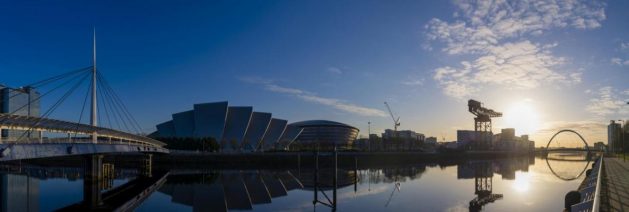
A view of the main venue for COP26 in Glasgow. Expectations are high for the outcome of the conference, but the two-week discussions and meetings must negotiate an obstacle course to reach concrete results in keeping with the severity of the climate emergency. CREDIT: UNFCCC

A view of the main venue for COP26 in Glasgow. Expectations are high for the outcome of the conference, but the two-week discussions and meetings must negotiate an obstacle course to reach concrete results in keeping with the severity of the climate emergency. CREDIT: UNFCCC

The relatively uneventful COP19 in Warsaw in 2013 served to testify to the birth of the Warsaw International Mechanism for Loss and Damage associated with Climate Change Impacts (WIM), whose rules of operation and financing will be central to the Glasgow discussions.

Climate policies will be the focus of COP26, co-chaired by the United Kingdom and Italy, which had to be postponed for a year due to covid-19 pandemic restrictions.

COP26 will address rules for carbon markets, climate finance for at least 100 billion dollars annually, gaps between emission reduction targets and necessary reductions, strategies for carbon neutrality by 2050, adaptation plans, and the local communities and indigenous peoples platform.

But missing from the agenda of the two weeks of discussions will be the goal of hundreds of billions of greenbacks per year, which has been postponed to 2023 – a sign that funding for mitigation and adaptation to climate change is the hot potato for the parties.

Complex architecture

The UNFCCC entered into force in 1994 and has been ratified by 196 parties, with the participation of the EU as a bloc, the Cook Islands and Niue – South Pacific island nations – in addition to the 193 U.N. member states.

The parties to the binding treaty subscribe to a universal convention that recognises the existence of climate change caused by human activities and assigns developed countries the main responsibility for combating the phenomenon.

The COPs, in which all states parties participate, govern the Convention and meet annually in global conferences where they make decisions to achieve the objectives of the climate fight, adopted unanimously or by consensus, especially after the KP failed to reach the negotiated goals.

In Paris, at COP21, member countries agreed on voluntary pollution reduction targets to keep the temperature increase below 1.5 degrees Celsius, considered the indispensable limit to contain disasters such as droughts and destructive storms, with high human and material costs.

These targets are embodied in the Nationally Determined Contributions (NDCs), in which countries set out their 2030 and 2050 goals. Only 13 nations have submitted a second version of their measures since they began submitting their actions to the UNFCCC Secretariat in Bonn, Germany, in 2016.

The Paris Agreement, in force since 2020 and so far ratified by 192 states parties, has its own Meeting of the Parties (MOP), which monitors compliance and takes decisions to promote compliance.

Each COP also draws thousands of business delegates, non-governmental organisations, international organisations, scientists and journalists.

In addition, a parallel alternative summit will bring together social movements from around the world, advocating an early phase-out of fossil fuels, rejecting so-called “false solutions” such as carbon markets, and calling for a just energy transition and reparations for damage and redistribution of funds to indigenous communities and countries of the global South.

Sandra Guzmán, director of the Climate Finance Programme at the non-governmental Climate Policy Initiative – with offices in five countries – foresees a complex summit, especially in terms of financing.

“No one knows for sure how loss and damage will be covered. Developed countries don’t want to talk about more funds. The scenario for political agreement is always difficult. The expectation is that the COP will move forward and establish a package of progress and build a good bridge to the next meeting,” she told IPS from London.

For 30 years, the parties to the UNFCCC have been doing the same thing, without achieving the desired reduction in emissions or control of global warming. If COP26 follows the same mechanics, the results are unlikely to change at the end of the two weeks of discussions and activities in which more than 25,000 people will participate.


COP26 Could Get Hot, but Southern African Region Needs it to be Cool and Committed

Africa, Biodiversity, Climate Action, Climate Change, Conferences, Environment, Featured, Food and Agriculture, Headlines, Humanitarian Emergencies, TerraViva United Nations

Climate Action

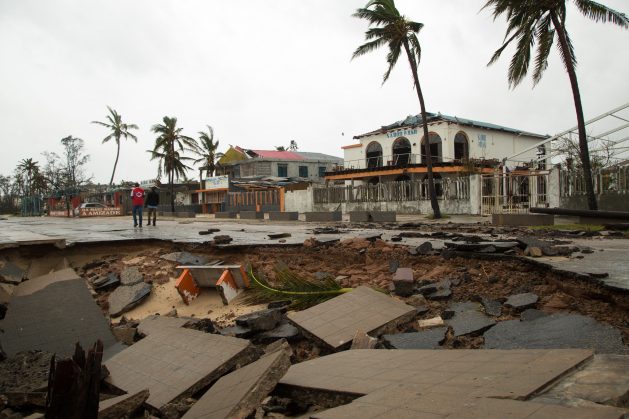
The Southern African region is particularly vulnerable to climate change while only being responsible for a fraction of emissions. It is hoped that COP26 will deliver tangible benefits to the area which has already suffered severe impacts of climate change like the effects of Cyclone Idai, Mozambique, in March 2019. Credit: Denis Onyodi: IFRC/DRK/Climate Centre

Johannesburg, Oct 26 2021 (IPS) – COP26 is almost upon us, and dire warnings abound that it’s boom or bust for a greener future. Meanwhile, everybody boasts about what they will do to cool down our planet, but there is a disjuncture between talk and action. Even Queen Elizabeth II of the host country, the United Kingdom, has grumbled publicly that not enough action is taking place on climate change.


In the Southern Africa region, the SADC’s member countries are clear that the developed countries must stump up the money to help them deliver their promises to reduce carbon emissions and carry out a raft of measures to combat global warming. All the SADC countries are signatories to the Paris Agreement.

The region has joined the cry of other African countries that the continent suffers most from climate change but hardly contributes to the causes of the phenomenon – emitting less than 4% of the world’s greenhouse gasses.
According to research undertaken on behalf of the UN, climate change adaptation needs for Africa were estimated to be $715 billion ($0.715 trillion) between 2020 and 2030.

In southern Africa, each country has its own Nationally Developed Contribution plan for dealing with climate change, including costs. Of course, funding will be needed to achieve these goals. Developing countries have pledged a $100bn annual target to help the developing world tackle climate change. All the Southern African countries will need a slice of this funding. The Green Climate Fund was established under the Cancun Agreements in 2010 as a dedicated financing vehicle for developing countries.

In the lead up to COP26, the fund is under scrutiny. Tanguy Gahouma, chair of the African Group of Negotiators at COP26, has said: “African countries want a new system to track funding from wealthy nations that are failing to meet the $100bn annual target.”

The Organisation for Economic Co-operation and Development (OECD) estimates this funding stood at $79.6bn in 2019. OECD data reveals that from 2016-19 Africa only got 26 percent of the funding.

Gahouma said a more detailed shared system was needed that would keep tabs on each country’s contribution and where it went on the ground.

“They say they achieved maybe 70 percent of the target, but we cannot see that,” Gahouma said.
“We need to have a clear road map how they will put on the table the $100bn per year, how we can track (it),” he said. “We don’t have time to lose, and Africa is one of the most vulnerable regions of the world.”

Amar Bhattacharya, from the Brookings Institution, says about the fund, “Some progress has been made – but a lot more needs to be done.”

Denmark’s development coordination minister Flemming Møller Mortensen has warned that only a quarter of international climate finance for developing countries goes to adaptation.

COP26 may turn into a squabble over money and perhaps an attack on developed countries as they are blamed for creating the problems of climate change in the first place by using fossil fuels for the last two centuries. G20 countries account for almost 80% of global greenhouse gas emissions.

Again, it is all about the money. Many developed countries do not want to change; their economies (and their rich elites) are wedded to fossil fuels. There are also problems with paying for adaptation. Will the rich countries fund the developing countries to green themselves up?

Southern Africa will need to deal pragmatically with the outcomes of COP26 as it becomes crucial to deal with climate change impacts – like the vulnerability to intense storms like Cyclone Idai, which hit Mozambique in March 2019. Credit: Denis Onyodi: IFRC/DRK/Climate Centre

Professor Bruce Hewitson, the SARCHI Research Chair in Climate Change Climate System Analysis Group, Dept Environmental & Geographical Sciences at the University of Cape Town, told IPS: “The well-cited meme that Africa is the continent most vulnerable to climate change impacts is true, as is the common response that Africa needs external aid to implement adaptation and development pathways compatible to climate mitigation. However, such messages hide a myriad of political realities about the difference between what is ideal and what is likely.”

Hewitson argues that what emerges from COP26 is an exercise in hope and belief.

“It’s a tightrope walk trying to balance competing demands and self-interests. At the end of the day, Africa will need to pragmatically deal with a compromised outcome and face the climate challenges as best possible under limited resources,” he says.

If Africa goes to COP26 with a begging bowl attitude, it could face the risk of dancing to the strings of the powerful and rich nations.

“Climate change impacts Africa in a multiplicity of ways, but at the root is when the local climate change exceeds the viability threshold of our infrastructural and ecological systems. Hence, arguably the largest challenge to responding to climate change is to expand and enable the regional capacity of the science and decision-makers to responsibly steer our actions in an informed and cohesive way; Africa needs to lead the design of Africa’s solutions,” says Hewitson.

While he argues that some of the best innovation is happening in Africa, it requires resources, and the COVID-19 pandemic has decreased international funding.

“Each community has unique needs and unique challenges, needing unique local solutions that are context-sensitive and context-relevant, and this will inevitably include the pain of some socio-economic and political compromise.”
The southern African region’s climate woes chime with the problems faced by a legion of developing countries. We have Mauritius’s threatened Indian Ocean islands, Seychelles, Madagascar, Comoros and those offshore of Tanzania and Mozambique, plus many thousands of miles of coastline. We have inland waterways. We have jungles, forests, vast plains and deserts. All prey to the viciousness of global warming.

The SADC’s climate change report quotes an academic paper by Rahab and Proudhomme that from 2002 “there has been a rise in temperatures at twice the global average.”

According to the SADC, “A Climate Change Strategy is in place to guide the implementation of the Climate Change Programme over a Fifteen-year period (2015 – 2030). The plan is innovative in terms of food security, preserving and expanding carbon sinks (which play a major role in stabilising the global climate) and tackling problems in urban areas that cause global warming like high energy consumption, poor waste management systems and inefficient transport networks.

Out of the region’s fifteen member countries, South Africa is the biggest culprit when it comes to greenhouse gas emissions.

South African President Cyril Ramaphosa recently said, “We need to act with urgency and ambition to reduce our greenhouse gas emissions and undertake a transition to a low-carbon economy.”

This is a big ask for the region’s economic powerhouse with entrenched mining interests, an abundance of coal and a huge fleet of coal-fired power stations.

Recently, Mining and Energy Minister Gwede Mantashe said South Africa must systematically manage its transition away from coal-fired power generation and not rush a switch to renewable energy sources.

“I am not saying coal forever… I am saying let’s manage our transition step by step rather than being emotional. We are not a developed economy, we don’t have all alternative sources.”

Angola has some of the most ambitious targets for transition to low-carbon development in Africa. The country committed to reducing up to 14% of its greenhouse gas emissions – commentators have met this with scepticism.
Mozambique, not – as yet – a significant carbon emitter, has potential, through its vast natural gas resources, to provide the wherewithal to heat the planet in a big way.

The Democratic Republic of the Congo – a least-developed country, has committed to a 17% reduction by 2030 in emissions. The DRC has the world’s second-largest tropical rainforest – a major carbon sink.

Other SADC countries that suffer from climate change but do very little to cause it are Lesotho, Swaziland, Botswana, Madagascar, which is currently suffering from a climate-induced famine; Malawi, Tanzania, Namibia and Zambia.

While talking up the need to cut emissions, Zambia’s neighbour Zimbabwe said it would increase electricity and coal supply to the iron and steel sectors, thus adding to emissions.

Mauritius, Seychelles and Comoros are all vulnerable Island economies and have a lot in common with the many other island states throughout the world and are very low carbon emitters but extremely vulnerable to climate change especially rising sea levels.

Despite all the problems emerging in the lead up to COP 26, we need to take to heart the fact that scientists and commentators worldwide are warning that COP26 must deliver a way forward that works for our planet and our people. Southern Africa and the African continent as a whole can contribute with innovation and enthusiasm by tapping into the vast potential of our youthful population.