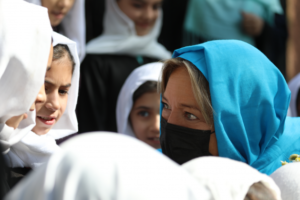
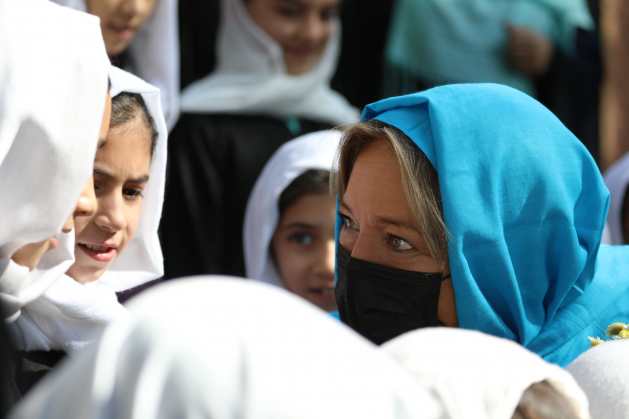
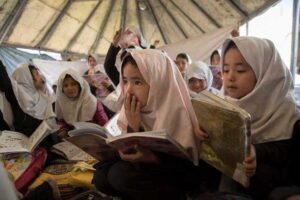
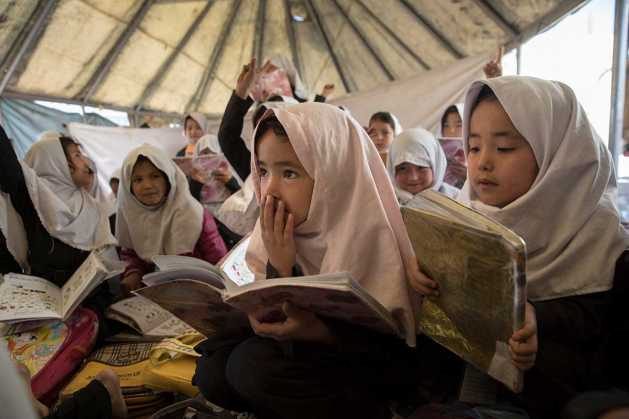
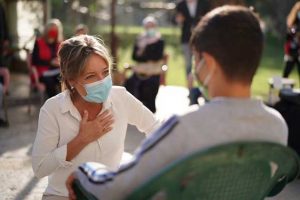
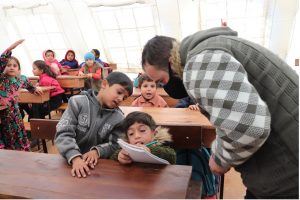
Yasmine Sherif, Director of Education Cannot Wait, is welcomed by teachers and students at a girls’ primary school in Kabul, Afghanistan.
Credit: Omid Fazel/ECW
New York, Nov 5 2021 (IPS) – After leading a landmark, first-ever all-women mission to Afghanistan last week, Yasmine Sherif, Director of Education Cannot Wait, the United Nations global fund for education in emergencies and protracted crises, says that schools must reopen for all children and that girls, in particular, must be able to return to secondary school classrooms.
Sherif visited a girls’ school in Kabul and spoke to students, female teachers, and administrators as part of her Afghan mission. She also met with the de facto education authorities at the Ministry of Education to advocate the right of all children to quality education. The ECW mission comes less than a month after ECW launched a US$4 million First Emergency Response grant to provide ‘quality, flexible learning and psychosocial support for children and adolescents caught in the escalating crisis.
“We need to act fast. When you are in the midst of a humanitarian emergency like Afghanistan, where there is no money in circulation, starvation is a very real fact and poverty is extreme,” Sherif told IPS. “Schools need to continue to reopen and education must be sustained. Not only at primary school levels but through secondary schools – and girls have to go back to secondary schools.”
Sherif, a human rights lawyer, worked in Afghanistan in the early 1990s. She was part of a mission to the country after the first Taliban takeover in 1999 and has visited the country periodically over the last 20 years. She spoke to IPS about her observations from this ground-breaking mission to Kabul a few days ago – the first of its kind since the Taliban take-over in August.
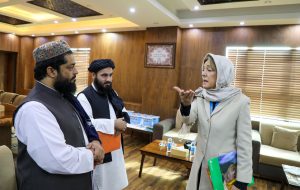
Yasmine Sherif, Director of Education Cannot Wait, meets with de facto education authorities in Afghanistan. Credit: Omid Fazel/ECW
“There are more women on the streets of Kabul today. I even saw women demonstrating for health care. I visited a girls’ primary school whose teachers and administration were all women,” Sherif said.
“The school’s headmaster is a woman, the school’s doctor is a woman, administrators and teachers are women. There are educated, strong women who are working, but they do not get salaries, because there are no salaries for basic services as a result of the funding freeze to Afghanistan.”
The World Bank, the International Monetary Fund, and the European Union are just a few of the international bodies that have cut off Afghanistan’s access to financing. According to the World Bank, the country relies on grant funding for more than 75 percent of public spending, with expenditure of US$411 billion and government revenue of US$2.5 billion.
With that grant funding frozen, the country is on the brink of economic collapse.
Sherif is appealing for direct funding through UN agencies like ECW and UNICEF, which has the proven mechanisms in place to ensure that funds are used to support teachers and students.
“Teachers are not being paid. UNICEF has a very strong process on the ground. If money were to be given today or tomorrow to pay all teacher salaries, UNICEF has capacities in place to deliver on that funding, even if this would typically have been done through the World Bank or other development actors, but now we are in humanitarian crisis so you cannot use regular development aid approaches,” Sherif told IPS.
“The same goes for all UN agencies like the World Food Programme and UNHCR, the UN Refugees agency. Funding can be channeled through them directly to implement aid programmes. Nothing needs to, nor will go through, the de facto authorities.”
The ECW Director is cautiously optimistic following her meeting with the de facto education authorities, to whom she appealed for a return to secondary school for girls.
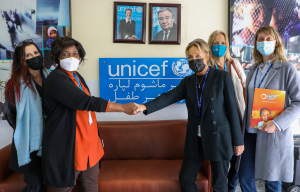
UNICEF Deputy Representative Alice Akunha and Chief of Education Jeannette Vogelaar greet the Education Cannot Wait all-women delegation to Afghanistan, led by Director Yasmine Sherif and her colleagues, Michelle May and Anouk Desgroseilliers. Credit: Omid Fazel/ECW
“Primary schools have opened for girls’ education and for girls’ secondary education, the de facto authorities told us that they are developing a plan. I stressed that the girls have no time to lose and that the benefits of educating girls are crucial to the future of the country,” she said.
The ECW Director has commended international and national civil society organizations that now work with religious scholars as they negotiate the resumption of secondary school education at the grassroots level. “By bringing an Islamic scholar with them, these NGOs have actually managed to build trust. So secondary schools have opened in some provinces, a few in the north and a few in the south. It is important to stand firm on human rights and girls’ rights, but you must also have the ability to build trust as well,” she said.
ECW is already prepared to swiftly scale up its support and adapt its programming in Afghanistan. New challenges and more children in need of help demand pivoting and quick response. Sherif says ECW was created for crises like these.
“As the UN’s global fund for education in emergencies and protracted crises, we are agile, quick, and flexible. We use decades of lessons learned across the UN system to respond to crises. Traditional development aid modalities that are not crisis-sensitive are not going to work; not in this situation,” she said.
Sherif says that an estimated $1 billion is urgently required for United Nations agencies and international and local NGOs to meet the pressing education needs across the country.
“It’s about how can we save the Afghan population from a humanitarian catastrophe. How can we ensure that every Afghan girl and boy in the country can go to primary and secondary school? It’s about how we can ensure that teachers receive their salaries, so they are able to continue to teach. It is about providing teaching and learning materials and safe learning environments. It is about ensuring that the rights of adolescent girls to access education are fulfilled. That is why it was important for us to do an all-women mission to Afghanistan and to make clear where we stand on girls’ education.”
Sherif is hoping that the visit can give the world an open window view into life in Afghanistan and provide concrete recommendations for international aid to be immediately scaled up and invested to support quality education for both girls and boys.
“Afghanistan cannot wait. The girls of Afghanistan cannot wait. Education cannot wait.”
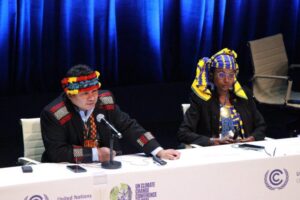
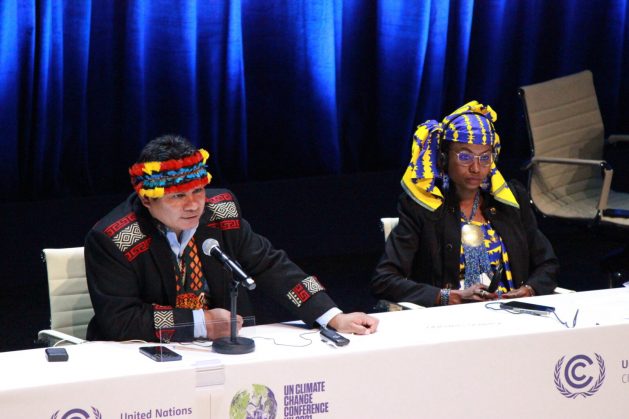
In the face of substantial international offers of funding for indigenous lands and forests at COP26, indigenous peoples are calling for specific schemes for their participation. Shuar leader Katan Kontiak (left) of Ecuador and Hindou Oumarou Ibrahim of Chad took part in a Nov. 2 forum on the indigenous peoples and local communities platform. CREDIT: Emilio Godoy/IPS
GLASGOW, Nov 4 2021 (IPS) – “For my people, the effects of climate change are a daily reality. The rainy season is shorter and when it rains, there are floods. And we have suffered from drought,” said Hindou Oumarou Ibrahim, a member of the Wodaabe or Mbororo pastoral people of Chad.
For the founder of the non-governmental Association of Indigenous Women and Peoples of Chad, one pernicious effect is the violence generated, because “when resources are lost, people fight for them – for water, for example,” she told IPS after a forum on the progress made by native groups at the climate summit in Glasgow, Scotland.
Around the world, indigenous peoples face the ambiguity of protecting ecosystems, such as forests or coastal zones, while at the same time suffering the onslaught of climate fury unleashed by humanity’s addiction to fossil fuels, like droughts, destructive storms and rising sea levels.
For decades, native peoples have insisted that their traditional knowledge can contribute to the fight against climate change. The emergence of the covid-19 pandemic in 2020 reaffirmed the results of treating nature as just another commodity.
Although in the last decade, indigenous representatives have gained a place at environmental summits, such as the 26th Conference of the Parties (COP26) of the United Nations Framework Convention on Climate Change (UNFCCC), which began on Sunday Oct. 31 in this city in the UK, now they want to be more than just token participants.
“We hope that the summit takes indigenous communities into account. We need funds that go directly to indigenous peoples,” Graciela Coy, an indigenous woman from Ak’Tenamit (our people, in the Q’eqchi’ language), a non-governmental organisation that works in northern Guatemala, told IPS.
Representatives of indigenous organisations have gained a place in every part of the COP. They participate as observers in the official sessions where the agreements are debated, in the parallel summit of social movements and in all the other forums held during the two weeks of the climate conference.
One of the expectations this year among indigenous people is the approval of the three-year working plan of the Local Communities and Indigenous Peoples Platform that emerged at COP21, which approved the Paris Agreement in 2015.
The proposal must be approved by the Facilitative Working Group, composed of seven indigenous and seven government representatives and endorsed at COP24, held in the Polish city of Katowice in 2018. It must then be ratified by the plenary of the 196 Parties to the COP and is to include capacity building activities for indigenous groups, the mapping of measures for their participation in the UNFCCC and financing.
Between 2019 and 2021, the group conducted 11 activities, with no physical sessions due to the pandemic.
Climate policies are the focus of COP26, which ends Nov. 12, after being postponed for a year as a result of the covid-19 pandemic.
Government delegates at COP26 are addressing carbon market rules, climate finance of at least 100 billion dollars per year, gaps between emission reduction targets and necessary reductions, strategies for carbon neutrality by 2050, adaptation plans and the working programme for the local communities and indigenous peoples platform.
Victoria Tauli-Corpuz, an indigenous activist from the Kankana-ey Igorot people of the Philippines, said the inclusion of human rights in the financing of emission reductions and adaptation to the effects of the climate crisis, as well as in the creation of carbon markets, is fundamental.
“Indigenous peoples also suffer from climate solutions, such as renewable energy projects. There must be effective safeguards that allow for the protection of indigenous peoples’ rights” in climate policies, the former U.N. Special Rapporteur on the Rights of Indigenous Peoples between 2014 and 2020 told IPS.
This respect has become urgent in areas such as the Amazon, the main jungle in Latin America shared by eight countries and a French territory, whose indigenous inhabitants have suffered the deterioration caused by the inroads made by agribusiness, livestock, soybean, hydrocarbon and mining companies, as well as the construction of dams, railroads, highways and river ports.
For this reason, Tuntiak Katan, a member of the indigenous Shuar people of Ecuador and general coordinator of the Global Alliance of Territorial Communities (GATC), told IPS that the removal of extractive activities from this ecosystem is a fundamental condition for making progress in protection of the climate.
“Indigenous peoples already protect 950 million hectares of land worldwide. What we are asking for is the protection of 80 percent of the Amazon by 2025. We are the voice of the women, children and elders” who suffer the impacts on the territories, said Katan, vice-coordinator of the non-governmental Coordinating Body of Indigenous Organisations of the Amazon River Basin (Coica).
The most recent scientific evidence shows that native peoples are the most effective protectors of tropical forests, which is why greater efforts are required for their conservation in the face of growing threats.
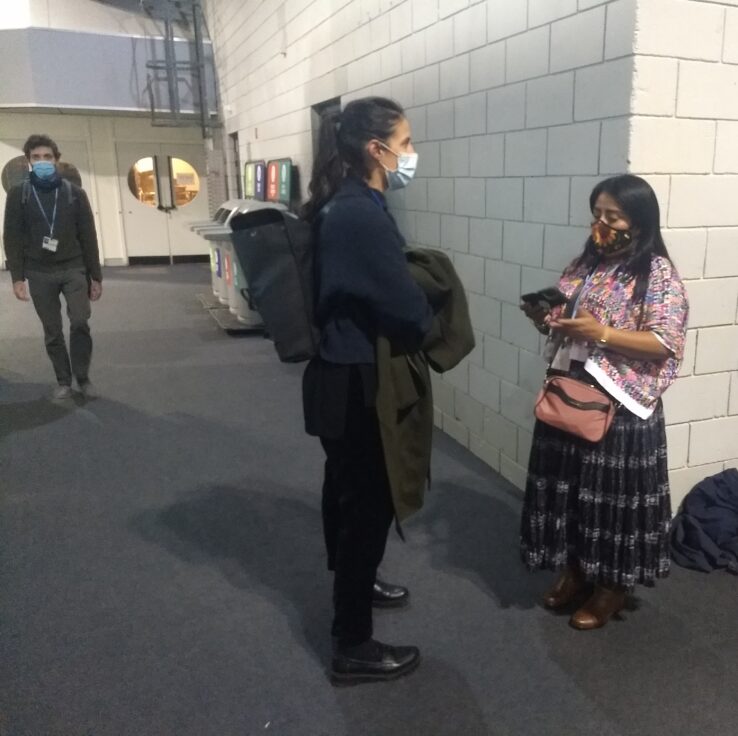
Q’eqchí’ indigenous activist Graciela Coy (R) from Guatemala called during the Glasgow climate summit for the promised international funds to go directly to indigenous peoples. CREDIT: Emilio Godoy/IPS
More than empty promises
In the face of the abundant offers made during the first week of COP26 activities to promote indigenous land tenure and reforestation, indigenous peoples were skeptical and demanded direct participation in these schemes.
Oumarou Ibrahim and Coy agreed on the need to define mechanisms to ensure that the resources provided reach the territories directly.
World leaders “must be our partners. Funding must be tailored to the needs of the people. The question is how the resources are going to reach indigenous peoples directly,” said Oumarou Ibrahim.
In Coy’s opinion, the fight against climate change requires the allocation of funds, which should be transferred “to indigenous peoples, as there is a lot of international aid” that does not always materialise in local communities.
In an acceptance of what native peoples have been demanding for years, the governments of Germany, the Netherlands, Norway, the United Kingdom, the United States and 17 private funders announced on Nov. 1 the provision of 1.7 billion dollars to help indigenous and local communities preserve tropical forests between 2021 and 2025.
It is estimated that each year only 270 million dollars are allocated to forest care and just 46 million dollars go to the direct guardians of the forest: their ancestral inhabitants.
Direct multilateral funding to aboriginal populations has been a recurring barrier to efforts to protect natural resources.
For a total of 190 projects, it has disbursed two billion dollars and another six billion are in the pipeline. In addition, it has committed another 10 billion for projects. It has also registered 113 institutions to receive funds, but none of them are indigenous.
Indigenous peoples are also demanding to be included in the Nationally Determined Contributions (NDCs), the voluntary commitments adopted by each country for 2030 and 2050 in order to comply with the Paris Agreement and on which the goal of containing global warming to 1.5 degrees Celsius is based.
“We just need a push,” said Katan. “We are sure of what we do and that is why it is good that they are offering financing. But what needs to be done is to abandon extractivism and get the oil, mining and agribusiness companies out of our territories, and apply a holistic vision, combined with the vision of the indigenous peoples.”
Even if COP26 does not produce the results desired by indigenous peoples, they will continue to care for natural resources and to demand climate justice.
Heather Barr is associate women’s rights director at Human Rights Watch
Taliban violations of the rights of women and girls are uniquely extreme. No other country openly bars girls from studying on the basis of gender. Credit: 2017 Paula Bronstein for Human Rights Watch
The Taliban have appointed an all-male cabinet. They abolished the Ministry of Women’s Affairs, and handed over the women’s ministry building to the reinstated Ministry of Vice and Virtue, which was responsible for some of the worst abuses against women during the Taliban’s previous period in power from 1996 to 2001.
This was the situation two months after the Taliban had regained control of the Afghan capital, Kabul, as the US and its allies departed, wrapping up their 20-year engagement in Afghanistan’s 40-year war.
The US and the whole international community seem a bit stunned and unsure of what to do. It forms a sadly perfect bookend to the days after the 9/11 attacks, when the US and its allies grieved and raged and then emphasized Taliban abuses of women and girls to help them build support for their invasion of Afghanistan.
The US has long had an uneven—and self-serving—track record on defending women’s rights abroad. But the US is not alone being unsure of what to do to protect the rights of women and girls under Taliban rule.
Even governments priding themselves on their commitment to women’s rights have struggled to find solutions. They have also struggled to make the rights of Afghan women and girls a top priority at a moment when troop-contributing nations are licking their wounds, and concerns about Afghanistan again becoming a host to international terrorist operations could overshadow concerns about human rights.
Humanitarian crisis
Taliban attacks on rights are not the only problem women and girls are facing. Afghanistan’s economy is in free fall, set off by widespread lost income, cash shortages, rising food costs, being severed from global financial systems, and an abrupt halt to the development assistance that made up 75 percent of the previous government’s budget.
This crisis, like most humanitarian crises, will cause the most harm to women and girls. Officials with the UN and several foreign governments are warning of economic collapse and risks of worsening acute malnutrition and outright famine. Surveys by the World Food Program (WFP) reveal that over nine in ten Afghan families have insufficient food for daily consumption, with half saying that they ran out of food at least once in the previous two weeks. One in three Afghans is already acutely hungry.
In December 2020, the UN Children’s Fund, UNICEF, had already warned that an estimated 3.1 million children—half of Afghanistan’s children —were acutely malnourished. Other United Nations reports warn that over 1 million more children could face acute malnutrition in the coming year. By mid-2022, 97 percent of Afghans may be below the poverty line.
Healthcare workers and teachers, many of them women, have not been paid for months, and the healthcare system is collapsing. Where schools for girls are open, few students attend, out of fear that they cannot move to and from school safely, along with financial problems, and a sense of despair about their future. And unpaid teachers may or may not teach.
Weak international response
Even as it became increasingly clear over the course of years that cheerful US and NATO statements about their progress in defeating the Taliban were papering over huge and growing cracks, few could imagine a Taliban return as abrupt as the one that took place in August 2021. Few would have predicted this level of humanitarian crisis and collapse of essential services within weeks of the end of a 20-year military, political, and development engagement by at least 42 countries costing an estimated $2.3 trillion.
The early weeks of resumed Taliban rule seemed marked by indecision and slow response by the international community, in spite of a G7 pledge on August 24, following an emergency meeting, that “We will work together, and with our allies and regional countries, through the UN, G20 and more widely, to bring the international community together to address the critical questions facing Afghanistan.”
A special session of the UN Human Rights Council on August 24 produced no meaningful progress. The UN Security Council in September renewed the mandate of the UN mission in Afghanistan but did not take specific steps to strengthen the mission’s human rights work, which faced staffing gaps and problems after some staff left their posts or were evacuated.
The resolution creating the role of special rapporteur provided the person with greater staffing resources than most special rapporteurs but did not accelerate the on-boarding process. Under the standard timeline, the rapporteur and their team won’t be in place until mid-2022.
An announcement by the International Criminal Court’s prosecutor called into question the role that body will play in protecting human rights in Afghanistan. The court’s Office of the Prosecutor had been considering action in Afghanistan since 2007 and opened an investigation in 2020.
Alleged war crimes and crimes against humanity within the court’s jurisdiction in Afghanistan include: attacks against civil servants including female officials; attacks on schools particularly girls’ schools; and rape and other sexual violence against women and girls. The investigation was suspended nearly as soon as it was opened, however, while the Office of the Prosecutor considered a request from the former Afghan government to defer to national proceedings.
The prosecutor on September 27, 2021, announced that he would seek authorization from the court to resume investigations in the absence of any prospect of genuine national proceedings, but would focus on crimes committed by the Taliban and Islamic State and “deprioritize” other aspects of the investigation.
This approach sends a message that some victims in Afghanistan are more entitled to justice than others, and risks undermining the legitimacy of the court’s investigation.
There is significant variety in the views of key countries about engaging with the new Taliban authorities in Afghanistan. Regional politics are fraught and complex. China and Russia may see themselves as benefitting from a shift in global power dynamics due to the US defeat in Afghanistan, and they and others including Pakistan and Qatar seem more ready than countries that contributed troops to engage with the Taliban. China, Russia and Pakistan were among only five countries that voted against the Human Rights Council resolution to establish a special rapporteur.
“Feminist foreign policy” and the Taliban
Women’s rights activists have made important progress around the world in the 20 years since the Taliban were previously in power, from 1996 to 2001. These advances make the Taliban’s violations of the rights of women and girls even more cruel and intolerable than they were in 2001 and should help spur action by countries that have made progress to right these wrongs.
How should a world increasingly embracing “feminist foreign policy” respond to Taliban violations of the rights of women and girls in 2021?
The first step is to muster political will. Lack of political may be a particular challenge in the wake of the withdrawal of foreign troops, but it is not a new problem. During the decades of international presence, troop-contributing nations paid lip service and contributed funding toward women’s rights, but rarely political capital, and over time the lip service and cash dwindled too.
Then there is a need for the international community to reach as much consensus as possible about what the problems are and what should be done. There are signs that even countries that have been more open to engaging with the Taliban have been disappointed by their unwillingness to appoint an inclusive government and their violations of women’s and girls’ rights.
The Taliban government excludes not just women but also largely excludes religious minorities and most non-Pashtun ethnic groups. Even China, Russia, Pakistan and Iran have all called for the Taliban to form an “inclusive government.” Pakistan Prime Minister Imran Khan has said that banning girls from education in Afghanistan would be “un-Islamic.” Qatar’s foreign minister called the Taliban’s ban on girls’ education “very disappointing.”
The Taliban’s unbending stance on the rights of women and girls is so extreme that this, and its opposition to an inclusive government, may drive broad concern about their actions and help the international community build consensus about how to engage. The US may not be the most able leader for this process and may prefer not to lead.
Other countries and institutions, including countries that have pledged to have a feminist foreign policy, majority Muslim countries, and organizations like the EU, should consider taking on greater leadership than they have so far, in response to a weak response from the US.
Next comes the need for a plan. Whatever the plan is, it should avoid any actions that would worsen Afghanistan’s deepening humanitarian crisis and disproportionately affect women and girls. There are signs of emerging agreement for humanitarian assistance and essential services, with the United Nations Development Program having made arrangements to pay salaries of healthcare workers on a temporary basis.
But major issues remain unresolved, suffering from a lack consensus by the international community, including how to respond to Taliban efforts to exclude women from working for aid agencies . Women workers are essential to ensure that aid reaches women and women-headed households. so permitting women humanitarian workers to do their jobs is not setting a condition on humanitarian assistance so much as an operational necessity to be able to deliver that assistance.
The international community has struggled to identify what leverage they have that can be used to influence the Taliban. The situation has been complicated by opaqueness on the Taliban side. Governments and donors need to figure out what the Taliban want from the international community, how much and where the Taliban are willing to compromise to get what they want. And they need to identify what other pressures—including the demands of their own members and the risk of Taliban fighters defecting to the Islamic State—constrain the Taliban from compromise.
This promise has not been fulfilled in any country; no country has achieved full gender equality and disparities in access to education and employment, wage gaps, and failure to adequately respond to gender-based violence are common around the world. But even in that context, Taliban violations of the rights of women and girls are uniquely extreme.
No other country openly bars girls from studying on the basis of gender. It is shocking to see a country intentionally destroy its system for responding to gender-based violence and dismantle institutions such as the Ministry of Women’s Affairs that were designed to strengthen compliance with CEDAW.
The leverage the international community has to influence the Taliban needs to be deployed in defense of the rights of women and girls. Doing this will be a complex, difficult, and long-term task. But as
CEDAW members, and, in many cases, countries that used women’s rights to sell a war and spent 20 years promising eternal solidarity to Afghan women and girls, the international community owes them this effort.
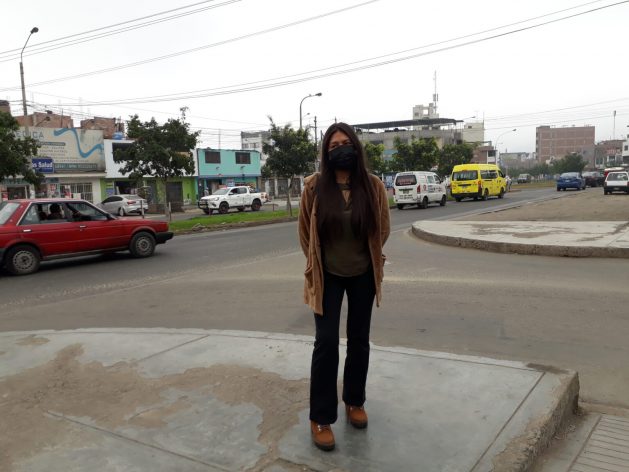
Girls’ sexual and reproductive rights activist Mía Calderón stands on San Martín Avenue in San Juan de Lurigancho, the most populous municipality of Peru’s capital. She complained that the pandemic once again highlighted the fact that sexual violence against girls comes mainly from someone close to home and that the girls are often not believed. CREDIT: Mariela Jara/IPS
LIMA, Oct 22 2021 (IPS) – “During the pandemic, sexual violence against girls has grown because they have been confined with their abusers. If the home is not a safe place for them, what is then, the streets?” Mía Calderón, a young activist for sexual and reproductive rights in the capital of Peru, remarks with indignation.
The 19-year-old university student, whose audiovisual communications studies have been interrupted due to the restrictions set in place to curb the covid-19 pandemic, is an activist who belongs to the youth collective Vayamos in San Juan de Lurigancho, the district of Lima where she lives.
Located to the northeast of the capital, it is a district of valleys and highlands areas higher than 2200 metres above sea level, where water is a scarce commodity and is supplied by tanker trucks. San Juan de Lurigancho was created 54 years ago and its population of 1,117,629 inhabitants, according to official figures, is mostly made up of families who have come to the capital from the country’s hinterland.
Lima’s 43 districts are home to a total of 9.7 million people, and San Juan de Lurigancho has by far the largest population.
In an interview with IPS during a walk through the streets of her district, Calderón said she helped one of her friends during the mandatory social isolation decreed in this Andean nation between March and July 2020, which has been followed by further restrictions on mobility at times of new covid-19 outbreaks.
Since then, classrooms have been closed and education has continued virtually from home, where girls spend most of their time.
“She was in lockdown with her two sisters, her mother and stepfather. But she left before her stepfather could rape her; the harassment had become unbearable. Now she is very afraid of what might happen to her little sisters because he’s still living at home,” she said.
But not all girls and adolescents at risk of sexual abuse have support networks to rely on.
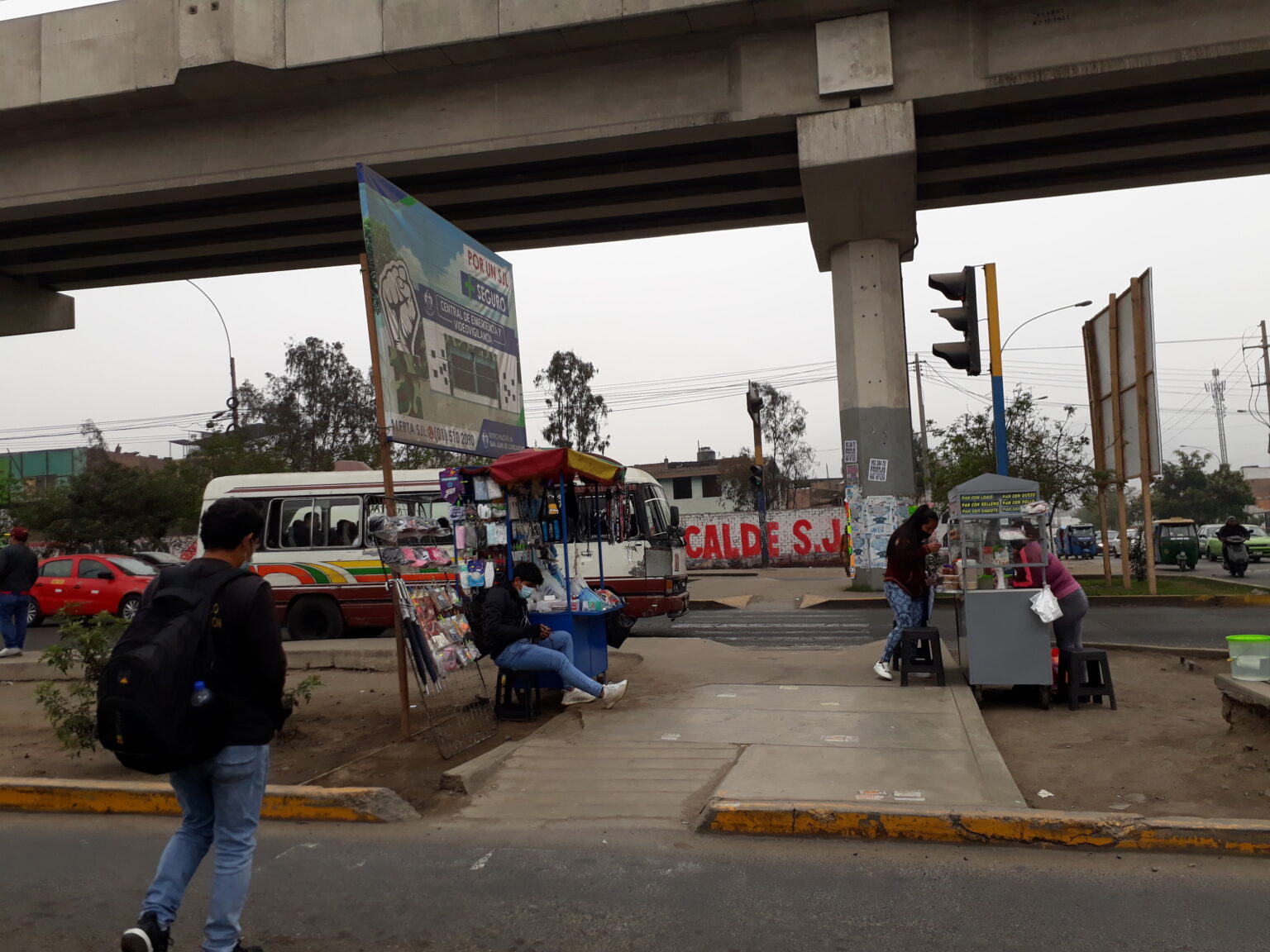
An intersection with hardly any passers-by in San Juan de Lurigancho, one of the 43 districts of the Peruvian capital. There are now fewer children on the streets because schools have been closed since the beginning of the covid pandemic and they receive their education virtually. This keeps them safe from violence in public spaces, but increases the abuse they suffer at home. CREDIT: Mariela Jara/IPS
Data that exposes the violence
Official statistics reveal a devastating reality: Between early 2020 and August of this year there have been 1763 births to girls under 14 years of age, according to the Health Ministry’s birth registration system (CNV).
All of these pregnancies and births are considered to be the result of rape, as the concept of sexual consent does not apply to girls under 14, who are protected by Peruvian law.
Looking at CNV figures from 2018 to August 2021, the total number increases to 4483, which would mean that on average five girls under the age of 14 give birth in Peru every day.
This is also the conclusion reached by the Latin American and Caribbean Committee for the Defence of Women’s Rights (Cladem), which in September completed a nationwide study on forced child pregnancy in Peru, published on Tuesday, Oct. 19.
For Cladem, forced child pregnancy is any pregnancy of a minor under 14 years of age resulting from rape, who was not guaranteed access to therapeutic abortion, which in the case of Peru is the only form of legal termination of pregnancy.
“These figures are unacceptable, but we know they may be even worse because of underreporting,” Lizbeth Guillén, who until August was the Peruvian coordinator of this Latin American network whose regional headquarters are in Lima, told IPS by telephone.
The activist headed up the project “Monitoring and advocacy for the prevention, care and punishment of forced child pregnancy” which was funded by the United Nations Trust Fund to End Violence against Women between 2018 and August 2021.
An aggravating factor for at risk girls and adolescents was that during the months of lockdown, public services for addressing violence against women were suspended and the only thing available was toll-free telephone numbers, which made it more difficult for victims to file complaints.
“What we have experienced shows us once again that homes are the riskiest places for girls,” said Guillén.
The Cladem study also reveals that the number of births to girls under 10 years of age practically tripled, climbing from nine cases in 2019 to 24 in 2020. And the situation remains worrisome, as seven cases had already been documented this year as of August.
Julia Vargas, 61, works in the municipality of Villa El Salvador, south of Lima, where she has lived since the age of 11 and where she maintains her vocation of service as a health promoter. Through this work she knows first-hand about sexual violence against girls and adolescents, which she says has worsened during the pandemic since they have been confined to their homes with their potential abusers. CREDIT: Mariela Jara/IPS
One district’s experience
“Sexual violence against girls has been indescribable during this period, worse than covid-19 itself. Men have been taking advantage of their daughters, they think they have authority over them,” said Julia Vargas, a local resident of Villa El Salvador.
This municipality, which emerged as a self-managed experience five decades ago to the south of the capital, offers health promotion as part of its public services to the community.
Vargas, a 61-year-old mother of four grown children, is proud to be a health promoter, for which she has received training from the Health Ministry and from non-governmental organisations such as the Flora Tristán Peruvian Women’s Centre.
“It’s hard to conceive of so much violence against girls,” she told IPS indignantly at a meeting in her district, “and the worst thing is that many times the mothers turn a blind eye; they say if he (their partner) leaves, who is going to support me.”
Studies indicate that women’s economic dependence is a factor that prevents them from exercising autonomy and reinforces unequal power relations that sustain gender-based violence.
Vargas continued: “There was a case of a father who got his three daughters pregnant and made them have clandestine abortions, and do you think the justice system did anything? Nothing! It said there was consent, how can a young girl give consent?!”
“Girls can’t be mistreated this way, they have rights,” she said.
Mía Calderón, a 19-year-old youth activist with the Vayamos collective, demands more and better measures in Peru to defend girls from sexual violence, fueled by the closure of schools since the beginning of the pandemic, which keeps them isolated and in homes where they sometimes live with their abusers. CREDIT: Mariela Jara/IPS
The culprit nearby
Calderón is also familiar with this situation. “The pandemic has highlighted the fact that sexual violence comes mainly from someone close to home and that many times the girls are not believed: ‘you provoked your uncle, your stepfather’, they are told by their families, instead of focusing on the abuser,” she said.
Her collective Vayamos works to help girls have the right to enjoy every stage of their lives. Due to the pandemic, the group had to restrict its face-to-face activities, but as a counterbalance, it increased the publication of content on social networks.
“No girl or adolescent should live in fear of sexual violence or should face any such risk,” she said.
However, Cladem’s research indicates that between 2018 and 2020, there were 12,677 complaints of sexual violence against girls under 14 in the country, the cause of many forced pregnancies.
But official statistics do not differentiate between child and adolescent pregnancy.
The 2019 National Health Survey reported that of the female population between 15 and 19 years of age, 12.6 percent had been pregnant or were already mothers. The percentage in rural areas was higher than the national rate: 22.7 percent.
Youth activist Mia Calderón, health promoter Julia Vargas and Cladem member Lizbeth Guillén all agree on the proposal to decriminalise abortion in cases of rape and on the need for timely delivery of emergency kits by public health services to prevent forced pregnancies and maternity.
These kits contain emergency contraceptive pills, HIV and hepatitis tests, among other components for comprehensive health protection for victims.
“There are regulatory advances such as this joint action protocol between the Ministry of Women and the Health Ministry for a girl victim of violence to access the emergency kit, but in practice it is not complied with due to the personal conceptions of some operators and they deprive the victims of this right,” explained Guillén.
She stressed that in order to overcome the weak response of the State to such a serious problem, it is also necessary to adequately implement existing regulations, guarantee access to therapeutic abortion for girls and adapt prevention strategies, since the danger often lies directly in the home.
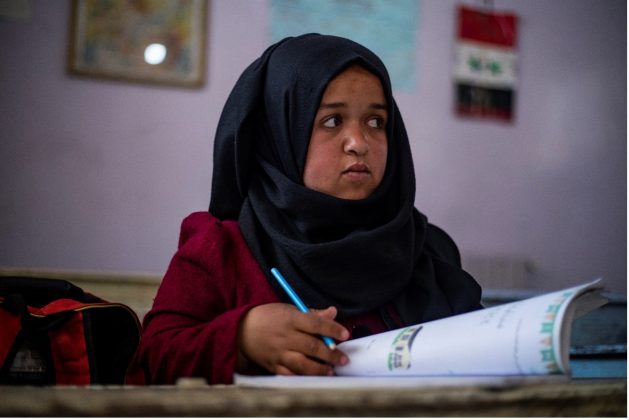
Kawthar, 13, takes notes while attending Grade 3 at a UNICEF-supported self-learning centre in Al-Hasakeh, northeast Syria. She says she always wanted to be like other children and grab her bag and go to school like other children. With Education Cannot Wait assisted schooling, this dream has become a reality. Credit: UNICEF/ Syria 2020/ Delil Souleiman
DOMINICA, Oct 21 2021 (IPS) – In war-torn Syria, the support of Education Cannot Wait (ECW) – the United Nations global fund for education in emergencies and protracted crises – is bringing positive, life-changing educational opportunities tailored to children like 11-year-old Ali.
Ali, who lives in Raqqa with his two siblings and parents, has to work to help support his family. He and his brother did not attend school. Ali heard about registration for ECW-supported educational activities near the industrial area in which he works. They are part of courses being offered in three centres in the city – alongside psychosocial support for children who have experienced war for most of their lives.
Ali initially registered his siblings in the ECW-supported programme but held out himself for fear of losing his job. The centre proposed a flexible learning schedule – one that would allow the brothers to work and attend classes. Programme officials had to convince his family and employers at the industrial centre that school is essential for children’s development. Now he is part of a class of 16 children from the area who attend classes from 7:30 am to 10:00 am. After class, they go to work.
Ali’s story is one of the many stories of vulnerable children and adolescents embroiled in Syria’s protracted conflict that ECW’s investments are helping bring back to school in partnership with education partners on the ground. ECW’s multi-year response in Syria was initiated in 2017 through an initial investment which was further expanded into a Multi-Year Resilience Programme which will continue until 2023 with a cumulative budget of US$45 million.
Yasmine Sherif, the Director of Education Cannot Wait, says too many children and adolescents in Syria have only seen the brutal reality of war, forced displacement, and the hardship of living in areas affected by armed conflict in their short lives. Credit: Education Cannot Wait (ECW)
“Too many children and adolescents in Syria have only seen the brutal reality of war, forced displacement, and the hardship of living in areas affected by armed conflict in their short lives. For them, education is a beacon of hope. It is an opportunity to thrive and become positive changemakers to rebuild their communities and ensure a more peaceful and prosperous future for all,” said Yasmine Sherif, the Director of Education Cannot Wait. “Working together with our partners on the ground, ECW is dedicated to fulfilling the right to a quality education for the most vulnerable girls and boys in Syria.”
“Save the Children has key actor status in the education sector in Syria and has been involved since the inception of ECW’s multi-year response, providing sector-specific technical expertise and guiding in the development of a programme framework that is responsive to the extensive education needs of children in Syria,” Sara Dabash, Awards Officer for the ECW programme in Syria, told IPS.
Children and adolescents already suffering from the impacts of a decade-long war are also bearing the brunt of the COVID-19 pandemic, particularly due to school closures and movement restrictions.
“The disruption of access to quality education for children has dramatically impacted learning and child well-being. In addition, lack of access to safe learning environments and continued isolation exposes children to higher risks of child labour, early marriage, and other negative coping mechanisms. The limited social interactions also compromise access to psychosocial support and other protection services,” Dabash said.
Emad, 9, who lives with a disability, shows his writing to his teacher to check if he is doing right in the class of Arabic subject in the ECW supported temporary learning space in Idleb, northwest Syria. Credit: UNICEF/ Syria 2020
According to Dabash, blended learning options have been introduced, using devices such as mobile phones for remote learning. This option has its downsides as many children have limited to no access to phones or internet connections.
Figures provided by Save the Children put almost 7 million people in need of humanitarian education assistance. Children make up 97 percent of that number. Dabash says, however, that in the “determined locations of implementation within the ECW Programme in northeast Syria, Save the Children, with the support of its partners, has identified around 15,000 children as the most vulnerable and in need of education assistance.”
Since 2017, ECW is also partnering with UNICEF to provide quality education services for the most vulnerable children in the country.
“With funding from ECW, UNICEF provides children across Syria with opportunities to continue their learning through a holistic package of activities tailored to the needs of the children. To support learning, the package of activities generally includes providing learning supplies and psychosocial support through recreational activities. Where classrooms do not exist or continue to be unsafe or overcrowded, we establish new classrooms and rehabilitate existing ones,” Karen Bryner, Education Specialist and ECW Programme Manager in Syria, told IPS.
Bryner says the partnership provides training, teaching supplies and stipend payments to teachers.
The goal is to get as many girls and boys as possible enrolled and attending school regularly. According to UNICEF, ‘children have experienced psychological distress due to violence and instability. Many have missed years of education, with over 2.4 million currently out of school.’
The COVID-19 pandemic has challenged that goal with intermittent school closures. However, Bryner says when face-to-face instruction was not an option, the ECW-supported students transitioned to electronic and paper-based distance education.
“Various modalities were used over the last year, including WhatsApp groups by teachers to deliver daily instruction where connectivity allowed; blended learning with face-to-face instruction two days a week and home-based learning (worksheets and assignments) for the other days, conducting lessons in smaller groups closer to children’s homes, and home delivery of biweekly learning packs and retrieval of students’ work by teachers,” she told IPS.
Kawthar, 13, hangs out with her cousin Juhaina outside her house in Ghwairan neighbourhood, Al-Hasakeh. Since 2019, she has benefitted from the self-learning programme, helping her catch up on the education she had missed due to displacement, her disability, and the financial challenges her family had. Credit: UNICEF/ Syria 2020/ Delil Souleiman
The story of 13-year-old Kawthar is a testament to the positive impact of ECW’s support for the most marginalised children Displaced five times and suffering from growth-related issues due to stunting, she could not walk to school, and her family could not afford transportation. Two years ago, Kawthar, originally from Al-Hasakeh City, enrolled in the ECW-supported self-learning programme implemented by UNICEF– a course that gives out-of-school children the tools to catch up to their peers. She also receives transportation to classes.
“I always wanted to be like all other children; to grab my bag and head to school; to read, write and learn,” says Kawthar. “I wish for all children to be able to go to school. And I certainly hope that nobody gets displaced anymore and that we all remain safe.”
According to UNICEF, with ECW funding, since November 2020, the self-learning programme has been able to reach 2,600 out-of-school children in Al-Hasakeh. Despite this progress, challenges remain to fulfil the right to inclusive, quality education for every child in Syria.
UNICEF states that there has been a 20 percent increase in the number of children in need of humanitarian assistance, and agencies will need scaled-up support as they continue to bring hope to Syria’s children.
MEXICO CITY, Oct 20 2021 (IPS) – They call it the Tlaxcala-New York Route. Between one end and the other, there are 2547 miles. An infamous road that today is one of the most important channel for human trafficking gangs. And a route seemingly impossible to destroy because of its million-dollar profits.
Rosi Orozco
The victims traveling along this route from Mexico to the United States experience in their bones what experts call “the globalization of organized crime”, one of the biggest obstacles to ending this crime.
The route is longer than itself. Sometimes it starts in South America, where victims are lured with dream jobs or a love story in Mexico. And it has a stopover in Mexico’s smallest state, Tlaxcala, where human traffickers kidnap their victims to prepare them for their journey north to the United States.
The worst part is in the next 2547 miles, which includes several horror stops throughout Mexico. The victims will be raped on table dances, brothels, bars, even trailer boxes and roadside tents.
If they survive and show endurance, at least 500 of them will be forced to cross illegally into the United States every year.
In New York, the exploitative clients will be of all nationalities: Mexicans, Americans, Europeans, Asians, Africans… sex tourists who will take back home a piece of humanity as a souvenir.
They are even likely to record those rapes and the videos will end up on porn sites with untraceable IP addresses that profit from a $97 billion a year industry. And when the authorities want to rescue one of those victims, two questions will overwhelm them. Where do we start? What is the origin of all this?
Since the beginning of the 21st century, organized crime has demonstrated that they know how to go global and evade the isolated efforts of individual countries. Their modus operandi imposes a new vision: if traffickers think internationally, justice must think globally. The “10 Days of Anti-Trafficking Activism” event was dedicated to that task.
Between July 26 and August 6, survivors, activists, and decision-makers debated online and face-to-face in Washigton, Miami and Mexico City for more than 240 hours on how to face the new challenges that impose this old crime and how to stay one step ahead.
Jeremy Vallerand, Rescue Freedom CEO, reminded us that human trafficking is a social problem that is not natural but created by human beings, so it is up to us to end it.
The Executive Director of Global Sustainability Network (GSN), Asmita Satyarthi, called for a global count of victims — there are about 25 million people in human trafficking networks and 30% of them are children.
Héma Sibi, CAP International’s Advocacy Coordinator, asked that we all demand a change of laws at an international level. New laws that punishes exploitative clients, not people who are forced into prostitution.
Chancellor Minister Marcelo Sánchez Sorondo, youth leaders such as Alina Luz —Miss Universo Argentina 2020, influencers such as Valentina de la Cuesta, magistrates, mayors, legislators, and more joined events and conferences that can be consulted at www.hojaenblanco.org and the conclusions indicate the way to effectively fight human trafficking.
It is urgent to create international laws that punish trafficking as a crime against humanity. To train police officers with the capacity to investigate this crime beyond national borders. To establish international agreements for financial intelligence units to return to the victims’ money obtained by traffickers, whatever country they are in.
Pivotal actions must go beyond prosecution. More and better prevention campaigns must be created to build bridges between rich and developing countries because that is where the exploiting clients and the exploited person are. National campaigns are no longer enough. The challenge is to build messages thinking about the origin and destination of the victims.
We need more determined participation of society to train new activists with a global perspective and place this topic on the world agenda with the same urgency as other problems faced by humanity, such as climate change or the equitable distribution of food.
Above all, there is an urgency to pass the megaphone to those who have a story that must be heard, because each victim in silence means the loss of a missing ally in the fight against this crime.
The “10 Days of Anti-Trafficking Activism” is one of those crucial events that help us begin to solve those questions that overwhelm us: Where do we start? What is the origin of all this? And by questioning ourselves, we will be able to find how to end those 2547 miles of suffering between Tlaxcala and New York.
So that one day, the seemingly impossible path to defeat will be a memory and the evidence that millions of dollars are not more powerful than millions of people fighting for a world without slavery.
The author is a human rights activist who opened the first shelter for girls and teenagers rescued from sexual commercial exploitation in Mexico. She has published five books on preventing human trafficking; she is the elected Representative of GSN Global Sustainability Network in Latin America.