One Hundred Years On, Argentine State Acknowledges Indigenous Massacre in Trial

Civil Society, Crime & Justice, Development & Aid, Editors’ Choice, Featured, Headlines, Human Rights, Indigenous Rights, Inequality, Latin America & the Caribbean, Population, Regional Categories

Indigenous Rights

During one of the hearings in Buenos Aires, the court trying a 1924 indigenous massacre in the Chaco heard the testimony of historian Nicolás Iñigo Carrera, from the University of Buenos Aires, who has been studying indigenous history in Argentina for decades. The expert witness described in detail the conditions in the Napalpí indigenous “reducción” or camp where the massacre took place. CREDIT: Daniel Gutman/IPS

During one of the hearings in Buenos Aires, the court trying a 1924 indigenous massacre in the Chaco heard the testimony of historian Nicolás Iñigo Carrera, from the University of Buenos Aires, who has been studying indigenous history in Argentina for decades. The expert witness described in detail the conditions in the Napalpí indigenous “reducción” or camp where the massacre took place. CREDIT: Daniel Gutman/IPS

BUENOS AIRES, May 13 2022 (IPS) – It’s a strange trial, with no defendants. The purpose is not to hand down a conviction, but to bring visibility to an atrocious event that occurred almost a hundred years ago in northern Argentina and was concealed by the State for decades with singular success: the massacre by security forces of hundreds of indigenous people who were protesting labor mistreatment and discrimination.


“We are seeking to heal the wounds and vindicate the memory of the (indigenous) peoples,” explained federal judge Zunilda Niremperger, as she opened the first hearing in Buenos Aires on May 10 in the trial for the truth of the so-called Napalpí Massacre, in which an undetermined number of indigenous people were shot to death on the morning of Jul. 19, 1924.

The trial began on Apr. 19 in the northern province of Chaco, one of the country’s poorest, near the border with Paraguay. But it was moved momentarily to the capital, home to approximately one third of the 45 million inhabitants of this South American country, to give it greater visibility.

In a highly symbolic decision, the venue chosen in Buenos Aires was the Space for Memory and Human Rights, created in the former Navy School of Mechanics (ESMA), where the most notorious clandestine torture and extermination center operated during the 1976-1983 military dictatorship, which kidnapped and murdered as many as 30,000 people for political reasons.

“What we hope is that the sentence will bring out the truth about an event that needs to be understood so that racism and xenophobia do not take hold in Argentina. People need to know about all the blood that has flowed because of contempt for indigenous people.” — Duilio Ramírez

The hearings in Buenos Aires ended Thursday May 12, and the court will reconvene in Resistencia, the capital of Chaco, on May 19, when the prosecutor’s office and the plaintiffs are to present their arguments before the sentence is handed down at an unspecified date.

“This trial is aimed at bringing out the truth that we need, and that I come to support, in the place where they brought my daughter when they kidnapped her. This shows that genocides are repeated in history,” Vera Vigevani de Jarach, seated in the front row of the courtroom, her head covered by the white scarf that identifies the Mothers of Plaza de Mayo human rights group, told IPS.

Vera, 94, is Jewish and emigrated with her family to Argentina when she was 11 years old from Italy, due to the racial persecution unleashed by fascist leader Benito Mussolini in 1939. In 1976 her only daughter, Franca Jarach, then 18 years old, was forcibly disappeared.

“Truth trials” are not a novelty in Argentina. The term was used to refer to investigations of the crimes committed by the dictatorship, carried out after 1999, when amnesty laws passed after the conviction of the military regime’s top leaders blocked the prosecution of the rest of the perpetrators.

A petition filed by a member of the Mothers of Plaza de Mayo (made up of mothers of victims of forced disappearance) before the Inter-American Commission on Human Rights (IACHR) led later to an agreement with the Argentine State, which recognized the woman’s right to have the judiciary investigate the fate of her disappeared daughter, even though the amnesty laws made it impossible to punish those responsible.

Eventually, the amnesty laws were repealed, the trials resumed, and defendants were convicted and sent to prison.

Indigenous communities and human rights organizations held an Apr. 19, 2022 demonstration in Resistencia, capital of the Argentine province of Chaco, at the beginning of the trial for the truth about the Napalpí massacre. CREDIT: Chaco Secretariat of Human Rights and Gender

Indigenous communities and human rights organizations held an Apr. 19, 2022 demonstration in Resistencia, capital of the Argentine province of Chaco, at the beginning of the trial for the truth about the Napalpí massacre. CREDIT: Chaco Secretariat of Human Rights and Gender

Historic reparations

“My grandmother was a survivor of the massacre and I grew up listening to the stories of labor exploitation in Napalpí and about what happened that day. For us this trial is a historic reparation,” Miguel Iya Gómez, a bilingual multicultural teacher who today presides over the Chaco Aboriginal Institute, a provincial agency whose mission is to improve the living conditions of native communities, told IPS.

The trial is built on the basis of official documents and journalistic coverage of the time and the videotaped testimonies of survivors of the massacre and their descendants, and of researchers of indigenous history in the Chaco.

The Argentine province of Chaco forms part of the ecoregion from which it takes its name: a vast, hot, dry, sparsely forested plain that was largely unsettled during the Spanish Conquest. Only at the end of the 19th century did the modern Argentine State launch military campaigns to subdue the indigenous people in the Chaco and impose its authority there.

Once the Chaco was conquered, many indigenous families were forced to settle in camps called “reducciones”, where they had to carry out agricultural work.

“The ‘reducciones’ operated in the Chaco between 1911 and 1956 and were concentration camps for indigenous people, who were disciplined through work,” said sociologist Marcelo Musante, a member of the Network of Researchers on Genocide and Indigenous Policies in Argentina, which brings together academics from different disciplines, at the hearing.

“When indigenous people entered the ‘reducción’, they were given clothes and farming tools, and this generated a debt that put them under great pressure. And they were not allowed to make purchases outside the stores of the ‘reducción’,” he explained.
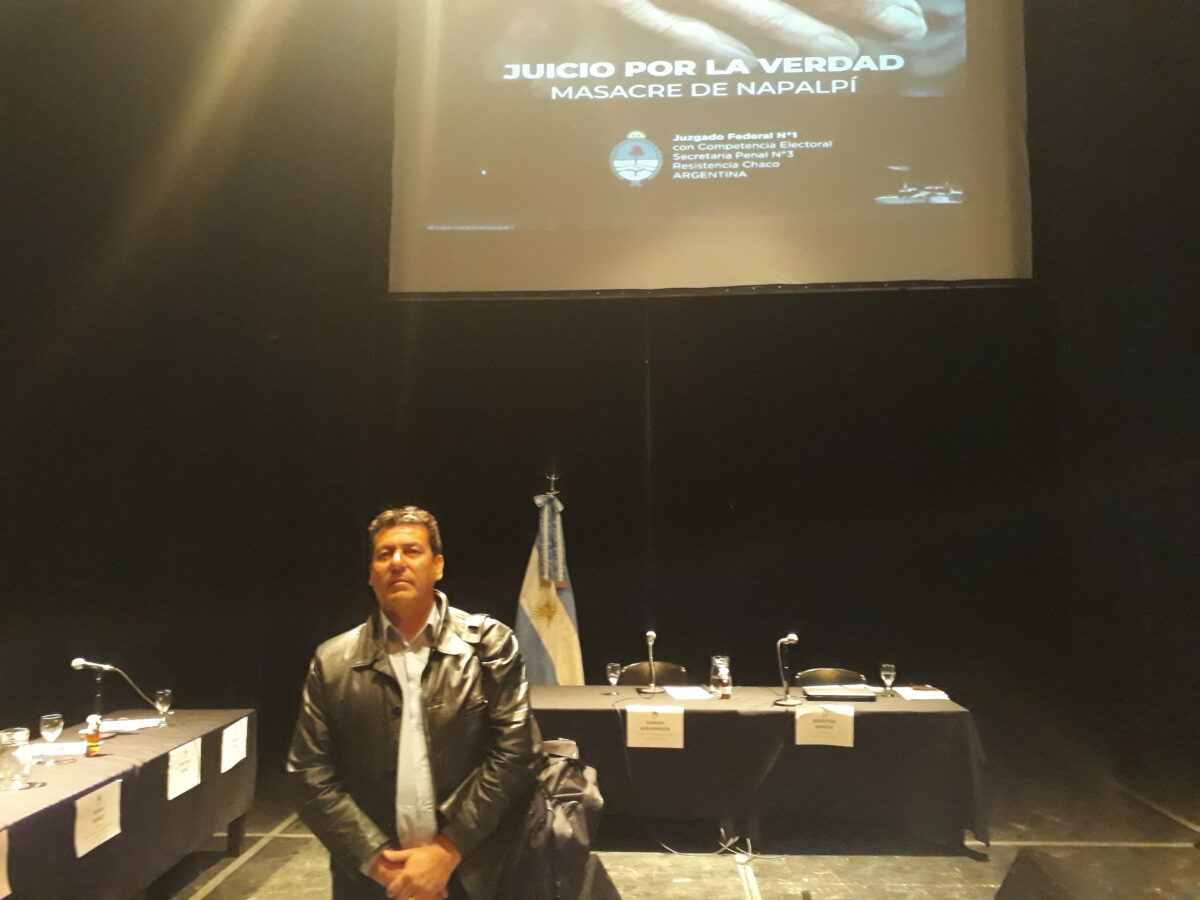
David García, a member of the Napalpí Foundation, created in 2006 to gather information about and bring visibility to the 1924 massacre, took part in the trial in Buenos Aires. His organization was one of the driving forces behind the historic trial in Argentina. CREDIT: Daniel Gutman/IPS

David García, a member of the Napalpí Foundation, created in 2006 to gather information about and bring visibility to the 1924 massacre, took part in the trial in Buenos Aires. His organization was one of the driving forces behind the historic trial in Argentina. CREDIT: Daniel Gutman/IPS

Invaded by cotton

Historian Nicolás Iñigo Carrera said it was common for indigenous people in the Chaco to go to work temporarily in sugar mills in the neighboring provinces of Salta and Jujuy, but the scenario changed in the 1920s, when the Argentine government introduced cotton in the Chaco, to tap into the textile industry’s growing global demand.

“Then the criollo (white) settlers, who often had no laborers, demanded the guaranteed availability of indigenous labor to harvest the cotton crop, and in 1924 the government prohibited indigenous people, who refused to work on the cotton plantations, from leaving the Chaco, declaring any who left subversives,” Carrera said.

Anthropologist Lena Dávila Da Rosa said the Jul. 19, 1924 protest involved between 800 and 1000 indigenous people from Napalpí, and some 130 police officers who opened fired on them, with the support of an airplane that dropped candy so the children would go out to look for it and thus reveal the location of the protesters they were tracking down.

“It’s impossible to know exactly how many indigenous people were killed, but there were several hundred victims,” Alejandro Jasinski, a researcher with the Truth and Justice Program of the Ministry of Justice and Human Rights, told IPS.

“The official report mentioned four people killed in confrontations among themselves, and there was a judicial investigation that was quickly closed. All that was left were the buried memories of the communities,” he added.

The memories were revived and made public in recent years thanks in large part to the efforts of Juan Chico, an indigenous writer and researcher from the Chaco who died of COVID-19 in 2021.

“Juan started collecting oral accounts almost 20 years ago,” David García, a translator and interpreter of the language of the Qom, one of the main indigenous nations of the Chaco, told IPS. “I worked alongside him to bring the indigenous genocide to light, and in 2006 we founded an NGO that today is the Napalpí Foundation. It was a long struggle to reach this trial.”
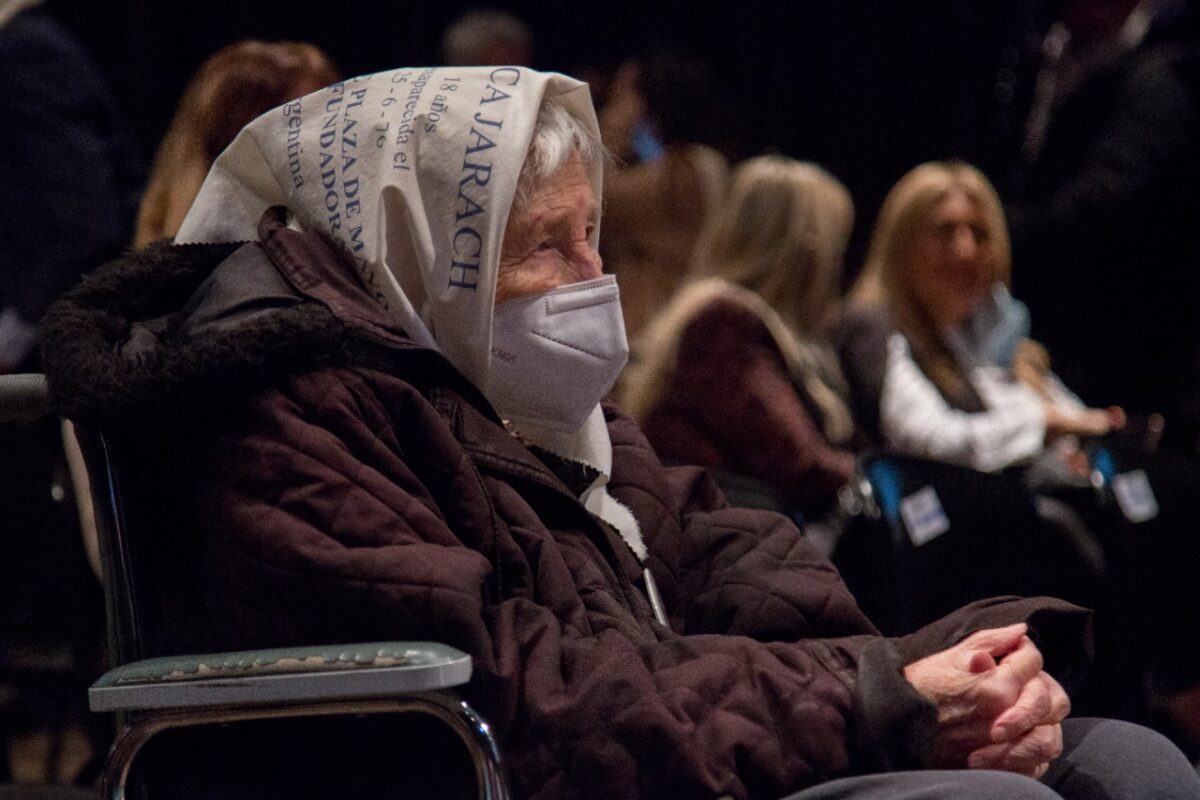
Vera Vigevani de Jarach, a member of the human rights group Mothers of Plaza de Mayo, attended the hearing in Buenos Aires for the Napalpí indigenous massacre, held in the most notorious clandestine detention and torture center used by the 1976-1983 military dictatorship in Argentina. CREDIT: National Secretariat of Human Rights

Vera Vigevani de Jarach, a member of the human rights group Mothers of Plaza de Mayo, attended the hearing in Buenos Aires for the Napalpí indigenous massacre, held in the most notorious clandestine detention and torture center used by the 1976-1983 military dictatorship in Argentina. CREDIT: National Secretariat of Human Rights

Indigenous people in the Chaco today

Of the population of Chaco province, 3.9 percent, or 41,304 people, identified as indigenous in the last national census conducted in Argentina in 2010, which is higher than the national average of 2.4 percent.

Census data reflects the harsh living conditions of indigenous people in the Chaco and the disadvantages they face in relation to the rest of the population. More than 80 percent live in deficient housing while more than 25 percent live in critically overcrowded conditions, with more than three people per room. In addition, more than half of the households cook with firewood or charcoal.

Today, the site of the Napalpí massacre is called Colonia Aborigen Chaco and is a 20,000-hectare plot of land owned by the indigenous community where, according to official data, some 1,300 indigenous people live, from the Qom and Moqoit communities, the most numerous native groups in the Chaco along with the Wichi.

In 2019, mass graves were found there by the Argentine Forensic Anthropology Team, a prestigious organization that emerged in 1984 to identify remains of victims of the military dictatorship and that has worked all over the world.

“What we hope is that the sentence will bring out the truth about an event that needs to be understood so that racism and xenophobia do not take hold in Argentina,” Duilio Ramírez, a lawyer with the Chaco government’s Human Rights Secretariat, which is acting as plaintiff, told IPS. “People need to know about all the blood that has flowed because of contempt for indigenous people.”

“We hope that with the ruling, the Argentine State will take responsibility for what happened and that this will translate into public policies of reparations for the indigenous communities,” he said.

  Source

Indigenous Women in Mexico Take United Stance Against Inequality

Civil Society, Cooperatives, Development & Aid, Economy & Trade, Editors’ Choice, Featured, Food and Agriculture, Gender, Headlines, Human Rights, Indigenous Rights, Latin America & the Caribbean, Poverty & SDGs, Regional Categories, TerraViva United Nations, Women & Climate Change, Women & Economy

Women & Economy

Every other Tuesday, a working group of Mayan women meets to review the organization and progress of their food saving and production project in Uayma, in the state of Yucatán in southeastern Mexico. CREDIT: Courtesy of the Ko'ox Tani Foundation

Every other Tuesday, a working group of Mayan women meets to review the organization and progress of their food saving and production project in Uayma, in the state of Yucatán in southeastern Mexico. CREDIT: Courtesy of the Ko’ox Tani Foundation

UAYMA, Mexico , Apr 26 2022 (IPS) – Every other Tuesday at 5:00 p.m. sharp, a group of 26 Mexican women meet for an hour to discuss the progress of their work and immediate tasks. Anyone who arrives late must pay a fine of about 25 cents on the dollar.


The collective has organized in the municipality of Uayma (which means “Not here” in the Mayan language) to learn agroecological practices, as well as how to save money and produce food for family consumption and the sale of surpluses.

“We have to be responsible. With savings we can do a little more,” María Petul, a married Mayan indigenous mother of two and a member of the group “Lool beh” (“Flower of the road” in Mayan), told IPS in this municipality of just over 4,000 inhabitants, 1,470 kilometers southeast of Mexico City in the state of Yucatán, on the Yucatán peninsula.

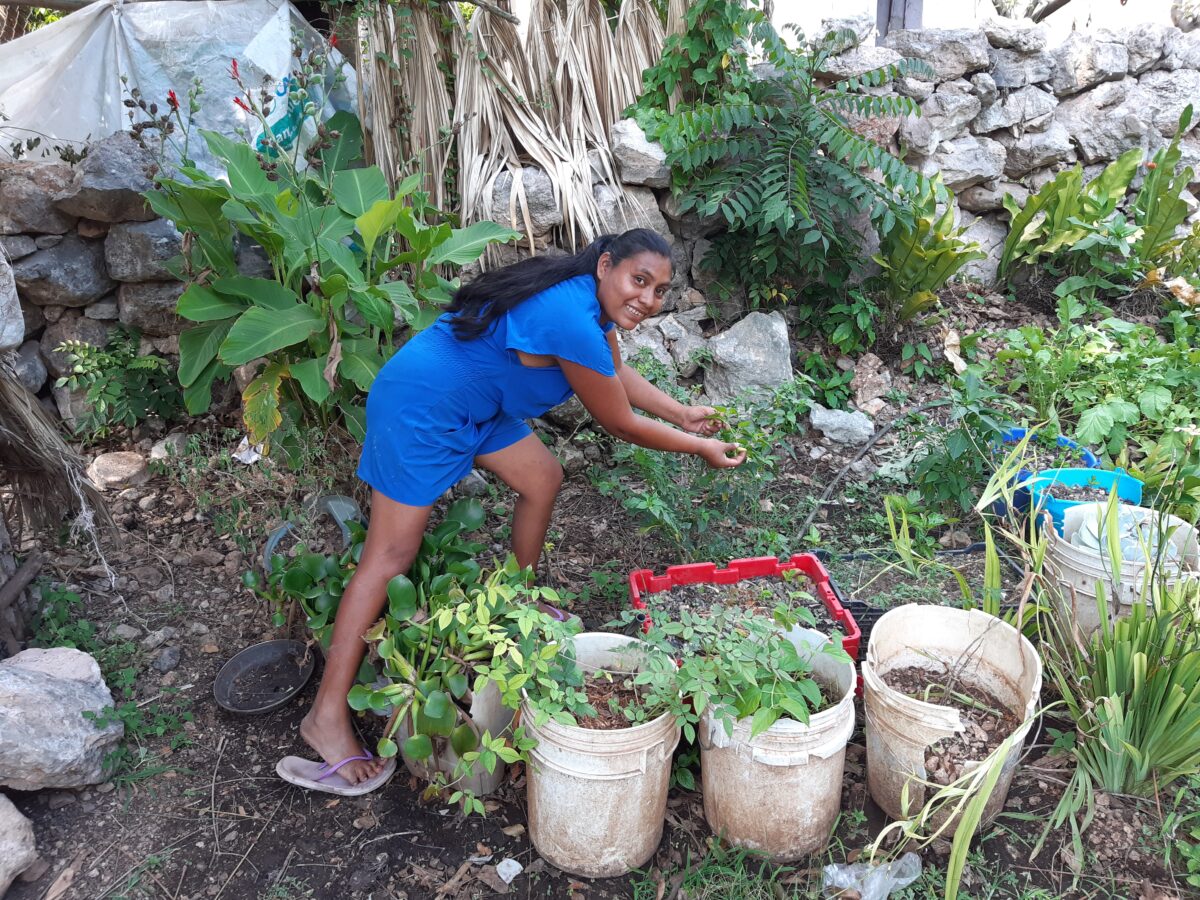
The home garden “gives me enough to eat and sell, it helps me out,” said Petul as she walked through her small garden where she grows habanero peppers (Capsicum chinense, traditional in the area), radishes and tomatoes, surrounded by a few trees, including a banana tree whose fruit will ripen in a few weeks and some chickens that roam around the earthen courtyard.

The face of Norma Tzuc, who is also married with two daughters, lights up with enthusiasm when she talks about the project. “I am very happy. We now have an income. It’s exciting to be able to help my family. Other groups already have experience and tell us about what they’ve been doing,” Tzuc told IPS.

The two women and the rest of their companions, whose mother tongue is Mayan, participate in the project “Women saving to address climate change”, run by the non-governmental Ko’ox Tani Foundation (“Let’s Go Ahead”, in Mayan), dedicated to community development and social inclusion, based in Merida, the state capital.

This phase of the project is endowed with some 100,000 dollars from the Commission for Environmental Cooperation (CEC), the non-binding environmental arm of the North American Free Trade Agreement (NAFTA), formed in 1994 by Canada, the United States and Mexico and replaced in 2020 by another trilateral agreement.

The initiative got off the ground in February and will last two years, with the aim of training some 250 people living in extreme poverty, mostly women, in six locations in the state of Yucatán.

The maximum savings for each woman in the group is about 12 dollars every two weeks and the minimum is 2.50 dollars, and they can withdraw the accumulated savings to invest in inputs or animals, or for emergencies, with the agreement of the group. Through the project, the women will receive seeds, agricultural inputs and poultry, so that they can install vegetable gardens and chicken coops on their land.

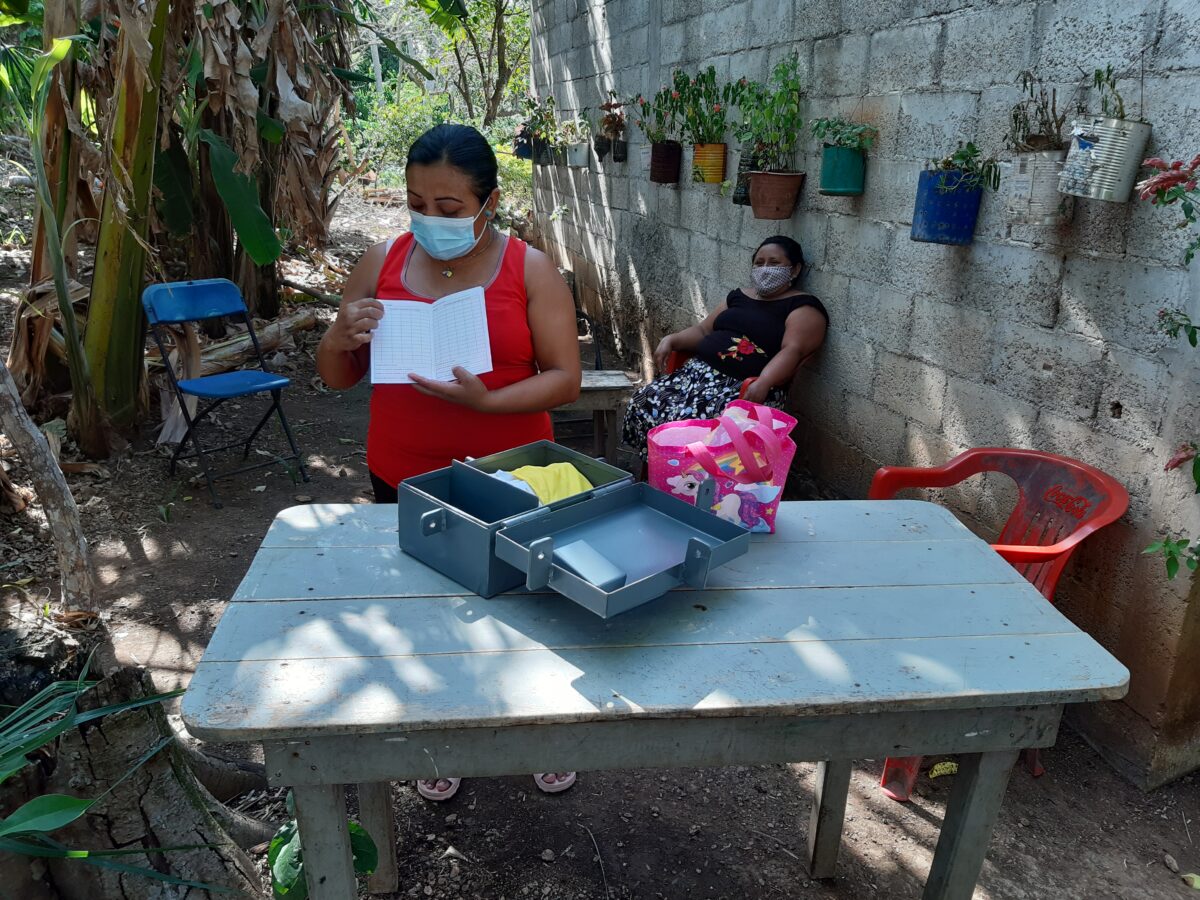
The women write down the quotas in a white notebook and deposit the savings in a gray box, kept in the house of the group’s president.

José Torre, project director of the Ko’ox Tani Foundation, explained that the main areas of entrepreneurship are: community development, food security, livelihoods and human development.

“What we have seen over time is that the savings meetings become a space for human development, in which they find support and solidarity from their peers, make friends and build trust,” he told IPS during a tour of the homes of some of the savings group participants in Uayma.

The basis for the new initiative in this locality is a similar program implemented between 2018 and 2021 in other Yucatecan municipalities, in which the organization worked with 1400 families.

María Petul, a Mayan indigenous woman, plants chili peppers, tomatoes, radishes and medicinal herbs in the vegetable garden in the courtyard of her home in Uayma, in the southeastern Mexican state of Yucatán. CREDIT: Emilio Godoy/IPS

María Petul, a Mayan indigenous woman, plants chili peppers, tomatoes, radishes and medicinal herbs in the vegetable garden in the courtyard of her home in Uayma, in the southeastern Mexican state of Yucatán. CREDIT: Emilio Godoy/IPS

Unequal oasis

Yucatan, a region home to 2.28 million people, suffers from a high degree of social backwardness, with 34 percent of the population living in moderate poverty, 33 percent suffering unmet needs, 5.5 percent experiencing income vulnerability and almost seven percent living in extreme poverty.

The COVID-19 pandemic that hit this Latin American country in February 2020 exacerbated these conditions in a state that depends on agriculture, tourism and services, similar to the other two states that make up the Yucatán Peninsula: Campeche and Quintana Roo.

Inequality is also a huge problem in the state, although the Gini Index dropped from 0.51 in 2014 to 0.45, according to a 2018 government report, based on data from 2016 (the latest year available). The Gini coefficient, where 1 indicates the maximum inequality and 0 the greatest equality, is used to calculate income inequality.

The situation of indigenous women is worse, as they face marginalization, discrimination, violence, land dispossession and lack of access to public services.

More than one million indigenous people live in the state.

Women participating in a project funded by the North American Commission for Environmental Cooperation record their savings in a white notebook and deposit them in a gray box. Mayan indigenous woman Norma Tzuc belongs to a group taking part in the initiative in Uayma, in the southeastern Mexican state of Yucatán. CREDIT: Emilio Godoy/IPS

Women participating in a project funded by the North American Commission for Environmental Cooperation record their savings in a white notebook and deposit them in a gray box. Mayan indigenous woman Norma Tzuc belongs to a group taking part in the initiative in Uayma, in the southeastern Mexican state of Yucatán. CREDIT: Emilio Godoy/IPS

Climate crisis, yet another vulnerability

Itza Castañeda, director of equity at the non-governmental World Resources Institute (WRI), highlights the persistence of structural inequalities in the peninsula that exacerbate the effects of the climate crisis.

“In the three states there is greater inequality between men and women. This stands in the way of women’s participation and decision-making. Furthermore, the existing evidence shows that there are groups in conditions of greater vulnerability to climate impacts,” she told IPS from the city of Tepoztlán, near Mexico City.

She added that “climate change accentuates existing inequalities, but a differentiated impact assessment is lacking.”

Official data indicate that there are almost 17 million indigenous people in Mexico, representing 13 percent of the total population, of which six million are women.

Of indigenous households, almost a quarter are headed by women, while 65 percent of indigenous girls and women aged 12 and over perform unpaid work compared to 35 percent of indigenous men – a sign of the inequality in the system of domestic and care work.

To add to their hardships, the Yucatan region is highly vulnerable to the effects of the climate crisis, such as droughts, devastating storms and rising sea levels. In June 2021, tropical storm Cristobal caused the flooding of Uayma, where three women’s groups are operating under the savings system.

For that reason, the project includes a risk management and hurricane early warning system.

The Mexican government is building a National Care System, but the involvement of indigenous women and the benefits for them are still unclear.

Petul looks excitedly at the crops planted on her land and dreams of a larger garden, with more plants and more chickens roaming around, and perhaps a pig to be fattened. She also thinks about the possibility of emulating women from previous groups who have set up small stores with their savings.

“They will lay eggs and we can eat them or sell them. With the savings we can also buy roosters, in the market chicks are expensive,” said Petul, brimming with hope, who in addition to taking care of her home and family sells vegetables.

Her neighbor Tzuc, who until now has been a homemaker, said that the women in her group have to take into account the effects of climate change. “It has been very hot, hotter than before, and there is drought. Fortunately, we have water, but we have to take care of it,” she said.

For his part, Torre underscored the results of the savings groups. The women “left extreme poverty behind. The pandemic hit hard, because there were families who had businesses and stopped selling. The organization gave them resilience,” he said.

In addition, a major achievement is that the households that have already completed the project continue to save, regularly attend meetings and have kept producing food.

  Source

New Constitution Would Declare Chile a Plurinational State

Civil Society, Democracy, Editors’ Choice, Featured, Headlines, Human Rights, Indigenous Rights, Latin America & the Caribbean, Regional Categories, TerraViva United Nations

Indigenous Rights

A Mar. 3 plenary session of the constitutional convention of Chile, where in long working days its members are drafting a new constitution, which must be completed by Jul. 4 at the latest. On Feb. 17, they approved by a large majority the new definition of Chile as a regional, plurinational and pluricultural State. CREDIT: Orlando Milesi/IPS

A Mar. 3 plenary session of the constitutional convention of Chile, where in long working days its members are drafting a new constitution, which must be completed by Jul. 4 at the latest. On Feb. 17, they approved by a large majority the new definition of Chile as a regional, plurinational and pluricultural State. CREDIT: Orlando Milesi/IPS

SANTIAGO, Mar 9 2022 (IPS) – Chile could change the course of its history and become a diverse and multicolored country this year with a “plurinational and intercultural state” that recognizes and promotes the development of the native peoples that inhabited this territory before the Spanish conquest.


By 112 votes in favor and 32 against, the constitutional convention approved this proposal which now forms part of the draft constitution that Chilean voters will approve or reject in an August or September referendum.

“The current Chilean constitution and the previous ones make no mention of the words Indian, native…indigenous peoples, or original peoples. Nothing. They are erased from the constitution because they were made invisible socially, culturally, economically, politically and militarily.” — Domingo Namuncura

The constitutional convention is debating and drafting a new constitution which is the result of the work of 155 constituents – half men and half women, with 17 indigenous members – elected by popular vote in October 2020 who began the task on Jul. 4, 2021. They have until Jul. 4 to finish their work.

In the country’s last census, in 2017, 2.18 million Chileans self-identified as indigenous people.

In other words, 12.8 percent of the 17.07 million inhabitants of Chile at that time (today the population stands at 19.4 million) were recognized as belonging to one of the indigenous peoples distributed throughout this long narrow South American country: the Mapuche (the largest native group), followed by the Aymara, Rapa Nui, Diaguita, Atacameño, Quechua, Colla, Kawesqar and Yagan.

Domingo Namuncura, a Mapuche social worker and professor at the Catholic University of Valparaíso, told IPS that “we are facing a very important historic event. The declaration of a plurinational State has always been a dream of the indigenous peoples of Chile.”

The creation of the constitutional convention was the response to months of protests and social unrest in 2019, the repression of which tainted the second term of right-wing President Sebastián Piñera, a businessman who had already governed the country between 2010 and 2014, and who will be succeeded as of Mar. 11 by the leftist Gabriel Boric, winner of the December elections.

Chile has been governed since 1980 by the constitution imposed by the dictatorship of General Augusto Pinochet (1973-1990), who used legislation to put in place a neoliberal and authoritarian economic and political regime, which democratic governments have only been able to partially dismantle since 1990.

The result is a country with a dynamic economy based on exports of mining and agricultural products, but with one of the most unequal societies in the world, which was at the basis of the 2019 demonstrations, as was the failure to fulfill promises of change, such as a new constitution, the reform of the educational system or improvements in social rights.

Mapuche Indians living in the metropolitan region. Data from 2021 indicate that the Mapuche, Chile's largest indigenous people, number 1.8 million, followed by the Aymara (156,000) and the Diaguita (88,000). CREDIT: Orlando Milesi/IPS

Mapuche Indians living in the metropolitan region. Data from 2021 indicate that the Mapuche, Chile’s largest indigenous people, number 1.8 million, followed by the Aymara (156,000) and the Diaguita (88,000). CREDIT: Orlando Milesi/IPS

Arguments of the constituents

No previous Chilean constitution has mentioned indigenous people and their rights, by contrast with other Latin American constitutions that have emerged since 1980. And the only precedent of declaring a “plurinational state” is that of neighboring Bolivia, which did so in its 2009 constitution.

“The current Chilean constitution and the previous ones make no mention of the words Indian, native…indigenous peoples, or original peoples. Nothing. They are erased from the constitution because they were made invisible socially, culturally, economically, politically and militarily,” said Namuncura.

Adolfo Millabur, Chile’s first Mapuche mayor, elected in 1996 in the southern town of Tirúa, resigned from his post to become a member of the constitutional convention, to occupy one of the seats reserved for Mapuche representatives. He maintained that “if Chile is transformed and defines itself as a plurinational state, what changes is its democratic vocation.”

“By acknowledging the peoples that lived here prior to the creation of the Chilean State, a collective actor is given value. Different forms of relations should begin to be established, especially in the area of political definition and participation,” he told IPS.

Lawyer Tiare Aguilera, a member of the constitutional convention from the Rapa Nui people, believes that “the most important thing is to reach the referendum with a citizenry that is informed about plurinationality and its implications.”

In her view, “through plurinationality, our country will finally be able to advance towards reparations for the native peoples of Chile.

“There is a great deal of ignorance among the public. If we correctly inform and educate the public about their meanings and implications, we believe that the changes in the definition of the State will be understood,” she told IPS.

The facade of the old National Congress, where since July 2021 the members of the constitutional convention have been debating the new form of State that will govern Chile starting this year, if the draft constition is approved in a referendum. CREDIT: Orlando Milesi/IPS

The facade of the old National Congress, where since July 2021 the members of the constitutional convention have been debating the new form of State that will govern Chile starting this year, if the draft constition is approved in a referendum. CREDIT: Orlando Milesi/IPS

Jaime Bassa, a member of the constitutional convention who was its vice-president until January, said “the normative proposals approved in commissions and in the plenary on plurinationality speak to us of a sense of reality, of accepting ourselves in legitimate diversity and coexistence, of recognizing our historical roots, of valuing ourselves based on our cultural identity.

“In comparative experiences, plurinationalism and multilingualism have brought about interesting cultural changes that have led to innovative and sustainable development alternatives,” he told IPS.

In his opinion, “the growth and development model we are moving towards within the framework of the constituent process that is underway should promote ethics and inter-territorial solidarity, care for the environment and sustainability, as foundations for political equality, and to ensure collaborative, resilient contexts of respect for rights that allow us to broaden and deepen our democracy.”

Bassa said the constitutional convention “is working on a proposal for a plurinational and decentralized legislative power in which there is equality, which would give rise to representation for the different territories, that would participate in the process of law-making, effectively representing the peoples and nations that coexist within the State.”

The regulation approved on Feb. 17 states that “Chile is a regional, plurinational and intercultural State made up of autonomous territorial entities, within a framework of equity and solidarity among all of them, preserving the unity and integrity of the State.”

According to Namuncura, who was the first Mapuche to serve as a Chilean ambassador, to Guatemala, “Chile has always been plurinational because it is constituted on the basis of different native populations that were already in this territory and that joined as native peoples or nations, by force or otherwise, in the construction of the national State.

“From the Aztec, Mayan, Inca and Mapuche cultures, before the arrival of the Spaniards, America was already a plurinational continent populated by more than 1,200 indigenous nationalities that were formed many centuries ago,” he pointed out.

The convention is also discussing other norms for indigenous peoples, such as their own courts of justice in coordination with the national justice system, a parliament with indigenous representation and a regime governing natural resources located in their territories.

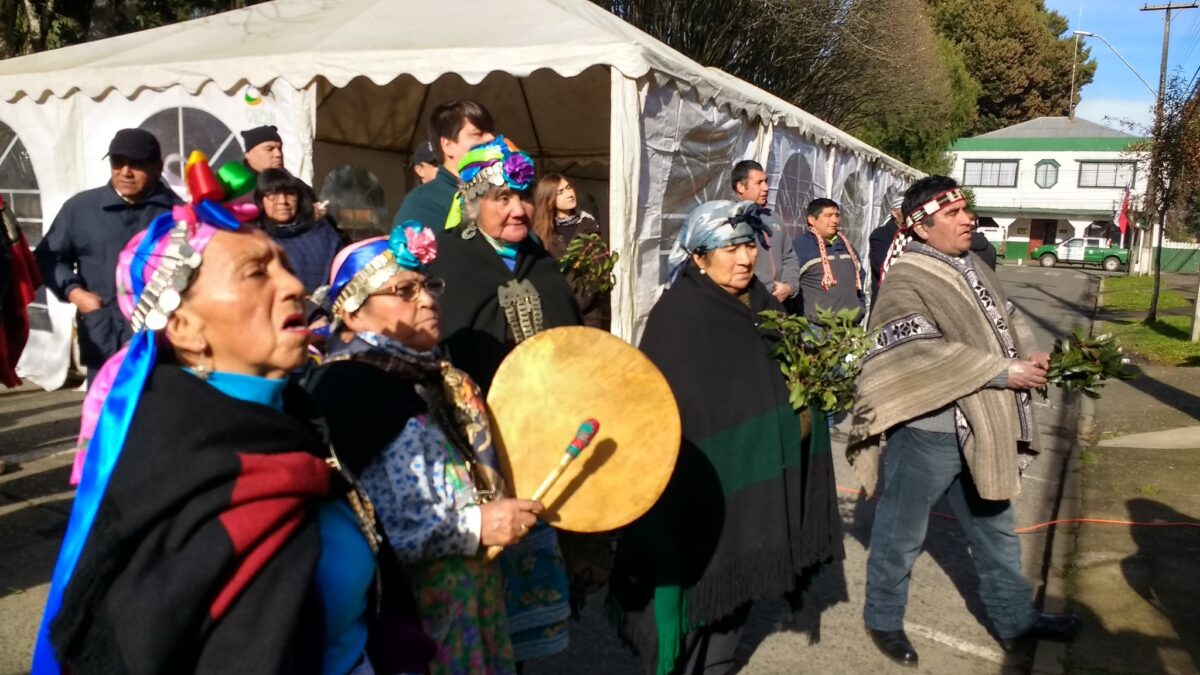
Representatives of the Mapuche, Lonko and Machi peoples take part in the raising of the flag in the Plaza de Armas in Vilcún, 700 km south of Santiago, in one of the many events held in Chile every Jun. 24, declared a national holiday for We Tripantu (new sunrise), the Mapuche New Year. CREDIT: Mirna Concha/IPS

Representatives of the Mapuche, Lonko and Machi peoples take part in the raising of the flag in the Plaza de Armas in Vilcún, 700 km south of Santiago, in one of the many events held in Chile every Jun. 24, declared a national holiday for We Tripantu (new sunrise), the Mapuche New Year. CREDIT: Mirna Concha/IPS

Business leaders unhappy

This process is of great concern to the business leaders grouped in the Confederation of Production and Commerce (CPC), whose board, headed by Juan Sutil, met several times with Mapuche representative Elisa Loncón, who was president of the convention until January, and her successor, María Elisa Quinteros.

The CPC was behind numerous Popular Standards Initiatives seeking to include its positions in the debate. It invited everyone to support these initiatives “that defend the values of freedom of thought and free enterprise,” among others, in order to achieve “a robust democracy” with public-private collaboration.

The CPC gathered 507,852 signatures and was able to submit 16 initiatives with its views on the constituent process. Three of them have already been rejected: “Free enterprise”, “Economic model, freedom of entrepreneurship and promotion of small and medium-sized enterprises”, and “Water for all”. One more is still being processed: “Towards sustainable mining for Chile”.

Business leaders have raised the tone of their opposition to the convention, which they accuse of distancing itself from the real Chile and from the work for a constitution for all.

“I am concerned that the constitution that is being drafted is not generating the proper balances and will not be a constitution that takes into account the sensibilities of all Chileans,” said Sutil.

Those sensitivities, he said, are especially from “a minority sector, which could be the center right, the right and even people from the center within the convention itself who are not being taken into consideration at all,” he told a local radio station.

“Chile is much more than what the constitutional convention reflects. The correlation of forces is very different in the real Chile than what is happening in the convention,” he argued.

According to Sutil, criticism of the convention is widespread and “this is bad not only because it jeopardizes the process, but also because it jeopardizes the future of the country from an institutional point of view, and from the point of view of its development and growth.”

Forestry companies own approximately 1.9 million hectares in an enormous area in the south, across three of the country’s regions. A significant part of these hectares are the ancestral lands of indigenous peoples.

Catalina Marileo and Luis Aillapán, a Mapuche couple, stand in front of their home in Puerto Saavedra in the central Chilean region of La Araucanía. They have been among the many members of native peoples tried under an anti-terrorism law inherited from the dictatorship for acts such as, in their case, opposing the military for building a road on their land. Now Chile could be declared a plurinational State. CREDIT: Marianela Jarroud/IPS

Catalina Marileo and Luis Aillapán, a Mapuche couple, stand in front of their home in Puerto Saavedra in the central Chilean region of La Araucanía. They have been among the many members of native peoples tried under an anti-terrorism law inherited from the dictatorship for acts such as, in their case, opposing the military for building a road on their land. Now Chile could be declared a plurinational State. CREDIT: Marianela Jarroud/IPS

Precedents of a truth commission

The Historical Truth and New Deal with Indigenous Peoples Commission, created by then president Ricardo Lagos in 2001 and composed of 24 members with cross-cutting representation, found that 500,000 hectares were awarded to indigenous peoples between 1884 and 1929. This was verified after reviewing 413 titles issued in that time span.

The purpose of the Commission was to “correct the historical invisibility of native peoples, recognize their identity, repair the damage done to them and contribute to the preservation of their culture.”

In its final report, in 2003, the Commission proposed a hundred measures. In the area of land, it called for protecting lands belonging to indigenous peoples, demarcating and titling ancestral lands of native communities, and establishing a land reclamation mechanism.

Regarding natural resources, it proposed recognizing the indigenous peoples’ right of ownership, use, administration and benefit, the preferential right in State concessions, and the right of use, management and conservation.

So far, the greatest gesture by the State for the mistreatment of indigenous peoples was made by the current United Nations High Commissioner for Human Rights Michelle Bachelet, who as president of Chile (2006-2010 and 2014-2018) apologized in June 2017 to the Mapuche in a solemn official act for “the errors and horrors” committed against them.

Namuncura believes that a pending task is “to reach a political agreement with the large forestry companies so that a part of these lands, which today are their property, are returned to the indigenous peoples through a long-term political and financial commitment, with the possibility of considering the value of this restitution.”

The wording already approved for the first draft will now be analyzed by the Harmonization Commission, which will ensure “the concordance and coherence of the constitutional norms approved by the plenary.”

The version that emerges from that process will be voted by the plenary which, by two thirds, will define the text to be voted on by all Chileans in the referendum.

  Source

Changing a System that Exploits Nature and Women, for a Sustainable Future

Active Citizens, Civil Society, Climate Action, Climate Change, Conferences, Environment, Gender, Global Governance, Headlines, Human Rights, Indigenous Rights, IPS UN: Inside the Glasshouse, Latin America & the Caribbean, Regional Categories, Women & Climate Change

Women & Climate Change

Peruvian farmer Hilda Roca, 37, stands in her agro-ecological garden in Cusipata, a town located at more than 3,300 meters above sea level in the highlands of Cuzco, where she grows vegetables for her family and sells the surplus with the support of her adolescent daughter and son. CREDIT: Mariela Jara/IPS

Peruvian farmer Hilda Roca, 37, stands in her agro-ecological garden in Cusipata, a town located at more than 3,300 meters above sea level in the highlands of Cuzco, where she grows vegetables for her family and sells the surplus with the support of her adolescent daughter and son. CREDIT: Mariela Jara/IPS

LIMA, Mar 7 2022 (IPS) – “Pachamama (Mother Earth) is upset with all the damage we are doing to her,” says Hilda Roca, an indigenous Peruvian farmer from Cusipata, in the Andes highlands of the department of Cuzco, referring to climate change and the havoc it is wreaking on her life and her environment.


From her town, more than 3,300 meters above sea level, she told IPS that if women were in power equally with men, measures in favor of nature that would alleviate the climate chaos would have been approved long ago. “But we need to fight sexism so that we are not discriminated against and so our rights are respected,” said the Quechua-speaking farmer.

The link between climate change and gender is the focus of the United Nations’ celebration of this year’s International Women’s Day, Mar. 8, under the theme “Gender equality today for a sustainable tomorrow”.

The aim is to “make visible how the climate crisis is a problem that is closely related to inequality, and in particular to gender inequality, which is expressed in an unequal distribution of power, resources, wealth, work and time between women and men,” Ana Güezmes, director of the Gender Affairs Division of the Economic Commission for Latin America and the Caribbean (ECLAC), told IPS.

Latin America is highly vulnerable to the climate crisis despite the fact that it emits less than 10 percent of the greenhouse gases that are warming the planet.

In addition, climate injustice has a female face in the region: lower-income population groups, where the proportion of women is higher, are more exposed to climate effects due to their limited access to opportunities, despite the fact that they are less responsible for emissions.

The extreme poverty rate in the region increased from 13.1 percent to 13.8 percent of the population – from 81 to 86 million people – between 2020 and 2021, according to data released by ECLAC in January. Women between 25 and 59 years of age are the most affected compared to their male counterparts. This situation is worse among indigenous and rural populations, who depend on nature for their livelihoods.

These aspects were highlighted at ECLAC’s 62nd Meeting of the Presiding Officers of the Regional Conference on Women, held Jan. 26-27, whose declaration warns that women and girls affected by the adverse impacts of climate change and disasters face specific barriers to access to water and sanitation, health and education services, and food security.

And it is women who are mainly responsible for feeding their families, fetching water and firewood, and taking care of the vegetable garden and animals.

“That is why we maintain that the post-pandemic recovery must be transformative in terms of sustainability and equality,” Güezmes emphasized from ECLAC headquarters in Santiago, Chile.

To this end, she said, this recovery “must untie the four structural knots of gender inequality that affect the region so much: socioeconomic inequality and poverty; the sexual division of labor and the unjust organization of caregiving; the concentration of power and patriarchal, discriminatory and violent cultural patterns; and the predominance of the culture of privilege.”

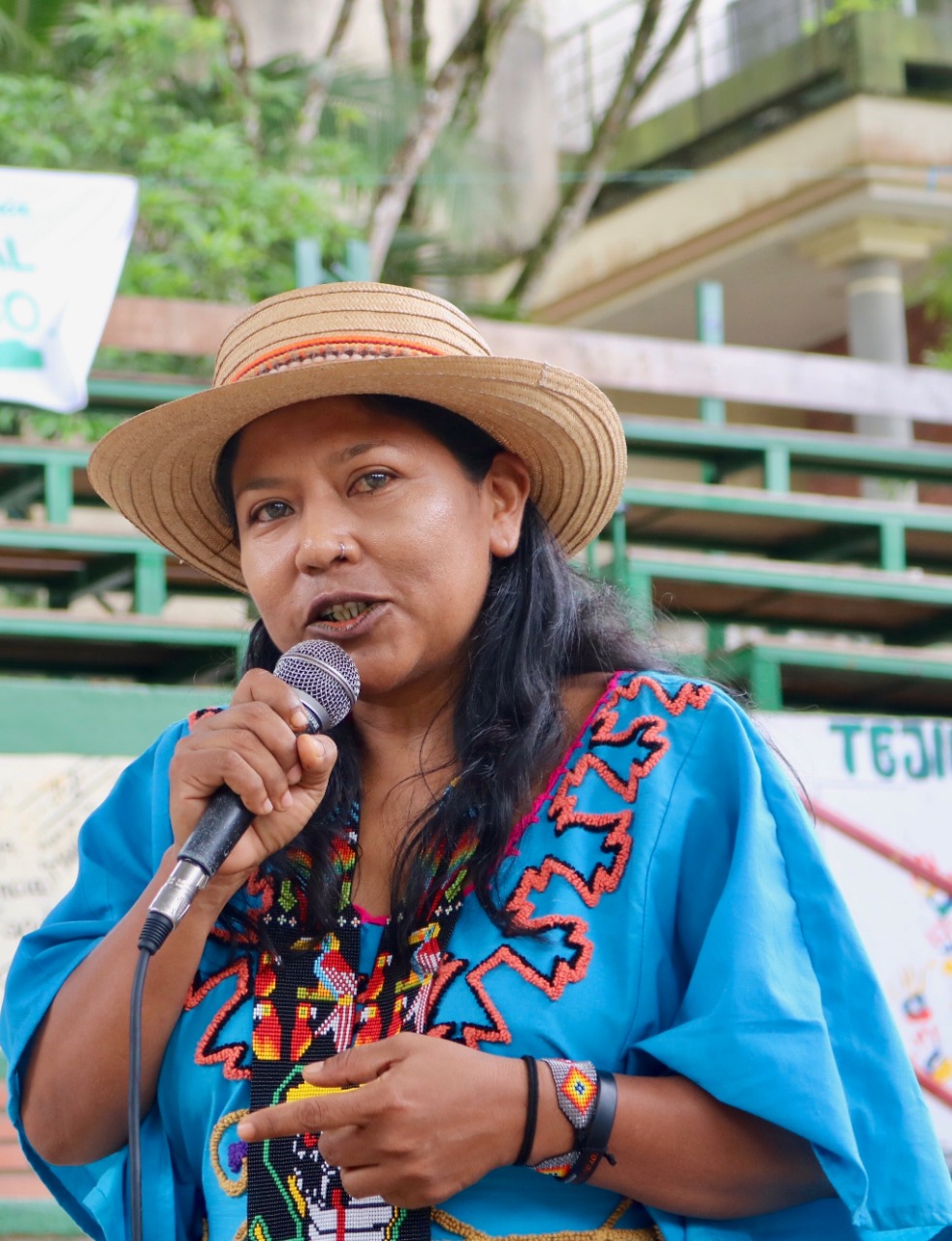
Luz Mery Panche, an indigenous leader of the Nasa people of Colombia. : Courtesy of Luz Mery Panche

Luz Mery Panche, an indigenous leader of the Nasa people of Colombia. : Courtesy of Luz Mery Panche

Reconciling with Mother Earth

Luz Mery Panche, an indigenous leader of the Nasa people, discussed the need to incorporate a gender perspective into the climate crisis. She talked to IPS from San Vicente del Caguán, in the department of Caquetá, in the Amazon region of Colombia, a country facing violent attacks on defenders of land and the environment.

For her, more than sustainable, “it is about moving towards a sustainable future.”

“We need to change the conditions that have generated war and chaos in the country, which is due to the hijacking of political and economic power by an elite that has been in the decision-making spaces since the country emerged 200 years ago,” she said.

Panche is a member of the National Ethnic Peace Coordination committee (Cenpaz) and in that capacity is part of the special high-level body with ethnic peoples for the implementation of the peace agreement in her country. She is a human rights activist and a defender of the Amazon rainforest.

She argued that to achieve a sustainable future “we must reconcile with Mother Earth and move towards the happy, joyful way of life that we deserve as human beings.”

This, she said, starts by changing the economic model violently imposed on many areas without taking into account the use of the soil, its capacities and benefits; by changing concepts of economy and the educational model; and by organizing local economies and focusing on a future of respect, solidarity and fraternity.

Panche said that in order to move towards this model, women “must have informed participation regarding the effects of climate change.

“Although we prefer to call Mother Earth’s fever ‘global warming’. And it is up to us to remember to make decisions that put us back on the ancestral path of harmony and balance, what we call returning to the origin, to the womb, to improve coexistence and the sense of humanity,” she said.

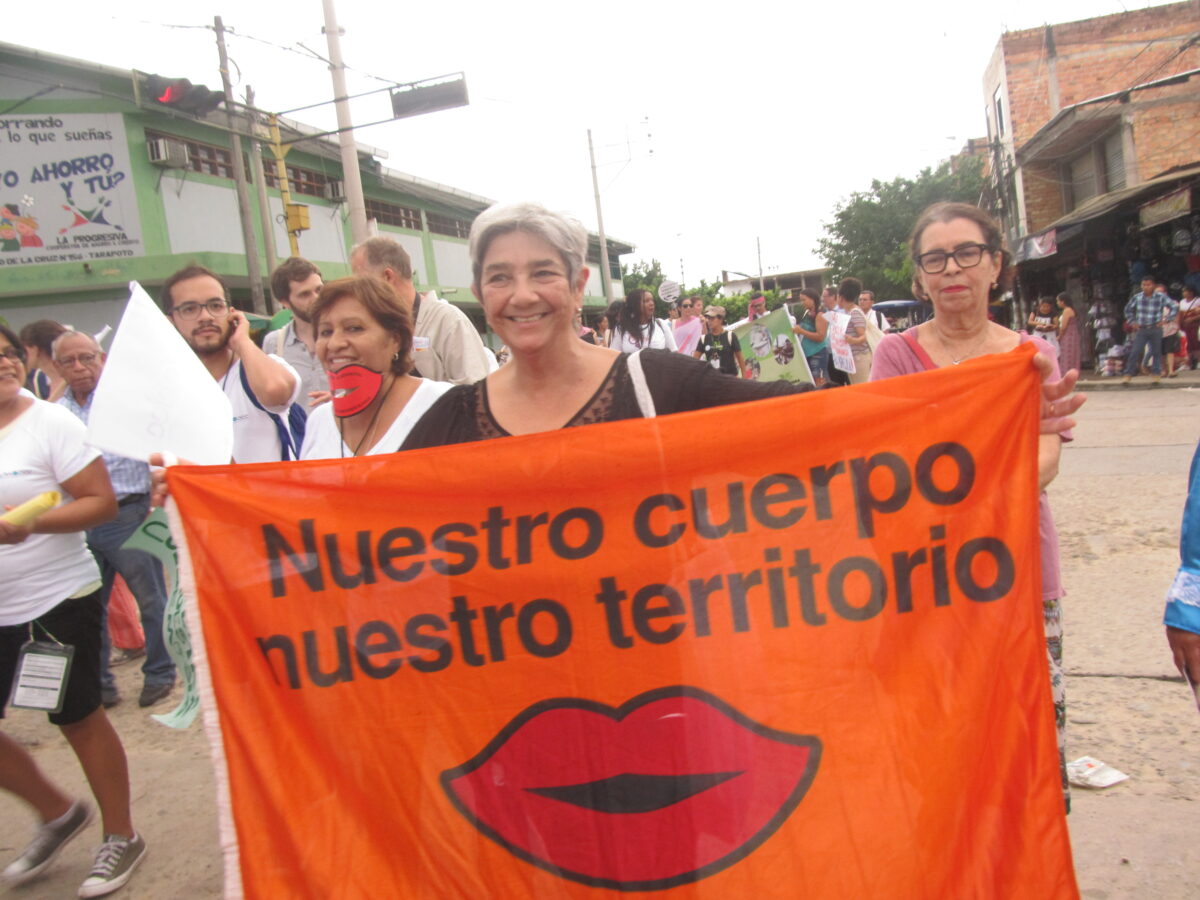
Uruguayan ecofeminist Lilian Celiberti carries a banner reading "Our body, our territory" in the streets of Tarapoto, a city in the central Peruvian jungle, during an edition of the Pan-Amazon Social Forum. CREDIT: Mariela Jara/IPS

Uruguayan ecofeminist Lilian Celiberti carries a banner reading “Our body, our territory” in the streets of Tarapoto, a city in the central Peruvian jungle, during an edition of the Pan-Amazon Social Forum. CREDIT: Mariela Jara/IPS

Changing times: another kind of coexistence with nature and equality

Lilian Celiberti, Uruguayan ecofeminist and founder of the non-governmental Cotidiano Mujer and Colectivo Dafnias, told IPS from Montevideo that governments have the tools to work on gender equality today in order to have a sustainable future tomorrow, as this year’s Mar. 8 slogan states.

But against this, she said, there are economic interests at play that maintain a development proposal based on growth and extreme exploitation of nature.

She called for boosting local economies and agroecology among other community alternatives in the Latin American region that run counter to the dominant government approach.

“But I believe that we are at a very complex crossroads and that only social participation will be able to find paths of multiple, diverse participation and collective sustainability that incorporate care policies and awareness of the eco-dependence of human society,” she said.

Celiberti said “we are on a planet of finite resources and we have to generate a new relationship with nature, but I see that governments are far from this kind of thinking.”

ECLAC’s Güezmes emphasized that social movements, especially those led by young indigenous and non-indigenous women in the region, have exposed the multiple asymmetries and inequalities that exist.

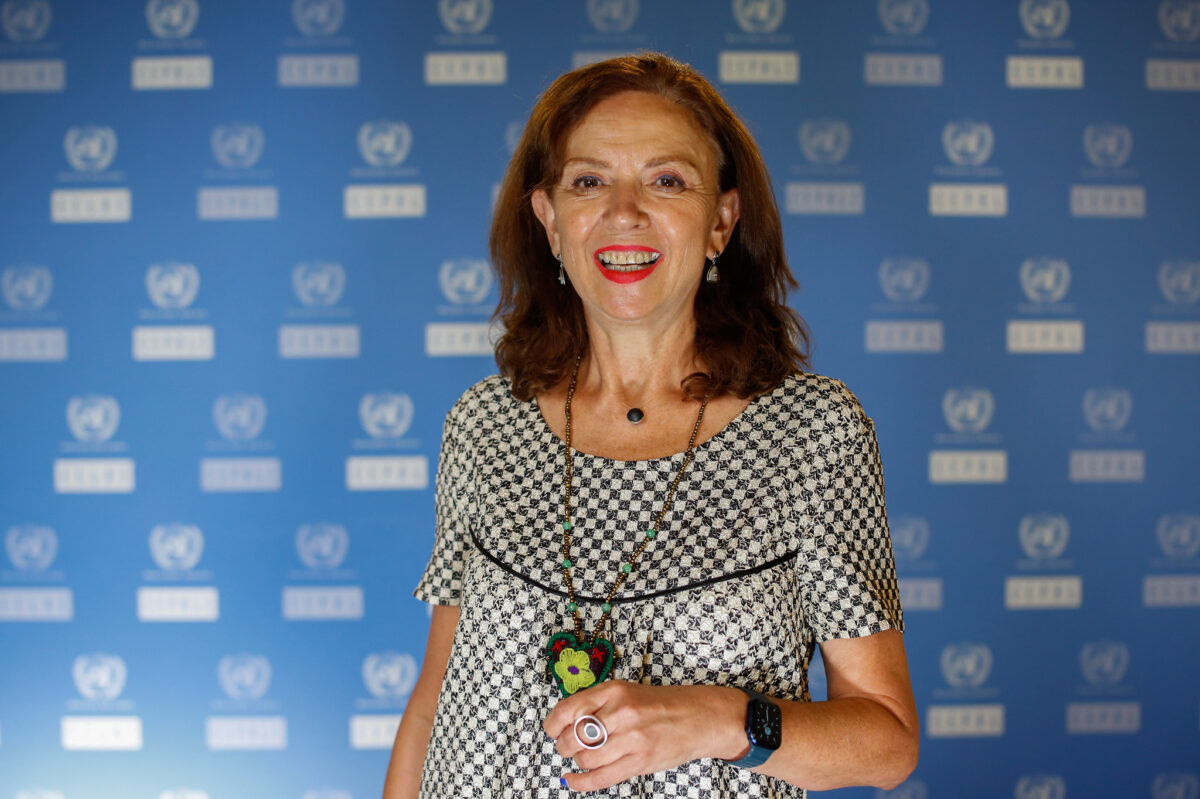
Ana Güezmes is director of the Gender Division of the Economic Commission for Latin America and the Caribbean. CREDIT: ECLAC

Ana Güezmes is director of the Gender Division of the Economic Commission for Latin America and the Caribbean. CREDIT: ECLAC

“We have an intergenerational debt, where young women have put at the center of the debate the unsustainability of the current development style that has direct impacts on our future at a global level and direct impacts on their livelihoods, territories and communities,” said Güezmes, who is from Spain and has worked for years within the United Nations in several Latin American countries.

She recognized the contribution of feminist movements that focus on a redistribution of power, resources and time to move towards an egalitarian model that includes the reduction of violence.

And she warned that from a climate perspective, the window of opportunity for action is closing, so we must act quickly, creating synergies between gender equality and climate change responses.

Güezmes said that “we are looking at a change of era” with global challenges that require a profound transformation that recognizes how the economy, society and the environment are interrelated. “To leave no one behind and no woman out, we must advance synergistically among these three dimensions of development: economic, social and environmental,” she remarked.

The expert cited gender equality as a central element of sustainable development because women need to be at the center of the responses. To this end, ECLAC plans to promote affirmative actions that bolster comprehensive care systems, decent work and the full and effective participation of women in strategic sectors of the economy.

She also raised the need to build “a renewed global pact” to strengthen multilateralism and achieve greater solidarity with middle-income countries on issues central to inclusive growth, sustainable development and gender equality.

“We have reiterated the urgent need to advance new political, social and fiscal pacts focused on structural change for equality,” Güezmes stressed.

She stated that in this perspective, the participation of women in all their diversity in decision-making processes is very important, particularly with regard to climate change.

To this end, she remarked, it is necessary to monitor their degree of intervention at the local, national and international levels – where asymmetry persists – and to provide women’s organizations, especially grassroots ones, with the necessary resources to become involved in such spaces.

“It involves strengthening financial flows so that they reach women who are at the forefront of responses to climate change and who are familiar with the situation in their communities, and boosting their capacities so that women from indigenous, native and Afro-descendant peoples participate in decision-making spaces related to the environment to promote the exchange of their ancestral knowledge on adaptation and mitigation measures,” she said.

Güezmes highlighted the contribution of women environmental activists and defenders to democracy, peace and sustainable development. It is necessary to “recognize their contribution to the protection of biodiversity and to development, despite doing so in conditions of fragility and exploitation and having less access to land, productive resources and their control,” she said.

For her part, Roca, who like other local women in the Peruvian Andes highlands practices agroecology to adapt to climate change and reconcile with Pachamama, calls for their voices to be heard.

“We have ideas and proposals and they need to be taken into account to improve the climate and our lives,” the indigenous farmer said.

  Source

Rural Women in Peru Seed Water Today to Harvest It Tomorrow

Active Citizens, Civil Society, Climate Action, Climate Change, Combating Desertification and Drought, Development & Aid, Editors’ Choice, Environment, Featured, Food and Agriculture, Gender, Headlines, Integration and Development Brazilian-style, Latin America & the Caribbean, Population, Poverty & SDGs, Projects, Regional Categories, Water & Sanitation, Women & Climate Change

Water & Sanitation

Women and men from the rural community of Sachac, at more than 3500 meters above sea level, build a kilometer-long infiltration ditch to capture rainwater and use it to irrigate crops in Cuzco, in Peru’s Andes highlands. CREDIT: Janet Nina/IPS

Women and men from the rural community of Sachac, at more than 3500 meters above sea level, build a kilometer-long infiltration ditch to capture rainwater and use it to irrigate crops in Cuzco, in Peru’s Andes highlands. CREDIT: Janet Nina/IPS

CUZCO, Peru , Dec 22 2021 (IPS) – “When I was a little girl we didn’t suffer from water shortages like we do now. Today we are experiencing more droughts, our water sources are drying up and we cannot sit idly by,” Kely Quispe, a small farmer from the community of Huasao, located half an hour from Cuzco, the capital of Peru’s ancient Inca empire, told IPS.


She is one of the 80 members of the Agroecological School of the Flora Tristan Peruvian Women’s Center, a non-governmental institution that has worked for the recovery of water sources through traditional techniques known as seeding and harvesting water in this part of the southern Andean region of Cuzco.

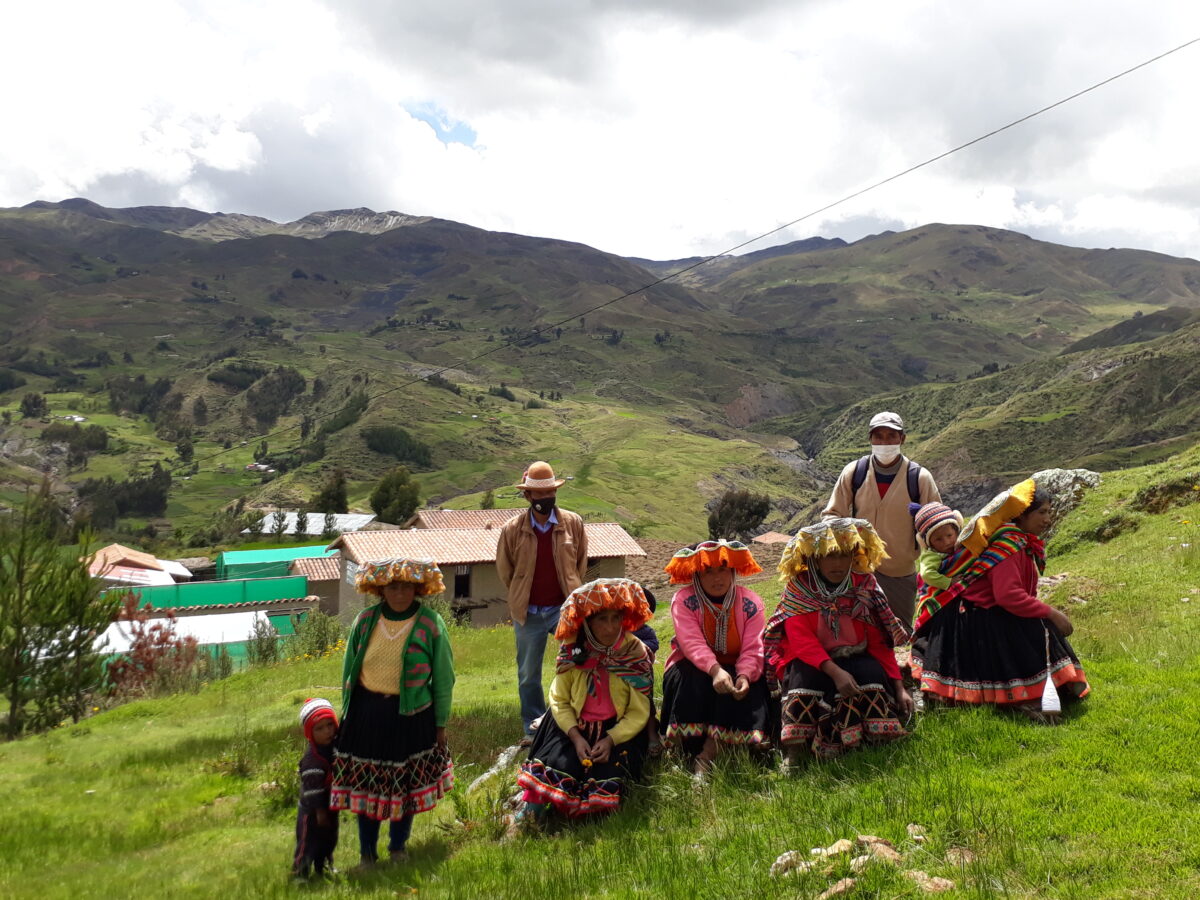
Muñapata, Huasao and Sachac are the three rural Quechua-speaking communities in the province of Quispicanchi, located between 3150 and 3800 meters above sea level, that have so far benefited from the project. The feminist-oriented institution promotes solutions based on nature and community work to address the problem of water scarcity and inadequate water use practices.

“We want to boost water security as well as gender equality because they are two sides of the same coin,” Elena Villanueva told IPS. On Dec. 14 she presented in this city the results of the initiative whose first phase was carried out in 2020 and 2021, with the support of the Basque Development Cooperation Agency and Mugen Gainetik, an international association for cooperation with countries of the developing South also based in Spain’s northern Basque region.

According to the National Water Authority (ANA), Peru is the eighth country in the world in terms of water availability, with a rich hydrodiversity of glaciers, rivers, lakes, lagoons and aquifers. However, various factors such as inefficient management of water and uneven territorial distribution of the population, in addition to climate change, make it impossible to meet consumption demands.

“The lack of water severely affects families in rural areas because they depend on small-scale agriculture for their livelihoods. The melting of glaciers as well as the increase in the frequency and intensity of droughts due to climate change are reducing water availability,” Villanueva explained.

This impact, she said, is not neutral. Because of the gender discrimination and social disadvantages they face, it is rural women who bear the brunt, as their already heavy workload is increased, their health is undermined, and their participation in training and decision-making spaces is further limited.

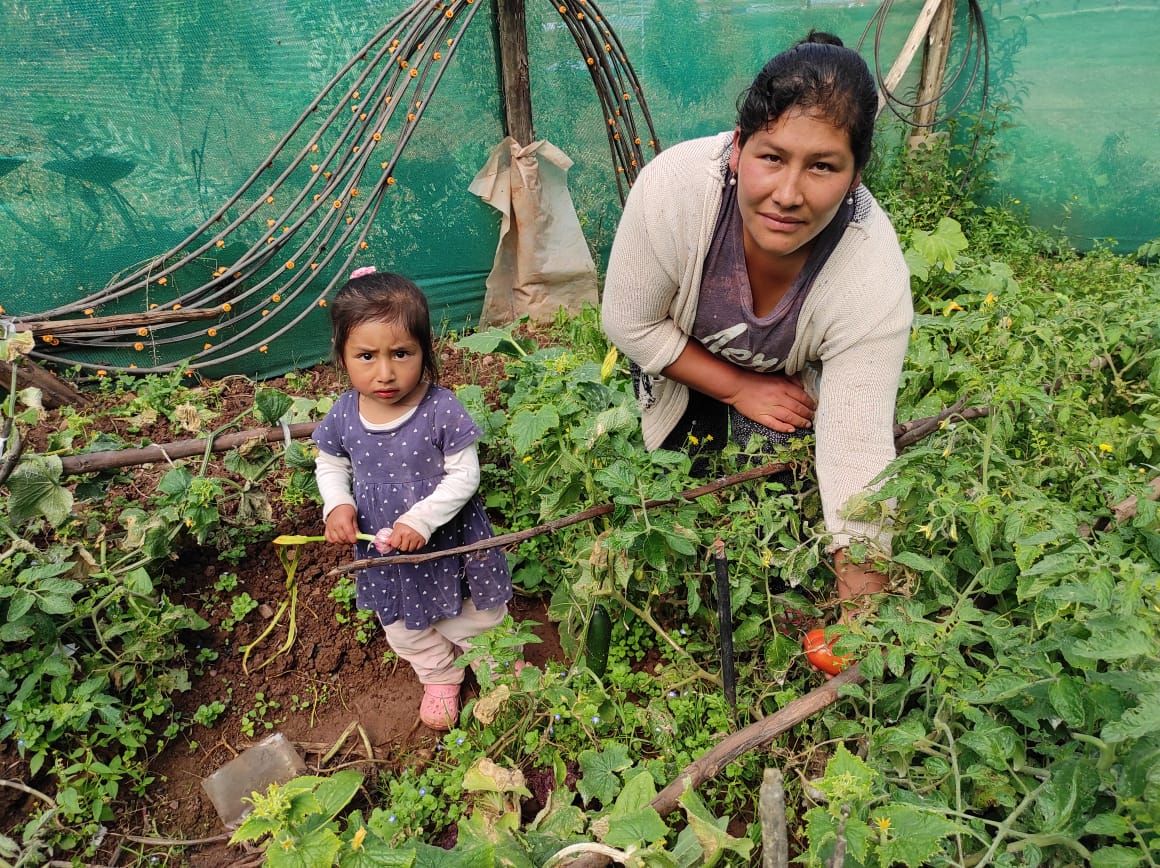
Kely Quispe, a farmer trained at the Flora Tristán Center's Agroecological School, holds a tomato in her organic garden in the farming community of Huasao. Her vegetable production depends on access to water for irrigation, but climate change has made water more scarce in the Andes highlands region of Cuzco in southern Peru. CREDIT: Janet Nina/IPS

Kely Quispe, a farmer trained at the Flora Tristán Center’s Agroecological School, holds a tomato in her organic garden in the farming community of Huasao. Her vegetable production depends on access to water for irrigation, but climate change has made water more scarce in the Andes highlands region of Cuzco in southern Peru. CREDIT: Janet Nina/IPS

“Moreover, although they are the ones who use water to ensure food, hygiene and health, and to irrigate their crops, they are not part of the decision-making with regard to its management and distribution,” she stressed.

The expert said that precisely in response to demand by the women farmers at the Agroecological School, where they receive technical and rights training, they are focusing on reviving water harvesting techniques used in ancient Peru, while promoting the equal participation of women in rural communities in the process.

She said that approximately 700 families living in poverty, some 3,500 people – about 11 percent of the population of the three communities – will benefit from the works being carried out.

Harvesting water

So far, these works are focused on the afforestation of 15 hectares and the construction of six “cochas” – the name for small earthen ponds, in the Quechua language – and an infiltration ditch, as part of a plan that will be expanded with other initiatives over the next two years.

The ditch, which is one kilometer long in 10-meter stretches, 60 centimeters deep and 40 centimeters wide and is located in the upper part of the community, collects rainwater instead of letting it run down the slopes.

The technique allows water to infiltrate slowly in order to feed natural springs, high altitude wetlands or small native prairies, as well as the cochas.

The mayor of the rural community of Sachac, Eugenio Turpo Quispe (right), poses with other leaders of the village of 200 families who will benefit from the forestation works and the construction of small reservoirs and infiltration ditches that will increase the flow of water in this highlands area that is suffering from prolonged droughts due to climate change. CREDIT: Mariela Jara/IPS

The mayor of the rural community of Sachac, Eugenio Turpo Quispe (right), poses with other leaders of the village of 200 families who will benefit from the forestation works and the construction of small reservoirs and infiltration ditches that will increase the flow of water in this highlands area that is suffering from prolonged droughts due to climate change. CREDIT: Mariela Jara/IPS

In their communal work, villagers use local materials and greenhouse thermal blankets to help retain water. In addition, they have used extracted soil to raise the height of the ditch, to keep rainwater from running over the top.

Although the ditch has been receiving rainwater this month (the rainy season begins in November-December), the ecosystem impact is expected to be more visible in about three years when the cocha ponds have year-round water availability, helping villagers avoid the shortages of the May-October dry season.

Several community members explained to IPS that they will now be able to harvest water from the ditch while at the same time caring for the soil, because heavy rain washes it away and leaves it without nutrients. Some 150 agricultural plots will also benefit from a sprinkler irrigation system, thanks to the project.

Since agriculture is the main livelihood of the families and this activity depends on rainwater, the main impact will be the availability of water during the increasingly prolonged dry periods to irrigate their crops, ensure harvests and avoid hunger, for both villagers and their livestock.

Eucalyptus and pine, huge consumers of water

The mayor of the Sachac community, Eugenio Turpo Quispe, told IPS that this is the first time that water seeding and harvesting practices have been carried out in his area. “We had not had the opportunity before; these works have begun thanks to the women who proposed forestation and the construction of cochas and ditches,” he said.

The local leader lamented that due to misinformation, two decades ago they planted pine and eucalyptus in the highlands of his community. “They have dried up our water sources, and when it rains the water disappears, it does not infiltrate. Now we know that out of ten liters of rain that falls on the ground, eight are absorbed by the eucalyptus and only two return to the earth,” he explained during the day that IPS spent in the community.

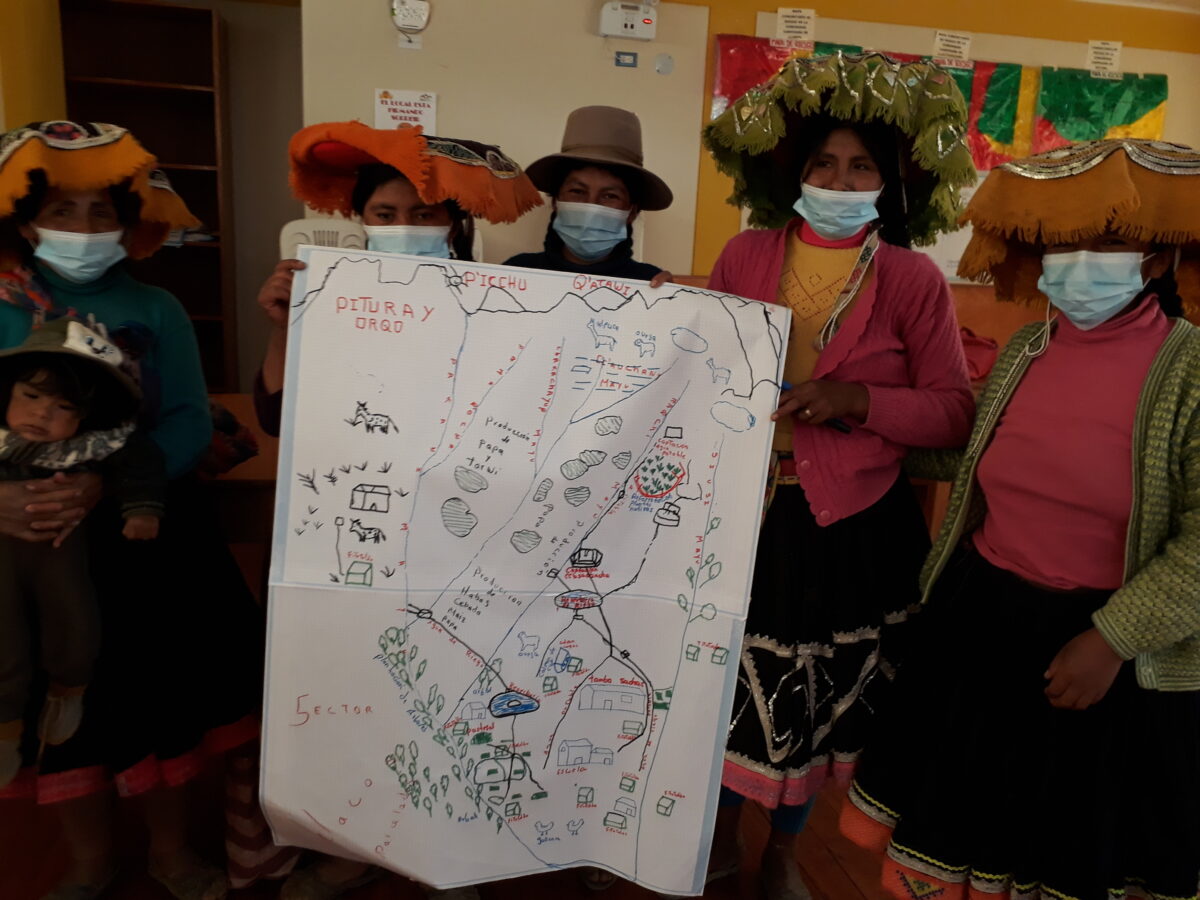
Women farmers from the rural community of Sachac show the map of water sources in their area and the uses for irrigation of their crops, for human consumption and household needs, as well as watering their animals, which they cannot satisfy throughout the year due to the increasingly long and severe dry season. CREDIT: Mariela Jara/IPS

Women farmers from the rural community of Sachac show the map of water sources in their area and the uses for irrigation of their crops, for human consumption and household needs, as well as watering their animals, which they cannot satisfy throughout the year due to the increasingly long and severe dry season. CREDIT: Mariela Jara/IPS

Turpo Quispe said they had seen forestation and construction of cochas and ditches in other communities, but did not know how to replicate them, and that only through the Flora Tristán Center’s project have they been able to implement these solutions to tackle the serious problem of shrinking water sources.

In Sachac, the three techniques have been adopted with the participation of women and men in communal work that began at six in the morning and ended at four in the afternoon. “Side by side we have been planting native plants, digging ditches and hauling stones for the cochas,” the mayor said proudly.

In this community, 9,000 seedlings of queuñas (Polylepis) and chachacomos (Escallonia Resinosas) – tree species that were used in the times of the ancient Inca empire – were planted. “These trees consume only two liters of rainwater and give eight back to Pachamama (Mother Earth),” Turpo Quispe said. As part of the project, the community has built fences to protect crops and has relocated grazing areas for their animals.

“We have planted seedlings and in 10 or 15 years our children and grandchildren will see all our hills green and with living springs so that they do not suffer a lack of water,” the mayor said.

Kely Quispe from the community of Huasao is equally upbeat: “With water we can irrigate our potatoes, corn and vegetables; increase our production to have enough to sell and have extra money; take care of our health and that of the whole family, and prevent the spread of covid.”

“But just as we use water for life, it is also up to us to participate on an equal footing with men in irrigation committees and community councils to decide how it is distributed, conserved and managed,” she added.

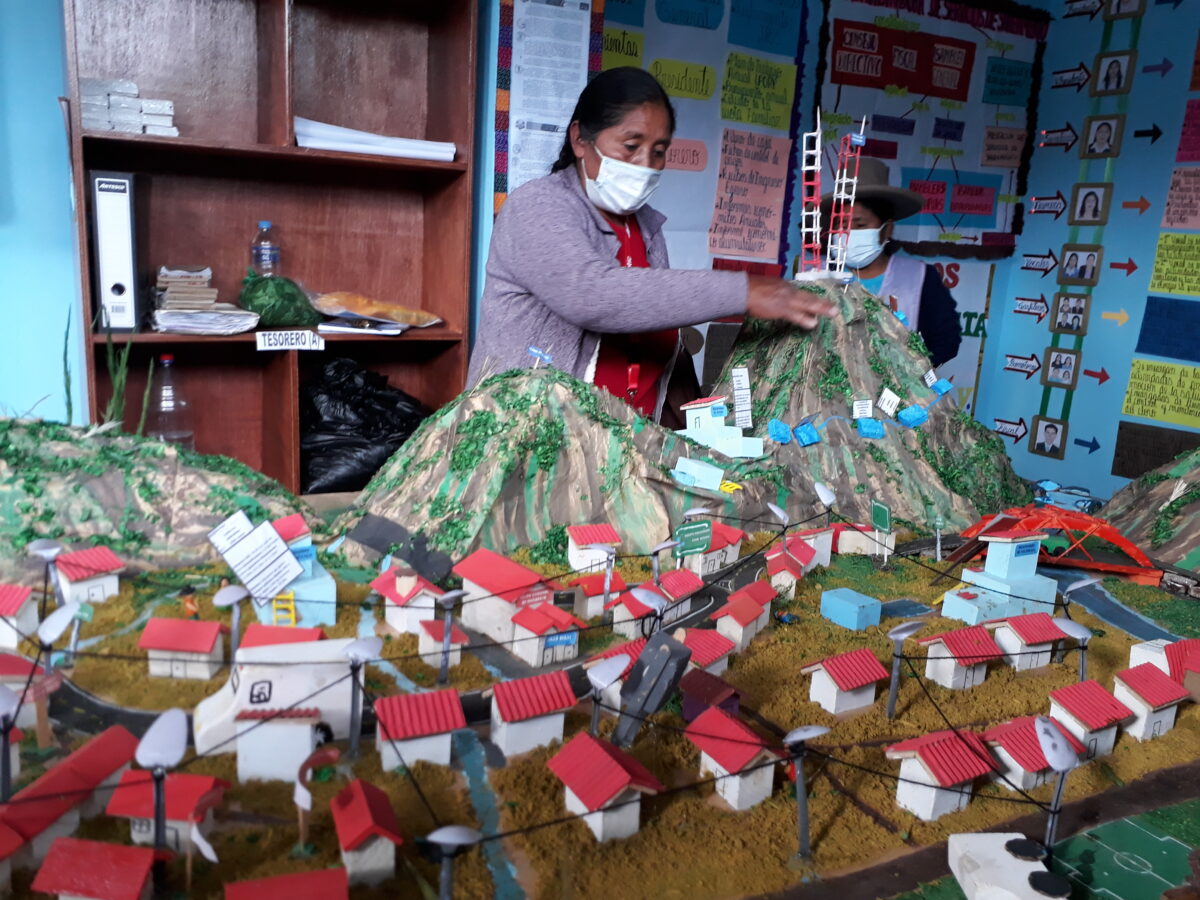
A model shows the water sources in the rural community of Muñapata in the Cuzco region, in Peru’s southern highlands. It was made by local women and men who built a system based on ancestral techniques for the collection and management of water, as increasing drought threatens their lives and crops. CREDIT: Mariela Jara/IPS

A model shows the water sources in the rural community of Muñapata in the Cuzco region, in Peru’s southern highlands. It was made by local women and men who built a system based on ancestral techniques for the collection and management of water, as increasing drought threatens their lives and crops. CREDIT: Mariela Jara/IPS

The decade of water security

Villanueva of the Flora Tristán Center said it was important for the country’s local and regional authorities to commit to guaranteeing water security in rural areas within the framework of the Sustainable Development Goals (SDGs).

The International Decade for Action: Water for Sustainable Development was declared for 2018-2028 by the United Nations and SDG6 is dedicated to water and sanitation, to ensure universal and equitable access for all, protect and restore water-related ecosystems, and support the participation of local communities in improving management and sanitation.

“At the national level, public policies aimed at seeding and harvesting water should be strengthened because they revive the communities’ ancestral knowledge, involving sustainable practices with low environmental impact that contribute to guaranteeing the food security of families,” she said.

However, Villanueva remarked, in order to achieve their objectives, these measures must not only promote equal participation of men and women, but must also be accompanied by actions to close the gender gap in education, access to resources, training and violence that hinder the participation and development of rural women.

  Source

Ecuador and the Pandora Papers: Death Threats and Impunity

Civil Society, Crime & Justice, Economy & Trade, Headlines, Latin America & the Caribbean, TerraViva United Nations

Opinion

MEXICO CITY, Dec 20 2021 (IPS) – In a ceremony in early October, the president of Ecuador and my opponent in the presidential elections, Guillermo Lasso, issued a warning to those “daring who seek to scrutinize” his assets. He was referring to the Pandora Papers published by the International Consortium of Investigative Journalists (ICIJ), which revealed how dozens of world leaders – including Lasso – hid billions of dollars to avoid paying taxes.


His threatening words were directed primarily at me, because of my knowledge of the offshore underworld and my determination to investigate him despite receiving death threats.

In 2017, Ecuador approved an anti-corruption law prohibiting public servants from holding assets in tax havens, directly or indirectly. This term was there to avoid the use of opaque and complex financial structures like trusts, foundations or partnerships. Last year I formally challenged Lasso’s candidacy for that reason, but he then signed an affidavit in which he claimed not to have properties in tax havens and the electoral commission agreed with him.

That led me to drop this issue and when I lost the election in February, I even gave a concession speech and spoke by phone to congratulate him. He offered me to put an end to the political persecution against progressives that former president Lenín Moreno had started.

However, the Pandora Papers revealed that Lasso had in fact transferred shares in limited liability companies representing 130 Florida properties from Panama to two trusts in the state of South Dakota. Lasso also recognised the existence of 14 entities that had been hidden from the Ecuadorian tax authorities.

Lasso denied having ties to these entities before assuming the presidency, including Banco Banisi in Panama. However, an investigation by the Latindadd organisation revealed that Lasso, a day before signing the affidavit, transferred his shares from Banco Banisi to the Banisi International Foundation, a new private interest foundation where his children are nominal beneficiaries but without any decision-making powers.

After the Pandora Papers were released, a large majority in parliament ordered an investigation. Official institutions cooperated little or nothing, claiming that it is confidential information while Lasso refused to attend the hearings. When the parliamentary commission approved the report linking Lasso to tax havens, his government immediately attacked the commission, and the Prosecutor’s Office launched a criminal investigation against the parliamentarians.

Soon afterwards, I started receiving threats and intimidation, not for having been a presidential candidate, but for insisting in investigating Lasso and speaking in the media about this case as an economic expert in offshore banking. Government supporters then launched coordinated troll attacks on social media, spreading false news about me, death threats, and insults.

A member of parliament linked to Lasso accused me of money laundering based on a false meme widely disseminated on social media. And criminal investigations were launched against me based on false news, also involving my retired parents and all former progressive candidates. Dozens of national and international civil society organisations, including the Financial Transparency Coalition, published a statement of support which I deeply appreciate.

But unfortunately, nothing has changed.

On December 8, the Comptroller General concluded that Lasso had no offshore interests since it did not consider South Dakota a tax haven, despite being widely recognised for this. But the blockade of the investigation against Lasso did not end there. That same day, a majority of the National Assembly of Ecuador decided not to impeach the president, referring their investigation to other state institutions, but asked him to go to parliament and give an explanation, which he refused to do.

Ironically, Lasso – along with the presidents of other countries such as Kenya and Chile, whose leaders were also revealed in the Pandora Papers to have hidden assets in tax havens – was invited to the recent ‘Summit for Democracy’ organised by the United States. During the summit the creation of a beneficial ownership registry was announced, including for South Dakota trusts, as well as anti-fraud measures on real estate which could impact Lasso, but it’s still uncertain whether these commitments by the US and other countries will become reality.

In total, $7 trillion is hidden in secret jurisdictions and tax havens, equivalent to 10% of global revenues, according to the UN High-Level Panel on International Financial Accountability, Transparency and Integrity. Meantime especially developing countries are fighting the resurgent Covid-19 pandemic and its economic impacts, struggling to provide basic social protection to its citizens and purchase vaccines.

So clearly the problem of tax evasion and financial opacity, and money being funneled by powerful individuals to tax havens, is an issue that not only affects my country, but affects everyone. Fighting for financial transparency is a fight for truth and social justice that we cannot afford to give up.

Andrés Arauz is an Ecuadorian economist and candidate for President in the 2021 elections, currently based in Mexico City where he is a Doctoral Fellow at the National Autonomous University of Mexico, UNAM.

  Source