Thales to recruit more than 9,000 new employees in 2026

DOHA, Qatar, 18 February 2026-/African Media Agency(AMA)/- Thales, world leader in high technologies for Defence, Aerospace and Cybersecurity & Digital, plans to recruit more than 9,000 employees worldwide in 2026.

These hiring prospects follow the recruitment of 8,800 employees in 2025, exceeding the initially announced target of 8,000 new talent. Over the past 5 years, Thales has recruited at least 8,000 people per year to support the growth dynamics of its three business sectors.

In 2025, Thales received 1.4 million applications worldwide, exceeding its record of one million CVs received in 2024. The Universum ranking positioned Thales in first place amongst the most attractive employers for engineering school students in France (and second place in 2024).

Strengthening the diversity of teams and management committees remains a priority for the Group. In 2025, women accounted for 32% of all recruitments. 69% of the Group’s management committees are composed of at least 4 women and Thales aims to reach 75% in 2026.

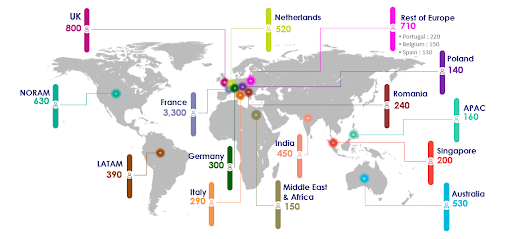
In 2026, Thales plans to recruit 150 people in the Middle East and Africa with 60 in the United Arab Emirates and 30 in the Kingdom of Saudi Arabia.

In France, Thales will recruit 3,300 people, including 1,630 in the Ile-de-France, 290 in Brittany, 280 in Nouvelle Aquitaine, 270 in Provence-Alpes-Côte d’Azur, 250 in Occitanie, 220 in Centre-Val de Loire, 180 in Auvergne-Rhône-Alpes and 130 in Pays de la Loire.

In addition to the 9,000 external recruitments, and thanks to the variety of Thales’ three business sectors, roles and geographies, 3,500 employees will benefit from internal mobility. Additionally, the Group’s “Learning Company” approach, with more than 35 internal academies, will enable employees to develop their skills, thereby maintaining Thales’ expertise at the highest level worldwide.

Thales is committed to advancing the integration of people with disabilities, with an employment rate of over 7% in France in 2025.

Around 40% of new arrivals will be assigned to engineering (software and systems engineering, cybersecurity, artificial intelligence, and data) and 25% to industry (technician, operator and engineer positions).

Thales reinforces commitment to inspire and support young talent in Science, Technology, Engineering and Mathematics (STEM)

Thales is dedicated to fostering the careers of young people and places strong emphasis on welcoming apprentices and interns, particularly in France, where it will support 1,700 trainees and 1,600 apprentices from Bac+2 to Bac+5, as well as 1,000 third-year and 500 second-year students in 2026. For these young people, these opportunities serve as a stepping stone to future employment. In 2025, apprentices and interns accounted for 15% of Thales’ recruitment in France.

Through its “Vocation Makers” programme, Thales is actively engaging with young people ages 6 to 18 to spark their interest in science and technology. This is achieved through site visits and educational presentations in schools. In 2025, the Group met with 250,000 students worldwide, ranging from primary to high school levels.

In parallel, Thales has launched the STEM for All’s programme, a scholarship and mentorship initiative in partnership with the French Academy of Technologies. The programme is designed to support and inspire young students from disadvantaged backgrounds who aspire to pursue careers in STEM. In its inaugural year, 40 awards were given in France and Belgium, each including a €5,000 grant and one-year of mentorship from a Thales employee. In 2026, STEM for All will be expanded in 2026 to countries including the Czech Republic, Poland, Greece, Romania, Italy, Germany, the Netherlands, Brazil and South Korea.

“We take great pride in seeing Thales’ appeal grow stronger year after year. The talented individuals who join us are driven by a desire to contribute to the development of sovereign, innovative, and sustainable solutions that the world needs more than ever. Together, we shaping the future by inspiring an increasing number of young people, especially young women, to pursue careers in science and technology.”
Patrice Caine, CEO of Thales

Candidates interested in the positions available at Thales can find out more and apply online at https://www.thalesgroup.com/fr/candidat and here for STEM for All.

Distributed by African Media Agency (AMA) on behalf of Thales

About Thales
Thales (Euronext Paris: HO) is a global leader in advanced technologies in advanced for the Defence, Aerospace and Cyber & Digital sectors. Its portfolio of innovative products and services addresses several major challenges: sovereignty, security, sustainability and inclusion.
The Group invests more than €4 billion per year in Research & Development in key areas, particularly for critical environments, such as Artificial Intelligence, cybersecurity, quantum and cloud technologies.
Thales has more than 83,000 employees in 68 countries. In 2024, the Group generated sales of €20.6 billion.

The post Thales to recruit more than 9,000 new employees in 2026 appeared first on African Media Agency.
The Maravi Post

If Women Farmers were Politicians, the World Would be Fed, says Danielle Nierenberg

Biodiversity, Conferences, Economy & Trade, Environment, Featured, Food and Agriculture, Food Security and Nutrition, Food Sustainability, Gender, Global, Green Economy, Headlines, Health, Humanitarian Emergencies, Natural Resources, TerraViva United Nations, Women & Climate Change, Women in Politics

Food Sustainability

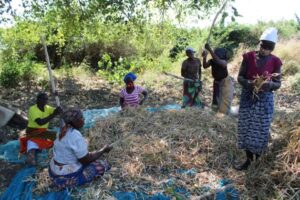
Women produce more than 50 percent of the food in the world but are disadvantaged when it comes to access to resources such as land and financial services. Credit: Busani Bafana, IPS

BULAWAYO, Zimbabwe, Sep 17 2021 (IPS) – Women, key contributors to agriculture production, are missing at the decision table, with alarming consequences, says Food Tank President Danielle Nierenberg in an exclusive interview with IPS.


Giving women a seat at the policymaking table could accelerate Sustainable Development Goals (SDGs) and keep the world fed and nourished. This necessitates a transformation of the currently lopsided global food system, she says.

Food Tank President Danielle Nierenberg.

Nierenberg, a top researcher and advocate on food systems and agriculture, acknowledges that women are the most affected during environmental or health crises. The COVID-19 pandemic disrupted global food production, affecting women farmers and food producers who were already excluded from full participation in agricultural development.

“We still have a long way to go in making sure that policies are not gender blind and include the needs of women at the forefront when mass disasters occur,“ Nierenberg told IPS, adding that policymakers need to understand the needs of farmers and fisherfolk involved in food systems.

“I think it is time we need more people who are involved with agriculture to run for political office because they understand its challenges,” she said. “If we had more farmers in governments around the world, imagine what that would look like. If we had women farmers running municipalities, towns and even countries, that is where change would really happen.”

According to the United Nations Food and Agriculture Organisation (FAO), women contribute more than 50 percent of food produced globally and make up over 40 percent of the agricultural labour force. But while women keep families fed and nourished, they are disadvantaged in accessing critical resources for food production compared to men. They lack access to land, inputs, extension, banking and financial services.

“Until we end the discrimination of women around the globe, I doubt these things will change even though women are in the largest part of the world’s food producers,” said Nierenberg, who co-founded and now heads the global food systems think tank, Food Tank.

Arguing that COVID-19 and the climate crisis were not going to be the last global shocks to affect the world, Nierenberg said women and girls had been impacted disproportionately; hence the need to act now and change the food system. Women have experienced the loss of jobs and income, reduced food production and nutrition and more girls are now out of school.

“It is not enough for me to speak for women around the globe. Women who are actually doing the work need to speak for themselves; they need to be included in these conversations,” Nierenberg said.

“What happens is that in conferences, there are a lot of white men in suits talking on behalf of the rest of the world. But we need the rest of the world, and women included, to be in the room.”

A food system is a complex network of all activities involving the growing, processing, distribution and consumption of food. It also includes the governance, ecological sustainability and health impact of food.

Noting that the COVID-19 pandemic has highlighted invisible issues, like the interconnectedness of our food systems, she said it was urgent to invest in regional and localized food systems that included women and youth. Food Tank and the Barilla Center for Food and Nutrition (BCFN) work collaboratively to investigate and set the agenda for concrete solutions for resetting the food system.

Divine Ntiokam, Food Systems Champion and Founder and Managing Director, Climate Smart Agriculture Youth Network Global (GCSAYN), agrees. While youth are ready to engage in promoting a just and inclusive transformation of rural areas, it was unfortunate they were rarely involved in decision-making, she said. They are excluded from the household level to larger political institutions and companies and need better prospects of financial security to remain in the farming sector.

“Young men and women need to be given special attention in formulating legislation to purchase land and receive proper land rights,” Ntiokam told IPS.

“International donors and governments need to invest in youth, particularly young women and girls, for their meaningful participation along with the food systems value network,” he said.

“Youth need to have a ‘seat at the table’, as they have at the Summit, in terms of decision-making on where governments and international donors invest their resources to make agriculture and food a viable, productive and profitable career.”

Researchers say current food systems are unfair, unhealthy, and inequitable, underscoring the urgency to transform the global food system. According to the FAO, more than 800 million people went to bed hungry in 2020, and scores of others are malnourished.

Jemimah Njuki, Director for Africa at IFPRI and Custodian for the Gender Equality and Women’s Empowerment Lever of the UN Food Systems Summit.

For food systems to be just, there is an urgency to close the gender resource gap, says Jemimah Njuki, Director for Africa at IFPRI and Custodian for the Gender Equality and Women’s Empowerment Lever of the UN Food Systems Summit.

UN Secretary-General Antonio Guterres will, on September 23, 2021 host the UN Food Systems Summit during the UN General Assembly High-Level Week. The Summit is billed as a platform to push for solid support in changing the world food systems to help the world recover from the COVID-19 pandemic while spurring the achievement of the SDG by 2030.

The Summit, the UN says will “culminate in an inclusive global process, offering a catalytic moment for public mobilization and actionable commitments by heads of state and government and other constituency leaders to take the food system agenda forward”.

“They (food systems) must also transform in ways that are just and equitable, and that meaningfully engage and benefit women and girls,” Njuki told IPS. She added that harmful social and gender norms creating barriers for women and girls by defining what women and girls can or cannot eat, what they can or cannot own, where they can go or not go should be removed.

“This transformation has to be driven from all levels and all sectors in our food systems: global to local, public to private, large scale producers to smallholder farmers and individual consumers,” Njuki said.

Leaders should enact policies that directly address injustices – such as ensuring women’s access to credit, markets, and land rights, Njuki said, noting that individual women and men need to confront social norms and legal prejudices and demand changes.

Njuki believes that current food systems have contributed to wide disparities among rich and poor.

“These negative outcomes are intimately linked with many of the biggest challenges facing humanity right now – justice and equality, climate change, human rights – and these challenges cannot be addressed without transforming how our food systems work,” Njuki told IPS.

“We are at a pivotal moment on the last decade before the deadline for the UN Sustainable Development Goals. This must be the decade of action for food systems to end hunger.”


Addressing the Low Female Representation in STEM Education

Conferences, Development & Aid, Editors’ Choice, Education, Featured, Gender, Global, Headlines, Regional Categories, TerraViva United Nations

Education

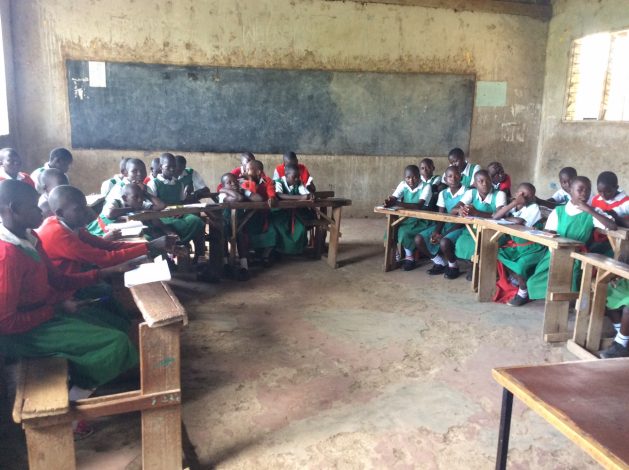
Data by the United Nations Educational, Scientific and Cultural Organization (UNESCO), shows that only 35 percent of students studying STEM in higher education globally are women. At primary and lower secondary levels, less than half of schools in sub-Saharan Africa have no electricity, computers or even access to the internet. Credit: Joyce Chimbi/IPS

DJIBOUTI CITY, Jan 28 2020 (IPS) – Dr. Anne-Maria Brennan loved science as a young girl. But instead of encouraging her, those around her made attempts to steer her in the “right direction”. “The right direction was in nursing, teaching and secretarial courses. I was told that girls do not study physics,” she tells IPS.


“These voices were so loud that I seriously considered becoming a music teacher. But then someone sensibly told me that I could become a scientist and an amateur musician, but there was nothing like an amateur scientist who was also a professional musician,” she says.

That was in the seventies, today Brennan is the vice-president of Science Engagement at the Foundation for Science, Technology and Civilisation in the United Kingdom.

Brennan previously served as an associate professor in Bioscience and Forensic Biology, at the School of Applied Science, London South Bank University.

“It turns out that girls could in fact study physics, or mathematics, science, technology and engineering,” she quips.

It has been five decades since Brennan swam against the tide, pursuing a career in science. But data by the United Nations Educational, Scientific and Cultural Organisation (UNESCO), shows that globally only 35 percent of students studying Science, Technology, Engineering and Mathematics – or STEM – in higher education are women. Further confirming that girls are still being steered towards domestic and caring career paths.

“Gender balance in enrolment as well as inclusivity in both participation and achievements in STEM education remains a global south challenge,” Professor Kalu Mosto Onuoha, President of the Nigerian Academy of Science, tells IPS.

“Education systems will never be balanced and inclusive when half of the population is not participating at per with their counterparts in STEM education,” he adds.

Similar sentiments were shared by other delegates participating in the 3rd International Summit on Balanced and Inclusive Education currently being held in Djibouti City, Djibouti. Organised by the Education Relief Foundation (ERF), over 200 delegates and government representatives from over 35 countries are currently in the Horn of Africa nation where state leaders are expected to sign a Universal Declaration on universal inclusive education.

  • Unfortunately, low female representation in STEM education is a narrative that knows no boundaries. According to UNESCO, Sweden has the highest share of women graduates from STEM programmes among Nordic countries, but STEM attainment among female students in Sweden stands at 16 percent, compared to male students at 47 percent.

Brennan affirms that the numbers are similarly low in the United Kingdom but notes some improvements in the fields of general practice and dentistry, where women have taken a lead.

She says there are few women in surgery and even fewer in engineering because men in these fields are considered unfriendly and the sectors too involved and dirty.

“These wide gender gaps in developing countries are purely out of choice. Students in these countries are making the choice to pursue other interests. In developing countries the choice is made for our students by a patriarchal culture and through socialisation,” says Onuoha.

He says that these inequalities are first rooted in the exclusion and marginalisation of girls in education enrolment.

“Girls who eventually made it to school were encouraged to undertake feminine subjects like teaching. They were socialised to believe that they could only be good mothers if they took on lighter subjects,” Onuoha expounds.

  • But the World Economic Forum’s Global Gender Gap Report 2020 indicates that these inequalities are not limited to the lagging behind of girls at the enrolment level.
  • In countries such as the Southern Africa nation of Namibia where girls outpace boys in school enrolment at all levels, the gap widens in STEM education. Here, about eight percent of female students have attained STEM education, compared to 21 percent of male students.
  • Nonetheless, the report shines a spotlight on countries with impressive levels of STEM education uptake among their female students.
  • In Mauritania, for instance, attainment in STEM is at 29 percent among female students, and 31 percent among male students. In the South Asian nation of Myanmar, female students outpace male students in attainment of STEM education.
  • A few other countries such as the Arab country of Oman are slowly and surely closing the gender gap in STEM uptake, with 41 percent of female students and 55 percent of male students.

“In developing countries there are many concerted efforts to address the first part of  the problem, even though painfully slowly, we are slowly closing gender gaps in education enrolment, retention and in some cases, achievements,” Professor Mahouton Norbert Hounkonnou, from the Benin National Academy of Science, Arts and Letters, tells IPS.

Hounkonnou is a full professor of mathematics and physics, and called for the demystification of sciences. “STEM education is taught as if only a few people are meant to understand but science and math is for all of us. Everybody does math on a daily basis without even knowing it.”

Hounkonnou says that balanced and inclusive education systems call for an overhaul in what is taught in STEMs, who teaches it and how it is taught. “Learners love to be engaged. Our classrooms must become more interactive. We also need a gender component, currently lacking, in many of our educational interventions,” he adds.

He called for investment in infrastructure and learning materials to improve the environment in which STEM education is provided.

U.N. research shows that countries in the sub-Sahara Africa face the biggest challenges. At the primary and lower secondary levels, less than half of schools have access to electricity, computers and internet.

“This forum provides an opportunity for us to define the shape a balanced and inclusive STEM education system should take, and make concerted efforts to build that system. It will take financial and technical resources, including the training of teachers to better interact with female learners,” says Hounkonnou.