Climate Crisis Disrupts Sundarbans Community Festival, Prosperity

Asia-Pacific, Civil Society, Climate Action, Climate Change, Climate Change Finance, Climate Change Justice, COP30, Environment, Featured, Headlines, Indigenous Rights, Population, Sustainable Development Goals, TerraViva United Nations
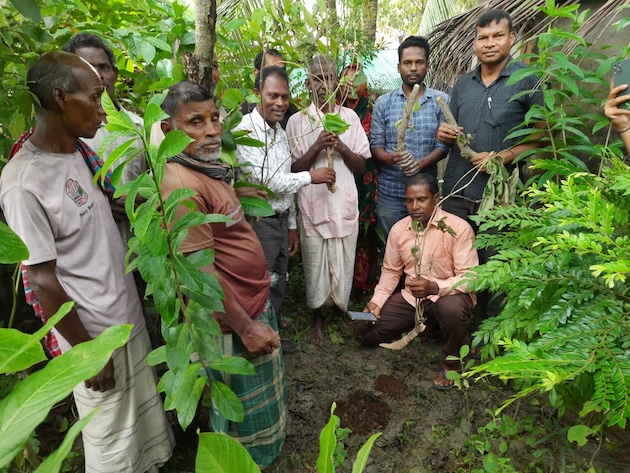
Two years ago, a Karam tree branch brought from another district was being planted in the SAMS office premises along the Shyamnagar-Munshiganj road, but it didn't survive. Credit: Rafiqul Islam Montu/IPS

Two years ago, a Karam tree branch brought from another district was being planted in the SAMS office premises along the Shyamnagar-Munshiganj road, but it didn’t survive. Credit: Rafiqul Islam Montu/IPS

SATKHIRA, Bangladesh, Dec 9 2025 (IPS) – A dried karam tree branch stands on the bank of a pond in a field in Datinakhali village adjacent to the Sundarbans. Despite many efforts, the tree could not be saved.


For two years, the Munda community in Bangladesh’s Sundarbans had been fighting to save the Karam tree so that they could bring back their traditional Karam festival—once the biggest festival in their community. Many trees are unable to survive due to the effects of salinity—this list includes the Karam tree, which is the main ingredient in celebrating the festival.

Bhakta Sardar, a priest from the Munda community, says the festival of the indigenous Munda community would be incomplete without the branches of the Karam tree

“We believe that our prosperity and well-being are hidden in the branches of the Karam tree. We pray to God to achieve our prosperity around this festival. But frequent cyclones and salinity have killed the Karam trees.”

“Now we celebrate this festival in its name only for the prosperity of the community. We cannot leave the festival for the next generation,” added Bhakta Sardar, referring to a smaller festival where the community uses fig tree branches as an alternative.

While the debate about how to integrate non-economic losses and damages due to the impact of climate change continued during the 30th Conference of the Parties to the UNFCCC (COP30) in Belém, Brazil, the Munda community is looking for ways to revive the Karam festival, a symbol of their prosperity. A recent study emphasized that these non-economic losses and damages included the loss of religious and cultural practices.

The study says that climate risks are increasing on the coast of Bangladesh. The risk is even higher in the southwest. If this situation continues in the future, small communities like the indigenous Munda community will be in even greater crisis. The study called for policy and financial reform to assist communities like this to adapt to the impacts of climate change.

In Search of the Karam Tree

The scientific name of the Karam tree is Mitragyna parvifolia. This tree in the Asian region is also known as Kelikadam. It mainly blooms before the monsoon. As the Karam tree has disappeared, the indigenous Munda community of Bangladesh now celebrates a similar festival on a smaller scale, with branches of a fig tree. The scientific name of this tree is Ficus religiosa.

There were once many Karam trees in the villages of southwestern Bangladesh. Datinakhali, adjacent to the Sundarbans in the Shyamnagar upazila (subdistrict) of Satkhira district, is one such village. This village celebrated the Karam festival with a grand event, with people from the Munda community from different areas joining in.

In addition to their time-honored religious tradition, the community in this village on the banks of the Chuna River faces economic difficulties.

The indigenous Munda community lives in several villages adjacent to the Sundarbans in Koyra upazila (sub-district) of Khulna district in southwestern Bangladesh.

Shukkuri Rani Munda used to attend the Karam festival organized in the courtyard of Fulsingh Munda’s house in Uttar Haztakhali village.

“To everyone now, the festival feels like a myth. A storm has swept away the entire festival. The next generation will forget the name of the Karam festival,” she says.

Munda Young Balai Krishna Sardar (38), president of the Sundarban Adivasi Unnayan Sangstha of that village, cannot recall attending the festival. Rangalal Munda’s 60-year-old father, Fulsingh Munda, witnessed a small-scale celebration five years ago. After Fulsingh’s death a year ago, no one in the village now knows how to initiate the Karam festival.
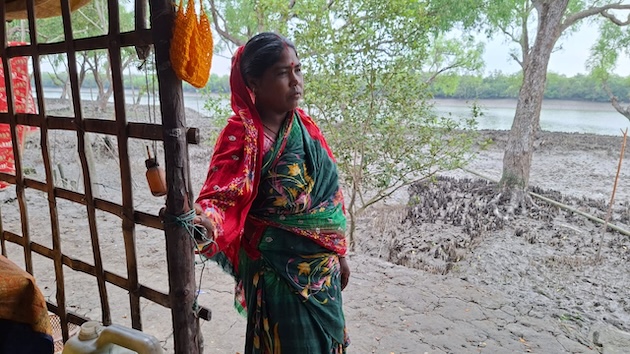
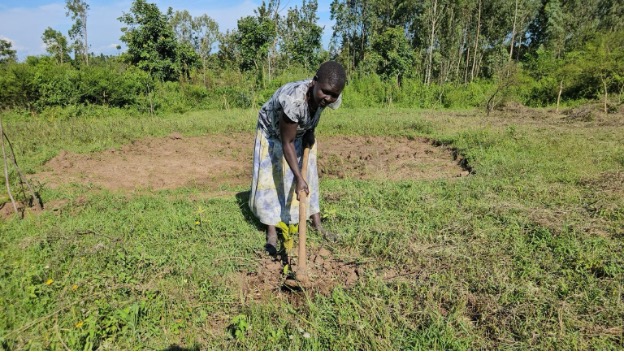
Geeta Rani Munda, 42, lives precariously in Datinakhali village, adjacent to the Sundarbans. She wants the Karam festival to return for her prosperity. Credit: Rafiqul Islam Montu/IPS

Geeta Rani Munda, 42, lives precariously in Datinakhali village, adjacent to the Sundarbans. She wants the Karam festival to return for her prosperity. Credit: Rafiqul Islam Montu/IPS

‘A Symbol of Our Faith’

The Munda community holds the belief that the branches of this tree conceal prosperity and well-being. They believe that the Karam festival ensures their good health and the well-being of future generations. Various tribal communities in Jharkhand, West Bengal, and Bihar, India, celebrate this festival with the same beliefs. Indigenous communities like Munda, Mahato, Kurmi, Matato, Santal, Orao, Baraik, Singh, Pahan, Mahali, Bhumij, etc., all celebrate the Karam festival.

“The Karam festival is our faith. Perhaps our economic condition is gradually deteriorating because we cannot follow our religious instructions,” said Anandini Rani Munda of Datinakhali village, articulating the belief that religious and economic wellbeing are intrinsically interlinked.

Nilkant Pahan, a priest of Burigoalini village in Shyamnagar upazila (sub-district), had been conducting the puja (religious ceremony) of the Munda community for eight years. He has organized the Karam festival several times following the ancestral tradition. But they were small events.

“Celebrating the Karam festival is our religious tradition. Our ancestors observed this tradition. We are trying to maintain its continuity. We are facing a much greater socio-economic and cultural crisis than before. We do not know what this crisis is because we cannot observe religious traditions,” Pahan says.

Impact of salinity

During Cyclone Aila in 2009, the entire area was submerged in the wave of salt water that broke the dam. The land was submerged in salt water for a long time, and the Karam trees could no longer survive. Many elderly Munda citizens believe that not only Aila but also other cyclones, especially a strong cyclone that hit the region in 1988, helped reduce the number of Karam trees.

GM Mostafizur Rahman, Chief Scientific Officer of Khulna Soil Resources Institute, said, “Both the intensity and extent of salinity in soil and water are increasing due to climate change; 81 percent of land in Shyamnagar is affected by varying degrees of salinity.”

Professor Saleh Ahmed Khan, Department of Botany, Jahangirnagar University, said, “The tree that the Munda community calls the ‘Karam’ tree is ‘Kelikadam.’ We did not find it among the 528 species under our research. The tree may not have survived due to the spread of salinity.”

Fight To Bring Back the Karam Festival

The Sundarbans Adivasi Munda Sangstha (SAMS) and leading members of the Munda community are working to bring back the Karam tree. They are trying to bring back the Karam festival by bringing branches of the Karam tree from other districts.

Two years ago, a branch of the Karam tree was planted in the SAMS office premises on the Shyamnagar-Munshiganj road, and another branch was planted in the Munda-dominated Datinakhali village. But it was not possible to save the tree. They will try again next year.

“We celebrate the Karam festival for our prosperity. We are trying to save the Karam trees for the festival. But due to salinity in the soil, the Karam trees cannot be saved. As an alternative, we use the branches of the fig (Ficus religiosa) tree,” said Geeta Rani Munda of Datinakhali village.

Krishnapada Sardar, Executive Director of SAMS, said it wasn’t enough that this festival only survives in the stories of elders.

“It was a major event in the rural culture of this community, which is proud of its identity. Climate change has changed the food habits of the Munda community, and the opportunities for livelihood have narrowed. The families of the community are facing an extreme economic crisis.

“Our lost festivals can be brought back by restoring the Karam tree. We want to return to our lost traditions. We want to return to our roots.”

IPS UN Bureau Report
  Source

Farmers Earn While Reviving Native Forests Through a Blockchain-Powered App

Africa, Biodiversity, Civil Society, Development & Aid, Economy & Trade, Editors’ Choice, Environment, Featured, Food and Agriculture, Food Systems, Gender, Green Economy, Sustainable Development Goals, Trade & Investment, Women & Economy

Africa Climate Wire

Caroline Awuor tends to tree seedlings on her farm in Siaya County, Western Kenya. She is a beneficiary of the My Farm Trees Project. Credit: Jackson Okata/IPS

Caroline Awuor tends to tree seedlings on her farm in Siaya County, Western Kenya. She is a beneficiary of the My Farm Trees Project. Credit: Jackson Okata/IPS

SIAYA, Kenya , Dec 8 2025 (IPS) – For years, Morris Onyango had been trying to reforest his degraded land on the shores of River Nzoia, in Siaya county, 430 kilometers from Kenya’s Capital, Nairobi. But every time he planted trees on his farm, his efforts bore little fruit, as floodwaters would not only wash away his tree seedlings but also fertile topsoil on his land.


“The land became unproductive and bare. I tried reclaiming the land through reforestation, but the trees’ survival rate was too low,” Onyango said.

Siaya County has a 5.23 percent forest cover and is ranked 44th out of Kenya’s 47 counties. Judy Ogeche, a scientist from the Kenya Forestry Research Institute (KEFRI), says that the compromised forest and tree cover in the county and the lack of any gazetted forests have discouraged the integration of tree and crop farming.

“Communities here do not see tree growing as a lucrative venture. Some myths and beliefs discourage tree growing. For example, some people believe that growing the Terminalia mentalis (often known as the Panga Uzazi) tree attracts death,” says Ogeche.

According to Ogeche, another challenge is gender inequality in land ownership, with men owning most available land and making decisions on what should be planted.

“We have many women interested in restoring tree cover, but their husbands would not allow it,” Ogeche said.

Across Africa, reforestation projects struggle to survive beyond the seedling stage. However, in parts of Kenya, a groundbreaking digital innovation is transforming the landscape by empowering rural farmers to earn a living while restoring degraded lands with native trees.

Tech and Reforestation

In a bid to restore lost biodiversity and enhance tree cover in Kenya, Alliance Bioversity International and CIAT, in partnership with the International Union for Conservation of Nature (IUCN), launched the My Farm Trees project, a blockchain-based platform that offers guidance to subsistence farmers on seed selection, planting, and post-plant care, ensuring that seedlings survive and thrive in harsh conditions.

Implemented in the counties of Siaya, Turkana and Laikipia, MFT emphasizes genetically robust native species that support biodiversity, improve soil health, and provide long-term ecological and economic benefits.

Ogeche observes that the My Farm Trees project has motivated communities in Siaya to grow trees.

“They are given free seedlings and taught how to plant and take care of them, and when the trees grow, they are paid,” she said.

To provide the right seedlings, the project is partnering with the Kenya Forestry Research Institute (KEFRI), the Kenya Forest Services (KFS) and private tree nursery operators in the respective counties.

For farmers like Onyango, the My Farm Trees Project gave them the much-needed solution to their degraded lands and soils

“The project gifted me 175 seedlings of various trees, which I planted along the riverbank. The trees have helped me reclaim my land, prevent erosion and get paid for taking care of my own trees,” Onyango says.

How it Works

In the My Farm Trees project, participating farmers are registered on the MyGeo Farm App, which allows them to monitor seedlings from planting to growing. Through the app, farmers can track and report progress.

Francis Oduor, the National Project Coordinator, says since its rollout, the project has seen over 1,300 farmers registered on the MyGeo Tree App, and over 100,000 seedlings have been planted across the three counties.

“The project is especially interested in using indigenous trees for landscape restoration, which are native to specific areas, and to enhance genetic diversity,” says Oduor.

Oduor explains that My Farm Trees uses monitoring, verification, and incentives to empower local communities to become leaders and stewards of tree-planting projects that provide immediate short-term benefits.

“The project does not just focus on payment to farmers but the long-term benefits of restored landscapes for improved agricultural productivity, water regulation, and climate resilience,” said Oduor.

To ensure the use of native varieties and guarantee the production of quality tree seedlings, the project team collaborates with KEFRI to provide technical assistance to local tree nursery operators.

Lawrence Ogoda, a tree nursery operator, is among the project beneficiaries. He has been trained on seed collection, raising seedlings and record keeping.

“Through the MyGeo Tree and MyGeo Nursery Apps, I can collect data and track progress on seed collection, propagation and development at the nurseries.”

Before joining the My Farm Trees project, Caroline Awuor had not given much attention to growing trees. She received 110 seedlings, 104 of which have successfully survived and are earning her cash incentives.

“Most of them are fruit trees, including mangoes, avocado and jackfruit, while there are also some timber trees. In addition to the incentives from the project, I also earn money by selling the fruit,” she says.

Caroline intends to plant an additional 1,000 tree seedlings on her land, strategically located near the River Nzoia.

According to Joshua Schneck, the Green Climate Fund (GCF) Portfolio Manager for Global Programs at IUCN, My Farm Trees is an innovative project driven towards sustainable transformation.

The Impact

In Kenya, My Farm Tree has supported 3,404 farmers, 56 percent of whom are women. A total of 210,520 trees have been planted, with a survival rate of over 60 percent beyond the first year, with 1,250 hectares of land being restored across Siaya, Turkana, and Laikipia counties.

The program has released KES 26 million (approximately USD 200,000) in digital payments, directly benefiting 1,517 farmers. Additionally, 13 local nurseries have been strengthened in partnership with the Kenya Forestry Research Institute.

Also implemented in Cameroon, the project has seen the restoration of 1,403 hectares of forest land with over 145,000 seedlings being planted and 2,200 farmers registered on the platform. The project has also seen the restoration of 423 community lands and 315 sacred forests, with USD 130,000 in incentives distributed to farmers.

Oduor noted that the My Farm Trees project offers a scalable blueprint for  forest restoration by combining science and Blockchain technology in tree selection, post-planting support, and farmer incentives, which gives it  global relevance.

“MFT is a scalable model that aligns with climate action, poverty reduction, and ecosystem recovery. This approach supports the goals of the Paris Agreement, the United Nations Convention to Combat Desertification, and the UN Decade on Ecosystem Restoration,” Oduor said.
IPS UN Bureau Report

  Source

‘Low- and Middle-Income Countries Need Better Data, Not Just Better Tech’

Conferences, Development & Aid, Economy & Trade, Editors’ Choice, Featured, Headlines, Sustainable Development Goals, TerraViva United Nations

Conferences

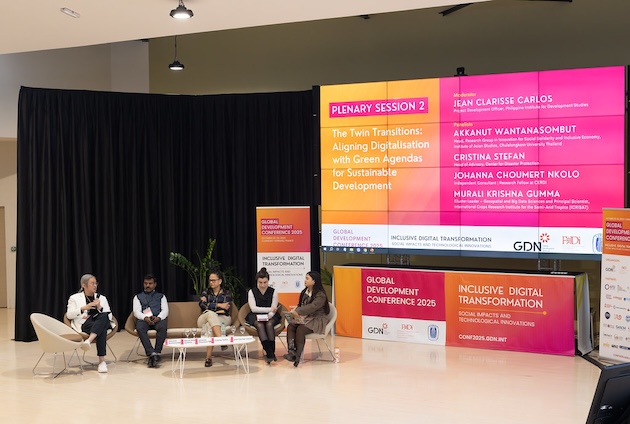
Johanna Choumert-Nkolo, third from right, speaking during a panel discussion at the Global Development Conference 2025 in Clermont-Ferrand, France. Credit: Athar Parvaiz/IPS

Johanna Choumert-Nkolo, third from right, speaking during a panel discussion at the Global Development Conference 2025 in Clermont-Ferrand, France. Credit: Athar Parvaiz/IPS

CLERMONT-FERRAND, France, Dec 4 2025 (IPS) – During the Global Development Conference 2025, development experts and researchers kept warning that low- and middle-income countries (LMICs) were being pushed into a wave of digital transformation without the basic statistical systems, institutional capacity, and local context needed to ensure that AI and digital tools truly benefited the poor.


Among the prominent voices shaping this conversation were Dr. Johannes Jütting, Executive Head of the PARIS21 Secretariat at the OECD, and development economist Johanna Choumert-Nkolo, who has over 15 years of research and evaluation experience. IPS interviewed both Jutting and Choumert-Nkolo following the conference, which concluded about five weeks ago, about the issues surrounding digitalization in LMICs.  Following is the summary of their responses.

How is Data the Weakest Link?

Much of the conversation around AI’s potential in the Global South centers on the promise of improved governance. But for Jutting, whose organization has been working on AI and data, there is a widening gap between the capacities of countries in the Global North and those in the Global South.

AI, he said, offers enormous potential. “For lower-income countries in particular, the production side is promising because AI can reduce the very high costs of traditional data collection. By combining geospatial data with machine learning, for instance, we can generate more granular and more timely data for policymaking, including identifying where poor populations live,” Jutting told IPS.

“But real challenges remain. Many low-income countries lack the fundamental conditions required to make use of AI. First, connectivity: without it, there is no practical AI application. Second, technical infrastructure such as data centers and reliable data transmission. Third, human capacity and skills, which require sustained investment. And fourth, governance and legal frameworks that must be updated to reflect new technologies,” he said.

There are also clear risks, particularly concerning confidentiality, privacy, and the fact that most large AI models are trained on data from the Global North, he told IPS and added that this creates potential biases and limits their usefulness for national statistical offices in the Global South.

Data collection processes, such as censuses and household surveys, are expensive, slow, and operationally difficult. According to him, many national statistical offices lack the workforce, training, and budget needed to maintain regular, reliable data production.

The challenge, he emphasized, is not simply technological.

“Digital transformation is not just a technology issue. It is a change management issue, a capacity development issue, a skills issue, and a political will issue.”

Dr. Johannes Jütting, second from right,speakingg during a panel discussion atthe Globall Development Conference 2025 in Clermont-Ferrand, France. Credit: Athar Parvaiz/IPS

Dr. Johannes Jütting, second from right, speaking during a panel discussion at the Global Development Conference 2025 in Clermont-Ferrand, France. Credit: Athar Parvaiz/IPS

Divide Within the Global South and Fiscal Constraints

While global debates often frame digital inequality as a problem between rich and poor nations, Jütting believes the more serious divide is emerging within the Global South itself. He argues that some LMICs are sprinting ahead while others fall further behind, a divergence he calls “one of the most worrying trends in development today.”

“What I see is a divide inside the Global South,” he said. “Countries like Rwanda, Kenya, the Philippines and Colombia are advanced—sometimes more advanced than OECD members. But others like Mali, Niger, and several small island states, are completely left behind.”

This divide is not only visible in connectivity and infrastructure but also in institutional readiness, technological skills and even access to basic demographic data. In some countries, he said, governments still lack reliable records of how many people are born each year or how many people live within their borders.

“How can we talk about fancy AI models when basic population data is missing?” he asked. “We have to start with the fundamentals.”

He also cautioned that development agencies may inadvertently widen this divide by focusing on “low-hanging fruits” that yield quick, measurable results, instead of supporting long-term system-building in fragile countries.

“There is donor fatigue, and funding is shrinking,” he said.

So, how do we move forward? First, Jutting said, every country needs a strong national strategy for the development of statistics (NSDS). This strategy must be fully aligned with national development plans, he said and added that only then can we ensure financing is efficient, coordinated, and aligned with country needs as well as international monitoring requirements, such as the SDGs or Africa’s Agenda 2063.

“Second, viable financing models will require greater domestic resource mobilization. Governments must be convinced to invest in their own data systems—and this requires demonstrating tangible impact.”

And third, he said, donors need to align their spending more effectively. “Our recent work on gender data financing shows a major disconnect: while gender equality funding is increasing, funding for gender data is not. This mismatch risks wasting money and undermining progress.”

He believes that there has to be a change on both fronts: national governments must allocate more domestic resources, and donors must invest in data in a more strategic, coherent, and results-oriented way.

Complexity of Measuring Digital Impacts

While Jütting focused on institutions and governance, Choumert-NKolo approached digitalization through the lens of climate resilience, human behaviour and evidence generation. Unlike many policy conversations that foreground tools and technologies, she emphasized the complexity of understanding real-world impacts.

“Digitalization is reshaping economies at a very fast pace,” she told IPS. “From a climate perspective, we need to understand what this means, both in terms of opportunities and risks.”

Her main concern is the long-term and layered nature of digital impacts. A digital tool deployed today may influence decisions in ways that take years to fully materialize.

“You never know how a tool will be used until people start making decisions with it,” she said. “Understanding behavioural change is complex, and attribution to one digital tool is extremely difficult.”

Despite these challenges, she emphasized that digital tools have significant potential to support climate adaptation. Farmers facing unpredictable weather patterns can benefit from climate information services delivered through mobile platforms. Communities vulnerable to storms or floods can receive alerts even through basic SMS networks. Such tools, she said, can save lives.

But she urged caution in assuming digital tools are universally accessible or understood.

“We must remember that not everyone can read or act on digital messages,” she said. “Literacy and accessibility gaps remain large in many countries.”

Her research experience in East Africa reinforced the importance of context. Mobile money, she said, became a major success story precisely because it solved local problems and fit local cultural and economic realities. But not every challenge requires a digital solution.

“Sometimes nature-based or low-cost solutions work better. The key is context. We must understand what problem we are trying to solve and whether digital tools are the right fit.”

She believes the way forward lies in identifying local needs, drawing from existing evidence and piloting new solutions where knowledge gaps remain. “There is a lot of hype around digitalization,” she said. “We need more comparative evidence on what works best in each setting.”

A Future That Must Be Shaped Carefully

One theme emerged with clarity from both experts: Digital transformation can support inclusive development, but only if countries invest in strengthening their statistical systems, building institutional capacity and grounding innovation in local realities.

“We need more and better data for better lives,” Jütting said. “But we must ensure the poorest countries are not left behind in this digital wave.”

Choumert-NKolo echoed that sentiment. “Digital tools offer huge opportunities,” she said. “But they must be rooted in context, evidence and local needs.”

For LMICs navigating the uncertainties of climate change, economic pressures and technological disruption, these warnings are timely. Digital transformation can be a powerful equalizer—or a new source of exclusion. The difference, experts said, will depend on whether governments and development partners prioritize the foundations that make digital inclusion truly possible.

  • “Travel (for reporting this story) to the Global Development Conference was supported by GlobalDev, the research communications platform of the Global Development Network (GDN). The 2026 Global Development Conference was organized in partnership with other members of the Pôle clermontois de développement international (PCDI)—Foundation for Studies and Research on International Development (FERDI) and Centre for International Development Studies and Research (CERDI). Reporting and research remain independent.”

IPS UN Bureau Report


Graduation Must Be a Springboard, Not a Stumbling Block

Climate Change Finance, Conferences, Development & Aid, Economy & Trade, Environment, Financial Crisis, Global, Headlines, Sustainability, Sustainable Development Goals, TerraViva United Nations, Trade & Investment

Opinion

UNITED NATIONS, Dec 1 2025 (IPS) – As we gather in Doha for the High-Level Meeting on “Forging Ambitious Global Partnerships for Sustainable and Resilient Graduation of Least Developed Countries,” the stakes could not be higher. A record number of fourteen countries-equally divided between Asia and Africa are now on graduation track. Graduation from the Least Developed Country (LDC) category is a landmark national achievement—a recognition of hard-won gains in income, human development, and resilience. Yet, for too many countries, this milestone comes with new vulnerabilities that risk undermining the very gains that enabled graduation.


Since the establishment of the LDC category in 1971, only eight countries have graduated. Today, 44 countries remain in the group, representing 14% of the world’s population, but contributing less than 1.3% to global GDP. The Doha Programme of Action (DPoA) charts an ambitious yet achievable target: enabling at least 15 additional countries to graduate by 2031. But as the DPoA underscores graduation must be sustainable, resilient and irreversible. It must serve as a springboard for transformation— not a moment of exposure to new risks.

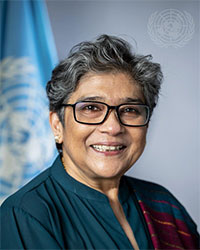
USG Rabab Fatima

Graduation with momentum:
Graduation often coincides with a significant shift in the international support landscape. As preferential trade arrangements, concessional financing, and dedicated technical assistance begin to phase down, countries may face heightened fiscal pressures, reduced competitiveness, and increased exposure to external shocks. Without well-sequenced and forward-looking transition planning, these shifts can slow progress toward the Sustainable Development Goals (SDGs) and strain national systems.

Yet within these challenges also lie opportunities. With the right policies, partnerships, and incentives, graduation can catalyse deeper structural transformation, expand access to new financing windows, strengthen institutions, and unlock pathways to diversified, resilient, and inclusive growth. The task before us is to manage risks while harnessing these opportunities—ensuring that no country graduates without momentum.

Smooth Transition Strategies: A National Imperative
The DPoA calls for every graduating country to develop inclusive, nationally owned Smooth Transition Strategies (STS) well-ahead of the graduation date. These strategies must be fully integrated into national development plans and SDG frameworks, ensuring coherence and resilience. They should prioritize diversification, human capital investment, and adaptive governance, while placing women, youth, and local actors at the center of design and oversight. STS must be living documents—flexible, participatory, and backed by robust monitoring and financing.

Reinvigorated Global Partnerships: The essential Pillar
No country can navigate this transition alone. The Doha Programme of Action calls for an incentive-based international support structure that extends beyond graduation. For LDCs with high utilization of trade preferences – the withdrawal of preferential market access must be carefully sequenced to avoid abrupt disruptions. For climate-vulnerable SIDS and LLDCs, enhanced access to climate finance, debt solutions, and resilience support are key elements in their efforts to tackle post-graduation challenges.

Deepened South-South and triangular cooperation, innovative financing instruments, blended finance, and strengthened private-sector engagement will be essential to building productive capacities and unlocking opportunities in digital transformation, green and blue economies, and regional market integration.

iGRAD: A Transformative Tool
The operationalization of the Sustainable Graduation Support Facility—iGRAD—is a concrete step forward. By providing tailored advisory services, capacity-building, and peer learning, iGRAD can serve as a critical tool to help countries anticipate risks, manage transitions, and sustain development momentum. Its success, however, hinges on strong political support and adequate, predictable resourcing from development partners.

Graduation as a Catalyst for Transformation
Graduation should not be the end of the story—it should be the beginning of a new chapter of resilience and opportunity. With integrated national strategies and reinvigorated global partnerships, we can turn graduation into a catalyst for inclusive, sustainable development. Let us seize this moment in Doha to reaffirm our collective commitment: no country should graduate into vulnerability. Together, we can ensure that graduation delivers on its promise—for communities, for economies, and for future generations.

Rabab Fatima is UN Under Secretary General and High Representative for the Least Developed Countries, Landlocked Developing Countries and Small Island Developing States

IPS UN Bureau


COP30 Fails the Caribbean’s Most Vulnerable, Leaders Say: ‘Our Lived Reality Isn’t Reflected’

Climate Change Finance, Climate Change Justice, Conferences, COP30, Development & Aid, Editors’ Choice, Environment, Featured, Headlines, International Justice, Latin America & the Caribbean, Small Island Developing States, Sustainable Development Goals, TerraViva United Nations

COP30


Regional leaders say the outcome of the ‘mixed bag’ climate talks once again overlooks the real and mounting threats faced by Caribbean countries.

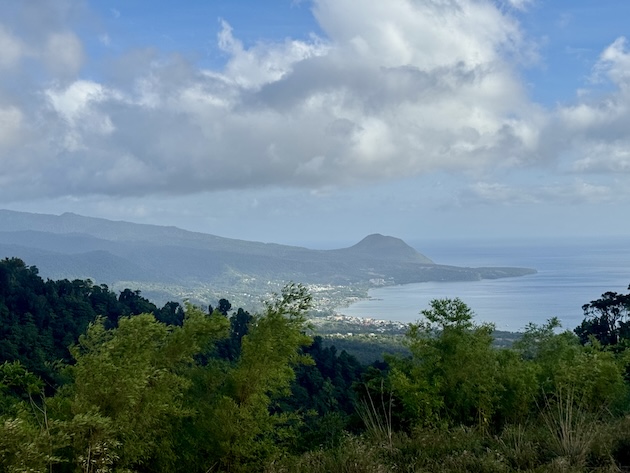
A coastal community in the Eastern Caribbean. Small island states say their extreme climate vulnerability is still not reflected in global finance decisions made at COP30. Credit: Alison Kentish/IPS

A coastal community in the Eastern Caribbean. Small island states say their extreme climate vulnerability is still not reflected in global finance decisions made at COP30. Credit: Alison Kentish/IPS

CASTRIES, St Lucia, Dec 1 2025 (IPS) – Caribbean small island states say this year’s UN climate conference has once again failed to deliver the urgency and ambition needed to tackle escalating climate devastation across the region. From slow-moving climate finance to frustrating political gridlock, leaders say COP30 did not reflect the realities that small islands are living through every day.


Jamaica is recovering from Hurricane Melissa, which left over 30 percent of the country’s GDP in losses and billions of dollars in damage. While the country has been able to respond rapidly thanks to a suite of innovative developmental finance tools, including a USD 150 million catastrophe bond, parametric insurance and a disaster savings fund, its Minister for Water, Environment and Climate Change, Matthew Samuda, warns that the vast majority of Caribbean islands do not have similar mechanisms.

Speaking at a press conference organized by Island Innovation and themed “Islands, the Climate Finance Gap, and COP30 Reflections,” Samuda said this is precisely why global negotiations must center the lived experiences of SIDS.

“I think I perhaps may be a little more disappointed than I am usually at the end of a COP because seeing what Jamaica is going through, seeing what Vietnam is going through, seeing extreme weather events pop up all around the world over the last 10 days, you would think that the urgency and the facts staring us in the face would have brought about greater ambition,” he said, adding that “unfortunately, the global geopolitical landscape didn’t allow for us to go much further.”

A Struggle Just to be Heard?

For many small islands and territories, simply participating meaningfully at COP30 was an uphill battle. The British Virgin Islands, like other Caribbean territories, had to rely on partners, including the Organisation of Eastern Caribbean States and the Caribbean Community Climate Change Centre for accreditation and access to the negotiations.

“We try to split up and cover as much as we can,” said Dr. Ronald Berkeley, Permanent Secretary in the Ministry of Environment, Natural Resources and Climate Change. “Our reliance on partners shows how limited our reach still is.”

Berkeley said that despite the Caribbean’s visible and worsening climate impacts, it remains difficult to get major emitters to understand the region’s urgency.

“For small islands, this is real. I’m not sure a lot of the big players believe us,” he said. “Until you live through being almost blown to smithereens by a Category Five hurricane, you will never understand.”

The BVI recently established its own climate trust fund, currently funded with about US$5.5 million, to address some financing shortfalls, but Berkeley emphasized that this cannot make up for reliable, large-scale climate funding.

Barriers to Pledges

Caribbean officials are echoing the same concern—that climate finance exists on paper but rarely reaches small, vulnerable nations at the speed or scale required.

“At COP there were positive commitments, about US$1.3 trillion annually by 2035 for climate action, the tripling of adaptation finance and operationalizing the Loss and Damage Fund,” said Dr. Mohammad Rafik Nagdee, Executive Director of the Caribbean Centre for Renewable Energy and Energy Efficiency (CCREEE).

“But the elephant in the room is the global finance gap,” he said. “Even where access exists, it’s not accessible at the speed the climate crisis demands. Processes are lengthy, requirements heavy and small governments simply don’t have the technical capacity.”

Nagdee said the region needs “greater predictability, simpler pathways and finance that is actually ready to disburse.”

Living Through it—Not Debating it

For Jamaica, which is emerging from one of the most devastating storms in its history, the mismatch between climate impacts and climate action is glaring.

“In the past four years, Jamaica has had its hottest day on record, its wettest day on record, its worst droughts, two tropical storms, a Category 4 hurricane and now what could be classified as a Category 6,” Samuda said. “That’s climate change in reality. That’s not an academic debate for us.”

Caribbean leaders widely described COP30 as a ‘mixed bag,’ with negotiations with incremental progress overshadowed by inadequate urgency.

“We cannot talk about building back better if the resources arrive slowly,” Nagdee said.

For small island states living on the frontlines of warming seas, rising temperatures and record-breaking storms, the message from COP30 is clear and becoming all-too familiar—that  climate change is accelerating and the price of delay is already being paid.

This feature is published with the support of Open Society Foundations.

IPS UN Bureau Report


From Access to Action — Carbon Markets Can Turn Developing Countries’ Ambitions into Realities

Biodiversity, Climate Action, Climate Change, Climate Change Finance, Climate Change Justice, Conferences, COP30, Economy & Trade, Environment, Global, Headlines, Sustainability, Sustainable Development Goals, TerraViva United Nations

Opinion

Local farmer ploughing a field in Indonesia. Credit: Unsplash

RIO DE JANEIRO, Brazil, Nov 26 2025 (IPS) – The UN climate talks at COP30 once again brought the critical issue of climate finance to the forefront of global discussions.

However, while much of the debate revolved around traditional forms of aid directed at developing countries most vulnerable to the impacts of climate change, a faster, more transformative approach lies in expanding access to carbon markets.


When emerging and developing economies (EMDEs) are equipped with the tools and knowledge needed to engage in these markets on their own terms, carbon finance can be generated and harnessed in ways that reflect their unique natural assets, governance, social contexts, and national priorities.

Achieving global climate and sustainable development goals depends on ensuring that those worst affected by climate change can fully participate in and benefit from this growing flow of finance.

EMDEs are on the frontlines of climate change — from rising sea levels threatening Pacific island nations to intensifying droughts and fires in the Amazon and Horn of Africa, and increasingly intense and frequent hurricanes in the Caribbean. These crises often hit hardest in regions that have contributed least to global emissions and in the most difficult position to react to them.

Yet, these same nations face a climate finance shortfall of $1.3 trillion per year. Carbon markets present an opportunity for these countries to bridge this gap by turning their natural advantages into climate finance assets.

Despite successful initiatives aimed at bolstering both high-integrity supply and demand for carbon credits, significant barriers to access persist, particularly for EMDEs. From fragmented policy landscapes to weak governance structures, limited institutional capacity, and low investor confidence, various obstacles prevent the vast potential of EMDEs to engage fully.

The Access Strategies Program — led by the Voluntary Carbon Markets Integrity Initiative — is a direct response to these challenges. It helps governments design and implement their own pathways into high-integrity carbon markets, enabling them to build the policies, institutional capacity, and investor confidence needed to meet their climate finance needs and transform their potential into progress.

Each country’s natural capital — from Brazil’s vast rainforest and agricultural landscapes, to the Caribbean’s blue carbon ecosystems, or Kenya’s grasslands and renewable energy potential — represents a unique competitive advantage, ready to be realised.

Simultaneously, no two countries share the same development goals or governance contexts. In some, carbon markets can drive forest conservation and biodiversity protection; while in others, they deliver the most impact by strengthening rural livelihoods or financing clean energy transitions.

The Access Strategies model recognises this uniqueness, tailoring its support to help countries use carbon finance in ways that align with their own specific economic and environmental strategies and goals.

For example, the Partnership for Agricultural Carbon (PAC) — developed with the Inter-American Institute for Cooperation on Agriculture (IICA) — is building capacity across Latin American and Caribbean agriculture ministries to participate in high-integrity carbon markets. It provides training, policy guidance, and decision-making tools that help governments and farmers identify viable carbon projects aligning with national agricultural and sustainability goals.

The collaboration has given small and medium producers a clearer route to investment, while positioning agriculture as a central player in regional climate strategies. Another example of the Access Strategies work is the recently launched Amazon Best Practices Guide, which will help Amazon state governments design and implement carbon market frameworks made specifically for their unique ecological and governance realities.

Moreover, in countries such as Kenya, Peru, and Benin, the Program has provided tailored support to develop policy and regulatory frameworks, strengthen institutional capacity, and attract responsible investment for high-priority climate mitigation projects — all in line with country-led goals.

These examples show what’s possible when governments have the tools and expertise to engage in high-integrity carbon markets on their own terms. More countries should seize this opportunity to tap into the growing flow of finance from carbon markets.

While carbon markets are not a silver bullet, they are one of the few scalable and self-sustaining tools available when grounded in integrity and tailored to each country’s needs.

Programs like Access Strategies do more than transfer technical knowledge — they build the enabling conditions for locally led action, drawing on countries’ unique ecological, social, and institutional insights to shape solutions that work in practice.

The focus of global climate action should not only be on new funding pledges, but on ensuring funding that is already available is effectively redirected for EMDEs countries to harness their own natural capital and promote social inclusion, while meeting their climate goals and reshaping their development pathway.

Building this kind of capacity is how we turn global ambition into lasting, locally owned progress, and moreover how carbon finance can become a true instrument of sustainable development.

Ana Carolina Avzaradel Szklo, Technical Director, Markets and Standards, Voluntary Carbon Markets Integrity Initiative (VCMI)

IPS UN Bureau