Women in Sudan are Starving Faster than Men; Female-Headed Households Suffer

Active Citizens, Africa, Armed Conflicts, Civil Society, Crime & Justice, Food and Agriculture, Food Security and Nutrition, Gender, Headlines, Health, Human Rights, Humanitarian Emergencies, Migration & Refugees, TerraViva United Nations
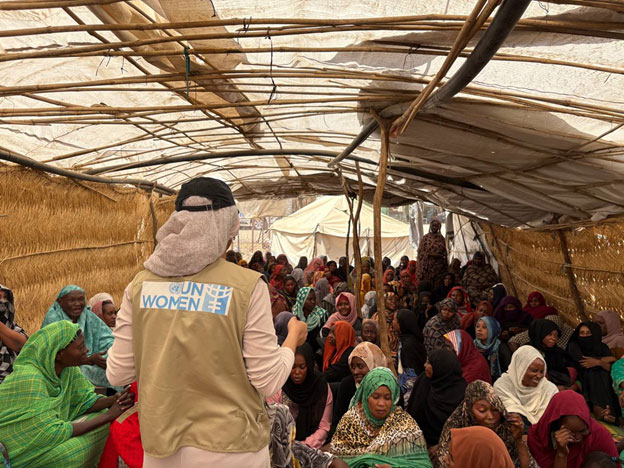
In Sudan, women-led households are three times more likely to deal with serious food insecurity compared to male-led households. Credit: UN Women Sudan

UNITED NATIONS, Aug 12 2025 (IPS) – The food crisis in Sudan is starving more day by day, yet it is affecting women and girls at double the rate compared to men in the same areas. New findings from UN-Women reveal that female-headed households (FHHs) are three times more likely to be food insecure than ones led by men.


Women and girls make up half of the starving in Sudan, at 15.3 million of the 30.4 million people currently in need. In the midst of the current humanitarian crisis brought on by the Sudanese civil war, women are increasingly seen to be leading households in the absence of men due to death, disappearances or displacement amidst the civil war, making simply living in a FHH a statistical predictor of hunger.

“With conditions now at near famine thresholds in several regions in the country, it is not just a food crisis, but a gender emergency caused by a failure of gender-responsive action,” said Salvator Nkuruniza, the UN-Women representative for Sudan.

Famine Risks for Sudan’s Women

This famine has left only 1.9 percent of FFHs food secure, compared to 5.9 percent of male-headed households (MHHs) reporting food security. 45 percent of the FHHs reported poor food consumption which was nearly double the rate as compared to MHHs at 25.7 percent. Considering this, only one third of FHHs have an acceptable diet in comparison to half of MHHs. In these worsening conditions 73.7 percent of women nationally are not meeting the minimum dietary diversity, which is limiting nutrient intake and thus endangering maternal and child health.

Rates of poor food consumption have doubled in one year across FHHs, meaning a longer drawn conflict will see even worse numbers leading to the ultimate starvation of many. Nearly 15 percent of FHHs are living in conditions that meet or are near famine thresholds compared to only 7 percent of MHHs meeting the same threshold.

With all available funding, the World Food Programme (WFP) has scaled assistance to support nearly 4 million people per month, leaving an additional 26 million people still in need of support. As one representative from the UN Office of the Coordination of Humanitarian Affairs (OCHA) told IPS, under these circumstances WFP has had to make tough calls, either shrinking assistance packages or reducing the amount of people who receive assistance. There have been cases where they have been forced to cut off all assistance in general.

Within Sudan’s civil society, women-led organizations (WLO) are playing a central role in delivering vital meals to affected groups across Sudan. Nkurunziza told IPS that “WLOS are the backbone of response in many areas,” who can access areas which the international system cannot reach. WLOs in West Kordofan are solarizing clinics, running nutrition outreach, managing mobile maternal health care, and operating informal shelters. In North Kordofan, WLOs. are running protection hotlines, distributing food, and helping displaced families find safety. Many times they are providing these services without institutional funding.

UN Women has been supporting 45 WLOs with institutional support, funding and technical assistance, which has allowed these organizations to operate across sixteen states. However, underfunding still remains a critical issue for WLOs. Nkurunziza explained how due to funding deficits, one WLO that operates across eight states was forced to shut down thirty-five of its sixty food kitchens. WLOs must also deal with serious logistical and digital constrains, making it nearly impossible to have any form of coordination meetings. Sudan is also facing the world’s largest displacement crisis, making a shrinking of operations among deteriorating consumption rates detrimental to attempts to elevate food security.

Aid Delivery Challenges

Amidst funding shortfalls, supply chains have struggled reaching critical locations due to Sudan’s size, lack of infrastructure, and weather difficulties. WFP shared that Sudan is “roughly the size of western Europe”, and as such they and other humanitarian actors are having to transport humanitarian items over 2500 kilometers across deserts and challenging terrain. They added that road infrastructure in remote areas such as Darfur and Kordofan has further increased the difficulty. The rainy season between April and October has also added further complications, which has made many roads completely flooded or impassable.

WFP said that the conflict has not only affected supply chains, but trade routes themselves. Among the besieged cities of El Fasher and Kadulgi, supplies remain limited and far and few. WFP is “extremely concerned about the catastrophic situation, especially in El Fasher and Kadulgi and urgently [needed] guarantees of safe passage to get supplies in – while we continue supporting with digital cash transfer”. This comes amidst not being able to deliver food and aid supplies by road.

Gender Disparities and Solutions

Nkurunziza told IPS that even before the conflict, women and girls “faced challenges in accessing their rights due to cultural norms and traditional practices”, adding that this conflict has only widened these gaps.

Food access is only one example of how gender inequality manifests during this crisis. Nkurunziza noted that food queues are often dominated by men compared to women from FHHs. He added that women have been “largely left out” of decision-making spaces, therefore their specific needs are “frequently overlooked”.

The search for food has caused an increase in harmful coping mechanisms like child marriage, sexual exploitation, female genital mutilation, and child labor. The nature of these harmful instances come from unchecked sexual exploitation and abuse due to the lack of law enforcement and government in many areas. Since April 2023, 1,138 cases of rape have been recorded, including 193 children. This number is expected to be even higher, as social and security fears may be preventing accurate reporting of gender-based violence crimes.

“The conflict has magnified every existing inequality,” Nkurunziza said, adding that this created the need for responsive action, moving beyond simple rhetoric.

In their report, UN Women outlined several measures that needed to be adopted in order to diminish famine conditions among women, including prioritizing food distribution and assistance planning to FHHs and establishing localized distribution sites, thus reducing movement-related risks for women. They also recommended increased representation in local aid committees and decision-making spaces by at least 40 percent. They called for increasing investment and funding to WLO’s, which are currently receiving less than 2 percent of humanitarian aid funds.

Despite these challenges, Nkurunziza said that WLOs are still working to feed families. “They are not waiting for permission — they are responding. The question is whether the system will finally recognize them as equal partners or continue to leave them behind.”

IPS UN Bureau Report


  Source

Spotlight on Landlocked Developing Countries Ahead of Third UN Conference

Africa, Climate Change, Conferences, Development & Aid, Economy & Trade, Editors’ Choice, Featured, Global, Headlines, Human Rights, Humanitarian Emergencies, Inequality, IPS UN: Inside the Glasshouse, Least Developed Countries, Population, Small Island Developing States, Sustainable Development Goals, TerraViva United Nations, Trade & Investment

Sustainable Development Goals

Uganda's Malaba town borders Kenya to the east and is a major entry point for goods destined for landlocked Uganda, Rwanda, and South Sudan from Kenya's Mombasa Port. Credit: Joyce Chimbi/IPS

Uganda’s Malaba town borders Kenya to the east and is a major entry point for goods destined for landlocked Uganda, Rwanda, and South Sudan from Kenya’s Mombasa Port. Credit: Joyce Chimbi/IPS

NAIROBI, Aug 1 2025 (IPS) – Landlocked developing countries face a unique set of challenges. Without coastal ports, they rely on transit nations, causing higher trade costs and delays.


To explore solutions to these complex hurdles, the Third UN Conference on Landlocked Developing Countries (LLDCs) or LLDC3, will take place in Awaza, Turkmenistan, 5–8 August 2025.

May Yaacoub, LLDC3 spokesperson and head of Advocacy and Outreach at the United Nations Office of the High Representative for the Least Developed Countries, Landlocked Developing Countries and the Small Island Developing States (UNOHRLLS), told IPS that the conference is “an opportunity to unlock the full potential of landlocked countries and address the challenges faced by some of the world’s most marginalized countries.”

“In every LLDC the map itself shapes the economy. Without a coastline, even the simplest export, whether cotton lint, copper cathode or cloud‑based software, must first cross at least one foreign border and frequently an entire transit corridor before it reaches a port,” Tomás Manuel González Álvarez, Senior Programme Management Officer and LLDC Team Lead at UNOHRLLS told IPS.

“The UN estimates that this physical detour means average transport costs in LLDCs are about 1.4 times higher than in comparable coastal economies. Those added costs depress profit margins, narrow the range of viable products and deter investors who value just‑in‑time delivery.”

Against this backdrop and while lacking direct sea access causes and exacerbates hurdles in trade, connectivity, and development, Yaacoub says LLDCs host vibrant communities with untapped potential and that these countries “have the ideas and know what they need to prosper. By supporting them at LLDC3 with partnerships, innovations and cooperation, we can help to build a more equitable and prosperous future for all.”

“This conference comes at the heels of the expiration of the Vienna Programme of Actions, which was adopted in Vienna, Austria, in November 2014, during LLDC2. LLDC3 will continue the work of LLDC2 and serve as a platform to explore innovative solutions, build meaningful and strategic partnerships, and increase the investment in LLDCs,” she observed.

The theme of the conference is ‘Driving Progress through Partnerships’, which she says underscores a shift from donor-recipient dynamics to mutual accountability and co-investment. And, that this includes a stronger role for transit countries, enhanced multilateral cooperation, and alignment with the SDGs, Paris Agreement and the Pact of the Future.

Álvarez emphasizes that this key, landlockedness, is experienced very differently and that the conference agenda reflects an understanding of these complexities. In Africa, “for countries such as Niger or Zambia, the critical pain point is the sheer length and fragility of overland routes—1,800 km from Niamey to Cotonou; 1,900 km from Lusaka to Durban.”

“Road and rail bottlenecks meet frequent customs stops and, in parts of the Sahel, insecurity. The result is chronic delays and freight rates that can exceed the f.o.b. (a term that defines who pays for the transportation costs) value of low‑margin agricultural commodities.”

He says in Asia, Kazakhstan or Uzbekistan possess better road and rail grids yet face. At the same time, these economies are accelerating an energy transition, moving from hydrocarbons to renewables and green hydrogen so they now need corridors that can carry high‑voltage electricity and fiber as well as bulk ore.

“Bolivia and Paraguay rely on the 3,300‑km Paraguay–Paraná waterway for almost four‑fifths of their trade. Low river levels during recent droughts have stranded barges and cost Paraguay an estimated USD 300 million in 2024 alone. Moreover, new tolls levied by Argentina highlight the vulnerability that comes with dependence on a single transit state,” he says.

Within this context, Yaacoub says LLDC3 represents a major change in both scope and ambition compared to its predecessors—LLDC1 held in Almaty in 2003, which was a ministerial meeting, and LLDC2 in Vienna in 2014. The first conference of this nature, or LLDC1 focused primarily on transit policy, infrastructure development, international trade, and technical and financial assistance.

LLDC2 expanded to include structural economic transformation, regional integration, and means of implementation. Notably, she says, LLDC3 “introduces a more holistic and forward-looking agenda, emphasizing climate resilience and adaptation, digital transformation and technology access, sustainable industrialization, reforming the global financial architecture, shock-resilience and disaster risk reduction.”

Yaacoub says the LLDC3 agenda reflects the unprecedented global complexities of the current era—climate change, pandemics, geopolitical tensions, and economic shocks. Key thematic areas include climate vulnerability and financing, with an emphasis on operationalizing the Loss and Damage Fund, doubling adaptation finance, and ensuring access to concessional resources.

Álvarez says the conference is particularly focused on converting the narrative from landlocked to land‑linked and that unlocking these countries potential relies on a strategy built on mutually reinforcing pillars that include “how Multibillion‑dollar investments in regional corridors, the Central and Northern Corridors in East Africa, the Trans‑Caspian route into Europe, and new dry‑ports on the Paraguay‑Paraná system can cut door‑to‑port time by 30 percent within the decade.”

He says building climate resilience is critical due to a “heavy reliance of LLDCs on agriculture, especially rain-fed agriculture, as a primary source of income, employment, and sustenance. Climate variability has already begun to disrupt agricultural cycles, reduce crop yields, and threaten food security. These effects ripple across rural economies, deepening poverty and forcing difficult choices for households.”

Álvarez says these issues are critical, as the same remoteness that inflates freight costs also hampers relief when drought, flood or storm strikes. Many LLDCs suffer disproportionately from climate‑related disasters because they lack redundant road and telecom links, and that “as extreme weather intensifies, production shocks travel quickly through thinly diversified economies and can wipe out years of growth.”

Overall, he says, “collectively these headwinds jeopardize progress on at least six Sustainable Development Goals—most visibly Goals 1 (No Poverty), 9 (Industry and Infrastructure) and 13 (Climate Action). Unless structural constraints are eased, many LLDCs risk missing the 2030 milestones by a full generation.”

Álvarez says the “developmental drag created by geography is not merely inconvenient; it is systemic.”

Stressing that high logistics costs shrink the set of competitive exports and that “many LLDCs remain reliant on two or three unprocessed commodities, leaving them vulnerable to price swings and limiting the spill‑overs that normally accompany industrial clustering.”

He says limited fiscal space means that governments struggle to finance education, health and social protection at scale. LLDCs as a group record poverty rates 50–60 percent higher than the global developing‑country average and score lower on the World Bank’s human‑capital index, 0.36 versus 0.48 in 2024.

Yaacoub confirms that all these issues will be explored in depth across key thematic areas that also include the private sector, civil society and youth engagement to foster inclusive partnerships and South-South and Triangular Cooperation with an emphasis on regional and interregional collaboration.

“This inclusive process ensures that the new Awaza Programme of Action is grounded in the lived realities of LLDCs and their partners,” she observes.

After all is said and done, Yaacoub says the most desirable outcome from the Third UN Conference on Landlocked Developing Countries would be the global endorsement and operationalization of the Awaza Programme of Action, which is a transformative and actionable framework that empowers LLDCs to overcome their structural challenges and thrive in a rapidly evolving global landscape.

Stressing that LLDC3 will serve as “a high-level platform to present, promote, and mobilize support for the implementation of the Awaza PoA that was adopted in December 2024. The second outcome would be the mobilization of resources and investment commitments from development partners to support infrastructure, climate resilience, and digital transformation.”

Ultimately, she is optimistic that the conference will lead to strengthened partnerships and regional cooperation to renew and expand transit agreements and regional integration initiatives, including enhanced South-South and Triangular Cooperation frameworks and commitments to multilateral collaboration aligned with the SDGs, the Paris Agreement and the pact of the Future.

IPS UN Bureau Report


‘After Decades of Making Huge Profits, Companies Shouldn’t Be Allowed to Leave Behind a Toxic Legacy’

Active Citizens, Africa, Civil Society, Climate Change, Development & Aid, Economy & Trade, Energy, Environment, Featured, Food and Agriculture, Headlines, Health, TerraViva United Nations

Jul 29 2025 (IPS) –  
CIVICUS speaks with Matthew Renshaw, a partner at a UK law firm that represents Nigerian communities taking legal action against Shell over environmental damage caused by its operations in the Niger Delta.


Matthew Renshaw

Two Nigerian communities, Bille and Ogale, are suing Shell in the UK over decades of oil spills in the Niger Delta that have devastated their land, water and way of life. The High Court has ruled that Shell and its former Nigerian subsidiary can be held liable for ongoing environmental damage, even if caused by oil theft or sabotage, and regardless of how long ago the spills occurred. The decision builds on a 2021 Supreme Court ruling that allowed UK-based parent companies to be sued for harm abroad. A full trial is set for March 2027.

How has oil pollution affected these communities?

Each of the three communities we represent in the Niger Delta have been affected by Shell’s operations in different ways.

The Bodo community endured two major oil spills from Shell pipelines in 2008 that released over half a million barrels of oil, causing the largest devastation of mangrove habitat in history. Families who once depended on fishing can no longer provide for themselves. Even swimming in the waterways is dangerous due to oil contamination. Despite bringing the case before UK courts in 2011, the community is still demanding a proper cleanup that they say has never materialised.

As for the Bille and Ogale communities, they brought their cases against Shell in the UK in 2015. The Ogale community depends primarily on farming and fishing, but since the 1980s, Shell has recorded around 100 spills in and around the area that have resulted in serious contamination of the drinking water. The United Nations conducted tests in 2011 and declared a public health emergency, but very little was done in response. Shell briefly provided safe water to residents, but that ended years ago. With no alternative sources available, many people have been forced to use visibly polluted water to drink and bathe their children.

The Bille community lives on islands in a riverine area where residents depend heavily on fishing and harvesting shellfish. A major pipeline runs directly through the community, very close to where people live. Between 2011 and 2013, multiple oil spills from Shell destroyed mangrove habitats. As with the Bodo community, fishing has become impossible for many people, forcing some to abandon their homes and communities entirely.

Why sue in the UK rather than Nigeria?

The decision to sue Shell in the UK came from our clients. While Shell operates in Nigeria through a local subsidiary, the parent company is based in the UK and has profited immensely from its Niger Delta operations, so our clients view it as equally responsible for the pollution in their communities.

They also believe they can’t get justice in Nigeria. The Nigerian legal system is notoriously slow: cases can take decades to reach judgement due to automatic rights of appeal. Many people won’t live to see justice. Bringing this type of case before Nigerian courts is also prohibitively expensive, because it requires extensive expert evidence that’s inaccessible to most affected communities.

In contrast, UK funding mechanisms make it far more feasible for our clients to pursue justice. They also trust they’ll receive a fairer hearing in London. This approach has already shown results: in the Bodo case, Shell finally brought in international experts to attempt cleanup. International litigation generates meaningful outcomes that wouldn’t happen otherwise.

Even when Shell argued that the case should be heard in Nigeria, in 2021 the UK Supreme Court ruled that because Shell PLC may share responsibility with its subsidiary, the case could proceed in London.

How is Shell defending itself?

Shell claims that most Niger Delta pollution stems from oil theft by local criminals, commonly known as ‘bunkering’. According to Shell, these criminals steal oil from pipelines to sell directly or refine into fuel. The company insists its operations are clean and criminals are to blame, arguing it’s doing its best to stop theft and therefore shouldn’t be held responsible.

This defence is fundamentally flawed. While oil theft is certainly a significant problem in Nigeria, Shell’s claims are overstated. Numerous spills have nothing to do with theft. They’re caused simply by poorly maintained infrastructure and decades-old pipelines that are not fit for purpose. This stands in stark contrast to other countries where maintenance is taken far more seriously.

Even accepting Shell’s argument, our clients contend that Shell should have taken reasonable precautions to prevent foreseeable theft. In other countries, pipelines are buried, fitted with detection systems and monitored closely to detect intrusion attempts or spills. Our clients contend that Shell has failed to implement these basic measures in the Niger Delta.

What did the recent court ruling say, and what do you hope to achieve?

The High Court sided with our position, ruling that if Shell failed to take reasonable steps to prevent foreseeable harm, it can be liable for pollution caused by bunkering. Significantly, the court also rejected Shell’s claims that it couldn’t be held liable for spills older than five years, ruling that if a spill has still not been cleaned up – even if it happened decades ago – the company can still be held accountable.

This ruling has far-reaching implications. It’s particularly significant for the Ogale case where pollution dates back to the 1980s, and it opens the door for many other Niger Delta communities affected by legacy spills dating to the 1970s or earlier. Beyond Nigeria, the ruling sends a warning to multinational companies attempting to divest from polluting operations without accepting responsibility for the damage left behind.

Our clients seek three main outcomes from the 2027 trial: proper cleanup and environmental remediation of their polluted lands, emergency provisions such as access to clean drinking water and compensation for lost livelihoods and damaged property.

A pressing concern is Shell’s recent divestment from its onshore operations in Nigeria. The company has sold its assets to a consortium and is attempting to walk away from decades of pollution. While the communities we represent have at least secured court proceedings, many others have been left behind with no cleanup and no accountability.

We’re determined to prevent Shell and other multinational companies from abandoning polluted sites without taking responsibility. Success in holding Shell accountable, including for decades-old spills, could establish crucial legal precedents. Legally, it would confirm that companies remain responsible for long-term environmental damage. Morally, it’s about basic fairness: after decades of extracting resources and making huge profits, companies shouldn’t be allowed to leave behind a toxic legacy.

While our case won’t create internationally binding precedents, it could significantly influence how similar claims are litigated in other countries, particularly in common law jurisdictions.

GET IN TOUCH
Website
Facebook
Instagram
LinkedIn
Twitter
YouTube

SEE ALSO
Business and Human Rights Treaty: a decade of struggle for corporate accountability CIVICUS Lens 08.Mar.2025
Chiquita verdict offers hope for corporate accountability CIVICUS Lens 29.Jul.2024
Peru’s oil spill raises corporate accountability questions CIVICUS Lens 01.Apr.2022

  Source

Sweet Hope to End Bitter Pills for Multidrug-Resistant Tuberculosis

Active Citizens, Africa, Civil Society, Development & Aid, Editors’ Choice, Featured, Headlines, Health, Human Rights, Humanitarian Emergencies, Sustainable Development Goals, TerraViva United Nations, Youth

Health

Rallying call to end TB by 2030. Credit: Busani Bafana/IPS

BULAWAYO, Jul 15 2025 (IPS) – Every day, Yondela Kolweni has to hold down her son, who screams and fights when it is time for his daily life-saving TB tablets—a painful reminder of her battle with the world’s top infectious killer disease.


“It is a fight I win feeling awful about what I have to do,” says Kolweni (30), a Cape Town resident and a TB survivor. “The tablets are bitter, and he spits them out most of the time, and that reminds me of the time I had to take the same pills.”

Kolweni’s five-year-old son is battling Multidrug Resistant TB (MDR TB), a vicious form of TB that is rising among children globally.

The global burden of MDR-TB among children and adolescents has increased from 1990 to 2019, particularly in regions with lower social and economic development levels, according to a recent study. In addition, the top three highest incidence rates of MDR TB in 2019 were recorded in Southern sub-Saharan Africa, Eastern Europe, and South Asia, while the top three highest rates of deaths in the same period were recorded in Southern, Central, and Eastern sub-Saharan Africa.

South Africa is one of 30 countries that account for 80 percent of all TB cases in the world and has the most cases of drug-resistant TB.

A Bitter Pill to Swallow

Kolweni’s son was diagnosed with MDR-TB five years ago, having tested positive for TB which has affected his grandmother and his mother. He was immediately on treatment, a drug cocktail that included moxifloxacin—a pill not for the yellow-livered.

“There were two medications he had to take, and there was one specifically, the yellow one, that he did not like, and with the color he knew what it was,” Kolweni told IPS in an interview, explaining a daily battle to get her son to take his meds.

It was down to a fight. She crushed the tablets, mixed them with a bit of water, and fed them through a syringe.

“We would sometimes hold him or wrap a towel around him so that we could feed him the medication, but he would still spit it out, which meant he was not taking the dosage he was meant to take,” said Kolweni. “We then came up with the idea to put his tablets in his yogurt, but that technique did not work because, being a smart kid, he took the bait but would soon spit out the medication.”

Moxifloxacin, an exceptionally bitter medicine, is one of the key drugs in the new all-oral treatment for multidrug-resistant tuberculosis (MDR TB). The treatment is a combination of the drugs Bedaquiline, Pretomanid, Linezolid and Moxifloxacin, known as BPaLM. The BPaLM regimen is specially formulated for children but is a bitter pill to swallow.

Sweet Medicine

But there is sweet hope. A new study, by Stellenbosch University and the TB Alliance, found that sweet, bitter-masked versions of Moxifloxacin significantly improve kids’ willingness to take the drug—easing the burden on parents and boosting treatment adherence.

Two formulations of moxifloxacin have been identified by children as tasting better than new generic versions of products currently on the market.

The results from the ChilPref ML study—a Unitaid-funded effort sponsored and led by Stellenbosch University in collaboration with TB Alliance—will help improve MDR TB treatment and adherence in children.

Dr. Graeme Hoddinott, of Stellenbosch University and the principal investigator of the study, notes that children cannot be treated in a humane manner for drug-resistant TB if the medicines taste so terrible that children refuse them or must be forced to take them.

Children diagnosed with drug-sensitive TB have good outcomes even within the four months because there is usually one tablet given, and there is a child-friendly formulation that dissolves easily to be given on a spoon or in a syringe, Hoddinott said. However, for drug-resistant TB, the situation is complicated. Most drugs for MDR TB are no longer used because of their toxicity and have been replaced by new drugs.

MDR-TB drugs are not child-friendly, Hoddinott admits. The active ingredient that kills TB in Moxifloxacin makes the pills incredibly bad tasting for children who have to take the medication daily for between six and nine months in cases of MDR TB.

“These drugs are incredibly bad tasting; they are genuinely awful to a point where adults who have been on extended TB treatment have been unable to administer the same drugs to their children because the smell evokes the time when they were sick,” Hoddinott told IPS. “It is a trauma to administer such bad-tasting drugs to a child, both for the parent and the child, particularly for the young children.”

The ChilPref study recruited just under 100 healthy children, ages 5–17, from two diverse settings in South Africa. The children evaluated flavor blends using a ‘swish and spit’ taste panel—tasting the medicine, which was dissolved in water, and then spitting it out without ingesting any of it.

Each child participant ranked the flavor blends among the three from each manufacturer and also rated the taste, smell and other characteristics of each. For moxifloxacin, there was a clear, strong preference for the new flavor blends (“bitter masker” and orange for Macleods, and strawberry and raspberry and tutti frutti for Micro Labs) over the existing commercially available flavors for both manufacturers. For Linezolid, there was no preference between the flavor blends.

“Ensuring children have access to effective and palatable TB treatments is a crucial step in improving adherence and treatment outcomes,” said Koteswara Rao Inabathina, one of the study’s authors and CMC Project Manager at TB Alliance.

“Through close collaboration with manufacturers, we have addressed critical unmet needs by developing practical solutions that make available and effective drug-resistant TB treatments not only accessible but also palatable and acceptable for children.”

The results of the ChilPref study showed that children preferred two new flavor blends of moxifloxacin, produced by Macleods Pharmaceuticals, India, and Micro Labs Pharmaceuticals, India. The results were communicated to the manufacturers, who are already updating their products.

“We are not surprised that a lot of kids did not like any of the tastings because we knew that they were horrible taste-wise, but we got a very clear signal for both manufacturers that the flavor blends we recommended were more preferred,” Hoddinott said. “We changed which flavor was going to market with relatively simple research.”

Dr. Cherise Scott, Senior Technical Manager at Unitaid, said the easier it was for children to take their medicines regularly, the more likely they were to complete their treatment successfully.

“We will not allow children to be neglected in global health responses simply because their needs are more complex.”

A Promising Treatment for MDR TB

As multi-drug-resistant TB transmission increases among children and adolescents, the development of new treatments is imperative, Hoddinott explained.

Moxifloxacin may also be increasingly used in the future for the treatment of drug-susceptible TB, which affects an estimated 1.2 million children globally each year.

Drug-resistant TB, has previously been one of the most difficult diseases to manage because of limited child-friendly treatment options, but scientists have made strides in developing new treatments for children, explains Dr. Anthony Garcia-Prats, one of the study authors and an associate professor at the University of Wisconsin-Madison.

“Now we are making sure that these medicines are appropriate for children, starting with an aspect that children and parents say is critical: taste,” Garcia-Prats said in a statement.

The new treatment is given when TB is either resistant to rifampicin, a critical first-line drug, or rifampicin and isoniazid, another first-line drug combination. These resistant strains are collectively referred to as RR/MDR-TB.

Annually there are an estimated 32,000 new cases of RR/MDR-TB among children 14 years and under—a population that is extremely sensitive to the taste of medicine, according to researchers.

This discovery could help improve adherence to TB medication and move a step closer towards the United Nations Sustainable Development Goal 3 to end TB by 2030.

“It is not a silver bullet,” Hoddinott cautions. “It does not solve everything, as people affected by TB still face many other challenges, and even the preferred flavor blends still do not taste nice. But, as part of the overall fight against TB in children, it’s an important step.”

Kolweni welcomes the development of masked TB medication.

“My experience with TB medication was not nice, and for children it is worse, and I think flavored tablets would make it easy for children to take, like  Gummies,” she said. “Every child loves flavors; even a suspension would be nice. My son would love it, and I will have no trouble getting him to take his medicine.”

Note: This article is brought to you by IPS Noram, in collaboration with INPS Japan and Soka Gakkai International, in consultative status with the UN’s Economic and Social Council (ECOSOC).

IPS UN Bureau Report

  Source

HIV/AIDS Funding Crisis Risks Reversing Decades of Global Progress

Africa, Civil Society, Development & Aid, Editors’ Choice, Featured, Global, Headlines, Health, Human Rights, Humanitarian Emergencies, Sustainable Development Goals, TerraViva United Nations, Women’s Health

Health

About 9.2 million people across the world living with HIV were not receiving treatment in 2024, according to the UNAIDS report. At the launch of the report was Rev. Mbulelo Dyasi, Executive Director of SANARELA. Winnie Byanyima, UNAIDS Executive Director, Aaron Motsoaledi, Minister of Health of South Africa. Juwan Betty Wani, Programme Coordinator, Adolescents Girls and young women Network South Sudan. Helen Rees, Executive Director, Wits RHI. Credit: UNAIDS

About 9.2 million people across the world living with HIV were not receiving treatment in 2024, according to the UNAIDS report. At the launch of the report was Rev. Mbulelo Dyasi, Executive Director of SANARELA. Winnie Byanyima, UNAIDS Executive Director, Aaron Motsoaledi, Minister of Health of South Africa. Juwan Betty Wani, Programme Coordinator, Adolescents Girls and young women Network South Sudan. Helen Rees, Executive Director, Wits RHI. Credit: UNAIDS

UNITED NATIONS, Jul 10 2025 (IPS) – UNAIDS called the funding crisis a ticking time bomb, saying the impact of the US cuts to the President’s Emergency Plan for AIDS Relief (PEPFAR) could result in 4 million unnecessary AIDS-related deaths by 2029.


A historic withdrawal of global HIV/AIDS funding threatens to derail decades of hard-won progress in the fight against AIDS, according to UNAIDS’ annual report, entitled Aids, Crisis and the Power to Transform. This funding shortage – caused by sudden and massive cuts from international donors – is already dismantling frontline services, disrupting lifesaving treatments for millions and endangering countless lives in the world’s most vulnerable communities.

“This is not just a funding gap—it’s a ticking time bomb,” said UNAIDS Executive Director Winnie Byanyima.

Despite major strides in 2024, including a decrease in new HIV infections by 40 percent and a decrease in AIDS-related deaths by 56% since 2010, the onset of restricted international assistance, which makes up 80 percent of prevention in low- and middle-income countries, could have disastrous effects. The report, mostly researched at the end of 2024, concluded that the end of AIDS as a public health threat by 2030 was in sight.

However, in early 2025 the United States government announced “shifting foreign assistance strategies,” causing them to withdraw aid from organizations like the President’s Emergency Plan for AIDS Relief (PEPFAR), which had earlier promised 4.3 billion USD in 2025. PEPFAR is one of the primary HIV testing and treatment services in countries most affected. Such a drastic decision could have ripple effects, including pushing other major donor countries to revoke their aid. The report projected that if international funding permanently disappears, they expect an additional 6 million HIV infections and 4 million AIDS-related deaths by 2029.

At a Press Briefing, Assistant Secretary-General for UNAIDS Angeli Achrekar noted the importance of PEPFAR since its inception in 2003, calling it one of the most successful public health endeavors. She expressed hope that as the US lessens its support, other organizations and countries are able to take up the global promise of ending AIDS without eroding the gains already made.

Achrekar noted “acute shifts” in a weakening of commitment from countries less directly affected by HIV/AIDS since the US has pulled funding.

UNAIDS also reports a rising number of countries criminalizing populations most at risk of HIV – raising stigma and worsening gender-based violence and non-consensual sex, two of the highest HIV risk-enhancing behaviors. The report showed the primary groups who lacked care were child HIV infections and young women, which is likely related to government campaigns  “attacking HIV-related human rights, including for public health, with girls, women and people from key populations.”

These punitive laws include criminalization or prosecution based on general criminal laws of HIV exposure, criminalization of sex work, transgender people and same-sex sexual activity and possession of small amounts of drugs. These laws have been on the rise for the past few years, and in conjunction with limited funding, the results for HIV/AIDS-positive patients could be fatal.

Recently, scientific breakthroughs have been made regarding long-acting medicine to prevent HIV infection. Health workers have seen tremendous success, both with new technologies like annual injections and the potential for more growth in the form of monthly preventative tablets and in old prevention techniques like condom procurement and distribution and access to clean, safe needles for drug users. However, due to various global conflicts and wars, supply chains have been disrupted, often harming countries not in the thick of the altercation but reliant on products like PrEP, an HIV prevention medication.

Although many countries most afflicted with the AIDS crisis have stepped up, promising more national funding for the issue, and many community networks have doubled down on their efforts, the disruption of supply chains and the lack of international frontline health workers cannot be solved overnight. To entirely restructure how healthcare is provided takes time – something those with HIV do not always have.

Areas like sub-Saharan Africa, which in 2024 housed half of the 9.2 million people not receiving HIV treatment, have been particularly affected by the recent changes. The majority of child infections still occur there, and combinations of “debt distress, slow economic growth and underperforming tax systems” provide countries in sub-Saharan Africa with limited fiscal room to increase domestic funding for HIV.

Despite the loss of funding, significant progress has been made to protect essential HIV treatment gains. South Africa currently funds 77% of its AIDS response, and its 2025 budget review includes a 3.3% annual increase for HIV and tuberculosis programs over the next three years. As of December 2024, seven countries in sub-Saharan Africa have achieved the 95-95-95 targets established by UNAIDS: 95% of people living with HIV know their status, 95% of those are on treatment, and 95% of those on treatment are virally suppressed. UNAIDS emphasized the importance of this being scaled up to a global level.

Achrekar observed, referring to countries whose domestic funds towards AIDS have increased, that “prevention is the last thing that is prioritized, but we will never be able to turn off the tap of the new infections without focusing on prevention as well.”

She reiterated the importance of countries most affected by the HIV/AIDS crisis establishing self-sustaining health practices to ensure longevity in both prevention and treatment.

Achrekar praised the global South for their work in taking ownership of treatment while still calling upon the rest of the world to join.

She said, “The HIV response was forged in crisis, and it was built to be resilient. We need, and are calling for, global solidarity once again, to rebuild a nationally owned and led, sustainable and inclusive multi-sectoral HIV response.”

IPS UN Bureau Report

  Source

Multi-Year Drought Gives Birth to Extremist Violence, Girls Most Vulnerable

Africa, Armed Conflicts, Biodiversity, Child Labour, Climate Change Finance, Climate Change Justice, Combating Desertification and Drought, Conferences, Development & Aid, Disaster Management, Editors’ Choice, Energy, Environment, Europe, Featured, Food and Agriculture, Gender Violence, Global, Headlines, Human Rights, Migration & Refugees, Peace, Sustainable Development Goals, TerraViva United Nations, Water & Sanitation, Women & Climate Change, Youth

Combating Desertification and Drought

In Nairobi’s Kibera, the largest urban informal settlement in Africa, girls and women wait their turn for the scarce water supply. Credit: Manipadma Jena/IPS

SEVILLE & BHUBANESWAR, Jul 2 2025 (IPS) – While droughts creep in stealthily, their impacts are often more devastating and far-reaching than any other disaster. Inter-community conflict, extremist violence, and violence and injustice against vulnerable girls and women happen at the intersection of climate-induced droughts and drought-impoverished communities.


Five consecutive years of failed rain in Ethiopia, Somalia, and Kenya brought the worst drought in seventy years to the Horn of Africa by 2023. In Somalia, the government estimated 43,000 excess deaths in 2022 alone due to drought-linked hunger.

As of early current year, 4.4 million people, or a quarter of Somalia’s population, face crisis-level food insecurity, including 784,000 people expected to reach emergency levels. Together, over 90 million people across Eastern and Southern Africa face acute hunger. Some areas have been enduring their worst ever recorded drought, finds a United Nations-backed study, Drought Hotspots Around the World 2023-2025 released today at the 4th International Conference on Financing for Development (FfD4).

UNCCD Executive Secretary Ibrahim Thiaw said "Drought is here, escalating, and demands urgent global cooperation" Photo courtesy: UNCCD

UNCCD Executive Secretary Ibrahim Thiaw noted that while drought is here and escalating, it demands urgent global cooperation. Photo courtesy: UNCCD

High tempera­tures and a lack of precipitation in 2023 and 2024 resulted in water supply shortages, low food supplies, and power rationing. In parts of Africa, tens of millions faced drought-induced food shortages, malnutrition, and displacement, finds the new 2025 drought analysis, Drought Hotspots Around the World 2023-2025, by the UN Convention to Combat Desertification (UNCCD) and the U.S. National Drought Mitigation Center (NDMC).

It not just comprehensively synthesizes impacts on humans but also on biodiversity and wildlife within the most acute drought hotspots in Africa (Somalia, Ethiopia, Zimbabwe, Zambia, Malawi, Botswana, and Namibia), the Mediterranean (Spain, Morocco, and Türkiye), Latin America (Panama and the Amazon Basin) and Southeast Asia.

Desperate to Cope but Pulled Into a Spiral of Violence and Conflict

“The coping mechanisms we saw during this drought grew increasingly desperate,” says lead author Paula Guastello, NDMC drought impacts researcher. “Girls pulled from school and forced into marriage, hospitals going dark, and families digging holes in dry riverbeds just to find contaminated water. These are signs of severe crisis.”

Over one million Somalis in 2022 were forced to move in search of food, water for families and cattle, and alternative livelihoods. Migration is a major coping mechanism mostly for subsistence farmers and pastoralists. However, mass migration strains resources in host areas, often leading to conflict. Of this large number of displaced Somalis, many crossed into territory held by Islamic extremists.

Drought in a Sub-Saharan district leads to 8.1 percent lower economic activity and 29.0 percent higher extremist violence, an earlier study found. Districts with more months of drought in a given year and more years in a row with drought experienced more severe violence.

Drought expert and editor of the UNCCD study Daniel Tsegai told IPS at the online pre-release press briefing from the Saville conference that drought can turn into an extremist violence multiplier in regions and among communities rendered vulnerable by multi-year drought.

Climate change-driven drought does not directly cause extremist conflict or civil wars; it overlaps and exacerbates existing social and economic tensions, contributing to the conditions that lead to conflict and potentially influencing the rise of extremist violence, added Tsegai.

Extracting water from a traditional well using a manual pulley system. Credit: Abdallah Khalili / UNCCD

Extracting water from a traditional well using a manual pulley system. Credit: Abdallah Khalili / UNCCD

Though the effects of climate change on conflict are indirect, they have been seen to be quite severe and far-reaching. An example is the 2006-2011 drought in Syria, seen as the worst in 900 years. It led to crop failures, livestock deaths and mass rural displacement into cities, creating social and political stress. Economic disparities and authoritarian repression gave rise to extremist groups that exploited individuals facing unbearable hardships.

The UN study cites entire school districts in Zimbabwe that saw mass dropouts due to hunger and school costs. Rural families were no longer able to afford uniforms and tuition, which cost USD 25. Some children left school to migrate with family and work.

Drought-related hunger impact on children

Hungry and clueless about their dark futures, children become prime targets for extremists’ recruitment.

A further example of exploitation of vulnerable communities by extremists is cited in the UNCCD drought study. The UN World Food Programme in May 2023 estimated that over 213,000 more Somalis were at “imminent risk” of dying of starvation. Little aid had reached Somalia, as multiple crises across the globe spread resources thin.

However, al-Shabab, an Islamic extremist group tied to al-Qaida, allegedly prevented aid from reaching the parts of Somalia under its control and refused to let people leave in search of food.

Violent clashes for scarce resources among nomadic herders in the Africa region during droughts are well documented. Between 2021 and January 2023 in eastern Africa alone, over 4.5 million livestock had died due to droughts, and 30 million additional animals were at risk. Facing starvation of both their families and their livestock, by February 2025, tens of thousands of pastoralists had moved with their livestock in search of food and water, potentially into violent confrontations with host regions.

Tsegai said, “Drought knows no geographical boundaries. Violence and conflict spill over into economically healthy communities this way.”

Earlier drought researchers have emphasized to policymakers that “building resilience to drought is a security imperative.”

Women and Girls Worst Victims of Drought Violence

“Today, around 85 percent of people affected by drought live in low- and middle-income countries, with women and girls being the hardest hit,” UNCCD Deputy Executive Secretary Andrea Meza said.

“Drought might not know boundaries, but it knows gender,” Tsegai said. Women and girls in low-income countries are the worst victims of drought-induced societal instability.

Traditional gender-based societal inequalities are what make women and girl children par­ticularly vulnerable.

During the 2023-2024 drought, forced child marriages in sub-Saharan Africa more than doubled in frequency in the four regions hit hardest by the drought. Young girls who married brought their family income in the form of a dowry that could be as high as 3,000 Ethiopian birr (USD 56). It lessened the financial burden on girls’ parental families.

Forced child marriages, however, bring substantial risks to the girls. A hospital clinic in Ethiopia (which, though, it has outlawed child marriage) specifically opened to help victims of sexual and physi­cal abuse that is common in such marriages.

Girls gener­ally leave school when they marry, further stifling their opportunities for financial independence.

Reports have found desperate women exchanging sex for food or water or money during acute water scarcities. Higher incidence of sexual violence happens when hydropower-dependent regions are confronted with 18 to 20 hours without electricity and women and girls are compelled to walk miles to fetch household water.

“Proactive drought management is a matter of climate justice,” UNCCD Meza said.

Drought Hotspots Need to Be Ready for This ‘New’ Normal

“Drought is no longer a distant threat,” said UNCCD Executive Secretary Ibrahim Thiaw, adding, “It is here, escalating, and demands urgent global cooperation. When energy, food, and water all go at once, societies start to unravel. That’s the new normal we need to be ready for.”

“This is a slow-moving global catastrophe, the worst I’ve ever seen. This report underscores the need for systematic monitoring of how drought affects lives, livelihoods, and the health of the ecosystems that we all depend on,” said Mark Svoboda, report co-author and NDMC Founding Director.

“The struggles experienced by Spain, Morocco and Türkiye to secure water, food, and energy under persistent drought offer a preview of water futures under unchecked global warming. No country, regardless of wealth or capacity, can afford to be complacent,” he added.

Global Drought Outlook 2025 estimates the economic impacts of an average drought today can be up to six times higher than in 2000, and costs are projected to rise by at least 35% by 2035.

“It is calculated that $1 of investment in drought prevention results in bringing back $7 into the GDP lost to droughts. Awareness of the economics of drought is important for policymaking,” Tsegai said.

The report released during the International Drought Resilience Alliance (IDRA) event at the Saville conference aims to get public policies and international cooperation frameworks to urgently prioritize drought resilience and bolster funding.

IPS UN Bureau Report


