UN Conference Recommits to Solidarity With Rohingyas, People of Myanmar

Armed Conflicts, Asia-Pacific, Civil Society, Development & Aid, Featured, Headlines, Human Rights, IPS UN: Inside the Glasshouse, Migration & Refugees, Religion, Sustainable Development Goals, TerraViva United Nations, Youth
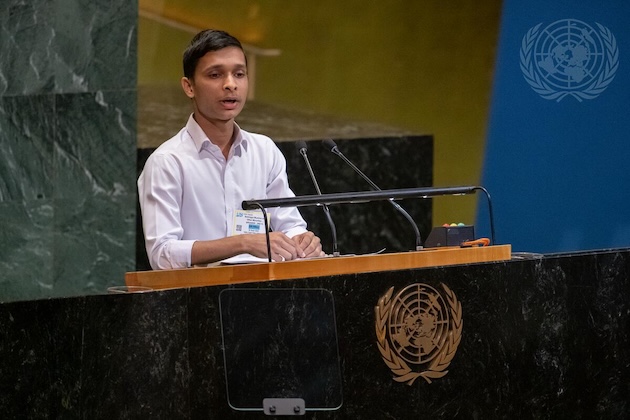
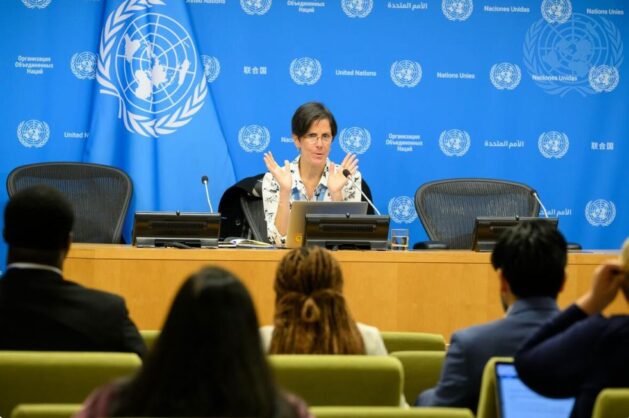
Maung Sawyeddollah, Founder of the Rohingya Students Network, addresses the high-level conference of the General Assembly on the situation of Rohingya Muslims and other minorities in Myanmar Credit: UN Photo/Manuel Elías

Maung Sawyeddollah, Founder of the Rohingya Students Network, addresses the high-level conference of the General Assembly on the situation of Rohingya Muslims and other minorities in Myanmar Credit: UN Photo/Manuel Elías

UNITED NATIONS, Oct 1 2025 (IPS) – The international community convened for a high-level meeting at UN Headquarters, this time to mobilize political support for the ongoing issue of the persecution of the Rohingya Muslims and other minorities in Myanmar.


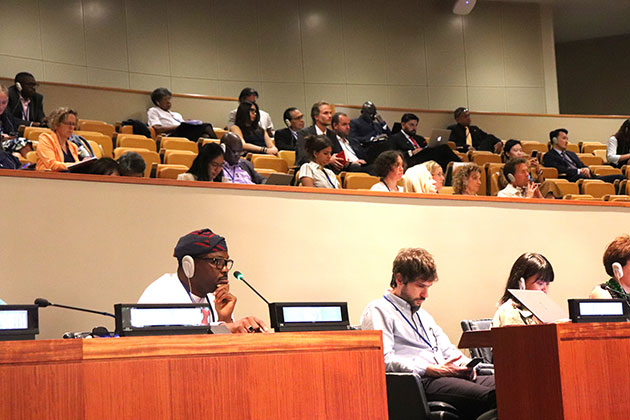
On Tuesday September 30, representatives from Rohingya advocacy groups, the UN system and member states convened at the General Assembly to address the ongoing challenges facing Rohingya Muslims and the broader context of the political and humanitarian situation in Myanmar.

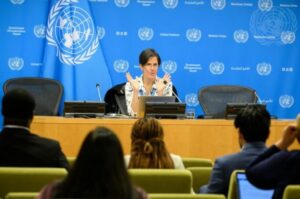
UN President of the General Assembly Annalena Baerbock remarked that the conference was an opportunity to listen to stakeholders, notably civil society representatives with experience on the ground.

“Rohingya need the support of the international community, not just in words but in action,” she said.

Baerbock added there was an “urgent need for strengthened international solidarity and increased support,” and to make efforts to reach a political solution with unequivocal participation from the Rohingyas.

“The violence, the extreme deprivation and the massive violations of human rights have fueled a crisis of grave international concern. The international community must honor its responsibilities and act. We stand in solidarity with the Rohingya and all the people of Myanmar in their hour of greatest need,” said UN Human Rights Commissioner Volker Türk.

In the eight years since over 750,000 Rohingyas fled persecution and crossed the border into Bangladesh, the international community has had to deal with one of the most intense refugee situations in living memory. Attendees at the conference spoke on addressing the root causes that led to this protracted crisis—systematic oppression and persecution at the hands of Myanmar’s authorities and unrest in Rakhine State.
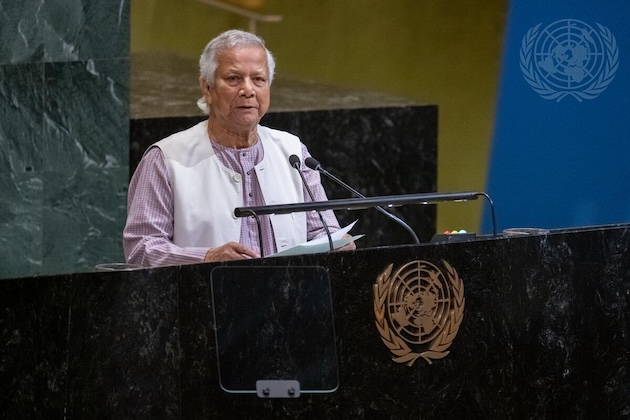
Muhammad Yunus, Chief Adviser of the interim Government of Bangladesh, addresses the high-level conference of the situation of Rohingya Muslims and other minorities in Myanmar. Credit: UN Photo/Manuel Elias

Muhammad Yunus, Chief Adviser of the interim Government of Bangladesh, addresses the high-level conference on the situation of Rohingya Muslims and other minorities in Myanmar. Credit: UN Photo/Manuel Elias

The military junta’s ascension in 2021 has only led to further unrest and instability in Myanmar and has made the likelihood of safe and sustained return far more precarious. Their persecution has only intensified as the Rohingya communities still residing in Rakhine find themselves caught in the middle of conflicts between the junta and other militant groups, including the Arakan Army.

At the opening of the conference, Rohingya refugee activists remarked that the systemic oppression predates the current crisis. “This is a historic occasion for Myanmar. But it is long overdue. Our people have suffered enough. For ethnic minorities—from Kachin to Rohingya—the suffering has spanned decades,” said Wai Wai Nu, founder and executive director of the Women’s Peace Network.

“It has already been more than eight years since the Rohingya Genocide was exposed. Where is the justice for the Rohingyas?” asked Maung Sawyeddollah, founder of the Rohingya Student Network.

For the United Nations, the Rohingya refugee crisis represents the dramatic impact of funding shortfalls on their humanitarian operations. UN Secretary-General António Guterres once said during his visit to the refugee camps in Bangladesh back in April that “Cox’s Bazar is Ground Zero for the impact of budget cuts”.

Funding cuts to agencies like UNICEF and the World Food Programme (WFP) have undermined their capacity to reach people in need. WFP has warned that their food assistance in the refugee camps will run out in two months unless they receive more funding. Yet as of now, the 2025 Rohingya Refugee Response Plan of USD 934.5 million is only funded at 38 percent.
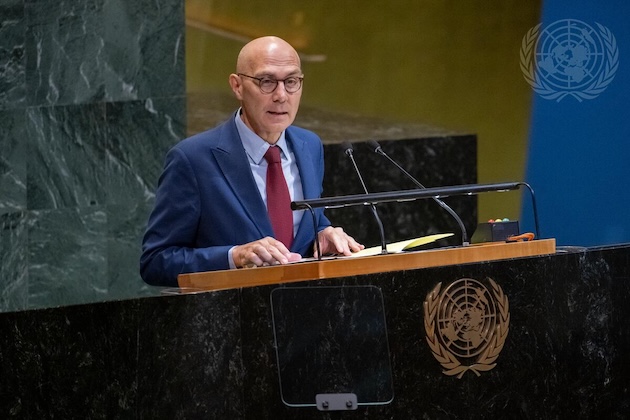
Volker Türk, United Nations High Commissioner for Human Rights, addresses the high-level conference of the General Assembly on the situation of Rohingya Muslims and other minorities in Myanmar. Credit: UN Photo/Manuel Elias

Volker Türk, United Nations High Commissioner for Human Rights, addresses the high-level conference of the General Assembly on the situation of Rohingya Muslims and other minorities in Myanmar. Credit: UN Photo/Manuel Elias

“The humanitarian response in Bangladesh remains chronically underfunded, including in key areas like food and cooking fuel. The prospects for funding next year are grim. Unless further resources are forthcoming, despite the needs, we will be forced to make more cuts while striving to minimize the risk of losing lives: children dying of malnutrition or people dying at sea as more refugees embark on dangerous boat journeys,” said Filippo Grandi, UN High Commissioner for Refugees.

As the host country of over 1 million refugees since 2017, Bangladesh has borne the brunt of the situation. Chief Advisor Muhammad Yunus said that the country faces its own development challenges and systemic issues with crime, poverty and unemployment, and has struggled to support the refugee population even with the help of aid organizations. He made a call to pursue repatriations, the strategy to ensure the safe return of Rohingyas to Rakhine.

“As funding declines, the only peaceful option is to begin their repatriation. This will entail far fewer resources than continuing their international protection. The Rohingya have consistently pronounced their desire to go back home,” said Yunus. “The world cannot keep the Rohingya waiting any longer from returning home.”

Along with the UN, Myanmar and Bangladesh, neighboring and host countries also have a role to play. Regional blocs like the Association of Southeast Asian Nations (ASEAN) are also crucial  in supporting the Rohingya population as well as leading dialogues with other stakeholders across the region.

“In my engagements with Myanmar stakeholders, I have emphasized that peace in Myanmar will remain elusive until inclusive dialogue between all Myanmar stakeholders takes place,” said Othman Hashim, the special envoy of the ASEAN Chair on Myanmar. “For actions within Myanmar, the crucial first step is stopping the hostilities and violence. Prolonged violence will only exacerbate the misery of the people of Myanmar, Rohingya and other minorities included.”

“Countries hosting refugees need sustained support. Cooperation with UNODC [UN Office of Drugs and Crime], UNHCR, and IOM [International Organization for Migration] must be deepened,” said Sugiono, Indonesia’s foreign minister.

Supporting the Rohingya beyond emergency and humanitarian needs would also require investing resources in education and employment opportunities. Involved parties were encouraged to support resettlement policies that would help communities secure livelihoods in  the long-term, or to extend opportunities for longterm work, like in Thailand where they recently granted long-staying refugees the right to work legally in the country.

“Any initiative for the Rohingya without Rohingya in the camp, from decision making to nation-building is unsustainable and unjust. The UN must mobilize resources to empower Rohingya. We are not only victims; we have the potential to make a difference,” said Sawyeddollah.

As one of the few Rohingya representatives present that had previous lived in the camps in Cox’s Bazaar, Sawyeddollah described the challenges he faced in pursuing higher education when he applied to over 150 universities worldwide but did not get into any of them. He got into New York University with a scholarship, the first Rohingya refugee to attend. He reiterated that universities had the capacity to offer scholarships to Rohingya students, citing the example of the Asian University of Women (AUW) in Chittagong, Bangladesh, where it has been offering scholarships to Rohingya girls since at least 2018.

The conference called for actionable measures that would address several key areas in the Rohingya refugee situation. This includes scaling up funding for humanitarian aid in Bangladesh and Myanmar, and notably, pursuing justice and accountability under international law. Türk and other UN officials reiterated that resolving the instability and political tensions in Myanmar is crucial to resolving the refugee crisis.

Kyaw Moe Tun, Permanent Representative of the Republic of the Union of Myanmar to the UN, blamed the military junta for the country’s current state and called for member states to refuse supporting the junta politically or financially. “We can yield results only by acting together to end the military dictatorship, its unlawful coup, and its culture of impunity. At a time when human rights, justice and humanity are under critical attack, please help in our genuine endeavour to build a federal democratic union that rooted in these very principles.”
IPS UN Bureau Report
  Source

Multilateralism Minus the People: 80 Years of the UN’s Broken Promise

Civil Society, Democracy, Global, Global Governance, Headlines, Human Rights, International Justice, IPS UN: Inside the Glasshouse, TerraViva United Nations

Opinion

Credit: United Nations

NEW YORK, Sep 30 2025 (IPS) – Last week, the United Nations (UN) marked its 80th anniversary against the backdrop of an unprecedented global crisis. With the highest number of active conflicts since 1946, trust in multilateralism is faltering.


Yet the UN’s founding vision, rooted in the principle of ‘We the Peoples,’ remains as urgent as ever; affirming that peace, human rights, and development cannot be achieved by governments alone. From the very beginning, civil society has been integral to this vision, a role formally recognised in Article 71 of the UN Charter, which underscores the value of NGOs in shaping international agendas.

“Article71: The Economic and Social Council may make suitable arrangements for consultation with non-governmental organisations which are concerned with matters within its competence. Such arrangements may be made with international organisations and, where appropriate, with national organisations after consultation with the Member of the United Nations concerned.”

Yet despite this important provision, multilateral processes have increasingly become state-centric, turning global governance into a top-down exercise detached from the people it is meant to serve.

Excluding civil society and global citizens from policy-making not only produces laws and policies out of touch with local needs but also undermines community-driven practices that are often best placed to identify challenges and craft solutions.

At worst, silencing those who hold governments accountable empowers authoritarian regimes to flout international law, restrict human rights, and erode the rules-based international order. While the UN may recognise the role of civil society in principle, why does practice remain so distant from this commitment?

One area for reflection is the extent to which international spaces mirror national realities. Many see the multilateral system as an all-powerful body safeguarding humanity from the scourge of war. In reality it is a regrouping of national actors, the same ones responsible for shrinking civic space at home.

According to the CIVICUS Monitor, more than 70 percent of the global population lives in countries where freedoms of expression, association, and assembly are severely restricted. For many human rights defenders (HRDs), even raising their voices at the UN has led to reprisals at home, including surveillance and imprisonment.

By privileging repressive states and sidelining accountability actors, multilateral institutions replicate domestic restrictions globally, leaving abuses unchecked and defenders excluded.

A second challenge is how money dictates priorities. The collapse of the global aid sector has forced many to confront this reality again. The UN is funded largely by member states through mandatory and voluntary contributions. Over time, earmarking of funds and shifting UN priorities have led to chronic underinvestment in human rights.

Today, the human rights pillar receives just five percent of the UN’s regular budget, and with the upcoming UN80 budget cuts, this already underfunded area faces further risk. When human rights are deprioritised through budget cuts and underfunding, the message to member states is clear- resources and political will are better placed elsewhere. This dynamic discourages collaboration with civil society and reinforces their marginalisation.

A third challenge is the unequal access granted to civil society at UN headquarters. Negotiation rooms are closed to most organisations, and draft resolutions are often circulated only among those with close ties to diplomats, leaving others without privileged access unable to provide timely input. Meaningful participation is impossible without timely information.

During high-level weeks in New York, even side event spaces can only be booked through a member state, effectively controlling who speaks and what is discussed. Major processes such as the Summit of the Future or Financing for Development rarely engage civil society at the national level in time to influence outcomes.

Even when hundreds of civil society organisations submit feedback on policy documents, there is little transparency on how their contributions are used. These opaque practices erode trust and leave committed groups questioning whether investing their scarce time and resources in multilateral spaces is worthwhile.

Despite these glaring challenges, which have turned the system into “we the member states,” the UN is not without tools to ensure it is inclusive of the people it was created to serve. First, existing tools such as the UN Guidance Note on the Promotion and Protection of Civic Space provide a clear framework for action through the “three P’s”: participation, protection, and promotion. To move this document beyond paper, the task force assigned to implement it must act urgently.

Accreditation processes may get civil society past the security desk after years of hurdles, but it does not guarantee meaningful engagement. What matters in the long run is meaningful participation across the UN system, not just at headquarters, in order to achieve political and practical impact.

Second, a focus on accountable leadership. When funding is slashed and political will abandoned, the UN inadvertently strengthens authoritarian regimes, enabling them to silence voices, restrict rights, and openly flout international law. This erosion of support for human rights contributes to shrinking civic freedoms worldwide and leaves many losing trust in the multilateral system.

In this context, civil society engagement is not optional, it is key to steering the UN’s future leadership toward defending human rights and global freedoms.

With conversations on the next Secretary-General already gaining momentum, civil society’s role must be a central test for every candidate. Town halls with nominees should be used to demand clear commitments to meaningful participation of civil society, as well as sustained funding and protection for human rights programmes.

This is not about tokenistic symbolism; meaningful civil society engagement is a fundamental condition for development progress, the protection of human rights, and the survival of a rules-based international order- including multilateral organisations like the UN.

As the UN enters its ninth decade, its relevance depends on accountability to the people, not just the states. Civil society must be recognized as independent partners, with their constructive input embedded across decision-making, financing, and oversight. Only by centering people and their rights can the UN restore trust, strengthen multilateralism, and truly fulfill its founding promise: a world grounded in peace, development, and human rights.

Jesselina Rana, a human rights lawyer, is the UN Advisor at CIVICUS’ New York Hub.

IPS UN Bureau

  Source

UN80: Three Tests to Make Reform About People, Not Spreadsheets

Armed Conflicts, Civil Society, Environment, Financial Crisis, Global, Global Geopolitics, Headlines, Human Rights, Inequality, Peace, TerraViva United Nations

Opinion

Sarah Strack is Forus Director and Christelle Kalhoulé is Forus Chair and civil society leader in Burkina Faso

Credit: Forus – UN High-Level Political Forum 2025

NEW YORK, Sep 26 2025 (IPS) – This September the UN turns 80, but the lessons of peace, justice, and cooperation are still unfinished. The world today faces the flames of inequality, conflict, ecological collapse and growing digital threats. In short, the very problems the UN was created to solve are once again staring us in the face.


That’s why the UN’s latest reform push, “UN80,” matters. Launched this spring, it promises to make the multilateral system more inclusive and accountable. But here’s the real question: can it align with 21st century’s needs? Will it be remembered as a budget drill or the start of a renewal that truly delivers for people where they live?

If this moment is going to count, three things must happen.

First, reforms must put people at the center, and we must avoid a reform by spreadsheet.

The UN is under financial strain. Geopolitical tensions are sky-high, negotiations are gridlocked, Member States are late on dues and membership fees, arrears run into the billions, and the UN’s mandate, efficiency, and effectiveness are under question.

“In a polycrisis world, shrinking the UN’s capacity is like cutting the fire brigade during wildfire season,” warns Christelle Kalhoulé, Forus Chair and civil society leader in Burkina Faso. “Reform cannot be about cutting corners. It must be about giving people the protection, rights, and solidarity they are being denied today.”

The UN80 Initiative marks the most sweeping reform effort in decades, with three tracks: streamlining services and consolidating IT and HR systems, reviewing outdated mandates, and exploring the consolidation of UN agencies into seven thematic “clusters.”

On paper, these reforms could bring overdue coherence. But the process has too often felt opaque, with key documents surfacing via leaks and staff unions flagging limited transparency and consultation.

Increasing the use of tools like AI is among the “solutions” being floated to “flag potential duplication” and shorten resolutions — yet without clear guardrails, there’s a risk of automating cuts and reinforcing bias rather than empowering people-first innovation. And the debate has too often been framed around cash flow, back payments, and cuts. The United States alone owes $1.5 billion in dues. Major donors are cutting ODA, and several UN humanitarian agencies are planning double-digit reductions in 2025 in their budgets.

As Arjun Bhattarai, Executive Director of the NGO Federation of Nepal warns: “Reform cannot be a synonym for austerity. Cutting budgets may make spreadsheets look tidy in New York, but it leaves communities in Kathmandu, Kampala, Khartoum, or Kyiv without support when they need it most.”

The danger is a reform focused on management efficiencies instead of reimagining what the UN must be to meet today’s and tomorrow’s challenges.

Second, a better compass exists.

Despite its flaws, multilateralism remains indispensable. Without the UN, the world would be poorer when it comes to peace, cooperation, and collective problem-solving.

What makes the UN matter most, however, are not the halls of New York or Geneva, but the people and communities it exists to serve.

The UN was created “for the people and by the people”. Protecting, safeguarding and promoting healthy sustainable lives for communities must remain the core priority.

Our measure for reform is simple: a transformed UN must reduce inequalities, ensure fairer and more inclusive representation across its governance structures, deliver public goods fairly with accountability, and protect people better, faster, while safeguarding rights.

As Moses Isooba, Executive Director of the Uganda National NGO Forum, puts it: “A reformed UN must stand closer to the people than to the corridors of power. It must be measured not by the length of resolutions, but by the depth of hope it restores and the changes it makes for communities worldwide.”

If UN80 becomes a technocratic exercise in “doing less with less,” we will emerge with a smaller, weaker UN at precisely the moment we need it most.

If instead it becomes a justice-driven reimagining — linking architecture and finance to a clear vision of protection, equity, participation, and decentralization — it could renew the UN’s capacity to act as a backbone of international cooperation.

As Justina Kaluinaite, Policy and advocacy expert at the Lithuanian NGDO Platform, stresses: “The UN will survive another 80 years only if it learns to listen. True reform is not about doing more with less, but about doing better with those who have been left out.”

Third, put reforms through three simple tests.

When leaders meet in New York, we challenge them to have every reform proposal answering three questions:

    1. The Inequality Question: Does this reform measurably narrow gaps — by income, gender, geography, or status — in who is protected and who benefits?

    2. The Localisation Question: Does it move money, decisions, and accountability closer to communities, with transparent targets and timelines?

    3. The Rights Question: Does it strengthen — not dilute — protection, gender equality, and human rights?

As Christelle Kalhoulé, sums it up: “The measure of UN80 should not be how much paper it saves, but how many lives it protects. History and the legacy we leave to future generations will not ask whether the UN balanced its budget in 2025; it will ask whether it stood with people.”

If leaders embrace this moment, the UN can emerge sharper, stronger, and more inclusive, with a justice-driven renewal of multilateralism, reclaiming its place as the backbone of global cooperation. If not, UN80 may go down in history as the moment when multilateralism chose retreat over renewal.

If UN80 is going to matter, it must prevent crises before they explode, deliver for both people and planet, give underrepresented countries and communities a real voice, keep civil society free and strong, and fix financing so money reaches those on the frontlines. The real test isn’t how tidy the org chart looks, it’s whether lives are saved, trust is rebuilt, and the UN proves it can still rise to the moment and be fit to serve this 21st century world.

IPS UN Bureau

  Source

Mamdani’s Stand on Genocide is More Important than the Dynamics of Arresting Netanyahu

Armed Conflicts, Civil Society, Crime & Justice, Global Governance, Headlines, Human Rights, International Justice, IPS UN: Inside the Glasshouse, Middle East & North Africa, TerraViva United Nations

Opinion

NEW YORK, Sep 23 2025 (IPS) – No leader responsible for mass atrocities enjoys greater impunity on the international stage than Benjamin Netanyahu. This is due to the strange stranglehold of the pro-Israel lobby on the two major political parties in the United States.


Unsurprisingly, the assertion by New York City mayoral candidate and front runner Zohran Mamdani on September 13 that he would order the arrest of Netanyahu if he ever came there, has attracted blowback from within the mainstream political establishments of both the Democratic and Republic parties, as well from extremist right-wing circles.

Legal experts have gone into a tizzy whether a future mayor of New York can arrest the leader of a foreign government. The unjustified blowback apparently in support of Israel’s televised genocide of the Palestinian people flies in the face of facts, basic principles of humanity and the shifting sands of public opinion in the United States.

A high- powered UN Commission of Inquiry led by a judge who investigated the Rwandan genocide of 1994 has recently concluded that Israel has committed genocide – the worst crime under international law – in Gaza.

The International Criminal Court (ICC) has a standing arrest warrant against Netanyahu and his former defence minister for using starvation as a weapon of war and for deliberately killing thousands of Palestinian civilians in Gaza. But bizarrely, it’s not Israel’s leaders but ICC judges and prosecutors who are being targeted through sanctions by the Trump administration.

Nevertheless, Netanyahu’s cruel war on Gaza is rapidly eroding American public support for Israel. According to the Pew Research Center’s latest findings more than half of American adults now possess an unfavourable opinion of Israel. Just 32 percent have confidence in Netanyahu himself.

However, the negative impacts of the damage done to American democracy by Netanyahu and his hardline supporters will linger on. Under the pretext of containing anti-Israeli sentiment, the Trump administration has attacked universities that were the site of sustained pro-Palestinian protests including Columbia and Harvard.

Academic freedom is a cherished American ideal but that hasn’t prevented the administration from threatening colleges and universities with federal funding cuts and placing restrictions on foreign students if they don’t toe the government’s line. Sadly, several pro-Palestinian student protest leaders have been arbitrarily detained in direct repudiation of constitutional protections on the freedom of speech and the right to peaceful protest drawing criticism from UN experts.

Many of us in civil society have been pointing out for some time that the leaders of the two major political parties in the United States are so beholden to the moneyed interests of their donors that they have become out of touch with the needs and aspirations of the American people.

Indeed, Israel’s belligerence in continuing atrocities on the civilian population in the Occupied Palestinian Territories of Gaza and the West Bank has been sharply rebuked by progressive groups like Jewish Voices for Peace and Jews for Racial and Economic Justice who support a new wave of politicians such as Mahmud Mamdani who are willing to stand up for human rights.

A generation of politicians who represent a more forward looking and inclusive vision for the United States and who enjoy widespread support in New York and beyond such as Alexandria Ocasio Cortez have rallied to Mamdani’s side.

Mamdani’s win in the Democratic primaries for the New York mayoral election was powered by a diverse coalition of supporters in America’s most diverse and vibrant city. He continues to be the front runner for the mayoral election slated on November 4.

So far, his focus has been on the issues that matter to most of the people of New York, such as the high cost of living and the ever- widening gap between millionaires and the rest of the country fueled by pro-big business policies and tax cuts.

Funnily, in blatant negation of diplomatic protocol, Netanyahu has jumped into the political fray by dubbing Mamdani’s proposals for New York City’s mayoral elections as ‘nonsense’.

Notably, Netanyahu is planning to come to New York to address the UN General Assembly on 26 September. When he speaks at the UN, it’s usually to disparage the institution, which will be marking 80 years of its founding from the ashes of war and the horrors of the holocaust.

Last year, a large number of delegates walked out of the UN hall when he came on stage. This year, Netanyahu emboldened by Trump’s support will try his best to repudiate the findings of the UN Commission of Inquiry on genocide in Gaza. Whether the delegates will pay attention is arguable.

However, one thing is certain. If Netanyahu attempts to go on to the streets of New York to campaign against Mamdani he will likely be met by mass protests.

Mandeep S. Tiwana is a human rights lawyer and Secretary General of global civil society alliance, CIVICUS. He is presently based in New York.

IPS UN Bureau

  Source

New Report Investigates Violence Against Women and Girls Through Surrogacy, Sparks Global Dialogue

Active Citizens, Civil Society, Development & Aid, Editors’ Choice, Featured, Gender, Gender Violence, Global, Headlines, Health, IPS UN: Inside the Glasshouse, Sustainable Development Goals, TerraViva United Nations, Women’s Health

United Nations Special Rapporteur Reem Alsalem recently released her report on violence against women and girls with a focus on surrogacy, one of the most controversial topics in the medical field.

United Nations Special Rapporteur Reem Alsalem. Credit: UN Photo/Loey Felipe

United Nations Special Rapporteur Reem Alsalem. Credit: UN Photo/Loey Felipe

UNITED NATIONS, Sep 19 2025 (IPS) – A United Nations report calling for the global abolition of surrogacy has sparked intense debate among experts, with critics arguing that blanket bans could harm the very women the policy aims to protect.


Reem Alsalem, the United Nations Special Rapporteur on violence against women and girls, issued a report on violence against women and girls with a specific focus on surrogacy as a form of exploitation. The report, officially titled “The different manifestations of violence against women and girls in the context of surrogacy,” was published on July 14, 2025, and is slated for discussion at the upcoming UN General Assembly session in October.

The report calls surrogacy “direct and exploitative use of a woman’s bodily and reproductive functions for the benefit of others, often resulting in long-lasting harm and in exploitative circumstances.”

It further delves into the danger of surrogacy business models, in particular, which embrace the ambiguity of international law to churn a profit, often at the expense of both the surrogate and the prospective family. Alsalem recommends the abolition of surrogacy and asks member states to “work towards adopting an international legally binding instrument prohibiting all forms of surrogacy.”

One of the largest problems with surrogacy today, according to Senior Lecturer at Swinburne University Jutharat Attawet, is a lack of comprehensive education and legal standards around the practice. This results in social alienation and false conceptions, which worsen exploitation of people who participate in surrogacy—they are not provided adequate resources

Attawet, who specializes in surrogacy healthcare and domestic policy, considers surrogacy itself a beneficial tool for nontraditional family building. However, she acknowledges the steps it has to take to ensure autonomy and respect for surrogates.

Attawet’s research, cited in Alsalem’s report, shows that approximately 1 percent of babies born in Australia are from surrogates, so although the number has doubled over the past decade, doctors are not familiar with the process. Furthermore, legislation is primarily top-down rather than region- or area-specific. Since doctors in places like Australia are “intimidated by the language” surrounding surrogacy due to minimal education, they are less willing to openly engage with the procedures. This pushes families to seek surrogates elsewhere, where laws are less stringent and doctors more comfortable with the procedures.

Another incentive for overseas surrogacy, Attawet says, is lack of national support for surrogacy. Since it does not fulfill the criteria of most healthcare insurance plans, prospective parents often seek a more affordable surrogacy birth internationally. This further contributes to the exploitation both she and Alsalem note in their respective research—international surrogacy is much more difficult to regulate between different countries’ laws and often primarily harms the surrogate and the child, who is less likely to know their birth mother from an international surrogacy.

Alsalem criticized the practice of international surrogacy as an exploitative technique to perpetuate wealth inequality between different countries, but many experts argue that the job is one of the few accessible, well-paying jobs for child-bearing people who need to care for their family full-time. Polina Vlasenko, a researcher whose work was also cited in Alsalem’s report, explained to IPS that international surrogacy in Ukraine and the Republic of Georgia “is the type of job you can combine with having a kid and being a full-time caretaker of your kid… it still benefits women.”

Vlasenko elaborated, saying that most workers in the surrogacy industry, including intermediaries and clinicians, were women who had some sort of pre-existing connection to the process—often being former surrogates. To ban surrogacy entirely, Vlasenko argues, would merely harm women in all facets of the industry rather than resolving wealth gaps. She said, “this inequality is much deeper than services of surrogacy.”

Social worker and professor at Ohio State University Sharvari Karandikar similarly opposes the Special Rapporteur’s recommendation of abolition. In an interview with IPS, Karandikar explained that “in countries like India, it’s really hard to implement policies in a uniform way, and I think that one needs to have proper oversight of medical professionals and how they’re engaging in surrogate arrangements and medical tourism. Blanket bans do not work.”

She emphasized the dangers of surrogacy without regulation, saying it would only do more harm.

Instead, Karandikar advocates for “the safety, the better communication, more education, more informed choice and decision, more safeguards, better treatment options, and long-term health coverage for women who engage in surrogacy” as “a wonderful way to speak about women’s choices, decisions and their health instead of penalizing anyone.”

However, in order for the global conversation surrounding surrogacy to center around female agency, experts like Vlasenko say the perception of surrogates needs to change. She said, “sex work is not seen as violence or exploitation when it’s done for free… it’s the same with childbirth… surrogate mothers are taking the only work that, in their situation, allows them to fulfill certain responsibilities like childcare and income generation. They think that they’re agents in this process, but society sees them as victims.”

Ultimately, the surrogacy debate reflects broader questions about women’s autonomy, economic inequality and reproductive rights. As Vlasenko noted, addressing the “much deeper inequality” that pushes women to surrogacy may prove more effective than focusing solely on limiting the practice itself.

IPS UN Bureau Report

  Source

Loss and Damage at COP30: Indigenous Leaders Challenge Top-Down Finance Models

Active Citizens, Civil Society, Climate Action, Climate Change, Climate Change Finance, Climate Change Justice, Conferences, COP29, COP30, Editors’ Choice, Featured, Headlines, Human Rights, Humanitarian Emergencies, Indigenous Rights, International Justice, Sustainable Development Goals, TerraViva United Nations

Indigenous Rights

Indigenous activists continue to fight for a seat at the table in solving climate change, asking for self-determination and financial agency.

Activists demand loss and damage reparations outside the hall where the COP29 negotiators were concluding their negotiations. Credit: UN Climate Change/Kiara Worth

Activists demand loss and damage reparations outside the hall where the COP29 negotiators were concluding their negotiations. Credit: UN Climate Change/Kiara Worth

UNITED NATIONS, Sep 17 2025 (IPS) – As climate-induced disasters continue to devastate the Global South, nations are steadily mounting pressure at the United Nations for wealthier countries to deliver on long-promised climate reparations through the Loss and Damage Fund. For Indigenous peoples, whose territories are often the most ecologically intact yet most damaged by climate change, these negotiations define survival, sovereignty and recognition as rights-holders in global climate governance.


After the fund’s operationalization at the 29th Conference of the Parties to the United Nations Framework Convention on Climate Change (COP29) in Baku last fall, developing countries say that the pledges so far—approximately USD 741 million—fall drastically short of the trillions needed to recover from climate devastation.

This low number is acutely felt in Indigenous communities, whose local economies rely on thriving ecosystems.

“A lot of rich biodiversity, carbon sinks and the most preserved parts of the world are within indigenous territories,” said Paul Belisario, Global Coordinator for the Secretariat of the International Indigenous Peoples Movement for Self-Determination and Liberation (IPMSDL), in an interview with IPS. “Without recognizing Indigenous people’s right to take care of it, to govern it and to live in it so that their traditional knowledge will flourish, we cannot fully address the climate crisis.”

UN Secretary-General António Guterres echoed this sentiment in Baku, saying, “The creation of the Loss and Damage Fund is a victory for developing countries, for multilateralism and for justice.  But its initial capitalization of USD 700 million doesn’t come close to righting the wrong inflicted on the vulnerable.”

These “wrongs,” Indigenous leaders argue, must include the exclusion of traditional and tribal knowledge in decision-making. In light of pushback to make climate action a legal responsibility rather than a political agreement, many are hopeful that COP30 will yield a more successful negotiation for adequate compensation.

The call for action is led by coalition blocs including the Alliance of Small Island States (AOSIS) and G77, an alliance of developing countries with China as its primary political and financial supporter. Both alliances represent the countries most vulnerable to climate-related natural disasters. G77 was particularly vocal during COP29, where their rejection of the deal was backed by a number of climate and civil society organizations who criticized the negotiating text for giving developed countries too much leeway to shirk their climate finance obligations.

For Indigenous groups, this criticism stems from concerns that funding will not successfully reach their communities due to bureaucracy or geographical and political isolation.

Secretary-General António Guterres meets with André Aranha Corrêa do Lago, President-designate of COP 30, the 2025 UN Climate Change Conference, which will be held in Belém, Brazil. Credit: UN Photo

Secretary-General António Guterres meets with André Aranha Corrêa do Lago, President-designate of COP 30, the 2025 UN Climate Change Conference, which will be held in Belém, Brazil. Credit: UN Photo

Janene Yazzie, director of policy and advocacy at the NDN Collective, spoke about the importance of Indigenous involvement in funding distributions, saying, “What we’re advocating for is to ensure that these mechanisms… are accessible to Indigenous Peoples, uphold the rights of Indigenous Peoples, and can be utilized towards solutions and responses that are designed and prioritized by Indigenous Peoples.”

Last year, countries eventually settled on mobilizing USD 300 billion annually by 2035 to developing countries for climate finance—far below the USD 1 trillion experts say is the minimum for effective mitigation and adaptation. The financial commitment is voluntary, meaning that countries can withdraw without consequence and no protections exist to ensure the money is distributed with regard for Indigenous governance systems.

The Forest Stewardship Council (FSC) Indigenous Foundation noted that groups without formal land titles could be excluded entirely, despite their role in stewarding biodiverse landscapes.

However, a recent International Court of Justice (ICJ) report has created new legal pathways. The court placed stringent obligations on states to prevent significant climate harm and tackle climate change, stating that failure to do so triggers legal responsibility. Scientific evidence can link emissions to specific countries, allowing those affected by climate change to seek legal action, which could include getting money back, restoring land, improving infrastructure, or receiving compensation for financial losses.

Indigenous activists at COP29. Credit: UN Climate Change/ Kiara Worth

Indigenous activists at COP29. Credit: UN Climate Change/Kiara Worth

This legal opinion opens new pathways for seeking restitution—not only in money but also in land recovery, infrastructure for adaptation, and guarantees of political participation.

This legal shift comes at a crucial time. In April 2025, thousands of Indigenous Brazilians marched in the capital ahead of COP30 in Belém, demanding land rights and decision-making influence. Meanwhile, the National Organization of the Indigenous Peoples of the Colombian Amazon (OPIAC) also issued a statement about the summit for Deforestation of the Amazon. They outline an action plan to end deforestation, strengthen land rights and phase out oil and gas exploration.

After indigenous groups were denied a co-presidency for COP30, Conference President André Corrêa do Lago pledged to establish a “Circle of Indigenous Leadership” within the conference. Many leaders found the arrangement insufficient—the FSC Indigenous Foundation called instead for “co-governance models where Indigenous Peoples are not just consulted but are leading and shaping climate action.”

Indigenous people make their message clear during COP29. Credit: Photo- UN Climate Change/Lara Murillo

Indigenous people make their message clear during COP29. Credit: UN Climate Change/Lara Murillo

Other groups were more explicitly critical. The Indigenous Climate Action co-authored a statement at the end of COP29 saying, “There is nothing to celebrate here today… While we urgently need direct and equitable access to climate finance for adaptation, mitigation and loss and damage across all seven socio-cultural regions… we reject the financial colonization that comes from loans and any other financial mechanisms that perpetuate indebtedness of nations that have contributed the least to climate change yet bear the brunt of its tragedies.”

Belisario frames the funding question as a matter of justice rather than charity.

“This funding is not just corporate social responsibility or compensation,” he told IPS. “This is historical justice.”

However, without Indigenous influence in the distribution of money from the Loss and Damage Fund, it remains unclear how effective this aid will be in combating climate change based on Indigenous knowledge and science. Many activists advocate for more localized approaches to climate action.

Belisario acknowledges the limitations of international negotiations.

“It’s been a running joke that we will negotiate until COP100, and we might not have that long. What we would really like to get out of COP30 is to meet many communities to discuss the common problems and make them realize that this COP is just a part of how we would like to solve our climate crisis,” he said. “We really believe that more radical ways to enact accountability and responsibility will start with movements in people’s own countries, in their own localities.”

As the FSC Indigenous Foundation concluded, “Indigenous Peoples must lead the design, management, and oversight of financial mechanisms that affect their lands, lives, and futures. Climate justice will only be possible when Indigenous Peoples are recognized as rights-holders and partners in decision-making.”

IPS UN Bureau Report