Homeless Camps, a Reflection of Growing Inequality in Chile

Active Citizens, Civil Society, Development & Aid, Editors’ Choice, Featured, Headlines, Human Rights, Latin America & the Caribbean, Population, Poverty & SDGs, Regional Categories

Development & Aid

On Cerro 18, above the affluent municipality of Lo Barnechea, in the coveted eastern sector of Santiago de Chile with a stunning view of the valley and the Andes Mountains, 300 families live in five camps or irregular settlements, many without water, electricity or sewage. CREDIT: Orlando Milesi/IPS

SANTIAGO, Dec 10 2021 (IPS) – Camps made up of thousands of tents and shacks have mushroomed in Chile due to the failure of housing policies and official subsidies for the sector, aggravated by the rise in poverty, the covid-19 pandemic and the massive influx of immigrants.


“Three years ago we were about to be evicted and when my children would head off to school they never knew if our little house would be there when they got home. One morning we were going to school and the carabineros (militarized police) were coming. Many times I had to go home early from work. It was chaotic, difficult and distressing,” Melanni Salas told IPS during a visit to the site.

Salas, 33, presides over Senda 23, one of the five camps that bring together 300 families who occupied public land in Cerro 18, in the municipality of Lo Barnechea, on the east side of Santiago. They have been building shacks with wood and other materials within their reach, which they are gradually trying to improve.

The threat of eviction ceased at the start of the covid pandemic, but the shadow still hangs over their heads because the municipality “built us a septic tank and gave us gifts for Christmas, but has said nothing about housing,” she said.

The community activist previously lived for 19 years as an “allegada”, the name given in Chile to people or families who share a house with relatives or friends, in overcrowded conditions. In 2016 she occupied the land where she and her husband Jorge built the precarious dwelling where she now lives with her three children aged 15, 13 and five years old.

“This used to be a garbage dump and now it is clean and there are houses,” said Salas. “Mine gets a little wet inside when it rains because it is made of wood and because of the strong wind. But I have drinking water, electricity and sewerage thanks to my mother-in-law who lives further up. The neighboring family has neither water nor sewage. They are a couple with three children and one of them, Colomba, was born a week ago.”

She explains that her neighbors “use the bathroom at their brother’s place who lives nearby, but during the pregnancy she went back to her mother’s house.”

In the camps people cook, wash, sleep and live together, observed by passers-by who have become accustomed to this new urban landscape. CREDIT: Orlando Milesi/IPS

In the camps people cook, wash, sleep and live together, observed by passers-by who have become accustomed to this new urban landscape. CREDIT: Orlando Milesi/IPS

Hundreds of homeless tents now line the main avenues of Santiago de Chile.

Explosive situation

“Every day more than 10 families come to live in an encampment in Chile,” says Fundación Techo Chile, a social organization dedicated to fighting against housing exclusion in the cities of this South American country.

The problem is also seen along the avenues and in the parks where hundreds of men and women set up tents to sleep, cook, wash and live together in full view of passers-by who have become accustomed to the scene.

In the last two years, the number of families living in 969 of these camps with almost no access to water, energy and sanitation services has increased to 81,643, a survey by the Fundación Techo Chile found.

In Chile, the term “campamentos” or camps has also come to refer to slums or shantytowns known traditionally as “callampas”, such as the one where Salas lives, which are built on occupied land and consist of houses made of light materials, although the neighborhoods are sometimes later improved and upgraded, but still lack basic services.

These slums are mainly in Santiago and Valparaíso, 120 kilometers north of the capital, in central Chile. But they are also found in the northern cities of Arica and Parinacota and the southern city of Araucanía.

They are home to 57,384 children under the age of 14 and some 25,000 immigrants, mostly Colombians, Venezuelans and Haitians. “Today, families live there who six months or two years ago were ‘allegados’ living in overcrowded, informal, precarious or abusive conditions. That is what is understood as a housing deficit,” Fundación Techo Chile’s executive director, Sebastián Bowen, told IPS.

“The 81,000 families living in camps are the most visible part of the problem, but the housing deficit, covering all the families who do not have access to decent housing, exceeds 600,000,” he said.

The State provides some 20,000 social housing solutions each year, a figure that is highly insufficient to meet the current need.

According to Bowen, “if we want to solve the problem of the camps, we must structurally change our housing policy to guarantee access to decent housing, especially for the most vulnerable families.”

This explosion coincided with the social protests that began in October 2019 and with the arrival of coronavirus in the country in March 2020.

According to the National Socioeconomic Characterization Survey (Casen), 10.8 percent of Chileans currently live in poverty, which means more than two million people, although social organizations say the real proportion is much higher.

Chile, with a population of 19 million people, is considered one of the most unequal countries in the world, as reflected by the fact that the 10 percent of households with the highest incomes earn 251.3 times more than the 10 percent with the lowest income.

View of some of the houses in Cerro 18, a shantytown where 300 families live, most of them without even the most basic services. In what used to be a garbage dump, on the hillside of one of the wealthy neighborhoods of the Chilean capital, they have built their houses using scrap wood and waste materials. CREDIT: Orlando Milesi/IPS

View of some of the houses in Cerro 18, a shantytown where 300 families live, most of them without even the most basic services. In what used to be a garbage dump, on the hillside of one of the wealthy neighborhoods of the Chilean capital, they have built their houses using scrap wood and waste materials. CREDIT: Orlando Milesi/IPS

The new constitution holds out hope

Benito Baranda, founder of the Fundación Techo, an organization that now operates in several Latin American countries, believes that the housing policy failed because it focuses on “market-based eradication, forming housing ghettos on land where people continue to live in a segregated manner.”

This policy is also based on a structure of subsidies “born during the dictatorship and which has remained in place because housing is not a right recognized in the constitution,” Baranda, now a member of the Constitutional Convention that is drafting a new constitution, which will finally replace the one inherited from the 1973-1990 military dictatorship of General Augusto Pinochet, told IPS.

“The decision of where people are going to live was handed over to the market. Not only the construction of housing. And the land began to run out and the available and cheap places were in the ghettos,” he explained.

Baranda criticized the policy of “eradication”, “which created ghettos and generated much greater harm for people,” referring to the forced expulsions of slumdwellers and their relocation to social housing built on the outskirts of the cities, a policy initiated during the Pinochet dictatorship and which crystallized social segregation in the capital.

According to Baranda, “in the last four governments there has been the least construction of housing for the poorest families.”

Baranda was elected to the constituent assembly in a special election in May and proposes “to generate a mechanism that will progressively reduce the waiting times for housing, which today can stretch out to 20 years.”
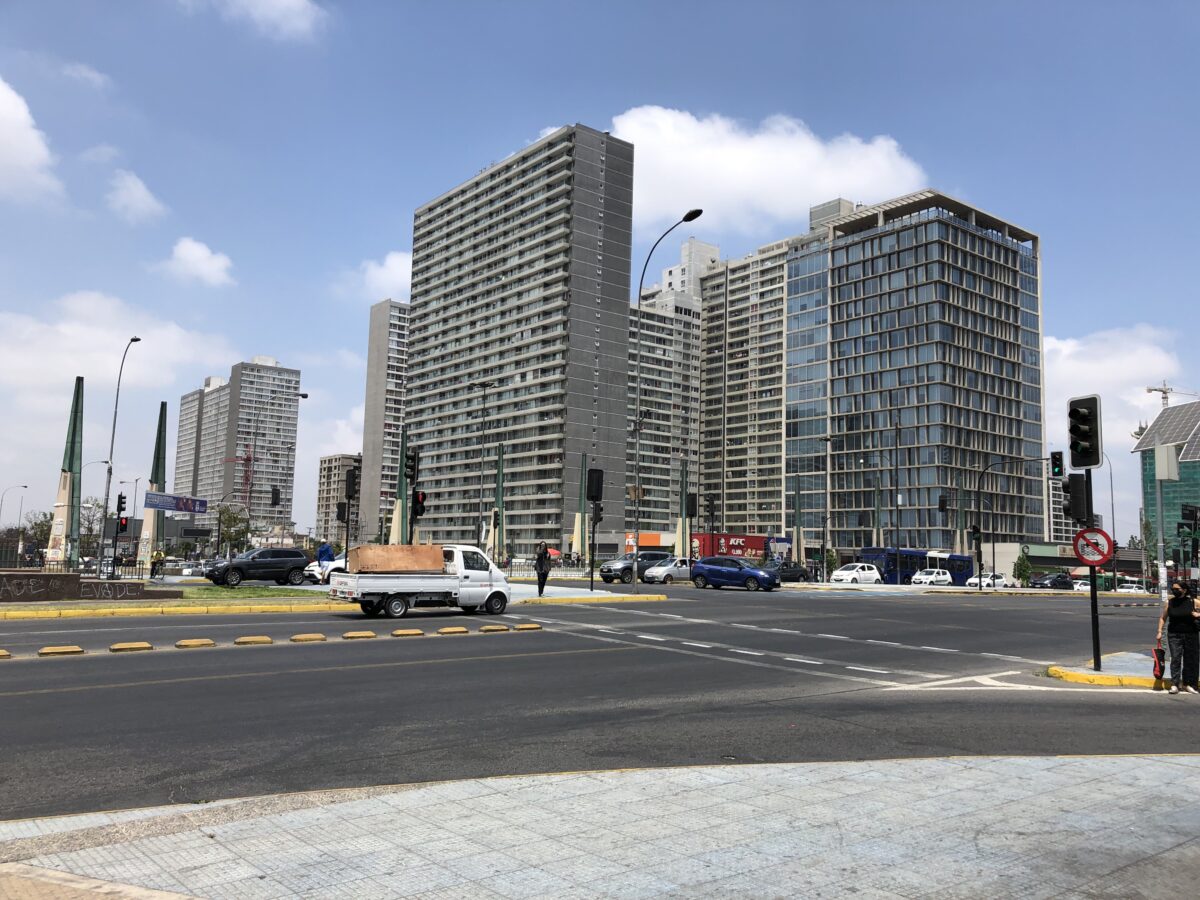
Twenty-story buildings, where each floor has 50 17-square-meter apartments, are called "vertical ghettos" and are inhabited mainly by immigrants. These ones are located in the Estación Central neighborhood, along Alameda Avenue that crosses Santiago de Chile. CREDIT: Orlando Milesi/IPS

Twenty-story buildings, where each floor has 50 17-square-meter apartments, are called “vertical ghettos” and are inhabited mainly by immigrants. These ones are located in the Estación Central neighborhood, along Alameda Avenue that crosses Santiago de Chile. CREDIT: Orlando Milesi/IPS

Privatization of social housing

Isabel Serra, an academic at the Diego Portales University Faculty of Architecture, believes that “the housing issue in Chile will be solved in some way through family networks…There is a lot of overcrowding here and small families are becoming the norm,” she told IPS.

According to Serra, the mushrooming of camps “clearly has to do with the influx of immigrants and this has grown especially in cities that are also functional or productive or extractivist hubs.”

She criticized the subsidy policy because these “are transferred to the private sector and what they do is drive up housing prices… and most of them are not used because they are not in line with the price of land and housing.”

“A highly financialized private market has made housing a tool for economic speculation…investors have decided to put their funds into the real estate market,” she said.

The problem has already reached the 155-member Constitutional Convention, which has been functioning since Jul. 4 and has a 12-month deadline to draft the new constitution, which must then be ratified in a plebiscite.

In September Melanni Salas and representatives of eight organizations met with Elisa Loncón, president of the Convention, to present her with the book “Constitution and Poverty”, which includes proposals to guarantee the right to housing.

“I hope they include this in the new constitution. The proposals were made by 25,000 excluded people…this document seeks to ensure that we are not left on the sidelines as always,” the community organizer explained.

A human right

Baranda said “in the constituent assembly we are working to get this enshrined as a right and to get the State to assume a leading role, not in the construction of housing itself, but in determining where people are going to live and creating the land bank that people have been demanding for so long.”

“We need the policies, by making land available and expropriating property that is not owned by the State, to create housing projects in places where there is social inclusion,” he stressed.

Serra agreed that “when the issue of housing is discussed in the constituent assembly, it will have to look at how the State buys and sells land.

“Housing is a basic human right and should be enshrined in the constitution, with all the parameters that are established for decent housing,” she argued.

Serra also called for “modernizing the instruments and the institutional framework dedicated to the provision of housing” because, she said, “currently the role of housing provision is clearly played by the market.”

She said it would require “a great deal of political will because land issues in general are political issues, very difficult to implement because there are many economic interests involved.”

Celia “Charito” Durán lives in the Mesana camp on Mariposas hill in the port city of Valparaíso, along with 165 other families, and counting.

The municipality delivers 3,000 liters of water per week to each house, using tanker trucks.

Durán said, however, that the priority is access “because if there is no road, we are cut off from everything: firefighters, water, ambulances.”

In Mesana there is no sewage system, only “cesspools, septic toilets and pipes through which people dump everything into the creek,” she told IPS by telephone.

On the hilltop the wind is very strong and every winter roofs are blown off and houses leak when it rains.

Durán, 56, has lived there since she was 37. She is confident that a solution to the social housing deficit will come out of the constituent assembly, after participating in meetings with Jaime Bassa, vice-president of the Constitutional Convention.

“We have the hope and expectation that the right to housing will be included. So, if tomorrow it is not fulfilled, you could go to the authorities with the right to protest about it,” she said.

“We want to be part of the city and not be segregated and forced to return to the camps,” Durán said.
  Source

School Meals Coalition Hopes to Provide a Meal to Every Child

Aid, Civil Society, Development & Aid, Education, Featured, Food Security and Nutrition, Global, Headlines, Health, Humanitarian Emergencies, Inequity, Poverty & SDGs, TerraViva United Nations

Food Security and Nutrition

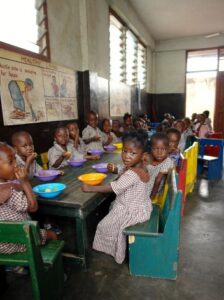
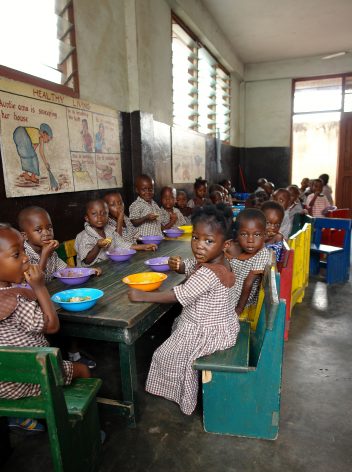
School meals have a host of benefits, including improving enrollments and preventing malnutrition. Now the School Meals Coalition plans to recruit local food producers to assist in the programme. Credit: Bill Wegener/Unsplash

United Nations, Nov 26 2021 (IPS) – Meals at schools not only give each child a nutritious meal but increase enrolments, among other benefits.


This emerged at a recent launch of the School Meals Coalition, a new initiative that aims to give every child a nutritious meal by 2030 through bolstering health and nutrition programmes. The coalition comprises over 60 countries and 55 partners dedicated to restoring, improving and up-scaling meal programs and food systems. Among their partners are UN agencies UNICEF, World Food Programme (WFP), UN Nutrition, Food and Agriculture Organization (FAO), and UNESCO.

In the briefing, the speakers identified School Meals Coalition’s primary goals to restore school meal programmes to the status before the COVID-19 pandemic and reach children in vulnerable areas who have not accessed these plans before. The member countries’ political leaders have come together to support this “important initiative”, according to the permanent representative of Finland to the United Nations, Jukka Salovaara.

“School meals are so much more than just a plate of food. It’s really an opportunity to transform communities, improve education, and food systems globally,” he said.

School meal programmes are a significant safety net for children and their communities. As one of the primary means for children to get healthy meals, they help combat poverty and malnutrition. Their impact on education is seen in increased engagement from students. They also serve as incentives for families to send their children, especially girls, to schools, thus supporting children’s rights to education, nutrition and well-being.

“We see documented jumps of 9 to 12 per cent in enrollment increases just because the meals are present,” WFP Director of School-Based Programmes Carmen Burbano said. “So, these are really important instruments to bring [children] to school.”

The programmes would also provide opportunities for sustainable development practices and transformations in food systems. One key strategy is to promote and maintain home-grown school meal programmes, recruiting local farmers and markets to provide food supplies. Investing in school meal programmes, especially through domestic spending, has proven to increase coverage. In low-income countries, the number of children receiving school meals increased by 36 percent when their governments increased the budgets for these programs.

A WFP study found that at the beginning of 2020, over 380 million children globally received meals through school meal programmes. The closure of schools due to the COVID-19 pandemic effectively disrupted those programmes, depriving 370 million children of what was effectively their main meal for the day. While there have been marked improvements since schools re-opened worldwide, with 238 million children accessing the school meals, there are still 150 million children that don’t have access.

The School Meals Coalition aims to close this gap through a system of collaboration between member countries and their partners. Among their initiatives will be a monitoring and accountability mechanism that is being developed by the WFP and its partners, which will be used to follow the coalition’s accomplishments, and a peer-to-peer information-sharing network, spearheaded by the German government, between members and partners that will use findings to influence their programme output.

Even before the pandemic, school meal programmes did not reach the most vulnerable children, 73 million, who could not access these programmes. Reaching children that have fallen through the cracks can be challenging, but it is significantly more difficult in countries affected by conflict or environmental disruptions.

Education Cannot Wait (ECW) and the World Food Programme (WFP) earlier signed a memorandum of understanding to feed children in protracted crises.

At the signing, WFP Assistant Executive Director, Valerie Guarnieri said: “Simply put, sick children cannot attend school and hungry children cannot learn. It is essential we invest more in the health and nutrition of young learners, particularly girls.”

ECW Director, Yasmine Sherif said a feeding scheme made a massive difference in children’s lives.

“For many children and youth in crisis-affected countries, a meal at school may be the only food they eat all day and can be an important incentive for families to send and keep girls and boys in school. It is also essential for a young person to actually focus and learn,” she said.

The coalition plans to find ways to break the barriers to enable children to reach school or look for alternative learning pathways to reach children who could not physically attend school.

The factors that can prevent children from fully attending schools, such as poverty, complexity in family lives, or conflict, have only been exacerbated over the last nearly two years, thanks mainly to the COVID-19 pandemic. As more schools open worldwide, the restoration of school meal programmes is expected to provide much-needed support for children and their communities in turn.

“This is a very urgent and timely priority,” said Head of the Sustainable Development Unit of the Permanent Mission of France to the United Nations, Olivier Richard. “Because school meals are very important for the recovery of our societies from the impact of the COVID-19 pandemic.”

To learn more about the School Meal Coalitions, you can follow their page.

  Source

No Vaccine for the Pandemic of Violence Against Women in Latin America

Active Citizens, Civil Society, Editors’ Choice, Featured, Gender, Gender Violence, Headlines, Human Rights, Indigenous Rights, Latin America & the Caribbean, Regional Categories

Gender Violence

This article is part of IPS coverage of the International Day for the Elimination of Violence against Women on Nov. 25, which kicks off 16 days of activism on the issue around the world.

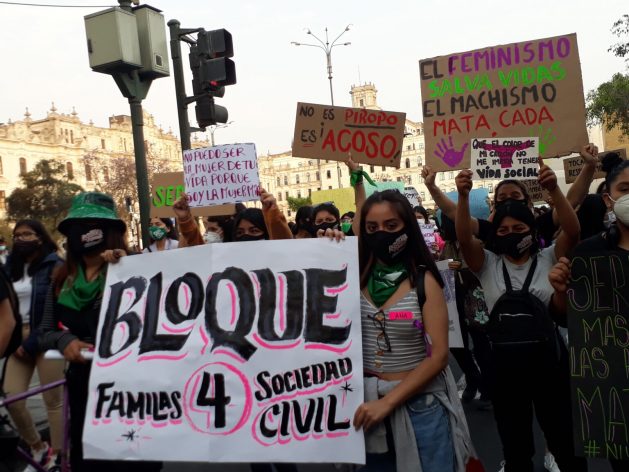
Despite restrictions due to covid, women from various feminist, youth and civil society groups gathered in the central Plaza San Martin in Lima and marched several blocks demanding justice and protesting impunity for violence against women, on Nov. 25, 2020. CREDIT: Mariela Jara/IPS

Despite restrictions due to covid, women from various feminist, youth and civil society groups gathered in the central Plaza San Martin in Lima and marched several blocks demanding justice and protesting impunity for violence against women, on Nov. 25, 2020. CREDIT: Mariela Jara/IPS

LIMA, Nov 24 2021 (IPS) – Despite significant legal advances in Latin American countries to address gender-based violence, it continues to be a serious challenge, especially in a context of social crisis aggravated by the covid-19 pandemic, which hits women especially hard.


“Existing laws and regulations have not stopped the violence, including femicide (gender-based murders). There is a kind of paralysis at the Latin American level, on the part of the State and society, where we don’t want to take much notice of what is happening, and women are blamed,” said María Pessina Itriago, a professor and researcher and the director of the Gender Observatory at UTE University in Quito.

Pessina, a Venezuelan who lives in the Ecuadorian capital and spoke to IPS by telephone from the university, said violence against women is ageold, and “we are still considered second-class citizens who are not recognized as social subjects.” And this dates way back – to the slaughter of “witches” in Europe in the Middle Ages, for example, she added.

“It hasn’t been easy to achieve my independence, have my own income and raise my children. I have suffered humiliation and slander, but I knew who I was and what I wanted: to live in peace and have a home without violence.” — Teresa Farfán

“The genocide of women is something that has not stopped and now in the context of the pandemic has become more serious. I believe that, in reality, the pandemic that we have experienced for many years is precisely this, that of gender violence,” she remarked.

Her reflection came ahead of the International Day for the Elimination of Violence against Women, which is celebrated on Thursday, Nov. 25 and kicks off 16 days of activism up until Dec. 10, World Human Rights Day.

The World Health Organization (WHO) and U.N. Women warned in March that globally one in three women suffers gender-based violence. And that the problem, far from diminishing, had grown during the covid pandemic and the restrictions and lockdowns put in place to curb it.

The study “Global and regional estimates of violence against women: prevalence and health effects of intimate partner violence and non-partner sexual violence”, which analyzed data from 2000 to 2018, is the most far-reaching produced by WHO on the topic.

The report, published in March of this year, stresses that violence against women is “pervasive and devastating” and affects one in three women with varying degrees of severity.

For Latin America and the Caribbean, the study puts the prevalence rate of violence among women aged 15 to 49 at 25 percent.

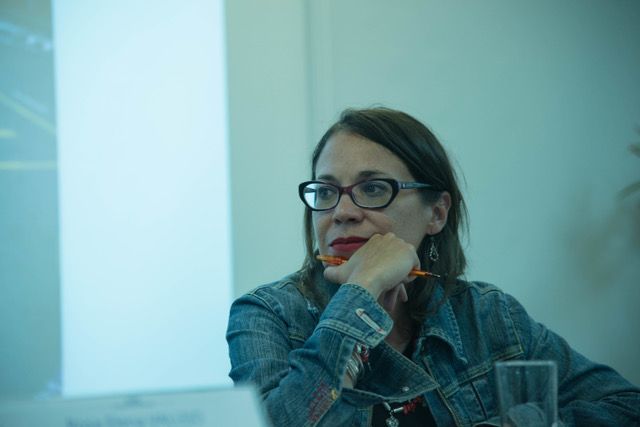
María Pessina Itriago is a professor, researcher and director of the Gender Observatory at UTE University in Quito. CREDIT: Courtesy of María Pessina

María Pessina Itriago is a professor, researcher and director of the Gender Observatory at UTE University in Quito. CREDIT: Courtesy of María Pessina

A regional epidemic during the global pandemic

With respect to femicides, the Gender Equality Observatory of the Economic Commission for Latin America and the Caribbean (ECLAC) reports that 4640 women died from this cause in 2019. The organization also called attention to the intensification of violence against girls and women during the pandemic.

The panorama is compounded by the gendered impacts of the pandemic on employment, which reduces women’s economic autonomy and makes them more vulnerable to violence.

According to the International Labor Organization (ILO), the region of the Americas experienced the largest reduction in female employment during covid, a situation that will not be reversed in 2021.

Peruvian sociologist Cecilia Olea, of the non-governmental Articulación Feminista Marcosur (AFM), which is made up of 17 organizations from 11 countries – nine South American nations, Mexico and the Dominican Republic – said there have been significant advances in the last 30 years in the fight against gender violence.

Among them, she cited the fact that States recognize their responsibility for the problem and no longer consider it a private matter.

She also pointed out that Latin America is the only region in the world with a specific human rights treaty on the issue: the Inter-American Convention on the Prevention, Punishment and Eradication of Violence against Women, known as the Convention of Belem do Para after the Brazilian city where it was approved in 1994, which established women’s right to live free of violence and set the framework for national laws to address this violation of women’s rights.

However, Olea said in an interview with IPS in Lima that the legal and regulatory framework has not been accompanied by political strategies to change the social imaginary of masculinity and femininity, which would provide incentives to modify the culture of inequality between men and women; on the contrary, she said, the violence forms part of a culture of impunity.

“Males feel free to oppress and governments are failing in their responsibility to guarantee comprehensive sex education throughout the educational system, in primary school and technical and higher education; this program exists by law but implementation is deficient due to lack of training for teachers and the opportunity to train people in new forms of masculinity is lost, for example,” she remarked.

Olea, a feminist activist and one of the founders of the AFM, said that not only do governments have a responsibility to prevent, address and eradicate gender violence, but there is also an urgent need to ensure health services; justice with due diligence, as the current delays revictimize and inhibit the use of regulatory instruments; and budgets to correct the current shortfall that prevents a better response to this social problem.

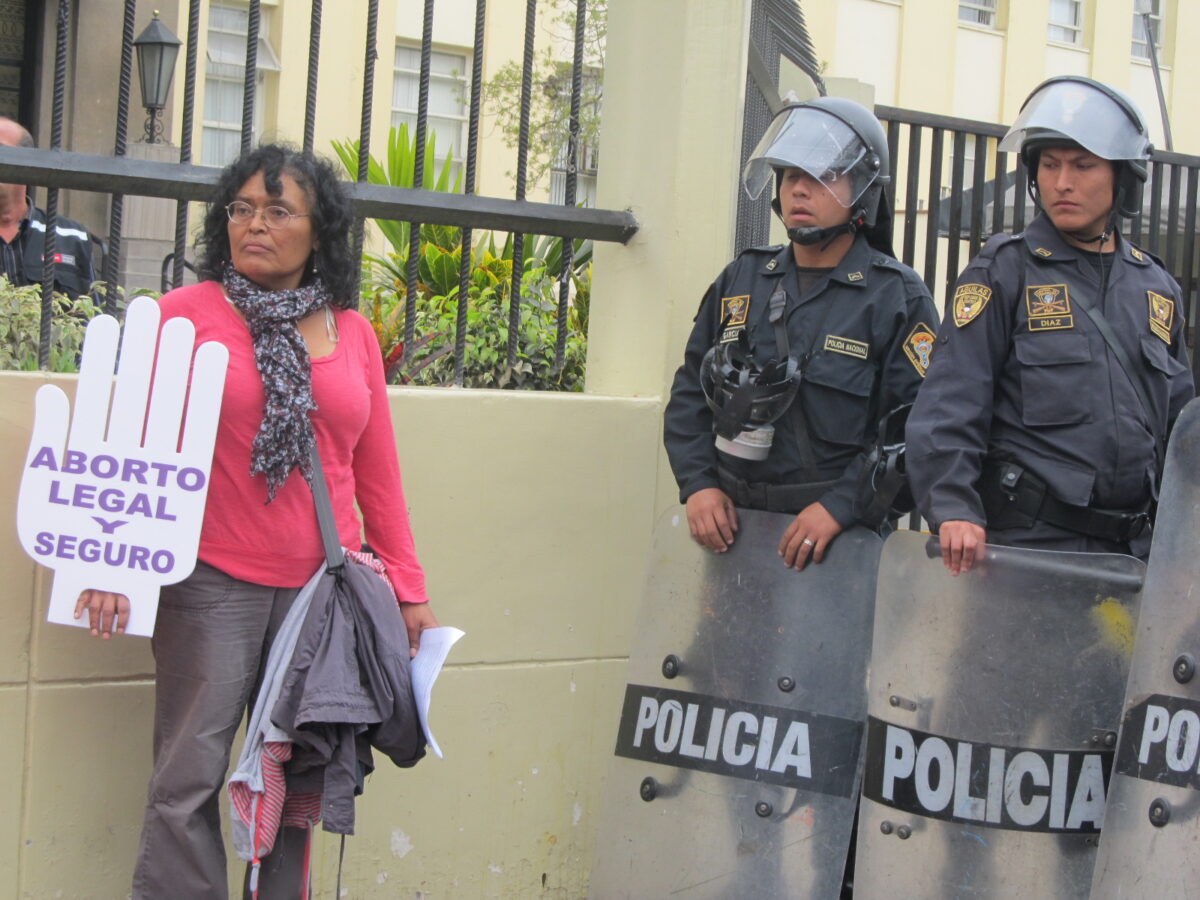
Peruvian sociologist Cecilia Olea, a member of the Articulación Feminista Marcosur (AFM), which brings together feminist networks from 11 Latin American countries, takes part in a demonstration outside the Peruvian Health Ministry in Lima, demanding reproductive rights. CREDIT: Mariela Jara/IPS

Peruvian sociologist Cecilia Olea, a member of the Articulación Feminista Marcosur (AFM), which brings together feminist networks from 11 Latin American countries, takes part in a demonstration outside the Peruvian Health Ministry in Lima, demanding reproductive rights. CREDIT: Mariela Jara/IPS

Cultural change in the new generations

Raised in a machista home, Pessina rebelled against gender norms from an early age and her constant questioning led her to come up with a new definition of how a good person should act.

“I believe that good people do not tolerate injustice or inequality of any kind, which is why I became a feminist about 15 years ago and I am very happy to be able to contribute a grain of sand with my students,” she said.

Pessina said the challenges to progress in the eradication of violence against women are to provide public policies with a budget to make them work; and to achieve an alliance between the State, civil society organizations and feminist movements to create a road map that incorporates excluded voices, such as those of indigenous women.

“The places where they can file reports are not near their towns, they have to go to other towns and when they get there they often cannot communicate in their own language because of the colonialist view that everything must be in Spanish, and there are no interpreters,” she complained.

Another part of the problem, she said, is that “the State itself blocks complaints and keeps these people marginalized, and they are not taken into account in the countries’ statistics on violence.”

The third challenge was to work with the media in Latin America because of their role in the construction of imaginaries, in order to generate the figure of the ombudsperson focused on gender to ensure that information is treated in a way that contributes to equality and does not reproduce discriminatory stereotypes.

Pessina said that what is needed is a cultural transformation driven by the new generations, in favor of gender equality.

“We see more young feminist women activists mobilizing to make it happen and they will make a turnaround; not now, but maybe in a decade we will be talking about other things. These new generations not only of women but of men, I think they are our hope for change,” she said.

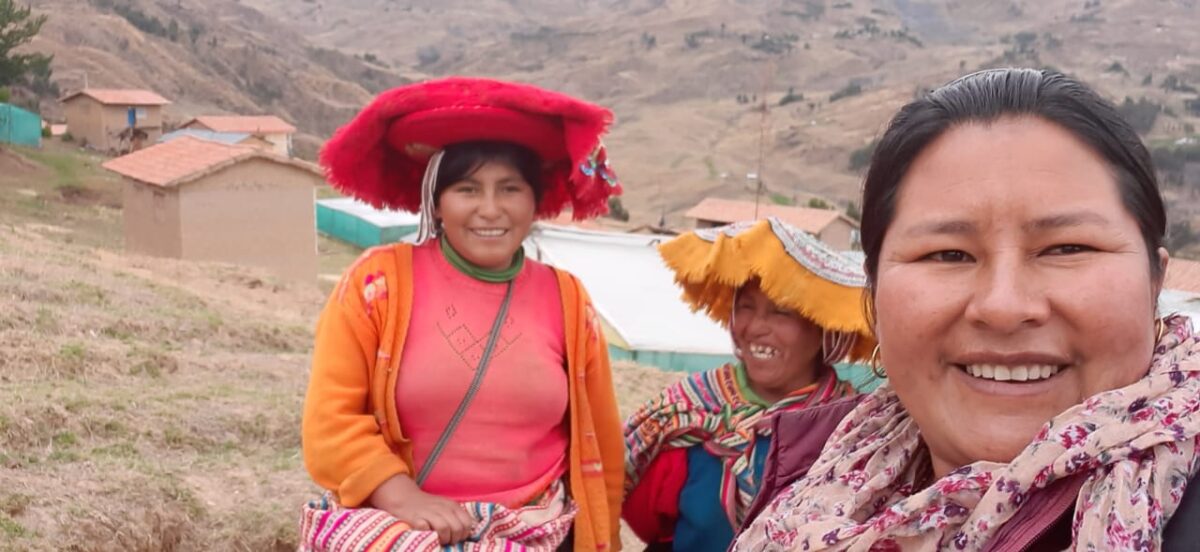
Quechua Indian woman Teresa Farfán, in the foreground, stands with two other rural women with whom she shares work and experiences in her Andes highlands community in Peru. She is convinced that telling her personal story of gender-based violence can help other women in this situation to see that it is possible to escape from abuse. CREDIT: Courtesy of Teresa Farfán

Quechua Indian woman Teresa Farfán, in the foreground, stands with two other rural women with whom she shares work and experiences in her Andes highlands community in Peru. She is convinced that telling her personal story of gender-based violence can help other women in this situation to see that it is possible to escape from abuse. CREDIT: Courtesy of Teresa Farfán

“I wanted a home without violence”

Teresa Farfán reflects the lives of many Latin American women who are victims of machista violence, but with a difference: she left behind the circle of gender violence that so often takes place in the home itself.

She is 35 years old and describes herself as a peasant farmer, a single mother and a survivor of an attempted femicide. She was born and lives in the town of Lucre, an hour and a half drive from the city of Cuzco, the capital of ancient Peru, in the center of the country.

Like most of the local population, she is dedicated to family farming.

Nine years ago she separated from the father of her children who, she says, did not let her move forward.

“He wanted me just to take care of the cows, but I wanted to learn, to get training, and that made him angry. He even beat me and it was horrible, and at the police station they ignored my complaint. He kicked me out of the house and thought that out of fear I would come back, but I took my children and left,” she told IPS during a day of sharing with women in her community.

At her moment of need she didn’t receive the support of her family, who urged her to return, “because a woman must do what her husband says.”

But she did have supportive friends who gave her a hand, both inside and outside her community, as part of a sisterhood of Quechua indigenous peasant women like her in the Peruvian highlands.

“It hasn’t been easy to achieve my independence, have my own income and raise my children. I have suffered humiliation and slander, but I knew who I was and what I wanted: to live in peace and have a home without violence,” she said. A wish that remains elusive for millions of Latin American women.

  Source

Climate Injustice at Glasgow Cop-Out

Civil Society, Climate Action, Climate Change, Development & Aid, Environment, Featured, Global, Headlines, Poverty & SDGs, TerraViva United Nations

Opinion

SYDNEY and KUALA LUMPUR, Nov 23 2021 (IPS) – The planet is already 1.1°C warmer than in pre-industrial times. July 2021 was the hottest month ever recorded in 142 years. Despite the pandemic slowdown, 2020 was the hottest year so far, ending the warmest decade (2011-2020) ever.

Betrayal in Glasgow
Summing up widespread views of the recently concluded Glasgow climate summit, former Irish President Mary Robinson observed, “People will see this as a historically shameful dereliction of duty,… nowhere near enough to avoid climate disaster”.


Anis Chowdhury

A hundred civil society groups lambasted the Glasgow outcome: “Instead of a multilateral agreement that puts forward a clear path to address the climate crisis, we are left with a document that takes us further down the path of climate injustice.”

Even if countries fulfil their Paris Agreement pledges, global warming is now expected to rise by 2.7°C from pre-industrial levels by century’s end. Authoritative projections suggest that if all COP26 long-term pledges and targets are met, the planet will still warm by 2.1℃ by 2100.

The United Nations Environment Programme suggests a strong chance of global warming disastrously rising over 1.5°C in the next two decades. Earlier policy targets – to halve global carbon emissions by 2030, and reach ‘net-zero’ emissions by 2050 – are now recognized as inadequate.

The Glasgow UN Framework Convention on Climate Change 26th Conference of Parties (COP26) was touted as the world’s ‘last best hope’ to save the planet. Many speeches cited disturbing trends, but national leaders most responsible for greenhouse gas (GHG) emissions offered little.

Thus, developing countries were betrayed yet again. Despite contributing less to accelerating global warming, they are suffering its worst consequences. They have been left to pay most bills for ‘losses and damages’, adaptation and mitigation.

Glasgow setbacks
Glasgow’s two biggest hopes were not realized: renewing targets for 2030 aligned with limiting warming to 1.5℃, and a clear strategy to mobilize the grossly inadequate US$100bn yearly – promised by rich country leaders before the Copenhagen COP in 2009 – to help finance developing countries’ efforts.

Jomo Kwame Sundaram

An exasperated African legislator dismissed the Glasgow Leaders’ Declaration on Forests and Land Use as an “empty pledge”, as “yet another example of Western disingenuousness … taking on the role of ‘white saviour’” while exploiting the African rain forest.

Meanwhile, far too many loopholes open to abuse remain, undermining efforts to reduce emissions. Further, no commitment to end fossil fuel subsidies globally – at US$11 million every minute, i.e., around US$6 trillion annually – was forthcoming.

No new oil and gas fields should be developed for the world to have a chance of getting to net-zero by 2050. Nevertheless, governments are still approving such projects, typically involving transnational corporate giants.

Various measures – e.g., ‘carbon capture and storage’ and ‘offsetting’ – have been touted as solutions. But carbon capture and storage technologies remain controversial, unproven at scale, expensive and rarely cost-competitive.

The Glasgow outcome did not include any commitment to fully phase out oil and gas. Meanwhile, the language on coal has been diluted to become virtually toothless: coal-powered plants will now be ‘phased down’, instead of ‘phased out’.

Offsets off track
Offset market advocates claim to reduce emissions or remove GHGs from the atmosphere by some to ‘off-set’ emissions by others. Thus, offsetting often means paying someone poor to cut GHG emissions or forcing them to pay someone else to do so. With more means, big business can more easily afford to ‘greenwash’.

Carbon offset markets have long overpromised, but underdelivered. As they typically exaggerate GHG emission reduction claims, offsetting is a poor substitute for actually cutting fossil fuel use. Meanwhile, disagreements over offset rules have long stalled international climate change negotiations.

Buying offsets allows GHG emitters “to keep polluting”, albeit for a fee. Highly GHG emitting activities by wealthier individuals, companies and nations can thus continue, after “transferring the burden of action and sacrifice to others” – typically to those in poorer nations – via the market.

For Tariq Fancy – who managed ‘sustainable investing’ at BlackRock, the world’s largest fund manager – the market for offsets is a “deadly distraction”, “leading the world into a dangerous mirage, … burning valuable time”.

Meanwhile, most established offset programmes – e.g., the United Nations’ REDD+ programme or the Kyoto Protocol’s Clean Development Mechanism – have clearly failed to meaningfully reduce GHG emissions.

More than 130 countries have committed to achieve net-zero by 2050. But net-zero targeting has actually allowed the world to continue kicking the can down the road, instead of acting decisively and urgently to verifiably cut GHG emissions.

Hence, it is seen as a cynical “scam”, “nothing more than an expensive cover-up for continued toxic emissions”. Trading non-verifiable offsets – supposedly to achieve net-zero – allows continuing GHG emissions with business almost as usual.

Loss and damage?
Vulnerable and poor nations have argued for decades that rich countries owe them compensation for irreversible damage from global warming. In fact, no UN climate conference has delivered any funding for losses and damages to countries affected.

Rich countries agreed to begin a ‘dialogue’ to discuss “arrangements for the funding of activities to avert, minimize and address loss and damage”. Representing developing nations, Guinea expressed “extreme disappointment” at this ruse to delay progress on financing recovery from and rebuilding after climate disasters.

Developed nations account for two-thirds of cumulative emissions compared to only 3% from Africa. Carbon emissions by the wealthiest 1% of the world’s population were more than twice those of the bottom half between 1990 and 2015!

Low-lying small island nations – from the Marshall Islands to Fiji and Antigua – fear losing much of their land to rising sea levels. But their longstanding call to create a ‘loss and damage’ fund was rejected yet again.

South Pacific island representatives have expressed disappointment at lack of funding for losses and damages, and the watered down language on coal. For them, COP26 was a ‘monumental failure’, leaving them in existential peril.

Although historical responsibility for GHG emissions lies primarily with the wealthy countries, especially the US and the European Union, once again, they have successfully evaded serious commitments to address such longstanding problems due to global warming.

Climate injustice
For the UN Secretary-General, “[o]ver the past 25 years, the richest 10% of the global population has been responsible for more than half of all carbon emissions, and the poorest 50% were responsible for just 7% of emissions”.

The World Bank estimates that, if left unchecked, climate change will condemn 132 million more people into poverty over the next decade, while displacing more than 216 million from their homes and land by 2050.

Meanwhile, poorer countries – who have contributed least to cumulative GHG emissions – continue to suffer most. To address climate injustice, rich countries – most responsible for GHG emissions and global warming – must do much more.

Their finance for developing countries ought to be much more ambitious than US$100bn yearly. Financing terms should be far more generous than currently. Also, funding should prioritize adaptation, especially for the poorest countries most at risk.

  Source

Mother of Summits: Sweet and Sour Diplomacy, but Nothing Cooked!

Conferences, Economy & Trade, Featured, Global, Global Geopolitics, Global Governance, Headlines, TerraViva United Nations

SINGAPORE, Nov 22 2021 (IPS) – It has been said that when Greek meets Greek, then comes the tug of war. The summit of the leaders of world’s two strongest powers, the United States and China, came face to face at long last. Albeit virtually. Still, this was undoubtedly the “mother of summits” this year. There were two telephone conversations earlier, but according to US officials this nearly four hours of summitry was far more “candid intense, and deeper interaction”. If there was one single take-away from this meeting, it was the establishment beyond all reasonable doubt of the incontrovertible fact that the US and China were indeed the two most influential global state actors. The decisions between the two, represented by their leaders, would profoundly impact the rest of humanity far into the future.


Dr. Iftekhar Ahmed Chowdhury

Given that in terms of deliverables, the consensus among all analysts was that nothing significant was expected, the event was important in that it put to rest the bickering between the subordinates that was pushing the world towards a precipice. It was about time the supreme political masters, Joe Biden of the US and Xi Jinping assumed the reins of control of the most important relationship of our times. Both sides were intellectually convinced that the stiffest possible competition between the two was on the cards. The challenge was to manage this in a way to prevent a conflict that would be catastrophic. This was one point on which, luckily, there was understanding on both sides.

There was not much on anything else. Prior to the meeting that Biden was focussed on writing the rules of the engagement of China “in a way that is favourable to our interests and our values and those of our allies and partners”. Unsurprisingly, Xi and the Chinese did not play ball. Both sides basically emphatically stated their positions on issues and showed nary an inclination to concede an inch to the other. In the end, as was expected, there were no breakthroughs. The irreconcilable positions remained in- tact, with a vague call by both sides for more cooperation.

A virtual meeting is bereft of the positive influences of informal chats, banquets, and the opportunity of developing personal camaraderie. Still, both leaders exuded friendly demeanours, and Xi called Biden “an old friend”. On Taiwan, the dialogue was tough. Xi reminded Biden of the US position on the Peoples ‘Republic being the sole legitimate government of China , reinforced by here communiques issued in 1972, 1979 and 1982. Following the talks the White House clarified that the “One China’ was also guided by the Taiwan Relations Act and the Six Assurances committing the US to opposing” unilateral efforts to change the status quo”. Xi made it clear that Taiwan for China was a “core issue”; it was a province of China, and any support to its independence was akin to playing with fire. “Whoever plays with fire will get hurt” was a message he strongly underscored.

There seemed a glimmer of hope on one front, though. In the past China has refused to be drawn into any nuclear arms control agreements given that its arsenal was far smaller than those of the US and Russia. But recent significant qualitative improvements of its capabilities have been worrying the US. At the meeting China showed willingness to talk on the subject. However, there is no possibility of agreements beyond the rim of the saucer because the Chinese will naturally demand steep cuts in US numbers which will be unacceptable to Washington. However, there could be forward movement through diplomatic engagements on matters such as Confidence Building Measures (CBMs), will the positivity that would entail.

There is a fundamental difference in the approach of China and the US to negotiations. The US believes in a kind of “a la carte” method of choosing areas where it believes there is scope for collaboration while competition, and even confrontation, continues others. The Chinese on the other hand reject this as “cherry picking” and see the agenda as a comprehensive package. What is the use of understanding on one subject, while differences on another cam lead to war? Unless this basic divergence is resolved, negotiations are unlikely to be able to yield any worthwhile results. Discussions will continue to be both sweet and sour, as the summit deliberations were, but nothing seriously palatable will get cooked!

Xi has in the meanwhile has consolidated his own power in China to a point that he may be set obtain a third term of office. More importantly, he is viewed as the navigator in the journey towards national rejuvenation leading to China becoming a modern fully developed nation by 2049 which will bring him yet closer to the status of the Great helmsman, Chairman Mao Zedong, himself. All these were the outcome of the Sixth plenum of the Chinese Communist Party which met last week and adopted a “historical resolution” that buttressed Xi’s power and position.

Incidentally, in the history of the party this was the third historical resolution. The first was adopted in 1945 under Mao four years prior to the revolutionary victory, and the second by the ‘reformist” Deng Xiaoping. While Mao was the one who restored a sense of pride among the Chinese people enabling them “to stand up” and Deng made them rich through his reforms, Xi, by the dint of this “thought” (which supersedes “theory” in Chinese political lexicon) gave them strength and shared prosperity. In an abstruse political milieu where the count of numbers means a great deal, a Xinhua communique on the meeting mentioned Xi’s name at least fourteen times, compared to seven of Mao and Five of Deng. That tells a lot.

Consequently, it is now all but certain that Xi will be elected to an unprecedented third term in office as party General Secretary at the 20th Party Congress next year. There is also some talk that he may assume the title of “Chairman” as well which will bring him at par with Mao. The plenum also elevated Xi Jinping Thought to 21st Century Marxism, completing the process of “Sinicization” of Marxist philosophy. Xi has been pragmatic in welding the conservatism of Mao, but shunning his repressive methods, with the reforms of Deng, correcting the “capitalist excesses”, and bringing China on a socialist path that would lead to a “modern society” with “shared prosperity “. Small wonder that many Chinese observers are beginning to see him as a “Philosopher King” in the mould of Plato in the West and Confucius in the East, a perfect mix for the cauldron of power and authority. An interesting footnote is that the Chinese Communist Party formally announced its third “historical resolution”, cementing Xi’s powers hours after the Summit, though it was leaked earlier, which pointed to a thought-through calibrated set of actions.

Nowhere the same degree, Joe Biden also seems to have achieved a modicum of success of his own despite powerful head winds. He has managed to create a sense of cohesion among America’s allies, though his path has had numerous pitfalls and bumps. Importantly he has managed to secure the passage into law of the massive legislation in terms of the US $1.2 trillion bill on a revamp of infrastructures, to “build back better”, a campaign pledge. This for him is no mean achievement, proving that persistence pays. But for him and his Democratic Party the future is not as rosy as that what appears to be for his Chinese counterpart. A Republican win in the Presidential race is a distinct possibility. That could lead to turmoil and backlash in US domestic politics, requiring the identification of a common foe to rally the nation. China is the obvious candidate. If, consequently, the “ultimate red line” for China, such as on the issue of Taiwan is crossed, a catastrophe could follow.

Surely the Chinese have made those calculations. From now to then, China and Xi will, while seeking to avoid an immediate conflict, be preparing to, in the words of the Global Times seen as a State media outlet, “to deal with the biggest storms in the world, the most powerful and comprehensive siege from the US and its allies”. Halfway down this decade it will be high- risk for one to wager too much in favour of peace!

Dr Iftekhar Ahmed Chowdhury is the Honorary Fellow at the Institute of South Asia Studies, NUS. He is a former Foreign Advisor (Foreign Minister) of Bangladesh and President & Distinguished Fellow of Cosmos Foundation. The views addressed in the article are his own. He can be reached at: isasiac @nus.edu.sg

This story was originally published by Dhaka Courier.


Glasgow Summit Ends Amidst Climate of Disappointment

Civil Society, Climate Action, Climate Change, Conferences, Development & Aid, Editors’ Choice, Energy, Environment, Featured, Global, Global Governance, Headlines, IPS UN: Inside the Glasshouse, Poverty & SDGs, Regional Categories

Climate Change

One of the family photos taken after the laborious end of the 26th climate summit in Glasgow, which closed a day later than scheduled with a Climate Pact described as falling short by even the most optimistic, lacking important decisions to combat the crisis and without directly confronting fossil fuels, the cause of the emergency. CREDIT: UNFCCC

One of the family photos taken after the laborious end of the 26th climate summit in Glasgow, which closed a day later than scheduled with a Climate Pact described as falling short by even the most optimistic, lacking important decisions to combat the crisis and without directly confronting fossil fuels, the cause of the emergency. CREDIT: UNFCCC

GLASGOW, Nov 14 2021 (IPS) – Developing countries will surely remember the Glasgow climate summit, the most important since 2015, as a fiasco that left them as an afterthought.


That was the prevailing sentiment among delegates from the developing South during the closing ceremony on the night of Saturday Nov. 13, one day after the scheduled end of the conference.

Bolivia’s chief negotiator, Diego Pacheco, questioned the outcome of the summit. “It is not fair to pass the responsibility to developing countries. Developed countries do not want to acknowledge their responsibility for the crisis. They have systematically broken their funding pledges and emission reduction commitments,” he told IPS minutes after the end of the 26th Conference of the Parties (COP26) on climate change in Glasgow.

The 196 Parties to the United Nations Framework Convention on Climate Change (UNFCCC) ignored the public clamor, which took shape in the demands of indigenous peoples, young people, women, scientists and social movements around the world for substantive measures to combat the climate crisis, even though the goal of containing global warming to 1.5 degrees Celsius is barely surviving on life support.

The Glasgow Climate Pact that came out of the summit finally mentions the need to move away from the use of coal. But it had to water down the stronger recommendation to “phase out” in order to overcome the last stumbling block.

In addition, COP26 broke a taboo, albeit very tepidly, after arduous marches and counter-marches in the negotiating room and in the three drafts of the Glasgow Pact: there was a mention of fossil fuels as part of the climate emergency. And it also stated the need to reduce “inefficient” subsidies for fossil fuels.

But the summit, where decisions are made by consensus, avoided a strong stance in this regard. It also avoided moving from recommendations to obligations for the next edition, to be held in Egypt, and those that follow, while the climate crisis continues causing severe droughts, devastating storms, melting of the polar ice caps and warming of the oceans.

In a plenary session that was delayed by several minutes, the final declaration underwent a last-minute change when India, one of the villains of the meeting – along with Saudi Arabia, Australia and Russia – asked for the phrase “phasing out” of coal to be replaced by “phasing down”, a change questioned by countries such as Mexico, Liechtenstein and Switzerland.

A paradoxical fact at the close of COP26, where civil society organizations complained that they were left out, was the decision of several countries to endorse the final text even though they differed on several points, including the fossil energy face-lifts.

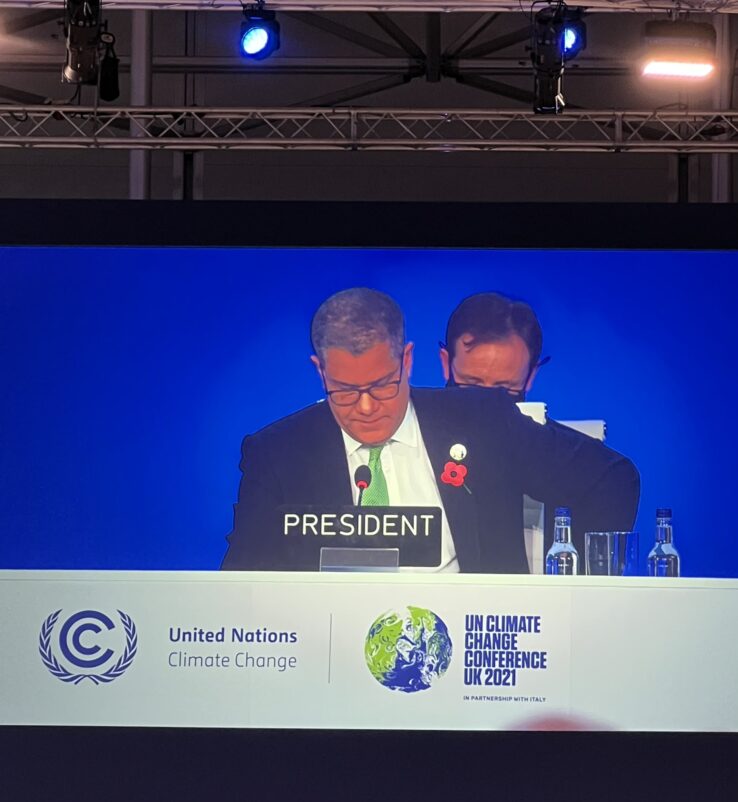
“Today, we can say with credibility that we have kept 1.5 degrees within reach. But its pulse is weak. And it will only survive if we keep our promises. If we translate commitments into rapid action,” said conference chairman Alok Sharma, choking back tears after a pact – albeit a minimal one – was reached by negotiating three drafts and holding arduous discussions on the fossil fuel question, right up to the final plenary.

COP26 chair Alok Sharma blinked back tears during his closing speech at the climate summit, expressing the tension of negotiating the Glasgow Climate Pact, due to the hurdles thrown in the way of a consensus by the big coal and oil producers. CREDIT: UNFCCC-Twitter

COP26 chair Alok Sharma blinked back tears during his closing speech at the climate summit, expressing the tension of negotiating the Glasgow Climate Pact, due to the hurdles thrown in the way of a consensus by the big coal and oil producers. CREDIT: UNFCCC-Twitter

The South is still waiting

Lost amidst the impacts of the climate emergency and forgotten by the industrialized countries, the global South failed to obtain something vital for many of its nations: a clear plan and funding for loss and damage, an issue that was deferred to COP27 in Egypt.

Mohamed Adow, director of the non-governmental Power Shift Africa, said the pact is “not good enough…There is no mention of solidarity and justice. We need a clear process to face loss and damage. There should be a link between emission reduction, financing and adaptation.”

The final decision by China, the United States, India and the European Union to turn their backs on a global fossil fuel exit and deny climate support to the most vulnerable nations left the developing world high and dry.

“There are things that cannot wait to COP27 or 2025. To face loss and damage, the most vulnerable countries need financing to battle the impacts on their territories,” Manuel Pulgar-Vidal, global climate and energy leader for the non-governmental World Wildlife Fund, told IPS.

Climate policies were, at least on the agenda, the focus of COP26.

The summit focused on carbon market rules, climate finance of at least 100 billion dollars per year, gaps between emission reduction targets and needed reductions, strategies for carbon neutrality by 2050, adaptation plans, and the working platform for local communities and indigenous peoples.

But the goal of hundreds of billions of dollars per year has been postponed, a reflection of the fact that financing for climate mitigation and adaptation is a touchy issue, especially for developed countries.

The corridors of the Blue Zone of the Scottish Events Campus, where the official part of the 26th Climate Conference was held in the city of Glasgow, were emptying on Saturday Nov. 13, at the end of the summit, which lasted a day longer than scheduled and ended with a negative balance according to civil society organizations. CREDIT: Emilio Godoy/IPS

The corridors of the Blue Zone of the Scottish Events Campus, where the official part of the 26th Climate Conference was held in the city of Glasgow, were emptying on Saturday Nov. 13, at the end of the summit, which lasted a day longer than scheduled and ended with a negative balance according to civil society organizations. CREDIT: Emilio Godoy/IPS

Offers and promises – on paper

One breakthrough at COP26 was the approval of the rules of the Paris Agreement, signed in the French capital in December 2015, at COP21, to form the basis on which subsequent summits have revolved. By 2024, all countries will have to report detailed data on emissions, which will form a baseline to assess future greenhouse gas reductions.

The agreement on the functioning of carbon markets creates a trading system between countries, but does not remove the possibility of countries and companies skirting the rules.

Industrialized countries committed to doubling adaptation finance by 2025 based on 2019 amounts. In addition, COP26 approved a new work program to increase greenhouse gas cuts, with reports due in 2022.

It also asked the UNFCCC to evaluate climate plans that year and its final declaration calls on countries to switch from coal and hydrocarbons to renewable energy.

Apart from the Climate Pact, the summit produced voluntary commitments against deforestation, emissions of methane, a gas more polluting than carbon dioxide, and the phasing out of gasoline and diesel vehicles.

In addition, at least 10 countries agreed to put an end to the issuing of new hydrocarbon exploration and exploitation licenses in their territories.

Furthermore, some thirty nations agreed to suspend public funding for coal, gas and oil by 2022.

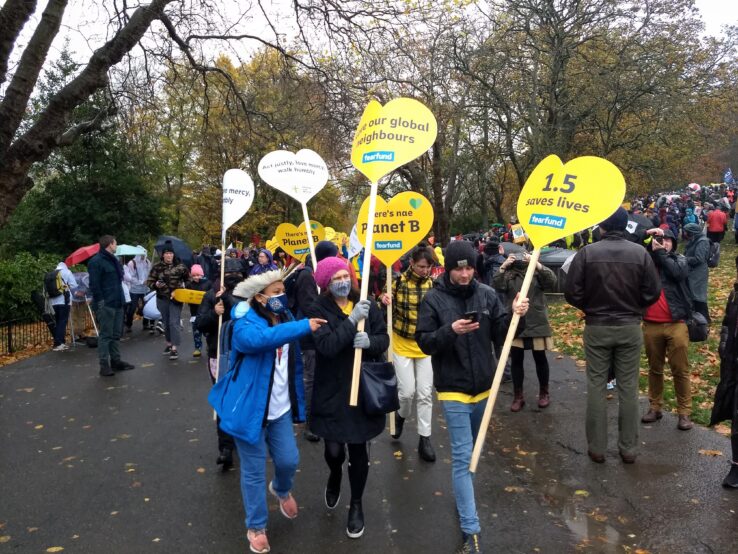
 Demonstrations demanding ambitious, substantive and equitable measures to address the climate crisis continued throughout the 14-day climate summit in Glasgow, which ended on the night of Saturday Nov. 13 with disappointing results for the global South. CREDIT: Emilio Godoy/IPS

Demonstrations demanding ambitious, substantive and equitable measures to address the climate crisis continued throughout the 14-day climate summit in Glasgow, which ended on the night of Saturday Nov. 13 with disappointing results for the global South. CREDIT: Emilio Godoy/IPS

Finally, more than 100 stakeholders, including countries and companies, signed up to the elimination of cars with internal combustion engines by 2030, without the major automobile manufacturers such as Germany, Spain and France joining in, and a hundred nations signed a pact to promote sustainable agriculture.

All of the 2030 pledges, which still need concrete plans for implementation, imply a temperature rise of 2.8 degrees C by the end of this century, according to the independent Climate Action Tracker.

The climate plans of the 48 least developed countries (LDCs) would cost more than 93 billion dollars annually, the non-governmental International Institute for Environment and Development said in Glasgow.

In addition, annual adaptation costs in developing countries would be about 70 billion dollars, reaching a total of 140 to 300 billion dollars by 2030, according to the United Nations Environment Program (UNEP).

But the largest disbursements are related to loss and damage, which would range between 290 billion and 580 billion dollars by 2030, and hence the enormous concern of these nations to obtain essential financing, according to a 2019 study. And their disappointment with the results of the Oct. 31-Nov.13 conference.

During his presentation at the closing plenary, Seve Paeniu, a climate envoy from Tuvalu, an island nation whose very existence is threatened by the rising sea level, showed a photo of his three grandchildren and said he had been thinking about what to say to them when he got home.

“Glasgow has made a promise to guarantee their future. It will be the best Christmas gift that I can bring home,” he said. But judging by the Climate Pact, Paeniu may have to look for another present.

IPS produced this article with the support of Iniciativa Climática of Mexico and the European Climate Foundation.