Panama’s Elections: Has Impunity Prevailed?

Civil Society, Climate Change, Crime & Justice, Economy & Trade, Education, Featured, Headlines, Labour, Latin America & the Caribbean, Migration & Refugees, TerraViva United Nations

Opinion

Credit: Johan Ordoñez/AFP via Getty Images

MONTEVIDEO, Uruguay, May 21 2024 (IPS) – Regional experts called it Panama’s most important election since the 1989 US invasion that deposed de facto president General Manuel Noriega. Panamanians went to the polls amid high inflation and unemployment, with a stagnating economy. Endemic corruption was also high on their long list of concerns, along with access to water, education and a collapsing social security system.


The winner, conservative lawyer José Raúl Mulino, was a stand-in for former president Ricardo Martinelli, disqualified from running due to a money laundering conviction. Martinelli remains popular regardless and managed to transfer his popularity to his less charismatic substitute. For those who backed Mulino, nostalgia for the economic stability and growth that marked Martinelli’s pro-business administration seemed to outweigh his proven record of corruption.

On the face of it, the election results seemed to demonstrate the primacy of economic considerations in voters’ minds, with hopes for growth trumping corruption fatigue. But that’s not the whole story.

Free, fair and uncertain

On 5 May, Panamanians went to the polls to elect a president and vice-president, 71 National Assembly members, 20 Central American Parliament deputies and local representatives.

The elections were undoubtedly clean and transparent, with integrity guaranteed by the participation of civil society in the National Scrutiny Board. Results were announced quickly and all losing candidates accepted them. But the pre-voting context was far less straightforward. Until the very last minute the now president-elect wasn’t sure he’d be allowed to run.

Mulino served as security minister in Martinelli’s government between 2009 and 2014. Ten years later, largely unknown to the electorate, he entered the race as Martinelli’s running mate for Achieving Goals (Realizando Metas, RM), a party Martinelli founded in 2021.

In July 2023, Martinelli was convicted of money laundering and sentenced to 10 years in prison, making him ineligible to run. He appealed, but the Electoral Tribunal didn’t make a final decision on his disqualification until March. To avoid jail, he sought asylum in the Nicaraguan embassy in Panama City. Mulino took his place, but his presidential candidacy was also challenged. For two months, he became the centre of attention as the Electoral Tribunal and Supreme Court debated whether he could ran. The positive court ruling came on 3 May, just two days before voting. Mulino also received a lot of help from Martinelli, who campaigned for him online while holed up in the Nicaraguan embassy.

A fragmented vote

Eight candidates contested the presidency, a five-year position with no possibility of a second consecutive term. With no runoff, a fragmented vote was likely to produce a winner with far less than half the vote. Mulino’s winning total of 34.2 per cent wasn’t unusual: two previous presidents received similarly low shares, including the outgoing centre-left president, Laurentino Cortizo of the Democratic Revolutionary Party (Partido Revolucionario Democrático, PRD).

Mulino’s closest competitor, on 24.6 per cent, was Ricardo Lombana, a centre-right anti-corruption outsider. In third place was Martin Torrijos, another former president and Martinelli’s immediate predecessor, now distanced from his original party, the PRD, and running on the ticket of the Christian democratic People’s Party (Partido Popular, PP). Fourth was Rómulo Roux, of the centre-right Democratic Change (Cambio Democrático, CD), the party Martinelli founded and used as a vehicle for the presidency, but which he abandoned in 2020 amid leadership disputes.

The parties that once dominated the political landscape fared badly. The Panameñista Party didn’t even have a presidential candidate; instead, its leader joined Roux as his running mate. The PRD, which led three of the last six governments, fell below six per cent.

Independents on the rise

In 1998, Martinelli’s CD was the first to challenge the dominance of traditional parties. Later changes to the electoral law allowed independent candidates to stand. Their growing prominence reflects widespread dissatisfaction with traditional parties and the political class.

In the 5 May congressional elections, independent candidates won more seats than any political party – 20, up from just five. Mulino’s new RM party took 14 seats. The PRD lost a whopping 22, retaining only 13. The new composition of the National Assembly speaks of a thirst for renewal that doesn’t match the choice for corruption and impunity the presidential results might suggest.

Spotlight on the economy

For the three decades before the pandemic, the Panamanian economy grew by around six per cent a year, helped by income from the Panama Canal and construction and mining booms. But then challenges started piling up. The economy slowed down. Jobs disappeared. Inflation rose.

Activity in the Panama Canal has been severely affected by the impacts of climate change, with a drop in water levels. Drought has also reduced access to drinking water in some regions. Meanwhile an unprecedented rise in the numbers of migrants travelling through the Darién Gap, the treacherous stretch of jungle at the border with Colombia, has stretched the resources of the humanitarian assistance system.

Mulino campaigned on promises to improve the economy by attracting investment, developing infrastructure and creating jobs. He pledged to improve access to safe water and promised to ‘shut down’ the Darién Gap.

Mulino’s voters may have accepted the bargain he appeared to offer – prosperity in exchange for impunity – but many more people voted against him than for. He was able to win because the vote against was so fragmented. The number of independents who entered Congress is just one of many indicators of widespread dissatisfaction with politicians like him.

Mulino will have to deliver on his promises to attract investment and create jobs. He’ll need to reduce inequalities and deal with growing insecurity, the situation in the Darién Gap and a pensions system on the brink of insolvency. Last but not least, he’ll need to strengthen institutions and tackle corruption – which begs the question of what he’ll do about Martinelli.

The challenges are many and great, and Mulino won’t have anything close to a legislative majority. The National Assembly is so fragmented that a high-level deal with one or two parties won’t be enough. Mulino seemed to recognise this on election night when he called for national unity and said he was open to dialogue and consensus. This was a first step in the direction he should keep following.

Inés M. Pousadela is CIVICUS Senior Research Specialist, co-director and writer for CIVICUS Lens and co-author of the State of Civil Society Report.

  Source

Working to Keep Náhuat, the Language of the Pipil People, from Vanishing in El Salvador

Civil Society, Development & Aid, Editors’ Choice, Education, Featured, Headlines, Human Rights, Indigenous Rights, Latin America & the Caribbean, Population, Regional Categories

Indigenous Rights

Elena López (left), one of two teachers who teach Náhuat to children in Nahuizalco, in western El Salvador, leads one of the morning's learning practices, in which the children, walking in circles, sing songs in the language of their ancestors, the Pipil people. CREDIT: Edgardo Ayala / IPS

Elena López (left), one of two teachers who teach Náhuat to children in Nahuizalco, in western El Salvador, leads one of the morning’s learning practices, in which the children, walking in circles, sing songs in the language of their ancestors, the Pipil people. CREDIT: Edgardo Ayala / IPS

NAHUIZALCO, El Salvador , May 6 2024 (IPS) – A group of children participating in an immersion program in Náhuat, the language of the Pipil people and the only remaining pre-Hispanic language in El Salvador, are the last hope that the language will not die out.


“This effort aims to keep Náhuat alive and that is why we focus on the children, for them to continue and preserve this important part of our culture,” Elena López told IPS during a short snack break for the preschoolers she teaches.

“This effort aims to keep Náhuat alive and that is why we focus on the children, for them to continue and preserve this important part of our culture.” — Elena López

López is part of the Náhuat Cuna project, which since 2010 has sought to preserve and revive the endangered indigenous language through early immersion. She is one of two teachers who teach it to children between the ages of three and five at a preschool center in Nahuizalco, a municipality in the department of Sonsonate in western El Salvador.

At risk of disappearing

“When a language dies, the basis of indigenous cultures and territories becomes extinct with it,” says the report Revitalization of Indigenous Languages, according to which the 500 Amerindian languages still spoken in Latin America are all in a situation of greater or lesser threat or risk.

In Mesoamerica, which includes Mexico, Guatemala, Belize, Honduras, El Salvador, Nicaragua and Costa Rica, 75 indigenous languages are spoken, says the study by the Fund for the Development of the Indigenous Peoples of Latin America and the Caribbean (FILAC).

With the exception of Mexico, Guatemala is the most linguistically diverse in this group of countries, with 24 native languages. The most widely spoken is K’iche’, of Mayan origin, and the least is Xinca, of unknown origin.

Brazil is the most ethnically and linguistically diverse country in Latin America, with between 241 and 256 indigenous peoples and between 150 and 186 languages.

A picture of some of the children learning Náhuat in the town of Nahuizalco, in western El Salvador, through an early language immersion program, in an effort by Don Bosco University to keep the endangered language alive. Teacher Elsa Cortez sits next to them. CREDIT: Edgardo Ayala / IPS

A picture of some of the children learning Náhuat in the town of Nahuizalco, in western El Salvador, through an early language immersion program, in an effort by Don Bosco University to keep the endangered language alive. Teacher Elsa Cortez sits next to them. CREDIT: Edgardo Ayala / IPS

Around 25 percent of these languages are at risk of extinction unless something is urgently done, the report warns. It is estimated that Latin America is home to more than 50 million people who self-identify as indigenous.

“These languages are losing their usage value…families are increasingly interrupting the natural intergenerational transmission of the languages of their elders, and a slow but sure process of moving towards the hegemonic language is observed, with speakers making Spanish or Portuguese their predominant language of use,” the report states.

The causes of the danger of the disappearance of these Amerindian languages are varied, the report points out, such as the interruption of intergenerational transmission, when the language is no longer passed on from generation to generation.

And that is exactly what the Náhuat Cuna project aims to revert by focusing on young children, who can learn from Náhuat speakers who did receive the language from their parents and grandparents and speak it fluently.

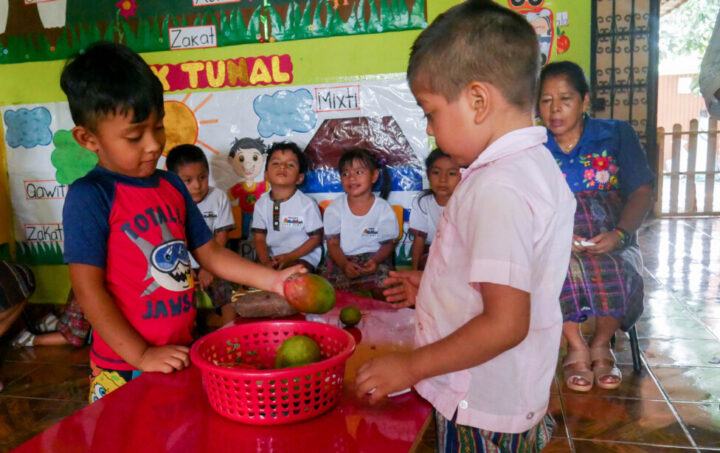
Two children pretend to purchase and sell fruits and vegetables speaking in Náhuat, as part of the teaching exercises at Náhuat Cuna in western El Salvador, a preschool for new generations of Salvadorans to learn the nearly extinct Amerindian language. CREDIT: Edgardo Ayala /IPS

Two boys pretend to purchase and sell fruits and vegetables speaking in Náhuat, as part of the teaching exercises at Náhuat Cuna in western El Salvador, a preschool for new generations of Salvadorans to learn the nearly extinct Amerindian language. CREDIT: Edgardo Ayala /IPS

López is one of these people. She belongs to the last generation of speakers who acquired it naturally, as a mother tongue, speaking it from a very young age with her parents and grandparents, in her native Santo Domingo de Guzmán, also in the department of Sonsonate.

“That’s how I was born and grew up, speaking it at home. And we never stopped speaking it, among my sisters and brothers, but not with people outside the house, because they discriminated against us, they treated us as Indians but in a derogatory way, but we never stopped speaking it,” said Lopez, 65.

Indeed, for reasons of racism and classism, indigenous populations have been marked by rejection and contempt not only from the political and economic elites, but also by the rest of the mestizo or mixed-race population, which resulted from the mixture of indigenous people with the Spaniards who started arriving in Latin America in the sixteenth century.

“They have always looked down on us, they have discriminated against us,” Elsa Cortez, 43, the other teacher at the Nahuizalco Náhuat Cuna, told IPS.

And she added: “I feel satisfied and proud, at my age it is a luxury to teach our little ones.”

Both López and Cortez said they were grateful that the project hired them as teachers, since they had no prior teaching experience, and in a context in which discrimination and social rejection, in addition to ageism, make it more difficult to find formal employment.

Before joining the project, Cortez worked full time making comales, which are circular clay griddles that are placed over a wood fire to cook corn tortillas. She also sold baked goods, and continues to bake bread on weekends.

López also worked making comales and preparing local dishes, which she sold in her neighborhood. Now she prefers to rest on the weekends.

All is not lost

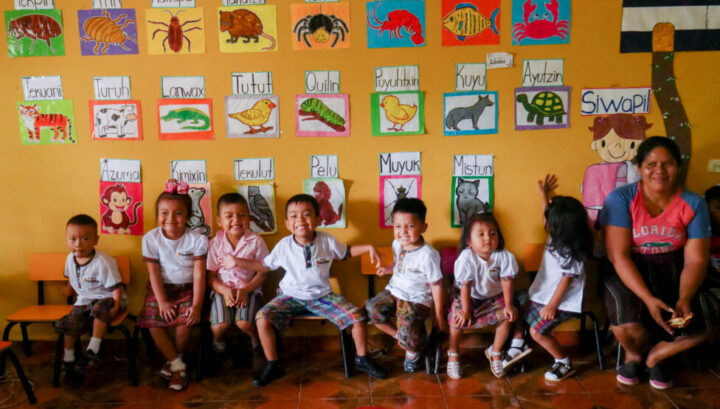
When IPS visited the Náhuat Cuna preschool in Nahuizalco, the three-year-olds were performing an exercise: they stood in front of the rest of the class of about ten children and introduced themselves by saying their first name, last name and other basic greetings in Náhuat.

Later they identified, in Náhuat, pictures of animals and elements of nature, such as “mistun” (cat), “qawit” (tree) and “xutxit” (flower). The students started their first year in the center in February, and will spend two years there.

The five-year-olds are the most advanced. Together, the two groups totaled about twenty children.

Jorge Lemus  (blue shirt), director of El Salvador’s Náhuat/Pipil Language Revitalization Program and the driving force behind the Náhuat Cuna project, which teaches the language to children between the ages of three and five, is photographed with indigenous women of the Pipil people in Nahuizalco in western El Salvador. CREDIT: Don Bosco University

At the end of their time at the Cuna, they will go to regular school in Spanish, with the risk that they will forget what they have learned. However, to keep them connected to the language, the project offers Saturday courses where they begin to learn grammar and how to write the language.

There is a group of 15 teenagers, mostly girls, who started at the beginning of the project and speak the language fluently, and some even teach it online.

The initiative is promoted by the Don Bosco University of El Salvador, and supported by the municipalities where they operate, in Nahuizalco and Santo Domingo de Guzmán. The Santa Catarina Masahuat branch will also be reopened soon.

Santo Domingo de Guzmán is home to 99 percent of the country’s few Náhuat speakers, who number around 60 people, Jorge Lemus, director of El Salvador’s Náhuat/Pipil Language Revitalization Program and main promoter of the Náhuat Cuna project, told IPS.

“In three decades I have seen how Náhuat has been in decline, and how the people who speak it have been dying out,” stressed Lemus, who is also a professor and researcher of linguistics at the School of Languages and Education at Don Bosco University, run by the Salesian Catholic order.

According to the academic, the last three indigenous languages in El Salvador in the 20th century were Lenca, Cacaopera and Náhuat, but the first two disappeared by the middle of that century, and only the last one survives.

“The only one that has survived is Náhuat, but barely, as there are perhaps just 60 speakers of the language. When I started working on this there were about 200 and the number continues to shrink,” said Lemus.

The only way to keep the language alive, he said, is for a new generation to pick it up. But it will not be adults, who could learn it as a second language but will continue speaking Spanish; it must be a group of children who can learn it as native speakers.

The expert clarified that, although they come from the same linguistic trunk, the Náhuat spoken in El Salvador is not the same as the Nahuatl spoken in Mexico, and in fact the spelling is different.

In Mexico, Nahuatl has more than one million speakers in the Central Valley, he said.

In El Salvador, in 1932, the Pipil people stopped speaking their language in public for fear of being killed by the government forces of General Maximiliano Hernández, who that year brutally cracked down on an indigenous and peasant uprising demanding better living conditions.

At that time, society was dominated by aristocratic families dedicated to coffee cultivation, whose production system plunged a large part of Salvadorans, especially peasants and indigenous people, into poverty.

Lemus argued that for a language to make a decisive comeback and become a vehicle for everyday communication would require a titanic effort by the State, similar to the revival of the Basque language in Spain, Maori in New Zealand or even Israel’s resuscitation of Hebrew, which was already a dead language.

But that is not going to happen in El Salvador, he said.

“The most realistic thing we want to achieve is to keep the language from disappearing, and for the new generation of Náhuat-speaking people to grow and multiply. If we have 60 speakers now, in a few years we will hopefully still have 50 or 60 speakers, from this new generation, and they will keep it alive in the communities and continue speaking it,” he said.

For her part, López wants to continue working towards this goal in order to leave the country her legacy.

Speaking in Náhuat, the preschool teacher said: “I really like teaching this language because I don’t want it to die, I want the children to learn and speak it when I am dead.”

  Source

Civil Society Scores LGBTQI+ Rights Victory in Dominica

Civil Society, Crime & Justice, Featured, Gender Violence, Headlines, Health, Human Rights, Latin America & the Caribbean, LGBTQ, TerraViva United Nations

Opinion

MONTEVIDEO, Uruguay, May 6 2024 (IPS) – On 22 April, Dominica’s High Court struck down two sections of the country’s Sexual Offences Act that criminalised consensual same-sex relations, finding them unconstitutional. This made Dominica the sixth country in the Commonwealth Caribbean – and the fourth in the Eastern Caribbean – to decriminalise same-sex relations through the courts, and the first in 2024.


Similar decisions were made in Antigua and Barbuda, St Kitts and Nevis and Barbados in 2022 – but progress then threatened to stall. Change in Dominica revives the hopes of LGBTQI+ activists in the five remaining English-speaking Caribbean states – Grenada, Guyana, Jamaica, St Lucia and St Vincent and the Grenadines – that still criminalise same-sex relations. Sooner than later, one of will be next. A small island has made a big difference.

Winds of change

The criminalisation of consensual gay sex in the Anglophone Caribbean dates back to the British colonial era. All former British colonies in the region inherited identical criminal laws against homosexuality targeting either LGBTQI+ people in general or gay men in particular. They typically retained them after independence and through subsequent criminal law reforms.

That’s what happened in Dominica, which became independent in 1978. Its 1998 Sexual Offences Act retained criminal provisions dating back to the 1860s. Section 16 of that law made sex between adult men, described as ‘buggery’, punishable with up to 10 years’ imprisonment and possible compulsory psychiatric confinement.

The offence listed in section 14, ‘gross indecency’, was initially punishable by up to five years in jail if committed by two same-sex adults. A 2016 amendment increased the penalty to 12 years.

As in other Caribbean countries with similar provisions, prosecutions for these crimes have been rare in recent decades, and have never resulted in a conviction. But they’ve been effective in stigmatising LGBTQI+ people, legitimising social prejudice and hate speech, enabling violence, including by police, obstructing access to essential social services, particularly healthcare, and denying people the full protection of the law.

Change has begun only in the past decade, but it’s been rapid. Bans on same-sex relations were overturned by the courts in Belize in 2016 and Trinidad and Tobago in 2018. More soon followed.

The legal case

In July 2019, an unnamed gay man identified as ‘BG’ filed a legal case challenging sections 14 and 16 of the Sexual Offences Act. The defendants named in the complaint were the Attorney General, the Bishop of Dominica’s capital Roseau, the Anglican Church and the Methodist Church. The Dominica Association of Evangelical Churches was also listed as an interested party.

The lawsuit was supported by Minority Rights Dominica (MiRiDom), the country’s main LGBTQI+ advocacy group, and three international allies: the Canadian HIV/AIDS Legal Network, the University of Toronto’s International Human Rights Program and Lawyers Without Borders. The law was challenged as discriminatory and an enabler of violence against LGBTQI+ people.

The High Court heard the case in September 2022, and on 22 April 2024, Justice Kimberly Cenac-Phulgence issued a ruling setting out the reasons why sections 14 and 16 violated the applicant’s constitutional rights to liberty, freedom of expression and privacy, and were therefore null and void.

The backlash

LGBTQI+ advocates around the world welcomed the court ruling, as did UNAIDS – the United Nations agency leading the global effort to end HIV/AIDS. But resistance wasn’t long in coming.

Religious institutions, which hold a lot of influence in Dominica, were quick to decry gains in LGBTQI+ rights as losses in moral values. The day after the ruling was announced, Dominica’s Catholic Church published a statement reaffirming its position that sex should only take place within a heterosexual marriage and, while expressing compassion towards LGBTQI+ people, reiterated its belief in the centrality of traditional marriage and family. The Seventh-day Adventists expressed alarm about the potential of the court ruling to lead to same-sex unions and marriages. Some faith leaders voiced outright bigoty, with one prominent figure calling sexual acts between persons of the same sex an ‘abomination’.

The road ahead

Having decriminalised same-sex relations, Dominica is now ranked 116th out of 198 countries on Equaldex’s Equality Index, which rates countries according to their LGBTQI+ friendliness. There’s clearly much work to be done. Outstanding issues include protection against discrimination in employment and housing, marriage equality and adoption rights. LGBTQI+ activists will also continue to push for the recognition of non-binary genders, the legalisation of gender change and the prohibition of conversion therapy.

The Equality Index makes clear that, as in all the Caribbean countries that have recently decriminalised same-sex relations, changes to laws remain far ahead of social attitudes, with considerable public homophobia. As the instant conservative reactions to the court ruling suggest, changing laws and policies isn’t nearly enough. Shifting social attitudes must now be a top priority.

Dominican LGBTQI+ activists know this, which is why they’ve been working to challenge prejudice and foster understanding since long before launching their legal challenge – and why they see the court victory as not the end of a journey but a stepping stone to further change.

The challenge for Dominica’s LGBTQI+ civil society is to replace the vicious circle of legal prohibition, which has reinforced social stigma, with a virtuous one in which legal progress normalises the presence and social acceptance of LGBTQI+ people, which in turn enables effective access to legally enshrined rights.

But they’ll take heart from being part of a broader regional and global trend. While working to ensure rights are realised domestically, they’ll also offer a powerful example that change can result to the circa 64 countries around the world that still criminalise gay sex, including the five holdouts in the Commonwealth Caribbean. More progress will come.

Inés M. Pousadela CIVICUS Senior Research Specialist, co-director and writer for CIVICUS Lens and co-author of the State of Civil Society Report.
  Source

Rainy Chiloé, in Southern Chile, Faces Drinking Water Crisis

Biodiversity, Civil Society, Conservation, Development & Aid, Economy & Trade, Editors’ Choice, Energy, Environment, Featured, Food and Agriculture, Headlines, Integration and Development Brazilian-style, Latin America & the Caribbean, Natural Resources, Projects, Regional Categories, TerraViva United Nations, Water & Sanitation

Water & Sanitation

Residents of the municipality of Castro, in Chiloé, an archipelago in southern Chile, demonstrate in the streets of their city, in front of the Gamboa Bridge, expressing their fear of threats to the water supply that they attribute to the lack of protection of peatlands, which are key to supplying water for the island's rivers. CREDIT: Courtesy of Chiloé en defensa del Agua

Residents of the municipality of Castro, in Chiloé, an archipelago in southern Chile, demonstrate in the streets of their city, in front of the Gamboa Bridge, expressing their fear of threats to the water supply that they attribute to the lack of protection of peatlands, which are key to supplying water for the island’s rivers. CREDIT: Courtesy of Chiloé en defensa del Agua

SANTIAGO, May 2 2024 (IPS) – The drinking water supply in the southern island of Chiloé, one of Chile’s rainiest areas, is threatened by damage to its peatlands, affected by sales of peat and by a series of electricity projects, especially wind farms.


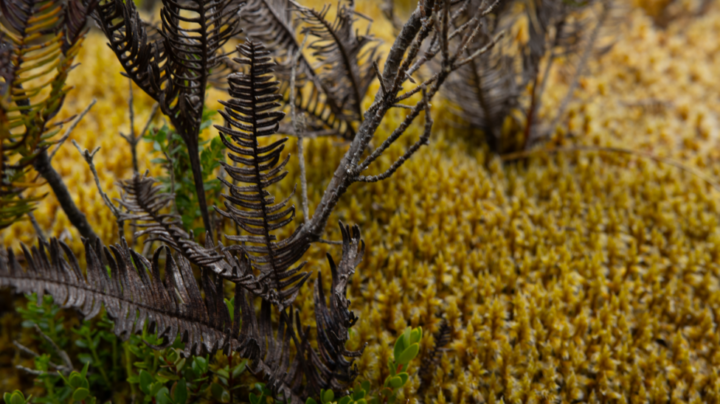
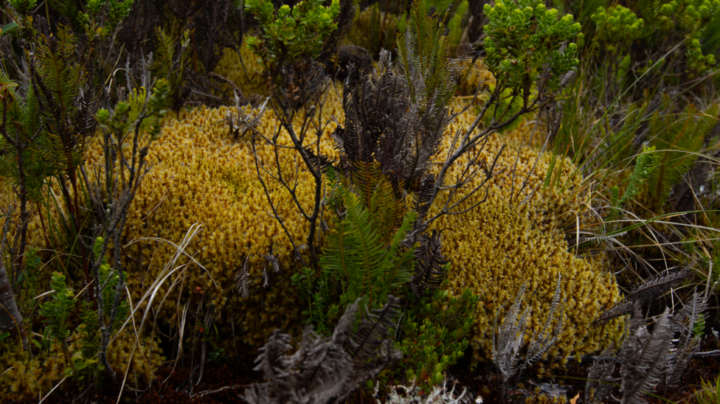
The peat bog (Moss sphagnum magellanicum) known as “pompon” in Chile absorbs and retains a great deal of water, releasing it drop by drop when there is no rain. In southern Chile there are about 3.1 million hectares of peatlands.

“We condemn the fact that the extraction of peat is permitted in Chiloé when there is no scientifically proven way for peat to be reproduced or planted…. there is no evidence of how it can regenerate.” ¨– Daniela Gumucio

Peat is a mixture of plant debris or dead organic matter, in varying degrees of decomposition, neither mineral nor fossilized, that has accumulated under waterlogged conditions.

The pompon is the main source of water for the short rivers in Chiloé, an archipelago of 9181 square kilometers and 168,000 inhabitants, located 1200 kilometers south of Santiago. The local population makes a living from agriculture, livestock, forestry, fishing and tourism, in that order.

“We don’t have glaciers, or thaws. Our water system is totally different from that of the entire continent and the rest of Chile. Since we don’t have glaciers or snow, our rivers function on the basis of rain and peat bogs that retain water and in times of scarcity release it,” Daniela Gumucio told IPS by telephone.

The 36-year-old history and geography teacher said that the Chiloé community is concerned about the supply of drinking water for consumption and for small family subsistence farming.

Gumucio is a leader of the National Association of Rural and Indigenous Women (Anamuri) and chairs the Environmental Committee of Chonchi, the municipality where she lives in the center of the island.

This long narrow South American country, which stretches between the Andes Mountains and the Pacific Ocean, has 19.5 million inhabitants and is facing one of the worst droughts in its history.

It’s strange to talk about water scarcity in Chiloé because it has a rainy climate. In 2011 more than 3000 millimeters of water fell there, but since 2015 rainfall began to decline.

In 2015 rainfall totaled 2483 millimeters, but by 2023 the amount had dropped to 1598 and so far this year only 316, according to data from the Quellón station reported to IPS by the Chilean Meteorological Directorate.

The forecast for April, May, and June 2024 is that below-normal rainfall will continue.

A water emergency was declared in the region in January and the residents of nine municipalities are supplied by water trucks.

To supply water to the inhabitants of the 10 municipalities of Chiloé, the State spent 1.12 million dollars to hire water trucks between 2019 and 2024. In Ancud alone, one of the municipalities, the expenditure was 345,000 dollars in that period.

A close-up shot of a peat bog in a watershed on the island of Chiloé, which has the ability to absorb water 10 times its weight. Because of this property, those who extract it today, without any oversight, dry it, crush it and pack it in sacks to sell it to traders who export it or sell it in local gardening shops. CREDIT: Courtesy of Gaspar Espinoza

A close-up shot of a peat bog in a watershed on the island of Chiloé, which has the ability to absorb water 10 times its weight. Because of this property, those who extract it today, without any oversight, dry it, crush it and pack it in sacks to sell it to traders who export it or sell it in local gardening shops. CREDIT: Courtesy of Gaspar Espinoza

Alert among social activists

The concern among the people of Chiloé over their water supply comes from the major boost for wind energy projects installed on the peat bogs and new legislation that prohibits the extraction of peat, but opens the doors to its use by those who present sustainable management plans.

Several energy projects are located in the Piuchén mountain range, in the west of Chiloé, where peat bogs are abundant.

“They want to extend a high voltage line from Castro to Chonchi. And there are two very large wind farm projects. But to install the turbines they have to dynamite the peat bog. This is a direct attack on our water resource and on our ways of obtaining water,” Gumucio said.

In 2020, the French company Engie bought three wind farms in Chiloé for 77 million dollars: San Pedro 1 and San Pedro 2, with a total of 31 wind turbines that will produce 101 megawatts (MW), and a third wind farm that will produce an additional 151 MW.

In addition, 18 kilometers of lines will be installed to carry energy to a substation in Gamboa Alto, in the municipality of Castro, and from there to the national power grid.

Another 92 turbines are included in the Tabla Ruca project, between the municipalities of Chonchi and Quellón.

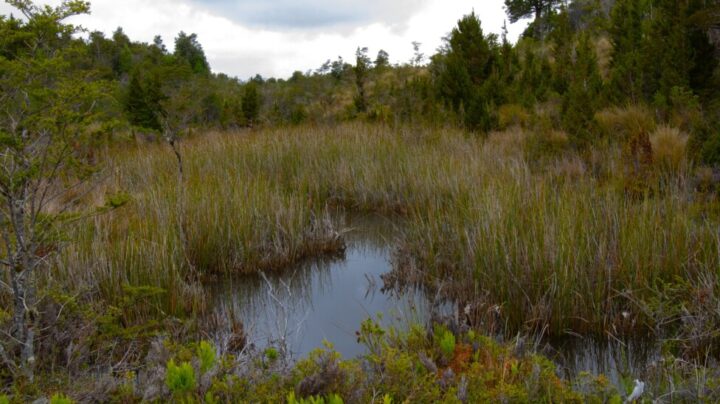
Peat bogs accumulate and retain rainwater in the wetlands of Chiloé and release it drop by drop to river beds in times of drought. CREDIT: Courtesy of Gaspar Espinoza

Peat bogs accumulate and retain rainwater in the wetlands of Chiloé and release it drop by drop to river beds in times of drought. CREDIT: Courtesy of Gaspar Espinoza

Engie describes its initiatives as part of the transition to a world with zero net greenhouse gas emissions, thanks to the production of clean or green energy.

Leaders of 14 social and community organizations expressed their concerns in meetings with regional authorities, but to no avail. Now they have informed their communities and called on the region’s authorities to protect their main water source.

Local residents marched in protest on Mar. 22 in Ancud and demonstrated on Apr. 22 in Puente Gamboa, in Castro, the main municipality of the archipelago.

Thanks to peatlands, the rivers of Chiloé do not dry up. The peat bogs accumulate rainwater on the surface, horizontally, and begin to release it slowly when rainfall is scarce.

For the same reason, peat is dup up and sold for gardening. In 2019 Chile exported 4600 tons of peat.

The wind energy projects are set up in areas of raised peat bogs, known as ombrotophic, located at the origin of the hydrographic basins.

“We have had a good response in the municipal council of Chonchi, where the mayor and councilors publicly expressed their opposition to approving these projects,” said Gumucio.

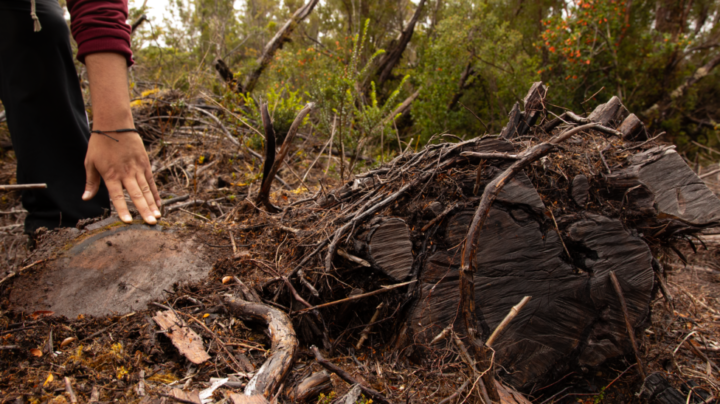
Dozens of trees have been felled in Chiloé to install wind turbines and make way for high-voltage towers that will transmit green energy to Chile's national power grid, without benefiting the inhabitants of the Chiloé archipelago. CREDIT: Courtesy of Gaspar Espinoza

Dozens of trees have been felled in Chiloé to install wind turbines and make way for high-voltage towers that will transmit green energy to Chile’s national power grid, without benefiting the inhabitants of the Chiloé archipelago. CREDIT: Courtesy of Gaspar Espinoza

The other threat to peatlands

The second threat to the Chiloé peat bogs comes from Law 21.660 on environmental protection of peatlands, published in Chile’s Official Gazette on Apr. 10.

This law prohibits the extraction of peat in the entire territory, but also establishes rules to authorize its use if sustainable management plans are presented and approved by the Agricultural and Livestock Service, depending on a favorable report from the new Biodiversity and Protected Areas Service.

The peatland management plan aims to avoid the permanent alteration of its structure and functions.

Those requesting permits must prove that they have the necessary skills to monitor the regeneration process of the vegetation layer and comply with the harvesting methodology outlined for sustainable use.

But local residents doubt the government’s oversight and enforcement capacity

Dozens of trees have been felled in Chiloé to install wind turbines and make way for high-voltage towers that will transmit green energy to Chile's national power grid, without benefiting the inhabitants of the Chiloé archipelago. CREDIT: Courtesy of Gaspar Espinoza

Dozens of trees have been felled in Chiloé to install wind turbines and make way for high-voltage towers that will transmit green energy to Chile’s national power grid, without benefiting the inhabitants of the Chiloé archipelago. CREDIT: Courtesy of Gaspar Espinoza

“We condemn the fact that the extraction of peat is permitted in Chiloé when there is no scientifically proven way for peat to be reproduced or planted…. there is no evidence of how it can regenerate,” said Gumucio.

The activist does not believe that sustainable management is viable and complained that the government did not accept a petition for the law to not be applied in Chiloé.

“We have a different water system and if this law is to be implemented, it should be on the mainland where there are other sources of water,” she said.

But according to Gumucio, everything seems to be aligned to deepen the water crisis in Chiloé.

“The logging of the forest, the extraction of peat, and the installation of energy projects all contribute to the drying up of our aquifers and basins. And in that sense, there is tremendous neglect by the State, which is not looking after our welfare and our right to have water,” she argued.

Peatland is part of the vegetation of the island of Chiloé, but is threatened by unsupervised exploitation, which the authorities hope to curb with a recently approved law, whose regulations are to be ready within the next two years. CREDIT: Courtesy of Gaspar Espinoza

Peatland is part of the vegetation of the island of Chiloé, but is threatened by unsupervised exploitation, which the authorities hope to curb with a recently approved law, whose regulations are to be ready within the next two years. CREDIT: Courtesy of Gaspar Espinoza

Scientists express their view

Six scientists from various Chilean universities issued a public statement asserting that the new law is a step in the right direction to protect Chile’s peatlands.

In their statement, scientists Carolina León, Jorge Pérez Quezada, Roy Mackenzie, María Paz Martínez, Pablo Marquet and Verónica Delgado emphasize that the new law “will require the presentation of a sustainable management plan” to exploit peat that is currently extracted without any controls.

They add that management plans must now be approved by the competent authorities and that those who extract peat will be asked to “ensure that the structure and functions of the peatlands are not permanently modified.”

They also say that the regulations of the law, which are to be issued within two years, “must establish the form of peat harvesting and post-harvest monitoring of the peat bog to protect the regeneration of the plant, something that has not been taken into consideration until now.”

They point out that the new law will improve oversight because it allows monitoring of intermediaries and exporters who could be fined if they do not comply with the legislation.

“While it is true that there is concern among certain communities and environmental groups, we believe that these concerns can be taken into account during the discussion of the regulations,” they say.

The scientists reiterate, however, that “peatlands are key ecosystems for mitigating the national and planetary climate and biodiversity crisis” and admit that “significant challenges remain to protect them, although this is a big step in the right direction.”

  Source

Solar Power and Biogas Empower Women Farmers in Brazil

Active Citizens, Biodiversity, Civil Society, Cooperatives, Development & Aid, Economy & Trade, Editors’ Choice, Energy, Environment, Featured, Food and Agriculture, Gender, Headlines, Integration and Development Brazilian-style, Latin America & the Caribbean, Projects, Regional Categories, TerraViva United Nations, Women & Climate Change, Women & Economy

Energy

Leide Aparecida Souza, president of the Association of Residents of the Genipapo Settlement in the rural area of Acreúna, a municipality in central-western Brazil, stands next to breads and pastries from the bakery where 14 rural women work. The women's empowerment and self-esteem have been boosted by the fact that they earn their own income, which is more stable than from farming, and provide an important service to their community. CREDIT: Marina Carolina / IPS

Leide Aparecida Souza, president of the Association of Residents of the Genipapo Settlement in the rural area of Acreúna, a municipality in central-western Brazil, stands next to breads and pastries from the bakery where 14 rural women work. The women’s empowerment and self-esteem have been boosted by the fact that they earn their own income, which is more stable than from farming, and provide an important service to their community. CREDIT: Marina Carolina / IPS

ACREÚNA/ORIZONA, Brazil , Apr 16 2024 (IPS) – A bakery, fruit pulp processing and water pumped from springs are empowering women farmers in Goiás, a central-eastern state of Brazil. New renewable energy sources are driving the process.


“We work in the shade and have a secure, stable income, not an unsteady one like in farming. We cannot control the price of milk, nor droughts or pests in the crops,” said Leide Aparecida Souza, who runs a bakery in the rural area of Acreúna, a municipality of 21,500 inhabitants in central Goiás.

“The Network is the link between the valorization of rural women, family farming and the energy transition. We chose family farmers because they are the ones who produce healthy food.” — Jessyane Ribeiro

The bakery supplies a variety of breads, including cheese buns and hot dog buns, as well as pastries, cakes and biscuits to some 3,000 students in the municipality’s school network, for the government’s school feeding program, which provides family farming with at least 30 percent of its purchases. Welfare institutions are also customers.

The bakery is an initiative of the women of the Genipapo Settlement, established in 1999 by 27 families, as part of the agrarian reform program implemented in Brazil after the 1964-1985 military dictatorship, which has so far settled 1.3 million families on land of their own.

Genipapo, the name chosen for the settlement, is a fruit of the Cerrado, the savannah that dominates a large central area of Brazil. Each settled family received 44 hectares of land and local production is concentrated on soybeans, cassava and its flour, corn, dairy cattle and poultry.

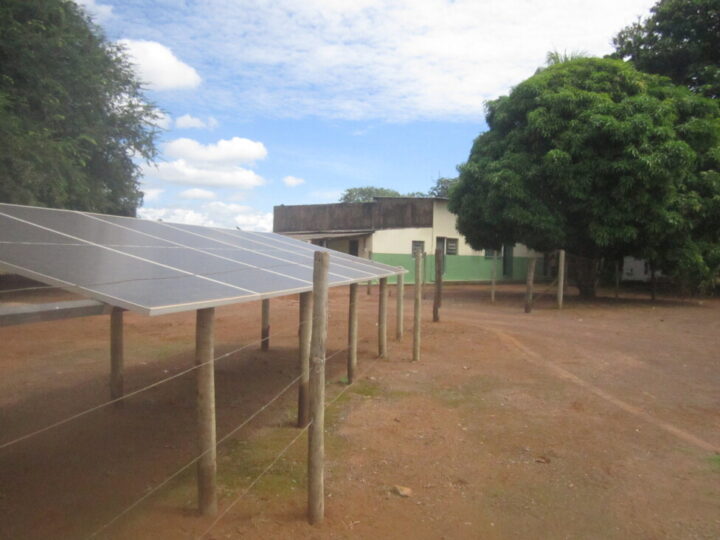
Six solar panels will reduce the costs of the women's bakery, installed on the former estate where 27 families were given land in Acreúna, in the Brazilian state of Goiás, as part of the country's ongoing agrarian reform program. CREDIT: Mario Osava / IPS

Six solar panels will reduce the costs of the women’s bakery, installed on the former estate where 27 families were given land in Acreúna, in the Brazilian state of Goiás, as part of the country’s ongoing agrarian reform program. CREDIT: Mario Osava / IPS

Bakery empowers rural women

The women of the Association of Residents of the Genipapo Settlement decided to create a bakery as a new source of income 16 years ago. They also gained self-esteem and autonomy by earning their own money. In general, agricultural and livestock income is controlled by the husbands.

Each of the women working at the bakery earns about 1,500 reais (300 dollars) a month, six percent more than the national minimum wage. “We started with 21 participants, now we have 14 available for work, because some moved or quit,” Souza said.

A year ago, the project obtained a solar energy system with six photovoltaic panels from the Women of the Earth Energy project, promoted by the Gepaaf Rural Consultancy, with support from the Socio-environmental Fund of the Caixa Econômica Federal, the regional bank focused on social questions, and the public Federal University of Goiás (UFG).

Gepaaf is the acronym for Management and Project Development in Family Farming Consultancy and its origin is a study group at the UFG. The company is headquartered in Inhumas, a city of 52,000 people, 180 km from Acreúna.

Due to difficulties with the inverter, a device needed to connect the generator to the electricity distribution network, the plant only began operating in March. Now they will see if the savings will suffice to cover the approximately 300 reais (60 dollars) that the bakery’s electricity costs.

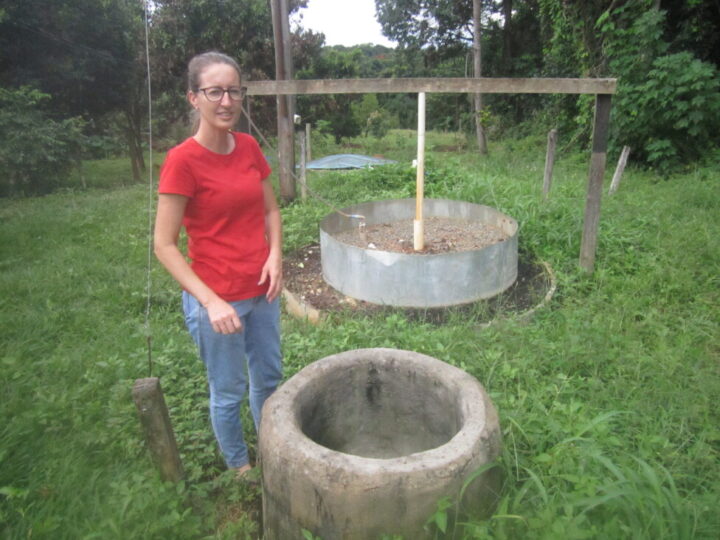
Iná de Cubas stands next to the biodigester that she got from the Women of the Earth Energy project in the municipality of Orizona, in the center-east of the Brazilian state of Goiás. The biogas generated benefits the productive activities of small farmers in rural settlements, as do solar plants on a family or community scale. Image: Mario Osava / IPS

Iná de Cubas stands next to the biodigester that she got from the Women of the Earth Energy project in the municipality of Orizona, in the center-east of the Brazilian state of Goiás. The biogas generated benefits the productive activities of small farmers in rural settlements, as do solar plants on a family or community scale. Image: Mario Osava / IPS

“It’s not that much money, but for us every penny counts,” Souza said. Electricity is cheap in their case because it is rural and nocturnal consumption. Bread production starts at 5:00 p.m. and ends at 3:00 or 4:00 a.m. from Monday to Thursday, according to Maristela Vieira de Sousa, the group’s secretary.

The industrial oven they use is low-consumption and wood-burning. There is another, gas-fired oven, which is only used in emergencies, “because it is expensive,” said de Sousa. Biogas is a possibility for the future, which would use the settlement’s abundant agricultural waste products.

Alternative energies make agribusiness viable

Iná de Cubas, another beneficiary of the Women of the Earth Energy project, has a biodigester that supplies her stove, in addition to eight solar panels. They generate the energy to produce fruit pulp that also supplies the schools of Orizona, a municipality of 16,000 inhabitants in central-eastern Goiás.

The solar plant, installed two years ago, made the business viable by eliminating the electricity bill, which was high because the two refrigerators needed to store fruit and pulp consume a lot of electricity.

The abundance of fruit residues provides the inputs for biogas production, an innovation in a region where manure is more commonly used.

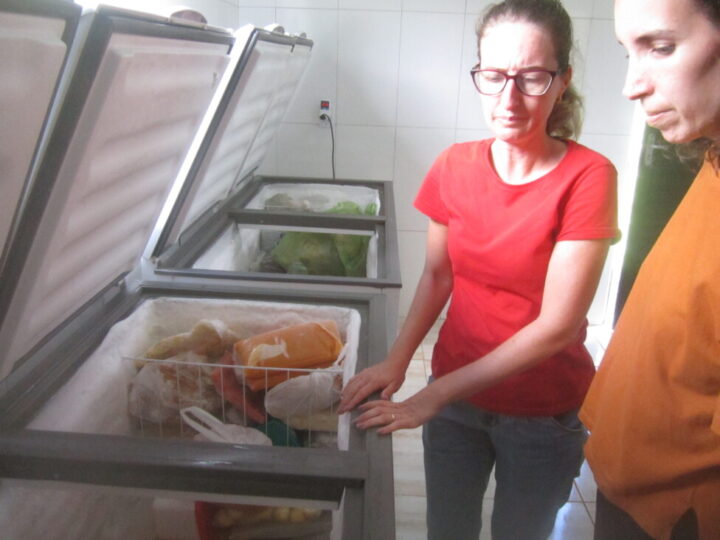
The refrigerators in which Iná de Cubas keeps the fruit and fruit pulp that she prepares for sale to schools in Orizona in central Brazil consume a great deal of electricity. CREDIT: Mario Osava / IPS

The refrigerators in which Iná de Cubas keeps the fruit and fruit pulp that she prepares for sale to schools in Orizona in central Brazil consume a great deal of electricity. CREDIT: Mario Osava / IPS

“I only use an additional load of animal feces when I need more biogas,” said Cubas, who gets the manure from her neighbor’s cows, since she does not raise livestock.

On her five hectares of land, Cubas produces numerous species of fruit for her cottage industry.

In addition to typical Brazilian fruits, such as cajá or hog plum (Spondias mombin), pequi or souari nut (Caryocar brasiliense) and jabuticaba from the grapetree (Plinia cauliflora), she grows lemons, mangoes, oranges, guava and avocado, among others.

For the pulp, she also uses fruit from neighbors, mostly relatives. The distribution of her products is done through the Agroecological Association of the State of Goias (Aesagro), which groups 53 families from Orizona and surrounding areas.

Agroecology is the system used on her farm, where the family also grows rice, beans and garlic. The crops are irrigated with water pumped from nearby springs that were recovered by the diversion of a road and by fences to block access by cattle, which used to trample the banks.

“The overall aim is to strengthen family farming, the quality of life in the countryside, incomes, and care for the environment, and to offer healthy food, without poisonous chemicals, especially for schools,” explained Iná de Cubas.

Biodigesters made of steel and cement, solar energy for different purposes, including pumping water, rainwater collection and harvesting, are part of the “technologies” that the Women of the Earth Energy project is trying to disseminate, said Gessyane Ribeiro, Gepaaf’s administrator.

In the area where Iná de Cubas lives, the project installed five biodigesters and seven solar pumps for farming families, in addition to solar plants in schools, she said.

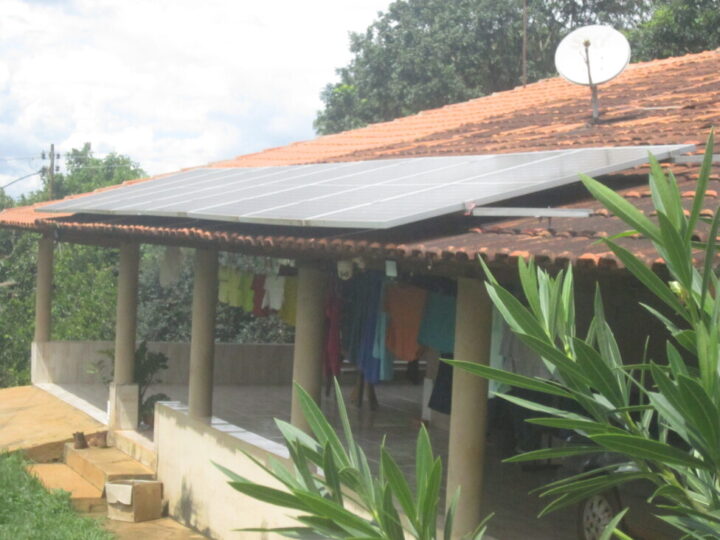
The eight solar panels on the roof of the Cubas family’s house, in the rural area of Orizona, make small agro-industrial processes viable, adding value to the wide diversity of native fruits from different Brazilian ecosystems, such as the Cerrado savannah and the Amazon rainforest, along with species imported throughout the country’s history. CREDIT: Mario Osava / IPS

Network of rural women

The Women of the Earth Energy Network, brought together by the project and coordinated by Ribeiro, operates in six areas defined by the government based on environmental, economic, social and cultural similarities. In all, it involves 42 organizations in 27 municipalities in Goiás.

The local councils choose the beneficiaries of the projects, all implemented with collective work and focused on women’s productive activities and the preservation of the Cerrado. All the beneficiaries commit themselves to contribute to a solidarity fund to finance new projects, explained agronomist Ribeiro.

“The Network is the link between the valorization of rural women, family farming and the energy transition,” she said. “We chose family farmers because they are the ones who produce healthy food.”

“We offer technological solutions that rely on the links between food, water and energy, to move towards an energy transition that can actually address climate change,” said sociologist Agnes Santos, a researcher and communicator for the Network.

Recovering and protecting springs is another of the Women’s Network’s activities.

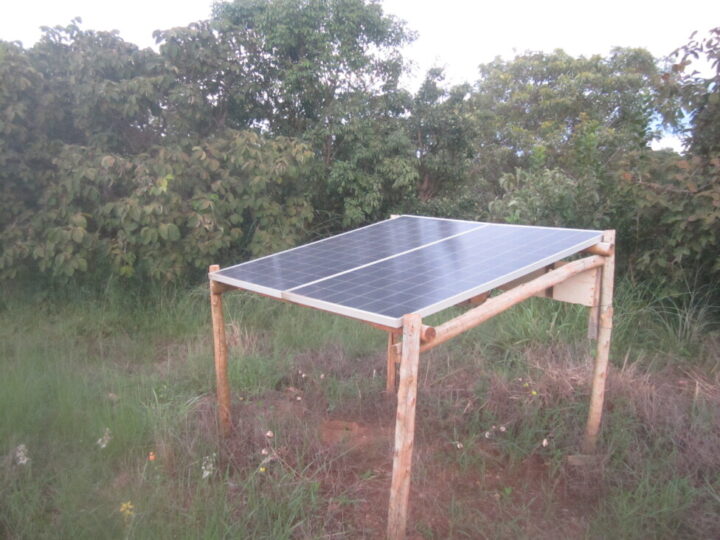
Two solar panels run a pump installed in a spring in the forest to pump the water needed by the 29 cows owned by Nubia Lacerda Matias' family in Orizona, in the state of Goiás, near Brasilia. Thus the cows stopped drinking water in the springs, which are now fenced off, vital to protect the water source for local families living downstream. CREDIT: Mario Osava / IPS

Two solar panels run a pump installed in a spring in the forest to pump the water needed by the 29 cows owned by Nubia Lacerda Matias’ family in Orizona, in the state of Goiás, near Brasilia. Thus the cows stopped drinking water in the springs, which are now fenced off, vital to protect the water source for local families living downstream. CREDIT: Mario Osava / IPS

Nubia Lacerda Matias celebrates the moment she was invited to join the movement. She won a solar pump, made up of two solar panels and pipes, which bring water to her cattle that used to damage the spring, now protected by a fence and a small forest.

“It’s important not only for my family, but for the people living downhill” where a stream flows, fed by various springs along the way, she said.

But the milk from the 29 cows and corn crops on her 9.4-hectare farm are not enough to support the family with two young children. Her husband, Wanderley dos Anjos, works as a school bus driver.

Iná de Cubas’ partner, Rosalino Lopes, also works as a technician for the Pastoral Land Commission, a Catholic organization dedicated to rural workers.

In his spare time, Lopes invents agricultural machines. He assembles and combines parts of motorcycles, tractors and other tools, in an effort to fill a gap in small agriculture, undervalued by the mechanical industry and scientific research in Brazil.

  Source

Migration in the Americas: A Dream That Can Turn Deadly

Civil Society, Climate Change, Crime & Justice, Featured, Gender Violence, Headlines, Human Rights, Latin America & the Caribbean, Migration & Refugees, TerraViva United Nations

Opinion

Credit: David Peinado/Anadolu via Getty Images

MONTEVIDEO, Uruguay, Apr 16 2024 (IPS) – The Darién Gap is a stretch of jungle spanning the border between Colombia and Panama, the only missing section of the Pan-American Highway that stretches from Alaska to southern Argentina. For good reason, it used to be considered impenetrable. But in 2023, a record 520,000 people crossed it heading northwards, including many children. Many have lost their lives trying to cross it.


People are also increasingly taking to the seas. A new people trafficking route has opened up across the Caribbean Sea via the Bahamas. Growing numbers of desperate migrants – mostly from conflict-ridden Haiti but also from more distant countries – are using it in an attempt to reach Florida. It’s risky too. In November 2023, at least 30 people died when a boat from Haiti capsized off the Bahamas.

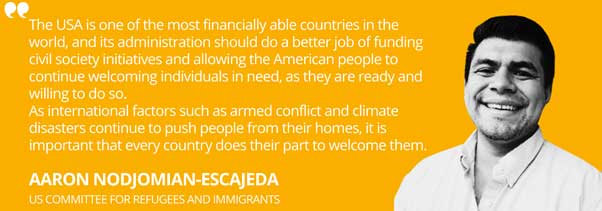
The pattern is clear: as is also the case in Europe, when safer routes are closed off, people start taking riskier ones. Millions of people in Latin American and Caribbean countries are fleeing authoritarianism, insecurity, violence, poverty and climate disasters. Most remain in other countries in the region that typically present fewer challenges to arriving migrants – but also offer limited opportunities. The USA therefore remains a strong migration magnet. Its tightening immigration policies are the key reason people are heading into the jungle and taking to the sea.

Dynamic trends

Out of the staggering 7.7 million Venezuelans who’ve left their country since 2017 – greater than the numbers of displaced Syrians or Ukrainians – almost three million have stayed next door in Colombia, with about 1.5 million in Peru, close to half million in both Brazil and Ecuador, and hundreds of thousands in other countries across the region.

Latin American host countries are relatively welcoming. Unlike in many global north countries, politicians don’t usually stoke xenophobia or vilify migrants for political gain, and states don’t usually reject people at borders or deport them, and instead try to provide paths for legal residence. Overall they’ve been pragmatic enough to strike a balance between openness and orderly entry. As a result, a high proportion of Venezuelan migrants have acquired some form of legal status in host countries.

But host states haven’t planned for long-term integration. They face typical global south challenges, such as high levels of inequality and many unmet social needs. That’s why those moving towards the USA include many Haitians, Nicaraguans and Venezuelans who were already living in other countries. They are mostly driven by the lack of opportunities, although in the case of Haitians language barriers and racial discrimination are also significant motivators.

While the USA has tightened its migration policies, its porous southern border – the longest border between global north and global south – remains inviting for many. In its 2022 fiscal year, US authorities had a record 2.4 million encounters with unauthorised migrants at the border. Many had come a long way, having crossed the Darién Gap and then headed across Central America and Mexico.

Dangerous journeys

People do so at great risk. According to the United Nations’ Missing Migrants Project reported at least 1,275 people died or went missing during migration in the Americas in 2023.

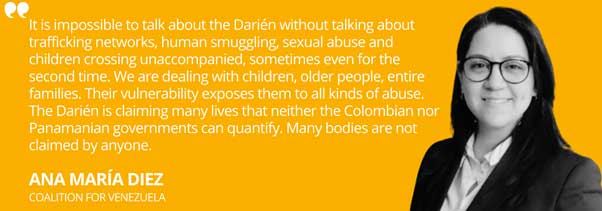
It’s unclear how many people have perished so far in the Darién Gap. In many cases, deaths go unreported and bodies are never recovered. The crossing can take anywhere from three to 15 days. As they cross rivers and mountains, people suffer from the jungle’s harshness and difficult weather.

According to Doctors Without Borders (MSF), much of the danger is because the Darién is one of the world’s most humid regions and doesn’t have any proper infrastructure. People can easily slip and fall on its steep paths or drown in rushing rivers. Hired guides can leave people stranded. Those who can’t keep up can get disoriented and lost. The difficult terrain forces many to leave their supplies along the way, including food and drinking water.

Migrants also often cross paths with local criminal groups that steal from them, kidnap them or commit rape. In December 2023, MSF recorded a seven-fold increase in monthly incidents of sexual violence. But despite the dangers, the number of people crossing in 2023 almost doubled compared to 2022.

The Darién Gap is only the gateway to Central America – the start of a much longer journey. The dangers don’t stop. Many end up staying somewhere in Mexico, but others keep marching northwards and face many hazards trying to reach the USA – drowning , or dying of heat exposure and dehydration in the desert during the day, or of hypothermia at night. Migrants have also died of asphyxiation in botched migrant smuggling operations. They are often blackmailed by smugglers and experience human rights abuses, including lethal violence, from Border Patrol agents.

US policies

Starting in early 2021, the administration of President Joe Biden made several changes to US immigration policies, such as rescinding the travel ban on primarily Muslim-majority and African countries, restoring the Deferred Action for Childhood Arrivals programme and granting Venezuelans living in the USA Temporary Protection Status, among other things.

But it was only in May 2023 that the Biden administration finally lifted Title 42, a public health order that, under the cover of the COVID-19 pandemic, the Trump administration used to immediately expel those caught crossing the border, with no right to apply for asylum. At the same time, however, the government issued several new rules that became known as the ‘asylum ban’. Before showing up at the border, people are now required to make an appointment with a smartphone app or have proof they have previously sought and failed to obtain asylum in the countries they’ve travelled through on their way to the USA. If they don’t comply with these requirements, they’re automatically presumed ineligible for asylum and can be subjected to expedited removal.

Civil society points out that it’s very difficult to get an appointment. The app frequently fails and many migrants don’t have smartphones, adequate wi-fi or a data plan. They face language and education barriers and are exploited by people pretending to help. Barriers to seeking asylum have risen to the point that advocates view them as violating the Refugee Convention’s principle of non-refoulment, according to which people can’t be returned to a country where they face serious threats to their life or freedom.

Election politics

Pressure is intensifying as the USA’s November 2024 presidential election approaches.

Republican governors of southern states such as Texas have made a show of bussing newly arrived migrants to far-off cities run by Democrats, dumping them there with no support, treating them as pawns in a political game. Congress Republicans have also repeatedly delayed backing support to Ukraine unless new border control measures are enacted in return.

In October 2023, Biden announced plans to strengthen the southern border and resume deportation flights to Venezuela, which had been paused. But no one has gone lower than Donald Trump, who recently told a rally that ‘immigrants are poisoning the blood of our country’ – a straightforward use of white supremacist rhetoric. His comments have grown increasingly dehumanising – he has repeatedly referred to migrants as ‘animals’.

In his 2023 State of the Union speech, President Biden responded to Trump directly, stating he refused to ‘demonise immigrants’. But in the same breath he urged Republicans to pass a bipartisan immigration bill they’re currently blocking, which would further tighten asylum rules, expand funding for border operations and give the president authority to empower border officials to summarily deport migrants during spikes in illegal immigration. The bill continues to be rejected by hardcore Republicans who see it as not strict enough.

For migrants and asylum seekers, the prospects look bleak. As far as their rights are concerned, the election campaign is a race to the bottom. A Trump victory could only bring further bad news – but a Biden win is unlikely to promise much progress. Election results aside, people will keep taking to the sea or venturing through the jungle, the barbed wire and the desert. Politicians need to recognise this reality and commit to upholding the human rights of all who strive to find a future in the USA.

Inés M. Pousadela is CIVICUS Senior Research Specialist, co-director and writer for CIVICUS Lens and co-author of the State of Civil Society Report.
  Source