Peru Faces Challenge of Climate Change-Driven Internal Migration

Civil Society, Climate Action, Climate Change, Development & Aid, Editors’ Choice, Featured, Global Governance, Headlines, Humanitarian Emergencies, IPS UN: Inside the Glasshouse, Latin America & the Caribbean, Population, TerraViva United Nations, Water & Sanitation

Climate Change

LIMA, Sep 28 2023 (IPS) – Nearly 700,000 people have migrated internally in Peru due to the effects of climate change. This mass displacement is a clear problem in this South American country, one of the most vulnerable to the global climate crisis due to its biodiversity, geography and 28 different types of climates.


“We recognize migration due to climate change as a very tangible issue that needs to be addressed,” Pablo Peña, a geographer who is coordinator of the Emergency and Humanitarian Assistance Unit of the International Organization for Migration (IOM) in Peru, told IPS.

In an interview with IPS at the UN agency’s headquarters in Lima, Peña reported that according to the international Internal Displacement Monitoring Center, the number of people displaced within Peru’s borders by disasters between 2008 and 2022 is estimated at 659,000, most of them floods related to climate disturbances.

“We recognize migration due to climate change as a very tangible issue that needs to be addressed.” — Pablo Peña

In this Andean country of 33 million inhabitants, there is a lack of specific and centralized data to determine the characteristics of migration caused by environmental and climate change factors.

Peña said that through a specific project, the IOM has collaborated with the Peruvian government in drafting an action plan aimed at preventing and addressing climate-related forced migration, on the basis of which a pilot project will begin in October to systematize information from different sources on displacement in order to incorporate the environmental and climate component.

“We aim to be able to define climate migrants and incorporate them into all regulations,” said the expert. The project, which includes gender, rights and intergenerational approaches, is being worked on with the Ministries of the Environment and of Women and Vulnerable Populations.

He added that this type of migration is multidimensional. “People can say that they left their homes in the Andes highlands because they had nothing to eat due to the loss of their crops, and that could be interpreted, superficially, as forming part of economic migration because they have no means of livelihood. But that cause can be associated with climatic variables,” Peña said.

In a 2022 report, the United Nations Food and Agriculture Organization (FAO) identified Peru as the country with the highest level of food insecurity in South America.
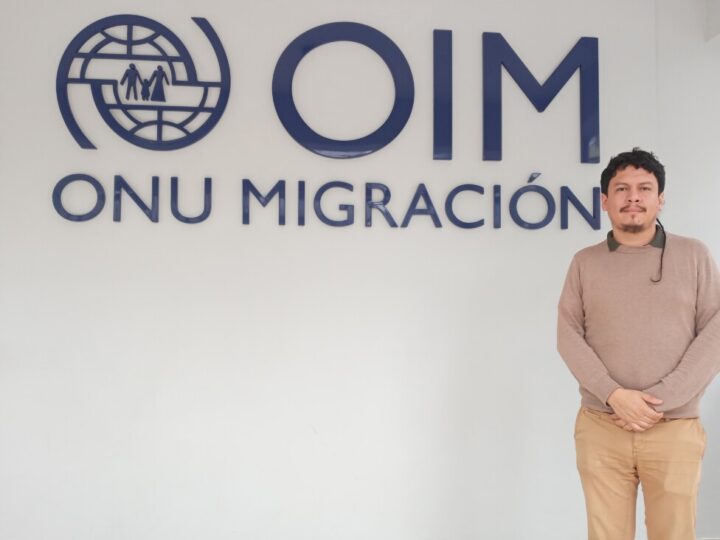
Pablo Peña, coordinator of the Emergency and Humanitarian Assistance Unit of the International Organization for Migration (IOM) in Peru, stands in front of the headquarters of this United Nations agency in Lima. He highlights the need to address the situation of internal migration driven by the impacts of climate change. CREDIT: Mariela Jara / IPS

Pablo Peña, coordinator of the Emergency and Humanitarian Assistance Unit of the International Organization for Migration (IOM) in Peru, stands in front of the headquarters of this United Nations agency in Lima. He highlights the need to address the situation of internal migration driven by the impacts of climate change. CREDIT: Mariela Jara / IPS

The Central Reserve Bank, in charge of preserving monetary stability and managing international reserves, lowered in its September monthly report Peru’s economic growth projection to 0.9 percent for this year, partly due to the varied impacts of climate change on agriculture and fishing.

This would affect efforts to reduce the poverty rate, which stands at around 30 percent in the country, where seven out of every 10 workers work in the informal sector, and would drive up migration of the population in search of food and livelihoods.

“The World Bank estimates that by 2050 there will be more than 10 million climate migrants in Latin America,” said Peña.

The same multilateral institution, in its June publication Peru Strategic Actions Toward Water Security, points out that people without economic problems are 10 times more resistant than those living in poverty to climatic impacts such as floods and droughts, which are increasing at the national level.

The country is currently experiencing the Coastal El Niño climate phenomenon, which in March caused floods in northern cities and droughts in the south. The official National Service of Meteorology and Hydrology warned that in January 2024 it could converge with the El Niño Southern Oscillation (ENSO) global phenomenon, accentuating its impacts.

El Niño usually occurs in December, causing the sea temperature to rise and altering the rainfall pattern, which increases in the north of the country and decreases in the south.
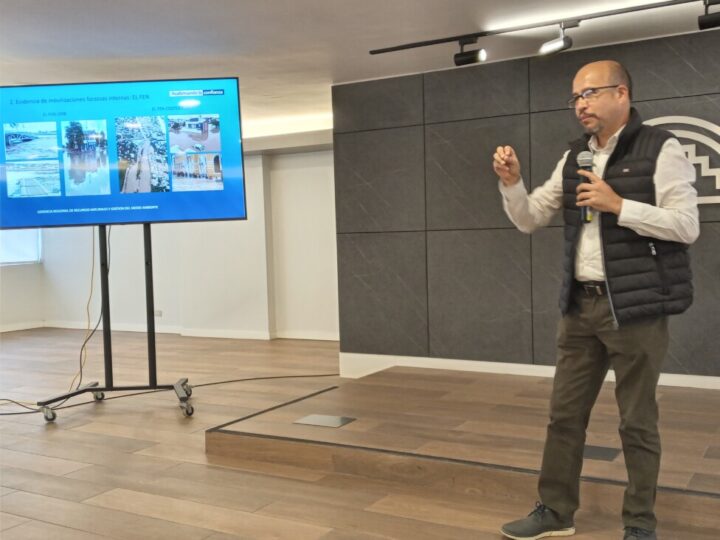
The manager of Natural Resources of the Piura regional government, Juan Aguilar, described the vulnerability to climate change of this northern coastal region of Peru at a September meeting organized by the IOM in Lima. The official explained that the El Niño climate phenomenon has become more intense and frequent due to the effects of climate change, which aggravates its impacts on the population, such as severe flooding this year. CREDIT: Mariela Jara / IPSThe manager of Natural Resources of the Piura regional government, Juan Aguilar, described the vulnerability to climate change of this northern coastal region of Peru at a September meeting organized by the IOM in Lima. The official explained that the El Niño climate phenomenon has become more intense and frequent due to the effects of climate change, which aggravates its impacts on the population, such as severe flooding this year. CREDIT: Mariela Jara / IPS

The manager of Natural Resources of the Piura regional government, Juan Aguilar, described the vulnerability to climate change of this northern coastal region of Peru at a September meeting organized by the IOM in Lima. The official explained that the El Niño climate phenomenon has become more intense and frequent due to the effects of climate change, which aggravates its impacts on the population, such as severe flooding this year. CREDIT: Mariela Jara / IPS

Reluctance to migrate to safer areas

Piura, a northern coastal department with an estimated population of just over two million inhabitants, has been hit by every El Niño episode, including this year’s, which left more than 46,000 homes damaged, even in areas that had been rebuilt.

Juan Aguilar, manager of Natural Resources of the Piura regional government, maintains that the high vulnerability to ENSO is worsening with climate change and is affecting the population, communication routes and staple crops.

At an IOM workshop on Sept. 5 in Lima, the official stressed that Piura is caught up in both floods and droughts, in a complex context for the implementation of spending on prevention, adaptation and mitigation.

Aguilar spoke to IPS about the situation of people who, despite having lost their homes for climatic reasons, choose not to migrate, in what he considers to be a majority trend.

“People are not willing overall to move to safer areas, even during El Niño 2017 when there were initiatives to relocate them to other places; they prefer to wait for the phenomenon to pass and return to their homes,” he added.
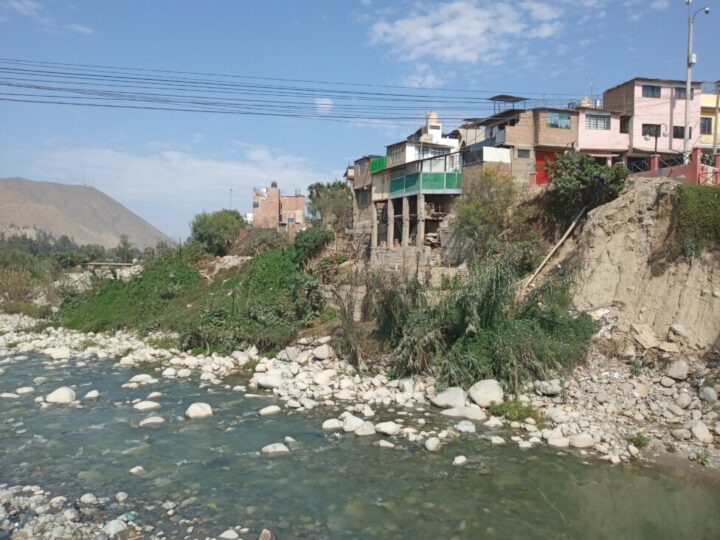
View of the Rimac River as it passes through the municipality of Lurigancho-Chosica, in the Peruvian province of Lima. In this town, many families are still living in housing in areas at high risk, which is exacerbated during the rainy season that begins in December and has intensified due to climate change and the increased recurrence of the El Niño climate phenomenon. CREDIT: Mariela Jara / IPS

View of the Rimac River as it passes through the municipality of Lurigancho-Chosica, in the Peruvian province of Lima. In this town, many families are still living in housing in areas at high risk, which is exacerbated during the rainy season that begins in December and has intensified due to climate change and the increased recurrence of the El Niño climate phenomenon. CREDIT: Mariela Jara / IPS

He explained that this attitude is due to the fact that they see the climatic events as recurrent. “They say, I already experienced this in such and such a year, and there is a resignation in the sense of saying that we are in a highly vulnerable area, it is what we have to live with, God and nature have put us in these conditions,” Aguilar said.

He acknowledged that with regard to this question, public policies have not made much progress. “For example after 2017 a law was passed to identify non-mitigable risk zones, and that has not been enforced despite the fact that it would help us to implement plans to relocate local residents to safer areas,” he added.

The regional official pointed out that “we do not have an experience in which the State says ‘I have already identified this area, there is so much housing available here for those who want to relocate’ , because the social cost would be so high.”

“We have not seen this, and the populace has the feeling that if they are going to start somewhere else, the place they abandon will be taken by someone else, and they say: ‘what is the point of me moving, if the others will be left here’,” Aguilar said.
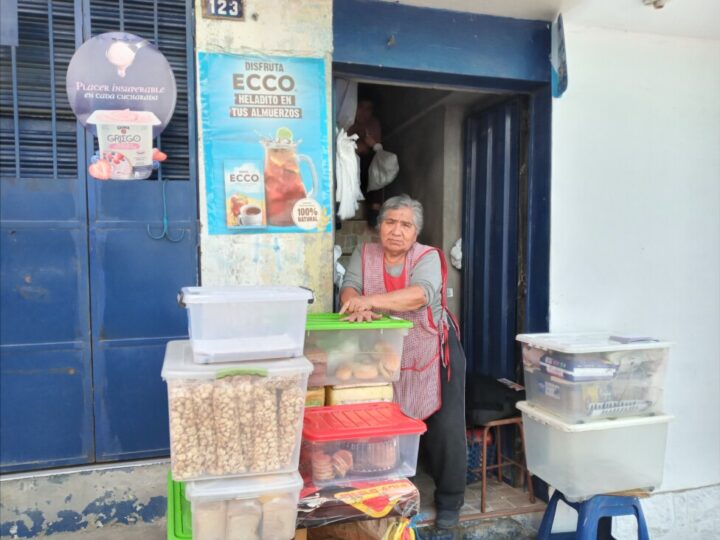
Paulina Vílchez, 72, has always lived in the Peruvian municipality of Lurigancho-Chosica. Despite the fear every year that the Rimac River might flood and that mudslides could occur in one of the 21 ravines in the area, she has never thought of moving away. "I'm not going to go to an empty plot to start all over again, that's why I've stayed. I leave everything in the hands of God," she said. CREDIT: Mariela Jara / IPS

Paulina Vílchez, 72, has always lived in the Peruvian municipality of Lurigancho-Chosica. Despite the fear every year that the Rimac River might flood and that mudslides could occur in one of the 21 ravines in the area, she has never thought of moving away. “I’m not going to go to an empty plot to start all over again, that’s why I’ve stayed. I leave everything in the hands of God,” she said. CREDIT: Mariela Jara / IPS

The fear of starting over

Some 40 km from the Peruvian capital, in Lurigancho-Chosica, one of the 43 municipalities of the province of Lima, the local population is getting nervous about the start of the rainy season in December, which threatens mudslides in some of its 21 ravines. The most notorious due to their catastrophic impact occurred in 1987, 2017, 2018 and March of this year.

Landslides, known in Peru by the Quechua indigenous term “huaycos”, have been part of the country’s history, due to the combination of the special characteristics of the rugged geography of the Andes highlands and the ENSO phenomenon.

In an IPS tour of the Chosica area of Pedregal, one of the areas vulnerable to landslides and mudslides due to the rains, there was concern in the municipality about the risks they face, but also a distrust of moving to a safer place to start over.

“I came here to Pedregal as a child when this was all fields where cotton and sugar cane were planted. I have been here for more than sixty years and we have progressed, we no longer live in shacks,” said 72-year-old Paulina Vílchez, who lives in a nicely painted two-story house built of cement and brick.

On the first floor she set up a bodega, which she manages herself, where she sells food and other products. She did not marry or have children, but she helped raise two nieces, with whom she still lives in a house that is the fruit of her parents’ and then her own efforts and which represents decades of hard work.

Vílchez admits that she would like to move to a place where she could be free of the fear that builds up every year. But she said it would have to be a house with the same conditions as the one she has managed to build with so much effort. “I’m not going to go to an empty plot to start all over again, that’s why I’ve stayed. I leave everything in the hands of God,” she told IPS.
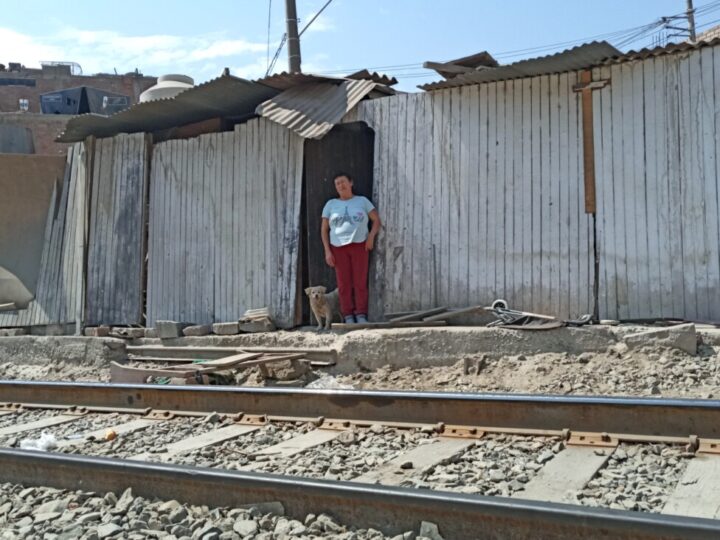
Maribel Zavaleta's home in the Peruvian municipality of Chosica is built of wood, near the Rimac River and just a meter from the train tracks. She arrived there in 1989, relocated after a mud, water and rock slide two years earlier in another part of the town. She constantly worries that another catastrophe will happen again, and says she would relocate if she were guaranteed safer land and materials to build a new house. CREDIT: Mariela Jara / IPS

Maribel Zavaleta’s home in the Peruvian municipality of Chosica is built of wood, near the Rimac River and just a meter from the train tracks. She arrived there in 1989, relocated after a mud, water and rock slide two years earlier in another part of the town. She constantly worries that another catastrophe will happen again, and says she would relocate if she were guaranteed safer land and materials to build a new house. CREDIT: Mariela Jara / IPS

Very close to the Rimac River and next to the railway tracks that shake her little wooden house each time the train passes by lives Maribel Zavaleta, 50, born in Chosica, and her family of two daughters, a son, and three granddaughters.

“I came here in 1989 with my mom, she was a survivor of the 1987 huayco, and we lived in tents until we were relocated here. But it’s not safe; in 2017 the river overflowed and the house was completely flooded,” she told IPS.

Zavaleta started her own family at the age of 21, but is now separated from her husband. Her eldest son lives with his girlfriend on the same property, and her older daughter, who works and helps support the household, has given her three granddaughters. The youngest of her daughters is 13 and attends a local municipal school.

“I work as a cleaner and what I earn is only enough to cover our basic needs,” she said. She added that if she were relocated again it would have to be to a plot of land with a title deed and materials to build her house, which is now made of wood and has a tin roof, while her plot of land is fenced off with metal sheets.

“I can’t afford to improve my little house or leave here. I would like the authorities to at least work to prevent the river from overflowing while we are here,” she said, pointing to the rocks left by the 2017 landslide that have not been removed.

  Source

Nigerian Women Challenge ‘Colonialist’ Patriarchy

Africa, Civil Society, Featured, Gender, Gender Identity, Headlines, TerraViva United Nations, Women & Economy, Women in Politics

Women & Economy

Bukes Saliu, a forklift driver, is a Nigerian woman who challenging stereotypes. Credit: Promise Eze/IPS

Bukes Saliu, a forklift driver, is a Nigerian woman who challenging stereotypes. Credit: Promise Eze/IPS

LAGOS, Sep 28 2023 (IPS) – Bukes Saliu wakes up very early every workday to beat the gruesome Lagos traffic to head to a job quite unusual for a woman to engage in Nigeria. She is a forklift operator in one of the busy depots in the coastal city, a task traditionally meant for men in the West African country.


In a country where women are seen as second-class citizens and whose roles are expected to be confined to the kitchen, Saliu is not letting patriarchal norms put her in a box.

“People are always thrilled when I tell them what I do. Sometimes I get snide remarks from some men I work with, but I don’t allow that to get to me,” Saliu says.

In August 2022, her curiosity was piqued when she came across a post on WhatsApp from her friend featuring a woman confidently posed beside a forklift machine. That ignited her interest in the job. Soon after, she enrolled in training to become a skilled forklift operator.

“It was a change of career path for me. I used to be a project manager with a non-profit, but I left the job to be a forklift operator. The first day I started work, I was a bit afraid, but now I operate the machine like any other man would do. I believe that women should be allowed at the table because it brings different perspectives, ideas, and experiences,” she adds.

Patriarchy Lives in Nigeria

Discrimination against women has been a serious problem in Nigeria. Women still grapple with an array of challenges and are marginalized despite the Nigerian constitution providing for gender equality and nondiscrimination

Women face a heavier burden of violence, and different types of bias, which creates significant obstacles in their quest for gender equality. This is frequently caused by unfair laws, religious and cultural traditions, gender stereotypes, limited education opportunities, and the unequal impact of poverty on women.

Although the government has attempted to tackle these deep-rooted issues, the pace of progress remains sluggish. Women’s representation within politics and decision-making spheres remains poor. For example, out of a total of 15,307 candidates in the 2023 general elections, only 1,550 were women. Only three women were elected as senators as against nine in the last election, and only one woman emerged as a presidential candidate.

Women are often excluded from economic prospects. Within Nigeria’s populace exceeding 200 million, a mere 60.5 million people contribute to its labor force. Among this workforce, around 27.1 million women participate, a significant portion of whom find themselves involved in low-skilled employment. Nigeria’s position on the World Economic Forum’s Gender Gap Index is a lowly 123rd out of 156 nations.

Swimming Against the Tide

A limited number of women are challenging conventional gender norms for the purpose of livelihood, stepping into roles that are male dominated in Nigeria. However, this transition is often met with resistance and negative reactions.

In 2021, Iyeyemi Adediran gained widespread attention for her exceptional mastery of driving long-haul trucks for oil companies. However, despite her remarkable skill, the then 26-year-old shared that she faced derogatory remarks for daring to break gender norms associated with truck driving—an occupation traditionally considered male-dominated.

In 2015, Sandra Aguebor, Nigeria’s first female mechanic, gained widespread attention for her all-female garages across the country. However, she revealed that her mother initially did not support her ambitions, believing that fixing cars should only be done by men.

Faith Oyita, a shoemaker in Benue State, Nigeria, is not letting patriarchal norms stop her. Despite Aba, a growing men-led market in southeast Nigeria, dominating the shoemaking industry, Oyita has been determined to make a name for herself since 2015, even though she resides kilometers away. She says she has trained over 300 other people on how to make shoes.

“When I first started, I didn’t care about the challenges that came with shoemaking. I had a deep passion for it, and I wanted to beautify people’s legs. Even though it was a skill dominated by men, I was determined to do things differently. I knew that greatness doesn’t come from convenience. In the beginning, many people questioned why I chose shoemaking. Even the man who taught me was hesitant and doubted my potential. I was the only female among all his apprentices, and many assumed that I came because I wanted to date him. Despite all the negative remarks, I never gave up,” she tells IPS.

Patriarchy Came Through Colonialism

“A lot of what is happening today is not how we originally lived our lives as Nigerian women. Patriarchy actually entered our society during the colonial era. Before colonization, both men and women were able to do things without being restricted by gender. Historically, women were involved in trading goods and services, and they could even marry multiple wives for themselves.

“However, when the colonialists arrived, they distorted our culture and, using religion, promoted the idea that men held more power. We should strive to correct this narrative. It’s unfortunate that we have been socialized to believe that men should always be in leadership positions and that women should only be in a man’s home,” says Añuli Aniebo Ola-Olaniyi, Executive Director, HEIR Women Hub.

Speaking further, Ola-Olaniyi argues that women who want to break gender norms must have a change of mindset and be ready to face challenges.

“The country that colonized us has their women driving buses and flying planes. They have progressed from where they colonized us. But Nigeria has failed to empower its women. When a Nigerian woman does something that is traditionally seen as only for men, it is seen as a big accomplishment. However, she has always been capable of doing those things. It’s just that the opportunities were not available. I don’t even think it’s a switch in gender roles. I believe that women are simply starting to realize their potential,” she tells IPS.

IPS UN Bureau Report

  Source

Bahrain’s Political Prisoners: Resistance Against the Odds

Civil Society, Crime & Justice, Democracy, Featured, Headlines, Human Rights, Middle East & North Africa, TerraViva United Nations

Opinion

Credit: Mohammed al-Shaikh/AFP via Getty Images

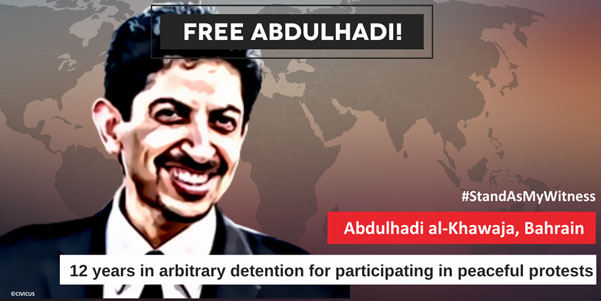
MONTEVIDEO, Uruguay, Sep 26 2023 (IPS) – Maryam al-Khawaja’s journey home ended before it had begun: British Airways staff stopped her boarding her flight at the request of Bahraini immigration authorities. Maryam was no regular passenger: her father is veteran human rights activist Abdulhadi al-Khawaja, in jail in Bahrain for 12 years and counting.


Abdulhadi was sentenced to life in prison on bogus terrorism charges for his role in 2011 democracy protests, part of the ‘Arab Spring’ regional wave of mobilisations. His health, weakened due to denial of medical care, has further declined as he joined other political prisoners in a hunger strike demanding improvements in prison conditions.

Emerging from the unlikeliest place – a prison designed to break wills and destroy the desire for freedom – this hunger strike has become the biggest organised protest Bahrain has seen in years.

Maryam has four judicial cases pending in Bahrain but was ready to spend years in prison if this was what it took to save her father’s life. This is far from Abdulhadi’s first hunger strike, but his family warns that his fragile health means it could be his last. In denying Maryam the chance to see her father, the Bahraini regime has reacted as those who rule by fear often do: in fear of those who aren’t afraid of them.

A prison state

The Bahraini cracked down severely on the 2011 protests, unleashing murderous security force violence to clear protest sites, arresting scores of protesters, activists and opposition leaders, subjecting them to mass trials and stripping hundreds of citizenship. It sentenced 51 people to death and has executed six, while 26 wait on death row having exhausted their appeals. Most were convicted on the basis of confessions obtained through torture.

Many of those arrested in the 2011 protests and subsequent crackdown remain behind bars. According to estimates from the Bahrain Center for Human Rights, over the past decade the government has arrested almost 15,000 people for their political views, and between 1,200 and 1,400 are still jailed, mostly in Jau prison in Manama, the capital. Abdulhadi is one of many.

On 7 August, Jau’s political prisoners went on hunger strike. Their demands include an end to solitary confinement, more time outside cells – currently they’re only allowed out for an hour a day, permission to hold prayers in congregation, amended visitation rules and access to adequate medical care and education. Over the following weeks the numbers taking part grew to more than 800. Their families took to the streets to demand their release.

On 31 August, the political prisoners extended their protest after rejecting the government’s offer of only minor improvements.

On 11 September, a two-week suspension of the strike was announced to allow the government to fulfil promises to improve conditions, including ending isolation for some prisoners. It seemed clear the government had shifted position to avoid embarrassment as Bahrain’s Crown Prince and Prime Minister Salman bin Hamad Al-Khalifa prepared to meet US President Joe Biden.

Abdulhadi, however, soon resumed his hunger strike after being denied access to a scheduled medical appointment, only to suspend it a few days later when he was promised improvements in conditions, including a cardiologist appointment. But the next day it became apparent that these were all lies, and he resumed his hunger strike. It felt, as Maryam put it, ‘like psychological warfare and an attempt to kill solidarity’.

International solidarity urgently needed

In her attempt to return to Bahrain, Maryam received strong international support. Several Bahraini, regional and international civil society groups backed a joint letter urging European Union authorities to call for the immediate and unconditional release of all Bahrain’s political prisoners. A similar letter was sent to the UK government.

In late 2022, backlash from human rights organisations forced Bahrain to withdraw its candidacy for a UN Human Rights Council seat. And earlier this year, during the Inter-Parliamentary Union’s global assembly in Bahrain, which the regime sought to use for whitewashing purposes, parliamentarians called on Bahrain to release Abdulhadi and send him to Denmark for medical treatment.

But while Bahrain’s political prisoners have many allies, some powerful voices aren’t among them.

Bahrain’s foreign allies include not only repressive autocracies such as Saudi Arabia and the United Arab Emirates but also democratic states, notably the UK and the USA, which clearly value stability and security far more highly than democracy and human rights.

Following Bahrain’s independence in 1971, the UK has continued to back the institutions it established – and has pretended to see progress towards democratic reform. In July, Bahrain’s Crown Prince made an official visit to the UK, where he met Prime Minister Rishi Sunak and signed a ‘Strategic Investment and Collaboration Partnership’ between the two countries. This included a US$1 billion investment deal in the UK. Barely a month before the start of the hunger strike, Sunak welcomed ‘progress on domestic reforms in Bahrain, particularly in relation to the judiciary and legal process’.

For the USA, Bahrain has been a ‘major non-NATO ally‘ since 2002 and a ‘major security partner’ since 2021. Bahrain was the first state in the region to be accorded major non-NATO ally status, the first to host a major US military base and the first, in 2006, to sign a free trade agreement with the USA. The US Navy’s Fifth Fleet, one of seven around the world, is stationed there, and the country hosts the headquarters of the US Naval Forces Central Command.

On 13 September, the Crown Prince visited Washington DC and signed a ‘Comprehensive Security Integration and Prosperity Agreement’ meant to scale up military and economic cooperation with the USA.

Only in the last paragraph of its pages-long announcement, meticulously detailed in every other respect, did the White House briefly acknowledge that human rights were an item of discussion. Nothing was said about the content or outcome of those alleged conversations.

The USA has been repeatedly chastised for a ‘selective defence of democracy‘. President Biden promised a foreign policy centred around human rights, but that rings hollow in Bahrain. It’s high time the USA, the UK and other democratic states use the many levers at their disposal to urge the Bahraini government to free its thousands of political prisoners and move towards real democratic reform.

Inés M. Pousadela is CIVICUS Senior Research Specialist, co-director and writer for CIVICUS Lens and co-author of the State of Civil Society Report.

  Source

Iran: One Year on, What’s Changed?

Active Citizens, Civil Society, Crime & Justice, Democracy, Economy & Trade, Featured, Gender, Headlines, Human Rights, Middle East & North Africa, TerraViva United Nations, Youth

Opinion

Credit: Dan Kitwood/Getty Images

MONTEVIDEO, Uruguay, Sep 19 2023 (IPS) – It’s a year since a photo of 22-year-old Mahsa Amini – bruised and in a coma she would never recover from after being arrested by the morality police for her supposedly improperly worn hijab – went viral, sending people onto the streets.


The protests became the fiercest challenge ever faced by Iran’s theocratic regime. The unprecedented scale of the protests was matched by the unparalleled brutality of the crackdown, which clearly revealed the regime’s fear for its own survival.

Led by women and young people, mobilisations under the ‘Woman, Life, Freedom’ banner articulated broader demands for social and political change. They spread like wildfire – to streets across Iran, to universities, even to cemeteries where growing numbers of the regime’s victims were being buried. They were echoed and amplified by the Iranian diaspora around the world. The Iranian people made it abundantly clear they wanted the Islamic Republic gone.

A year on, the theocratic regime still stands, but that doesn’t mean nothing has changed. By sheer force, the authorities have regained control – at least for now. But subtle changes in daily life reveal the presence of active undercurrents that could once again spark mass protests. The regime knows this, hence the fear with which it has awaited this date and its redoubled repression as it neared.

A glimpse of change

Last December, as protests raged and the authorities were busy trying to stop them, women could be seen on Iranian streets without their hijabs for the first time in decades. After the protests were quelled, many simply refused to resubmit to the old rules. A tactical shift followed, with mass street mobilisation turning into more elusive civil disobedience.

Women, particularly Gen Z women just like Mahsa, continue to protest on a daily basis, simply by not abiding by hijab rules. Young people express their defiance by dancing or showing affection in public. Cities wake up to acts of civil disobedience emblazoned on their walls. Anti-regime slogans are heard coming from seemingly nowhere. In parts of the country where many people from excluded ethnic minorities live, protest follows Friday prayers. It may take little for the embers of rebellion to reignite.

Preventative repression

Ahead of the anniversary, family members of those killed during the 2022 protests were pressured not to hold memorial services for their loved ones. The lawyer representing Mahsa Amini’s family was charged with ‘propaganda against the state’ due to interviews with foreign media. University professors suspected to be critical of the regime were dismissed, suspended, forced to retire, or didn’t have their contracts renewed. Students were subjected to disciplinary measures in retaliation for their activism.

Artists who expressed support for the protest movement faced reprisals, including arrests and prosecution under ridiculous charges such as ‘releasing an illegal song’. Some were kept in detention on more serious charges and subjected to physical and psychological torture, including solitary confinement and beatings.

Two months ago, the regime put the morality police back on the streets. Initial attempts to arrest women found in violation of hijab regulations, however, were met with resistance, leading to clashes between sympathetic bystanders and police. Women, including celebrities, have been prosecuted for appearing in public without their hijab. Car drivers carrying passengers not wearing hijab have been issued with traffic citations and private businesses have been closed for noncompliance with hijab laws.

The most conservative elements of the regime have doubled down, proposing a new ‘hijab and chastity’ law that seeks to impose harsher penalties, including lashes, heavy fines and prison sentences of up to 10 years for those appearing without the hijab. The bill is now being reviewed by Iran’s Guardian Council, a 12-member, all-male body led by a 97-year-old cleric.

[embedded content]

If not now, then anytime

In the run-up to 16 September, security force street presence consistently increased, with snap checkpoints set up and internet access disrupted. The government clearly feared something big might happen.

As the anniversary passes, the hardline ruling elite remains united and the military and security forces are on its side, while the protest movement has no leadership and has taken a bad hit. Some argue that what made it spread so fast – the role of young people, and young women in particular – also limited its appeal among wider Iranian society, and particularly among low-income people concerned above all with economic strife, rising inflation and increasing poverty.

There are ideological differences among the Iranian diaspora, which formed through successive waves of exiles and includes left and right-wing groups, monarchists and ethnic separatists. While most share the goal of replacing the authoritarian theocracy with a secular democracy, they’re divided over strategy and tactics, and particularly on whether sanctions are the best way to deal with the regime.

Ever since the protests took off last year, thousands of people around the world have shown their support and called on their governments to act. And some have, starting with the USA, which early on imposed sanctions on the morality police and senior police and security officials. New sanctions affecting 29 additional people and entities, including 18 members of the Islamic Revolutionary Guard Corps and security forces, were imposed on the eve of the anniversary of the protests, 15 September, International Day of Democracy. That day, US President Joe Biden made a statement about Mahsa Amini’s inspiration of a ‘historic movement’ for democracy and human dignity.

The continuing outpouring of international solidarity shows that the world still cares and is watching. A new regime isn’t around the corner in Iran, but neither is it game over in the quest for democracy. For those living under a murderous regime, every day of the year is the anniversary of a death, an indignity or a violation of rights. Each day will therefore bring along a new opportunity to resurrect rebellion.

Inés M. Pousadela is CIVICUS Senior Research Specialist, co-director and writer for CIVICUS Lens and co-author of the State of Civil Society Report.

  Source

Treated Wastewater Is a Growing Source of Irrigation in Chile’s Arid North

Active Citizens, Civil Society, Climate Action, Climate Change, Combating Desertification and Drought, Development & Aid, Economy & Trade, Editors’ Choice, Environment, Featured, Food and Agriculture, Green Economy, Headlines, Integration and Development Brazilian-style, Latin America & the Caribbean, Projects, Regional Categories, Sustainable Development Goals, Water & Sanitation

Water & Sanitation

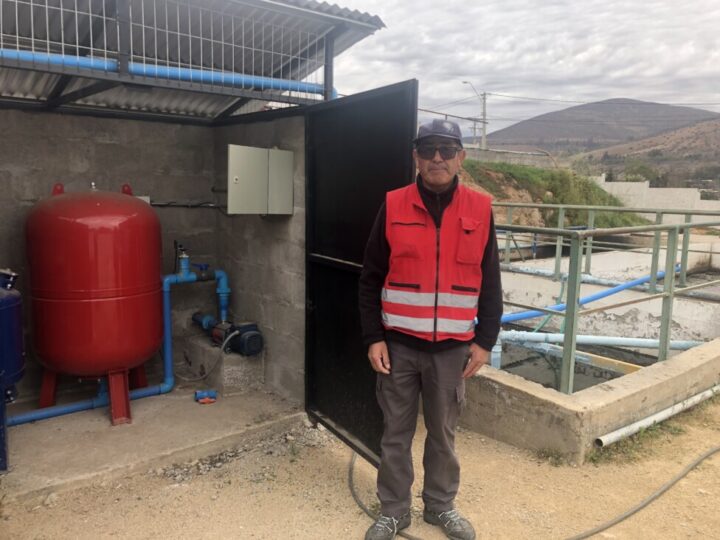
Alfalfa farmer Dionisio Antiquera stands in front of one of the wastewater treatment ponds at the modernized plant in Cerrillos de Tamaya, a rural community in the Coquimbo region of northern Chile. The thousands of liters captured from the sewers are converted into clear liquid ready for reuse in local small-scale agriculture. CREDIT : Orlando Milesi / IPS

Alfalfa farmer Dionisio Antiquera stands in front of one of the wastewater treatment ponds at the modernized plant in Cerrillos de Tamaya, a rural community in the Coquimbo region of northern Chile. The thousands of liters captured from the sewers are converted into clear liquid ready for reuse in local small-scale agriculture. CREDIT : Orlando Milesi / IPS

COQUIMBO, Chile , Sep 18 2023 (IPS) – The reuse of treated wastewater in vulnerable rural areas of Chile’s arid north is emerging as a new resource for the inhabitants of this long, narrow South American country.


The Coquimbo region, just south of the Atacama Desert, one of the driest in the world, is suffering from a severe drought that has lasted 15 years.

According to data from the Meteorological Directorate, a regional station located in the Andes Mountains measured 30.3 millimeters (mm) of rain per square meter this year as of Sept. 10, compared to 213 mm in all of 2022.

“Rural localities today are already reusing wastewater or gray water. This is going to happen, with or without us, with or without a law. The need for water is so great that the communities are accepting the use of treated wastewater.” — Gerardo Díaz

At another station, in the coastal area, during the same period in 2023, rainfall stood at 10.5 mm compared to the usual level of 83.2 mm.

Faced with this persistent level of drought, vulnerable rural localities in Coquimbo, mostly dedicated to small-scale agriculture, are emerging as a new example of solutions that can be replicated in the country to alleviate water shortages.

The aim is to not waste the water that runs down the drains but to accumulate it in tanks, treat it and then use it to irrigate everything from alfalfa fields to native plants and trees in parks and streets in the localities involved. It is a response to drought and the expansion of the desert.

“We were able to implement five wastewater treatment projects and reuse 9.5 liters per second, which is, according to a comparative value, the consumption of 2,700 people for a year or the water used to irrigate 60 hectares of olive trees,” said Gerardo Díaz, sustainability manager of the non-governmental Fundación Chile.

These five projects, promoted by the Fundación Chile as part of its Water Scenarios 2030 initiative, are financed by the regional government of Coquimbo, which contributed the equivalent of 312,000 dollars. Of this total, 73 percent is dedicated to enabling reuse systems, for which plants in need of upgrading but not reconstruction have been selected.

The common objective of these projects, which together benefit some 6,500 people, is the reuse of wastewater for productive purposes, the replacement of drinking water or the recharge of aquifers.

Díaz told IPS that the amount of reuse obtained is significant because previously this water was discharged into a stream, canal or river where it was perhaps captured downstream.

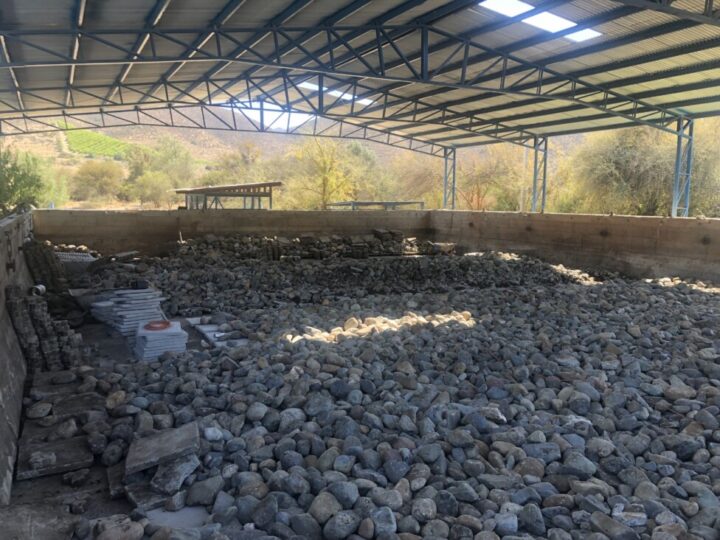
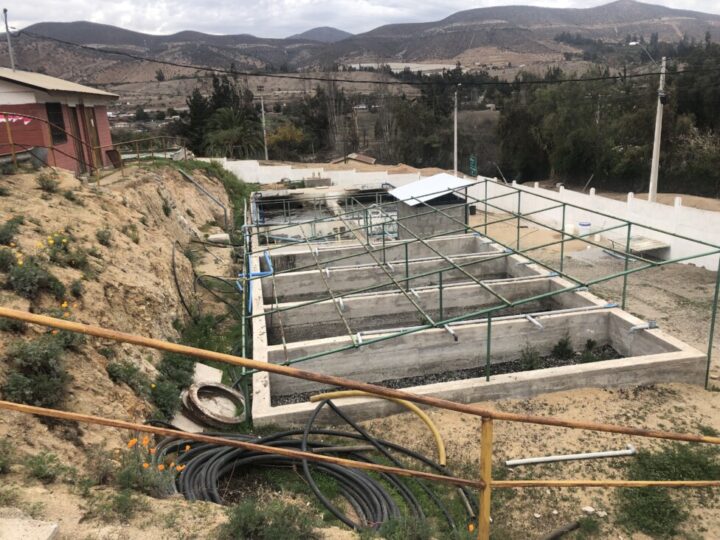
The Huatulame treatment plant in the rural municipality of Monte Patria in northern Chile is being completely repaired with the support of the local municipality. Waterproof plastic sheeting and boulders have been installed, and in the final stage sawdust and earthworms will be incorporated before receiving wastewater from local households for reuse. CREDIT: Orlando Milesi / IPS

The Huatulame treatment plant in the rural municipality of Monte Patria in northern Chile is being completely repaired with the support of the local municipality. Waterproof plastic sheeting and rocks have been installed, and in the final stage sawdust and earthworms will be incorporated before receiving wastewater from local households for reuse. CREDIT: Orlando Milesi / IPS

A successful pilot experience

In Coquimbo, which has a regional population of some 780,000 people, there are 71 water treatment plants, most of which use activated sludge and almost all of which are linked to the Rural Drinking Water Program (APR) of the state Hydraulic Works Directorate.

Activated sludge systems are biological wastewater treatment processes using microorganisms, which are very sensitive in their operation and maintenance and rural sectors do not have the capacity to maintain them.

“Most of these treatment plants are not operating or are operating inefficiently,” Diaz acknowledged.

But one of the plants, once reconditioned, has served as a model for others since 2018. Its creation allowed Dionisio Antiquera, a 52-year-old agricultural technician, to save his alfalfa crop.

“We have had a water deficit for years. This recycled water really helps us grow our crops on our eight hectares of land,” he said in the middle of his alfalfa field in Cerrillos de Tamaya, one of the Coquimbo municipalities that IPS toured for several days to observe five wastewater reuse projects.

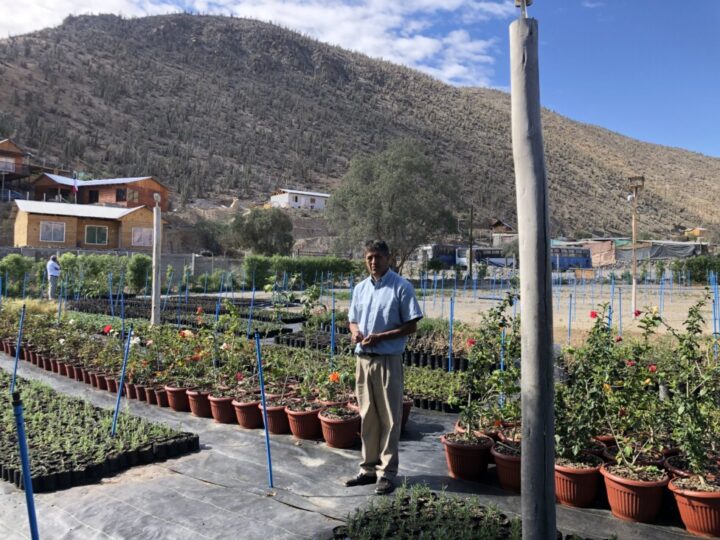
Raúl Ángel Flores stands in his nursery, where the plants and trees are irrigated with recycled water from the Punta Azul project in the town of Villa Puclaro, in Chile's Coquimbo region. All profits from the town's wastewater treatment are reinvested in its maintenance. CREDIT: Orlando Milesi / IPS

Raúl Ángel Flores stands in his nursery, where the plants and trees are irrigated with recycled water from the Punta Azul project in the town of Villa Puclaro, in Chile’s Coquimbo region. All profits from the town’s wastewater treatment are reinvested in its maintenance. CREDIT: Orlando Milesi / IPS

He explained that using just reused water he was able to produce six normal alfalfa harvests per year with a yield per hectare of 100 25-kg bales.

“That’s 4500 to 4800 bales in the annual production season,” he said proudly.

These bales are easily sold in the region because they are cheaper than those of other farmers.

The water he uses comes from an APR plant that has 1065 users, 650 of whom provide water, including Antiquera.

On one side of his alfalfa field is a plant that accumulates the sludge that is dehydrated in pools and drying courts, and on the other side, the water is chlorinated and runs into another pond in its natural state.

“This water works well for alfalfa. It is hard water that has about 1400 parts per million of salt. Then it goes through a reverse osmosis process that removes the salt and the water is suitable for human consumption,” the farmer explained.

In Chile, treated wastewater is not considered fresh water or water that can be used directly by people, and its reuse is only indirect.

Antiquera sold half a hectare to the government to install the plant and in exchange uses the water obtained and contributes 20 percent to the local APR.

He recently extended his alfalfa field to another seven hectares, thanks to his success with treated water.

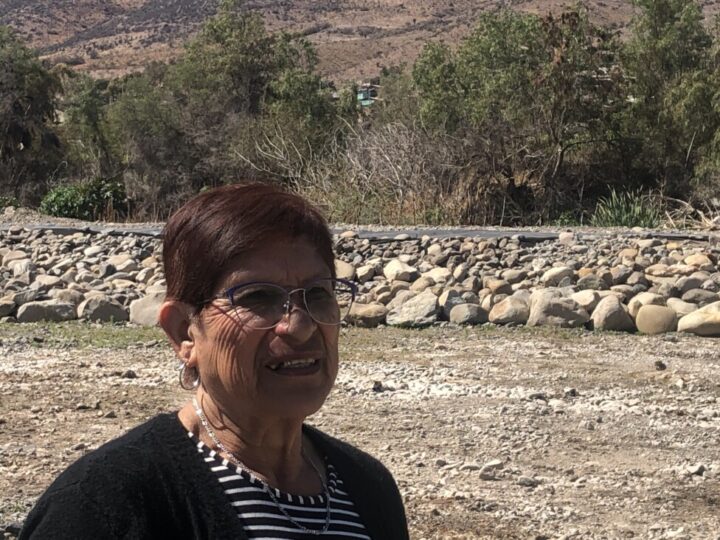
Deysy Cortés, president of a rural drinking water system in Huatulame, stands in front of the dry riverbed of the town of the same name. Today there is no water in the river, where local residents swam and summer vacationers camped on its banks 15 years ago. CREDIT: Orlando Milesi / IPSDeysy Cortés, president of a rural drinking water system in Huatulame, stands in front of the dry riverbed of the town of the same name. Today there is no water in the river, where local residents swam and summer vacationers camped on its banks 15 years ago. CREDIT: Orlando Milesi / IPS

Deysy Cortés, president of a rural drinking water system in Huatulame, stands in front of the dry riverbed of the town of the same name. Today there is no water in the river, where local residents swam and summer vacationers camped on its banks 15 years ago. CREDIT: Orlando Milesi / IPS

Flowers and trees also benefit

In Villa Puclaro, in the Coquimbo municipality of Vicuña, Raúl Ángel Flores, 55, has an ornamental plant nursery.

“I’ve done really well. My nursery has grown with just reuse water….. I have more than 40,000 ornamental, fruit, native and cactus plants. I deliver to retailers in Vicuña and Coquimbo,” a port city in the region, he told IPS.

The nursery is 850 square meters in size, and has an accumulation pond and pumps to pump the water. He has now rented a 2,500-meter plot of land to expand it.

Flores explained to IPS that he manages the nursery together with his wife, Carolina Cáceres, and despite the fact that they have two daughters and a senior citizen in their care, “we make a living just selling the plants…I even hired an assistant,” he added.

In the southern hemisphere summer he uses between 4,000 and 5,000 liters of water a day for irrigation.

“I have water to spare. Here it could be reused for anything,” he said.

Joining the project made it possible for Flores to make efficient use of water with a business model that in this case incorporates a fee for the water to the plant management, which is equivalent to 62 cents per cubic meter used.

 Arnoldo Olivares operates the water treatment and recycling plant in Plan de Hornos, northern Chile. The plant's infrastructure and operation have been upgraded, and it can now deliver water to rural residents to irrigate trees and plants, instead of using potable water. CREDIT: Orlando Milesi / IPS

Arnoldo Olivares operates the water treatment and recycling plant in Plan de Hornos, northern Chile. The plant’s infrastructure and operation have been upgraded, and it can now deliver water to rural residents to irrigate trees and plants, instead of using potable water. CREDIT: Orlando Milesi / IPS

Eliminating odors, and creating new gardens

In the community of Huatulame, in the municipality of Monte Patria, Fundación Chile built an artificial surface wetland to put an end to the bad odors caused by effluents from a deficient waste-eater earthworm vermifilter treatment plant.

“This wetland has brought us peace because the odors have been eliminated. For the past year people have been able to walk along the banks of the old riverbed,” Deysy Cortés, 72, president of the APR, told IPS.

The municipality of Monte Patria is financing the repair of the plant with the equivalent of 100,000 dollars.

“The sprinklers will be changed, the filtering system will be replaced, and sawdust and worms will be added. It will be up and running in a couple of months,” explained agronomist Jorge Núñez, a consultant for Fundación Chile.

As in other renovated plants, safe infiltration of wastewater is ensured while the project simultaneously promotes the protection of nearby wells to provide water to the villagers.

The Huatulame treatment plant in the rural municipality of Monte Patria in northern Chile is being completely repaired with the support of the local municipality. Waterproof plastic sheeting and boulders have been installed, and in the final stage sawdust and earthworms will be incorporated before receiving wastewater from local households for reuse. CREDIT: Orlando Milesi / IPS

The Huatulame treatment plant in the rural municipality of Monte Patria in northern Chile is being completely repaired with the support of the local municipality. Waterproof plastic sheeting and boulders have been installed, and in the final stage sawdust and earthworms will be incorporated before receiving wastewater from local households for reuse. CREDIT: Orlando Milesi / IPS

Cortés warned of serious difficulties if no more rain falls in the rest of 2023, despite the relief provided by the plant for irrigation.

“I foresee a very difficult future if it doesn’t rain. We will go back to what we experienced in 2019 when in every house there were bottles filled with water and a little jug to bathe once a week,” she said.

During a recent crisis, the local APR paid 2500 dollars to bring in water from four 20,000-liter tanker trucks.

In Plan de Hornos, a town in the municipality of Illapel, irrigation technology was installed using reused water instead of drinking water to create a green space for the community to enjoy.

The project included water taps in people’s homes for residents to water trees and flowers.

Arnoldo Olivares, 59, is in charge of the plant, which has 160 members.

“I run both systems,” he told IPS. “I pour drinking water into the pond. After passing through the houses, the water goes into the drainage system, where there is a procedure to reclaim and treat it.”

“This water was lost before, and now we reuse it to irrigate the saplings. We used to work manually, now it is automated. It’s a tremendous change, we’re really happy,” he said.

Antiquera the alfalfa farmer is happy with his success in Cerrillos de Tamaya, but warns that in his area 150 to 160 mm of rainfall per year is normal and so far only 25 mm have fallen in 2023.

“The water crisis forces us to find alternatives and to be 100 percent efficient. Not a drop of water can be wasted. They have forecast very high temperatures for the upcoming (southern hemisphere) summer, which means that plants will require more water in order to thrive,” he said.

Díaz, the sustainability manager of Fundación Chile, said the Coquimbo projects are fully replicable in other water-stressed areas of Chile if a collaborative model is used.

He noted that “in Chile there is no law for the reuse of treated wastewater. There is only a gray water law that was passed years ago, but there are no regulations to implement it.”

He explained, however, that due to the drought, “rural localities today are already reusing wastewater or gray water. This is going to happen, with or without us, with or without a law. The need for water is so great that the communities are accepting the use of treated wastewater.”

The governor of Coquimbo, Krist Naranjo, argued that “a broader vision is needed to value water resources that are essential for life, especially in the context of global climate change.”

“We’re working on different initiatives with different executors, but the essential thing is to value the reuse of graywater recycling,” she told IPS from La Serena, the regional capital.

  Source

Latin America Is Lagging in Its Homework to Meet the SDGs

Civil Society, Conferences, Development & Aid, Editors’ Choice, Featured, Global, Global Governance, Headlines, IPS UN: Inside the Glasshouse, Latin America & the Caribbean, Regional Categories, Sustainable Development Goals

Sustainable Development Goals

A view of the Altos de Florida neighborhood in Bogotá, Colombia. Overcoming poverty is the first of the Sustainable Development Goals, and in the Latin American and Caribbean region there is not only slow progress but even setbacks in the path to reduce it. CREDIT: Freya Mortales / UNDP

A view of the Altos de Florida neighborhood in Bogotá, Colombia. Overcoming poverty is the first of the Sustainable Development Goals, and in the Latin American and Caribbean region there is not only slow progress but even setbacks in the path to reduce it. CREDIT: Freya Mortales / UNDP

CARACAS, Sep 15 2023 (IPS) – The Latin American and Caribbean region is arriving at the Sustainable Development Goals Summit on the right track but far behind in terms of progress, at the halfway point to achieve the SDGs, which aim to overcome poverty and create a cleaner and healthier environment.


“We are exactly halfway through the period of the 2030 Agenda for Sustainable Development, but we are not half the way there, as only a quarter of the goals have been met or are expected to be met that year,” warned ECLAC Executive Secretary José Manuel Salazar-Xirinachs.

“We are exactly halfway through the period of the 2030 Agenda for Sustainable Development, but we are not half the way there, as only a quarter of the goals have been met or are expected to be met that year.” — José Manuel Salazar-Xirinachs

However, the head of the Economic Commission for Latin America and the Caribbean (ECLAC) stressed, in response to a questionnaire submitted to him by IPS, that “the percentage of targets on track to be met is higher than the global average,” partly due to the strengthening of the institutions that lead the governance of the SDGs.

The 17 SDGs include 169 targets, to be measured with 231 indicators, and in the region 75 percent are at risk of not being met, according to ECLAC, unless decisive actions are taken to forge ahead: 48 percent are moving in the right direction but too slowly to achieve the respective targets, and 27 percent are showing a tendency to backslide.

The summit was convened by UN Secretary-General António Guterres for Sept. 18-19 at the United Nations headquarters in New York, under the official name High-Level Political Forum on Sustainable Development.

The stated purpose is to “step on the gas” to reach the SDGs in all regions, in the context of a combination of crises, notably the COVID-19 pandemic, inflation, new wars, and the climate and food crises.

The SDGs address ending poverty, achieving zero hunger, health and well-being, quality education, gender equality, clean water and sanitation, affordable and clean energy, decent work and economic growth, industry, innovation and infrastructure, and reducing inequalities.

They also are aimed at sustainable cities and communities, responsible production and consumption, climate action, underwater life, life of terrestrial ecosystems, peace, justice and strong institutions, and partnerships to achieve the goals.

Drinking water is distributed from tanker trucks in the working-class Petare neighborhood in eastern Caracas. Access to safe drinking water and sanitation is another of the goals that are being addressed with a great variety of results within Latin American and Caribbean countries, and there is no certainty that this 2030 Agenda target will be reached in the region. CREDIT: Caracas city government

Drinking water is distributed from tanker trucks in the working-class Petare neighborhood in eastern Caracas. Access to safe drinking water and sanitation is another of the goals that are being addressed with a great variety of results within Latin American and Caribbean countries, and there is no certainty that this 2030 Agenda target will be reached in the region. CREDIT: Caracas city government

Progress is being made, but slowly

“In all the countries of the region progress is being made, but in many not at the necessary rate. The pace varies greatly and we are not where we would like to be,” Almudena Fernández, chief economist for the region at the United Nations Development Program (UNDP), told IPS from New York.

Thus, said the Peruvian economist, “there is progress, for example, on some health or energy and land care issues, but we are lagging in achieving more sustainable cities, and we are not on the way to achieving, regionally, any of the poverty indicators.”

Salazar-Xirinachs, who is from Costa Rica, said from Santiago that “the countries that have historically been at the forefront in public policies are the ones that have made the greatest progress, such as Uruguay in South America, Costa Rica in Central America or Jamaica in the Caribbean. They have implemented a greater diversity of strategies to achieve the SDGs.”

A group of experts led by U.S. economist Jeffrey Sachs prepared graphs for the UN on how countries in the various developing regions are on track to meet the goals or still face challenges – measured in three grades, from moderate to severe – and whether they are on the road to improvement, stagnation or regression.

According to this study, the best advances in poverty reduction have been seen in Brazil, El Salvador, Guyana, Paraguay, the Dominican Republic and Uruguay, while the greatest setbacks have been observed in Argentina, Belize, Ecuador and Venezuela.

In the fight for zero hunger, no one stands out; Brazil, after making progress, slid backwards in recent years, and the best results are shown by Caribbean countries.

In health and well-being, education and gender equality, there are positive trends, although stagnation has been seen, especially in the Caribbean and Central American countries.

In water and sanitation, energy, reduction of inequalities, economic growth, management of marine areas, terrestrial ecosystems, and justice and institutions, Sachs’ dashboard shows the persistence of numerous obstacles, addressed in very different ways in different countries.

Many countries in Central America and the Caribbean are on track to meet their climate action goals, and in general the region has made progress in forging alliances with other countries and organizations to pave the way to meeting the SDGs.

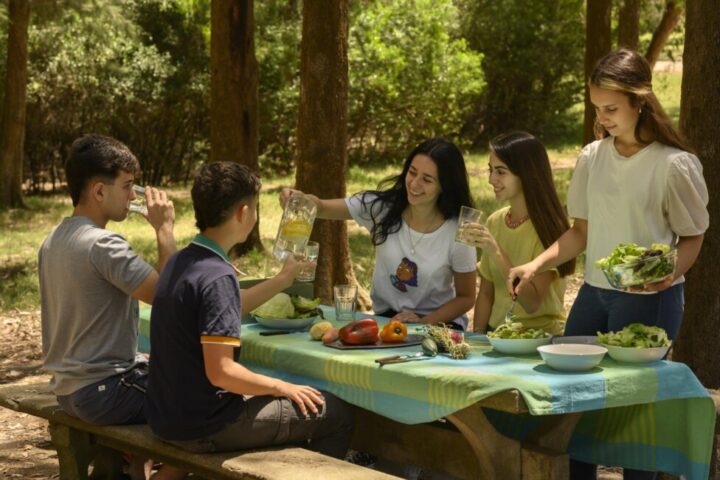
Young people in a Latin American country share a vegetable-rich meal outdoors. The notion of consuming products produced with environmentally sustainable techniques is gaining ground, and a private sector whose DNA is embedded in the search for positive environmental and social repercussions is flourishing. CREDIT: Pazos / Unicef

Young people in a Latin American country share a vegetable-rich meal outdoors. The notion of consuming products produced with environmentally sustainable techniques is gaining ground, and a private sector whose DNA is embedded in the search for positive environmental and social repercussions is flourishing. CREDIT: Pazos / Unicef

A question of funds

Even before the pandemic that broke out in 2020, Fernández said, the region was not moving fast enough towards the SDGs; its economic growth has been very low for a long time – and remains so, at no more than 1.9 percent this year – and growth with investment is needed in order to reduce poverty.

In this regard, Fernández highlighted the need to expand fiscal revenues, since tax collection is very low in the region (22 percent of gross domestic product, compared to 34 percent in the advanced economies of the Organization for Economic Cooperation and Development), “although progress will not be made through public spending alone,” she said.

Salazar-Xirinachs pointed out that “in addition to financial resources, it is very important to adapt actions to specific areas to achieve the 2030 Agenda. The measures implemented at the subnational level are of great importance. Specific problems in local areas cannot always be solved with one-size-fits-all policies.”

Fernández underlined that the 2030 Agenda “has always been conceived as a society-wide agenda, and the private sector plays an essential role, particularly the areas that are flourishing because it has a positive social and environmental impact on their DNA, and there are young consumers who use products made in a sustainable way.”

ECLAC’s Salazar-Xirinachs highlighted sensitized sectors as organized civil society and the private sector, for their participation in sustainable development forums, follow-up actions and public-private partnerships moving towards achievement of the SDGs.

Finally, with respect to expectations for the summit, the head of ECLAC aspires to a movement to accelerate the 2030 Agenda in at least four areas: decent employment for all, generating more sustainable cities, resilient infrastructure that offers more jobs, and improving governance and institutions involved in the process.

ECLAC identified necessary “transformative measures”: early energy transition; boosting the bioeconomy, particularly sustainable agriculture and bioindustrialization; digital transformation for greater connectivity among the population; and promoting exports of modern services.

It also focuses on the care society, in response to demographic trends, to achieve greater gender equality and boost the economy; sustainable tourism, which has great potential in the countries of the region; and integration to enable alliances to strengthen cooperation in the regional bloc.

In summary, ECLAC concludes, “it would be very important that during the Summit these types of measures are identified and translate into agreements in which the countries jointly propose a road map for implementing actions to strengthen them.”