Small Farmers Feeling Climate Change Heat Find Little Support From the State

Asia-Pacific, Civil Society, Climate Change, Development & Aid, Economy & Trade, Editors’ Choice, Environment, Featured, Food and Agriculture, Food Security and Nutrition, Food Sustainability, Headlines, Health, Natural Resources, Sustainable Development Goals, TerraViva United Nations

Food and Agriculture

The extreme heat adversely affected the milk production of the over 800,000 cattle in Karachi. Credit: Zofeen Ebrahim/IPS

The extreme heat adversely affected the milk production of the over 800,000 cattle in Karachi. Credit: Zofeen Ebrahim/IPS

KARACHI, Pakistan, Aug 9 2024 (IPS) – The over 20 million residents of Pakistan’s port city of Karachi, in Sindh province in particular, have been experiencing brutal heat since May. But they are not the only ones bearing the brunt of high temperatures and humidity.


Up to 15,000 cattle died due to scorching heat mixed with high humidity which Shakir Umar Gujjar, president of the Cattle and Dairy Farmers Association, Pakistan, said was “no joke”.

Mubashir Abbas, owner of 170 heads, lost eight cows and five buffaloes to the “extreme heat” in the last week of June, which translates to a loss of Rs 5.5 million (USD 19,800) for him.

“Three more are running high fever and I will have to sell them to cut my losses,” he told IPS over phone from Bhains Colony, in Karachi’s Landhi district. “I will fetch no more than Rs 40,000 (USD 143) a piece, when the market rate for each healthy one is valued between Rs 1.5 and 2 million (USD 5,300–7,000),” he estimated. Every now and then, in the last 23 years, he would lose a few to disease, but he had never “seen a healthy animal dying from heat.”

Livestock, the largest sub-sector in agriculture, contributed 60.84 percent to agriculture and 14.63 percent to the country’s GDP during 2023-2024, according to the Pakistan Economic Survey. More than eight million rural families are engaged in livestock production, accounting for 35-40 percent of their total income.

About 15,000 cattle died due scorching heat mixed with high humidity in Sindh province, Pakistan. Credit: Zofeen Ebrahim/IPS

About 15,000 cattle died due scorching heat mixed with high humidity in Sindh province, Pakistan. Credit: Zofeen Ebrahim/IPS

“From June 23 to 30, Karachi experienced a heatwave with temperatures ranging between 40 and 42 °C. The ‘feel-like’ temperature went up to 54 °C due to high humidity,” said Dr. Sardar Sarfaraz, chief meteorologist at the Pakistan Meteorological Department.

Dr. Nazeer Hussain Kalhoro, director general at the government’s Sindh Institute of Animal Health in the Livestock and Fisheries Department in Karachi, attributed extreme heat to the death of livestock, especially exotic and crossed breeds.

The temperature was still lower than the deadly 2015 heatwave temperature of 44.8 °C that claimed over 2,000 human lives when the feel-like heat index exceeded 60 °C, said Sarfaraz. “A much bigger number of animals died then, and many young animals had to be slaughtered,” said Gujjar.

The heat had adversely affected the milk production of the over 800,000 cattle in Karachi, said Gujjar. “When an animal is in stress and discomfort, due to extreme heat, its intake of regular amount of fodder decreases, which can result in decrease in milk production,” said Kalhoro.

“I was getting between 1,400 and 1,480 kg in a day; it is not more than 960 kg now. I lose 0.11 million rupees (USD 400) daily,” said Abbas.

Communication Gap

The lack of engagement with the farmer by the government was the reason. Gujjar said the communication gap between the ministry of national food security and research at the federal level and the livestock departments at the provincial departments meant the uneducated farmer was on his own.

“The biggest tragedy is that our farmer is not educated and also unaware of how to prepare or protect the animal from the vagaries of climate,” said Gujjar, adding: “They do their own traditional treatment of their animals, which results in even more avoidable deaths.”

Similar is the plight of small farmers who remain in the eye of the climate storm. “They are continuously in a reactive mode,” said Mahmood Nawaz Shah, president of a farmers’ group, the Sindh Abadgar Board, with “government policies not conducive to them”.

Giving examples, Shah said the minimum price of cotton was fixed and notified at Rs 8,500/kg (UAD 30) but growers received Rs 5,200/kg (USD 18); a 50-kilo bag of urea increased from Rs 1,700 to Rs 4,600 (USD 6 to 16) in just three years; and the artificial shortage for the same last year meant the farmer had to pay Rs 5,500 for the same bag from the black market.

“We had recommended to the government to develop a climate endowment fund and compensate small farmers by involving insurance companies as soon as extreme events lead to crop and livestock losses,” said Shah.

Both the farmers, Gujjar and Shah, have hit the nail on the head on why Pakistan, one of the most vulnerable to climate crises, is unable to manage it effectively. The disconnect and lack of coordination between different federal and their related provincial government bodies is found across the spectrum and is highlighted in the 2024 Climate Change Performance Index (CCPI) as a major reason that hampered policy implementation, placing Pakistan on the 30th position among 63 countries and the EU, which collectively account for over 90 percent of global greenhouse gas (GHG) emissions. “Improved cooperation between different levels of government would be a step in the right direction,” it concluded.

Similarly, the 2024 Environmental Performance Index that assesses the progress of effectiveness of 180 countries in mitigating climate change, relying on historical greenhouse gas emissions data, put Pakistan three rungs down at 179th rank this year from the 176th position it held in 2022.

Indifference and Apathy

Both the CCPI and the EPI are a clear giveaway of government’s nonchalance. The latter index has especially pointed to areas like air pollution, wastewater treatment, protected areas management and climate mitigation.

“The country is slipping on most environmental indicators,” agreed former climate change minister, Malik Amin Aslam, pointing to the weak air pollution control measures, non-adherence to the electric vehicles transition and failure to promote renewables.  From being a country championing the global green cause in 2022 to now “ignominiously slipping down the environmental performance ladder” should certainly raise alarm bells for our current green policy makers, warned Aslam.

The 2022 floods, which should have acted as a wake-up call for the government, he said, failed to move the government towards preparedness and improving the health of the environment.

Maha Qasim, CEO of Zero-Point Partners, an environmental management and consulting firm, said: “No significant effort had been made in building climate-resilient infrastructure like roads, drainage systems and flood management facilities like levees or reservoirs.

The EPI has pointed towards Pakistan’s use of coal as a driver.

Putting things in perspective, Qasim said that in 2021, only around 14% of Pakistan’s energy mix was based on coal, while it figured 45 percent and 63 percent in India’s and Estonia’s energy mix. But in the last two years, Pakistan’s overall GHG emissions as well as CO2 have declined, due to “Pakistan’s overall performance capita emissions from fossil fuels and industry have declined due to stagnant economic growth,” she said.

Thus, Pakistan is well within its carbon budget and has met its Nationally Determined Contribution commitments to the UNFCCC.

The updated NDCs of 2021 have pledged to reduce emissions by 50%, shifting to renewable energy by 60 percent and 30 percent to electric vehicles by 2030, and a complete ban on importing coal.

Poor transport fuel regulations, old and inefficient vehicles on the road, mass cutting down of trees to make way for rapid urbanization, burning of agricultural residue and poor solid waste management have also been mentioned for Pakistan’s poor score.

Aslam, however, said the index failed to “register or recognize” Pakistan’s efforts on reforestation—the Billion Tree Tsunami Afforestation Project in Khyber Pakhtunkhwa province, followed by 10 Billion Tree Tsunami Programme across the country. “The EPI ranking can certainly enhance its acceptability and credibility by improving these areas,” he said.

Weak Governance

Sobia Kapadia, a humanitarian aid practitioner, added factors like “weak governance, turning to fire-fighting and ad-hoc measures” whenever a climate crisis arises, thereby destroying the symbiosis.

“Heat, rain and floods are all connected to the core issue of human-induced development; but blaming heat and humidity on climate change is like blaming the naughtiest child,” said Kapadia, citing resorts being constructed in the mountains by cutting trees.

In yet another recent report that gives insights to investors and helps governments in setting carbon market-friendly policies, Pakistan comes 39th out of 40 countries.

Khalid Waleed, an energy economics expert at the Sustainable Development Policy Institute (SDPI), was quoted by media saying “for the first time in budget history, the government has tagged projects worth Rs53 billion under climate change adaptation and Rs225 billion under climate change mitigation,” referring to the budget presented earlier this month. However, he added that the budget was not climate change project-specific but had been tagged for their climate benefits.

Zia ul Islam finds the budget allocation “rather tricky” to understand as it not only indicates development projects from the Ministry of Planning Development & Special Initiatives, but foreign-funded projects and projects under various ministries and provinces.

Environmental and public policy analyst Dawar Butt, comparing the country’s miniscule environmental spending to India and Bangladesh, said climate did not seem to be a priority. He further added that the climate change allocation has been “cut down by one billion rupees from what finally got approved in this year’s budget.”

Handling Climate Change on Piecemeal Basis

But it is not just how the government is handling climate change. Referring to a climate risk awareness survey conducted by GIZ Pakistan, Qasim highlighted that while many organizations are beginning to acknowledge the impact of climate change on their business models, their approach towards dealing with it was “incomplete and fragmented with a focus on climate mitigation” to meet external requirements of clients or regulators rather than on long-term business sustainability.

Due to the funding fatigue, Zia ul Islam suggested the “begging attitude” may be replaced by capacity building of concerned authorities, bringing in necessary improvements in the legal instruments and effective implementation.”

Good News

If Pakistan can somehow link smooth governance with climate finance and showcase to the world that it can fund its own climate solutions, it will give local and international companies the confidence to invest in the country. This year’s Financing Climate Action  report by Transparency International states Pakistan has a huge potential to “dollarize climate adaptive and mitigative projects” provided climate governance is improved.

Flood insurance initiatives for farmers, for example, said Qasim, at very low markup rates, have the potential to be “scaled up across the country to increase flood resilience.”

IPS UN Bureau Report

  Source

How Climate-Smart Strategies Revitalized Tanzania’s Livestock Sector

Africa, Africa Climate Wire, Armed Conflicts, Civil Society, Climate Change, Climate Change Justice, Development & Aid, Editors’ Choice, Environment, Featured, Food and Agriculture, Food Security and Nutrition, Headlines, Human Rights, Indigenous Rights, Sustainable Development Goals, TerraViva United Nations

Climate Change Justice

In a quest for survival, farmers and pastoralists living in Oldonyo Sambu, Tanzania’s northern Maasai Steppe, used to fight over every drop of water. However, 12 villages have now adopted climate-smart bylaws after months of negotiations, putting an end to hostilities.

A pastoralist gazes into the horizon while taking a break from grazing cattle in Ikolongo Village. Credit: Kizito Makoye/IPS

A pastoralist gazes into the horizon while taking a break from grazing cattle in Ikolongo Village. Credit: Kizito Makoye/IPS

IRINGA, Tanzania , Jul 16 2024 (IPS) – As the sun sets, its golden hues piece through the dusty haze, creating a dazzling display when a herd of livestock lazily roams on the arid landscape as they return home from grazing.


Dressed in shiny red robes, the youthful Maasai pastoralists routinely whistle as they steer cattle, goats and sheep to maintain a unified path.

The quest for survival has forced these herders in Oldonyo Sambu, Tanzania’s northern Maasai Steppe, jostling for dwindling water and pastures as they try to sustain their herds.

Surprisingly, 670 kilometres (416 miles) away in Ikolongo village, south of Tanzania, the plight of water consumers has improved, thanks to a community-led initiative that brought farmers and pastoralists together  to resolve their water woes.

Sitting under a baobab tree, 47-year-old Leinot Leboo watches his cattle drink from a pond. This tranquil moment contrasts sharply with the situation in Oldonyo Sambu, where farmers often clash with herders as they jostle for water.

“I don’t recall any fight between pastoralists and farmers here.We get enough pastures and water for our livestock,” says Leboo.

Unlike in Oldonyo Sambu, local villagers here have created specific grazing lands and water points for livestock to prevent clashes with farmers. “We often bring our cattle here and let them graze and drink without causing any disturbances,” says Leboo.

According to Ignas Mashaka, Ikolongo village chairman, the residents have created a system where pastoralists pay a small fee to feed their herds on rice husks produced by farmers, especially in the dry season.

“This arrangement provides a steady source of feed, but it also give farmers extra income,” says Mashaka

Cows drink from a pond used exclusively by pastoralists in Ikolongo village, Tanzania. Credit: Kizito Makoye/IPS

Cows drink from a pond used exclusively by pastoralists in Ikolongo village, Tanzania. Credit: Kizito Makoye/IPS

Strict Rules

After months of negotiation between local residents and local district authorities, the villagers enacted strict by-laws, which have now been adopted and ratified by 12 surrounding villages.

“These rules have helped to ease tensions over water use,” says Mashaka.

Under the initiative, local residents joined forces to construct dams and reservoirs which have reduced water scarcity, providing a reliable supply for farmers and pastoralists.

“We used to fight over every drop of water,” says Musa Chacha, a farmer at Ikolongo village. “But now, there’s enough for everyone and there’s no reason to fight,”

By working together and managing resources sustainably, Ikolongo villagers have built a strong and resilient community.

Female farmers in Ikolongo village learn horticulture to grow vegetables as part of their strategy to cope with drought. Credit: Kizito Makoye/IPS

Female farmers in Ikolongo village learn horticulture to grow vegetables as part of their strategy to cope with drought. Credit: Kizito Makoye/IPS

The Bigger Picture

Despite having vast grazing lands, the east African country faces frequent conflicts over water and other resources due to climate change and weak land governance. Prolonged droughts often lead to clashes between farmers and pastoralists as they jostle for water and grazing space.

Tanzania’s livestock sector, a vital source of livelihood for millions, holds potential for growth in production and trade. With a cattle population of 36.6 million, the country ranks second in Africa, after Ethiopia. This accounts for 1.4% of the global cattle population and 11% of Africa’s. Beyond cattle, Tanzania also boasts large numbers of sheep, goats, chickens, and pigs, placing it among the continent’s top ten in overall livestock numbers.

However, the sector is plagued by many challenges due to climate risks and low investment, World Bank analysts say.

Transformative Initiative

As part of its broader efforts to improve the livestock sector, Tanzania has launched a new USD 546 million initiative to bolster productivity, increase resilience to climate change and improve the livestock industry. The initiative entails innovative strategies to curb extreme weather by constructing water reservoirs, introducing drought-resistant forage crops, and improving livestock breeds.

Challenges and Solutions

According to a recent World Bank report, “Harnessing the Opportunity for a Climate-Smart and Competitive Livestock Sector in Tanzania,” the pasture-based livestock sector in Tanzania faces serious challenges due to climate change and endemic livestock diseases, impacting animal health, productivity, and market access.

A herd of cattle grazes in a designated pastoralist area in Ikolongo village. Credit: Kizito Makoye/IPS

A herd of cattle grazes in a designated pastoralist area in Ikolongo village. Credit: Kizito Makoye/IPS

Pastoralist’s Perspective

Saidi Juma, a 55-year-old pastoralist from Kilolo village, has witnessed changes in weather patterns over the years. “When I was young, the rains were predictable, and the grass was plenty,” he says. “But in recent years, we have struggled to find pasture for our animals, and the rivers dry up too soon.”

One aspect of the scheme is adopting climate-smart innovations, such as better animal husbandry practices, drought-resistant fodder, and efficient water management systems.

The introduction of drought-resilient Brachiaria grass at Ikolongo village has maintained better livestock health during dry spells. “We planted these grass because they are resilient to drought and provide enough food for our livestock,” says Mashaka.

According to him, drought-resistant forage crops has ensured a steady supply of nutritious feed for livestock in  dry seasons.

Expert Insights

In an interview with IPS, Malongo Mlozi, Professor of Agricultural studies and extension at Sokoine University of Agriculture, hailed the government initiative to revamp the ailing livestock sector by improving water management techniques.

“Water is life; by ensuring a reliable water supply, we can significantly improve the resilience of our livestock farmers against climate change,” he says

According to Mlozi, pastoralists must be trained to acquire the necessary skills and knowledge to cope with the vagaries of the weather.

“When pastoralists understand the benefits of climate-smart practices, they are more likely to adopt them and see positive results,”

Mlozi says the government scheme is likely to improve food security.

“By increasing the productivity of our livestock sector, we can ensure a stable supply of meat, milk, and other livestock products,” says Mlozi

Leinot Leboo grazes his cattle in a bushy enclave in Ikolongo village. Credit: Kizito Makoye/IPS

Leinot Leboo grazes his cattle in a bushy enclave in Ikolongo village. Credit: Kizito Makoye/IPS

“This will help in addressing the nutritional needs of our population and reduce dependency on imports.”

Under the initiative, the government will construct water harvesting structures and introduce solar-powered boreholes to provide an eco-friendly solution.

“Access to water has always been a problem for farmers and pastoralists.The solar-powered boreholes will provide enough water.”

The scheme is also aiming to improve market access for livestock products by improving value chains so pastoralists can fetch better prices in livestock markets closer to their communities.

Tanzania’s livestock sector is changing with climate-smart practices and community-led efforts, setting an example for other regions. By focusing on sustainability and innovation, Tanzania is improving the lives of pastoralists and promoting peace and cooperation.

“We have come a long way from those tough times. Now, we look forward to a future where our children can grow up without the fear of conflict and scarcity.”

This feature is published with the support of Open Society Foundations.

IPS UN Bureau Report

  Source

Snowless Winter and a Climate Crisis: Kashmir’s ‘Unprecedented’ Weather

Asia-Pacific, Civil Society, Climate Change, Climate Change Justice, Editors’ Choice, Environment, Featured, Food and Agriculture, Food Security and Nutrition, Headlines, Natural Resources, Sustainable Development Goals, TerraViva United Nations

Climate Change

Local Muslims held special prayer ceremonies in January for snowfall. Credit: Umar Manzoor Shah/IPS

Local Muslims held special prayer ceremonies in January for snowfall. Credit: Umar Manzoor Shah/IPS

SRINAGAR, India, Feb 20 2024 (IPS) – Abdul Gani Malik, a 75-year-old goldsmith living in Kashmir’s capital, Srinagar, has witnessed eras of tranquility and turbulence in the Himalayan region. What he has not seen, however, is a snowless Kashmir during the winter.


Malik still works at his shop, located in one of the jam-packed markets of the old city area of Kashmir’s capital, intricately lacing colorful emeralds on dazzling gold necklaces. While conversing with IPS, he mentions that the winter in Kashmir has never been so terrible and terrifying as it has been this year.

He recalls how, during the 40-day harshest winter period from December 21 to January 30, snow would accumulate to about six or seven feet, freezing and making pathways treacherous even for city dwellers. In the mountainous region, according to Malik, the snow would last for several months, regulating temperatures during the summer and providing water and food.

“Now is a different tale. The mountains appear dry and dead. The rivers are carrying no water, and our woods are bereft of life. This is an absolute apocalypse,” Malik said.

The region of Kashmir is located in the north-western complex of the Himalayan ranges, with marked relief variation, snow-capped summits, antecedent drainage, complex geological structure, and rich temperate vegetation and fauna.

Kashmir’s winter is traditionally divided into three parts: Chilay Kalan (old man winter), Chilay Khuarud (young winter), and Chilay Bacha (kiddy winter). The coldest part, called Chilay Kalan, starts on December 21 and ends at the end of January. It is during this period that snowfall is expected.

“The temperatures during this period plummet to even minus 8 to 10 degrees Celsius, and when it snows, it accumulates in glaciers. The snowfall in the later period is of no use,” says Abdul Ghani Malik.

He was part of the congregational prayers held across Kashmir for snowfall. Local Muslims, who constitute more than 90 percent of the local population, decided in January to hold special prayers for snowfall in all major mosques. “We prayed, and we hope God listens to our plight.”

According to Abid Ali, a student of environmental sciences from Kashmir, Kashmir’s livelihood depends on snowfall, and if it doesn’t snow, things are going to take a terrible shape.

“The region’s electricity system, agriculture, and tourism are all dependent on snowfall. The dry winter will prove catastrophic for the local populace,” Abid said.

Kashmir, as per estimates, reported a 79 percent precipitation deficit through December of last year. Indian meteorologists claim that unusual weather is linked to global warming and El Niño, the sporadic climate phenomenon that can create warm, dry conditions in the Indian subcontinent and other parts of Asia.

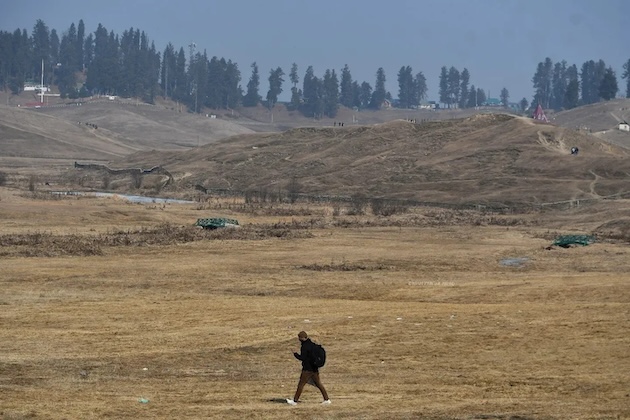
A man walks through an area in Kashmir where low snowfall is causing concern as the region’s economy is highly dependent on it. Credit: Umar Manzoor Shah/IPS

A man walks through an area in Kashmir where low snowfall is causing concern as the region’s economy is highly dependent on it. Credit: Umar Manzoor Shah/IPS

Threat to Agriculture

In Kashmir, 60 percent of the state’s revenue comes from agriculture and horticulture, and about 80 percent of the population lives in rural areas.

However, over the years, the valley has experienced irregular patterns of precipitation. In the first five months of 2022, Kashmir saw a 38 percent rain shortage, according to data provided by the Meteorological Department (MeT) in Srinagar.

The data reveals that the Kashmir Valley has experienced a significant lack of pre-monsoon precipitation over the years. From March 1 to May 31, 2022, the region got 99.5 mm of rain, 70 percent lower than average.

Comparatively, between March and May of each of the following years—2017, 2018, 2019, 2020, and 2021—there was a deficit of 16, 28, 35, and 26 percent, respectively. The dry winter this year is already throwing life out of gear for the farmers.

Abdul Karim Ganaie, a farmer hailing from south Kashmir’s Pulwama, says the threats are menacingly looming large, and people cannot do anything other than watch helplessly as the crisis unfolds.

When IPS contacted Choudhary Mohammad Iqbal, the director of agriculture in Kashmir, he stated that the department was closely monitoring the situation and would be issuing a warning to the farmers in the coming months.

“We accept that the situation is going to prove worrisome for Kashmir’s farming community, but we have to adopt a strategy to ensure minimal losses. We are working on that front,” Choudhary said.

Tourism under Cloud

The famous tourist destinations in Kashmir are also witnessing a dip in tourist arrivals, putting the people associated with this business in dire straits. In January, the famous tourist resorts recorded the lowest arrival of foreign and domestic tourists, with only 30 percent occupancy in hotels.

It snows at last but too little, too late!

Finally, in the first week of February, when the harshest 40-day-long spell was already over, it snowed in most of the areas of Kashmir. However, according to experts, the snow would yield the fewest results as it is not possible to accumulate for an extended period.

What is important, says Mehraj Ahmad, a research scholar working on climate change in Kashmir, is that the snow must accumulate in the higher reaches for as long as possible until the arrival of summers.

“The snowfall of February or March carries the least significance when compared with the snowfall of January. Therefore, we really are keeping our fingers crossed and praying for the safeguard of our lives against the dark, dreadful effects of climate change,” Ahmad said.

IPS UN Bureau Report

IPS UN Bureau, IPS UN Bureau Report, India, Kashmir

  Source

New Era: Unlocking Africa’s Agriculture Potential Through CGIAR TAAT Model

Africa, Biodiversity, Civil Society, Climate Change, COP28, Development & Aid, Editors’ Choice, Featured, Food and Agriculture, Food Security and Nutrition, Food Sustainability, Headlines, Human Rights, Humanitarian Emergencies, Population, Poverty & SDGs, Sustainable Development Goals, TerraViva United Nations, Trade & Investment

Food and Agriculture

Transforming food systems is key to solving food insecurity on the African continent. A powerful and unified effort is needed to ensure food systems are transformed to be robust enough to support the population. Credit: Joyce Chimbi/IPS

Transforming food systems is key to solving food insecurity on the African continent. A powerful and unified effort is needed to ensure food systems are transformed to be robust enough to support the population. Credit: Joyce Chimbi/IPS

NAIROBI, Jan 16 2024 (IPS) – As hunger and food insecurity deepen, Africa is confronting an unprecedented food crisis. Estimates show that nearly 282 million people on the continent, or 20 percent of the population, are undernourished. Numerous challenges across the African continent threaten the race to achieve food security; research and innovative strategies are urgently needed to transform current systems as they are inadequate to address the food crisis.


Transforming food systems is key. A powerful and unified effort is needed to equip food systems to advance human and planetary health to their full potential. This was the message as CGIAR entered a new era under the leadership of Dr Ismahane Elouafi, the Executive Managing Director. Named one of the most influential Africans of 2023, she continues to stress the need to use science and innovation to unlock Africa’s potential to meet its food needs.

Dr Ismahane Elouafi, the CGIAR’s newly appointed Executive Managing Director. Credit: FAO

Dr Ismahane Elouafi, the CGIAR’s newly appointed Executive Managing Director. Credit: FAO

During her inaugural field visit to an IITA center in Ibadan, Nigeria, alongside Dr Simeon Ehui, IITA’s Director General and CGIAR Regional Director for Continental Africa, she oversaw extensive discussions on transforming food systems and leveraging science and technology.

“At COP28 in Dubai, UAE, there was high-level recognition and a wonderful spotlight on science and innovation. CGIAR has an opportunity to represent science and innovation at large, representing the whole community at large. We can cut down poverty and stop malnutrition, and we have the tools—we just need to bring them to the farmers,” she said.

CGIAR continues to create linkages between agricultural and tech stakeholders, emphasizing digital innovation for agricultural development. CGIAR-IITA explores leveraging ICTs to tackle agricultural challenges, boost productivity, ensure sustainability, and enhance food security, featuring presentations, discussions, workshops, and networking across sectors.

There was a significant focus on the CGIAR TAAT model as a tool to use technology to address Africa’s worsening food crisis. TAAT Technologies for African Agricultural Transformation (TAAT) is a key flagship programme of the African Development Bank’s Feed Africa strategy for 2016 to 2025.

“We have the technology, and all hands are on deck to ensure that no one sleeps hungry. There are severe food insecurities on the continent today, deepening rural poverty and malnutrition. We have the capacity to achieve food security,” Ehui emphasized.

IITA’s Dr Kenton Dashiell spoke about TAAT in the context of strategic discussions around policy and government engagement. Emphasizing the need for the government, private sector, and other key stakeholders to create effective and efficient food systems transformation paths. As a major continent-wide initiative designed to boost agricultural productivity across the continent by rapidly delivering proven technologies to millions of farmers, TAAT can deliver a food-secure continent.

Elouafi stressed the need to ensure that technology is in the hands of farmers. in line with TAAT, which aims to double crop, livestock, and fish productivity by expanding access to productivity-increasing technologies to more than 40 million smallholder farmers across Africa by 2025. In addition, TAAT seeks to generate an additional 120 million metric tons.

IITA’s Bernard Vanlauwe spoke about sustainable intensification with the aim of increasing production and improving the livelihoods of smallholder farmers in sub-Saharan Africa. Farmers are increasingly dealing with higher temperatures and shorter rainy seasons, affecting the production of staple foods such as maize. Further stressing the need for improved crop varieties to meet Africa’s pressing food insecurities.

Elouafi stressed that the needs are great, in particular, eliminating extreme poverty, ending hunger and malnutrition, turning Africa into a net food exporter, and positioning Africa at the top of the agricultural value chains. She emphasized the need to leverage progress made thus far, building on the commitments of Dakar 1, the 1st Summit of the World’s Regions on Food Security held in Dakar in January 2010, where representatives and associations of regional governments from the five continents noted that the commitments made at the World Food Summit in 2002 had had little effect and that the food crisis had only worsened.

Elouafi said the UN Food System Summit in 2021 and the 2023 Dakar 2 Summit, with an emphasis on building sustainable food systems and aligning government resources, development partners, and private sector financing to unleash Africa’s food production potential, were important meetings to build on. The commitments made at these high-level meetings had already created a pathway towards ending hunger, food insecurity, and malnutrition and transforming food systems to meet the most pressing food needs today.

It is estimated that Africa’s agricultural output could increase from USD 280 billion per year to USD 1 trillion by 2030. The visit and ensuing discussions highlighted how investing in raising agricultural productivity, supporting infrastructure, and climate-smart agricultural systems, with private sector investments, government support, and resources from multinational financial institutions, all along the food value chain, can help turn Africa into a breadbasket for the world. Private sector actors will be particularly urged to commit to the development of critical value chains.

IPS UN Bureau Report

  Source

Climate Justice is the Responsibility of the Wealthier Nations, Says Bangladesh Climate Envoy

Asia-Pacific, Climate Action, Climate Change, Climate Change Finance, Climate Change Justice, Conferences, COP28, Editors’ Choice, Environment, Featured, Food Security and Nutrition, Headlines, Humanitarian Emergencies, Sustainable Development Goals, TerraViva United Nations

COP28

Five fishers pray for a benevolent sea in Dublar, Bangladesh. Credit: Rodney Dekker/Climate Visuals

Five fishers pray for a benevolent sea in Dublar, Bangladesh. Credit: Rodney Dekker/Climate Visuals

DUBAI, Dec 11 2023 (IPS) – Wealthier nations must deliver the finances so developing countries can adapt—the time for excuses is over, says Saber Hossain Chowdhury, Bangladesh’s Special Envoy for Climate Change in the Prime Minister’s Office.


In a wide-ranging exclusive interview with IPS, Chowdhury said climate change was at the forefront of Bangladesh’s focus, as one in seven people faces displacement due to climate impacts. With this in mind, the country was focused on building resilience and ensuring resources were directed toward the most marginalized.

“The biggest challenge we will have is the melting of the glaciers in the Himalayas because it means flooding in the short term and sea level rise in the long term. We will lose about one-third of our agriculture GDP between now and 2050, and we can lose up to 9 percent of our GDP by 2100,” Chowdhury said.

“For us, it is not just one sector of our economy; it is an existential challenge for Bangladesh.”

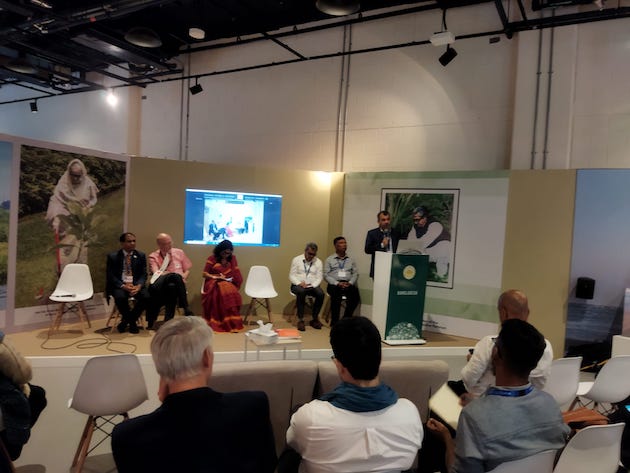
Saber Hossain Chowdhury, Special Envoy for Climate Change, Prime Minister’s Office Bangladesh, addresses an event on climate change at Bangladesh pavilion at COP28 in Dubai. Credit: Umar Manzoor Shah/IPS

Saber Hossain Chowdhury, Special Envoy for Climate Change, Prime Minister’s Office Bangladesh, addresses an event on climate change at the Bangladesh Pavilion at COP28 in Dubai. Credit: Umar Manzoor Shah/IPS

Here are edited excerpts from the interview:

IPS: In terms of climate change and the government’s actions, where is Bangladesh?

Chowdhury: Bangladesh is giving most importance to the Global Stocktake because it has two dimensions—one is looking back and the other is looking forward. We all know how bad things are when we look back because we know we are nowhere near where we are supposed to be.

But what do we do with that knowledge? How do we move forward across the board in terms of mitigation, adaptation, funding, loss and damage, and, of course, the global goals? And one of the points we are stressing is the continual interconnectedness between mitigation, adaptation, and loss and damage.

The more effective our mitigation in terms of keeping temperatures in check, the more manageable the adaptation becomes, and the more manageable the adaptation becomes, the lesser the burden that we pass on the loss and damage.  And it is meaningless to talk about adaptation without the context of mitigation. Because of the rise in temperature to 1.5°C (the threshold to which world leaders pledged to try to limit global warming), there will be a certain level of adaptation that you can do, but if the temperatures are close to 3°C, as it is now said the temperature is likely to rise to, then all adaptation will become loss and damage because there are limits to adaptation and there are limits to resilience.

IPS: What are your views on the ongoing COP 28?

Chowdhury: We got off to a great start. The fact that the Loss and Damage Fund was agreed upon on the first day. In terms of context, we only had this in the agenda last year and it was approved and within a year, the funds have started coming in.  That was a huge positive. We know that funds are nowhere near what the needs are. But it is a good start and we are hoping that the same spirit will be seen in other challenges such as mitigation, adaptation, funding, etc.

Also, I believe the presidency has tried to be very inclusive. But at the end of the day, it depends on global solidarity. If members of the conference come together, then we will have the deal we need. Let me say that this COP is a hugely important COP because we don’t have the luxury of tradeoffs.  We have to deliver across the board, and mitigation (to keep to the Paris Agreements) of 1.5°C is an absolute must, and if we go beyond that, I think we have lost the game. To what extent we can mitigate will then determine what our adaptation requirements are. The better we manage adaptation, the lesser the burden will be on loss and damage.  It is a litmus test. Bangladesh being at ground zero for climate change impact, this is a hugely important event for us.

IPS: Bangladesh is often termed a ‘victim of climate change’ across the globe. Why is that?

Chowdhury: One in seven people in Bangladesh will face displacement because of climate change, and that adds up to about 13–14 million people. We have a huge food security problem because we are losing agricultural land due to sea level rise.  The biggest challenge we will have is the melting of the glaciers in the Himalayas, which means flooding in the short term and sea level rise in the long term. We will lose about one-third of our agriculture GDP between now and 2050, and we can lose up to 9 percent of our GDP by 2100. For us, it is not just one sector of our economy; it is an existential challenge for Bangladesh.

IPS: What do you believe is the responsibility of wealthier nations towards Bangladesh?

Chowdhury: Climate justice is all about wealthier nations. They must deliver the finance so that we can adapt; they must rein in the emissions. They need to act as per science and not have any excuses. It is now or never because the window of action is closing very fast. If we don’t get it right in COP 28, whatever we do in subsequent COPs may well be too little, too late. We have to reduce emissions by 43 percent by 2030. We must reduce emissions by 60 percent by 2035, then we can get to net zero. With that, you also must have tripled the amount of renewable energy and doubled your energy efficiency. So, it has to be a package of responses. It is for the wealthier nations to mitigate, to provide funds for loss and damage as well as for adaptation.

IPS: How responsive do you find these developed nations to the climate crisis?

Chowdhury: Responses must be taken at two levels: one is making pledges, and the other is delivering on pledges. There is no point saying we will do this and then, as in the past, not do it. Pledges are the first step, and therefore everybody has to realize that this is the question of global solidarity.  It is not the question of Bangladesh and the developed world. What is happening in Bangladesh today will also happen in those countries that we call developed. Greenland will become greener again because the ice is going to melt. They will also face sea level rise. So it is not the question of “if,” it is the question of when.

IPS: Bangladesh has advanced warning systems for the climate. Please tell us about it.

Chowdhury: We have what we refer to as an ‘early warning system’ If you look at the cyclone that hit Bangladesh in the early 1970s, up to a million people died because of it. But now, when the cyclone hits Bangladesh, the number of deaths is in single digits. The reason for that is that through an early warning system, we can evacuate people to cyclone shelters. That has saved lives, and Bangladesh is a model for that.

Our honorable Prime Minister has this program where we are building cyclone shelters all around the coast of Bangladesh so that people can be evacuated there. We cannot stop a storm or a hurricane from coming, but we can prepare ourselves so that the loss of lives is minimal, and that is what Bangladesh has achieved. Also, the early warning system is very basic, and it is community-based.

IPS: What is Bangladesh doing about the agrarian crisis?

Chowdhury: Bangladesh has a huge success story in terms of food production. From a deficit nation, we are now a surplus nation, but climate change threatens that.  This is something we look at in terms of food security, so all of the advances and progress that we have made over the years are now at risk because climate change is impacting this sector.

IPS: What is the role of NGOs in terms of tackling climate change and offering support to governments?

Chowdhury: NGOs need to have partnerships with governments where they can take those ideas and scale them up. That is the reason that NGOs need to have a very close relationship with the government. The whole issue is not how much money I have spent; it is what impact I have generated through spending that money.

But the message at the end of the day is that whatever money is spent must be spent on those who are most marginalized. So how do we get funds for the people who are most in need? I think that must be an overriding issue. This is a learning process, and we are all on the learning curve. When we go back to Bangladesh, we need to have a brainstorming session with NGOs and CSOs and find out what is working, how we can make their job easier, and how we can make the collaboration a win-win between various ministries, government departments, and NGOs.
IPS UN Bureau Report


Smallholder Farmers Gain Least from International Climate Funding

Africa, Aid, Civil Society, Climate Action, Climate Change, Climate Change Finance, COP28, Development & Aid, Editors’ Choice, Food and Agriculture, Food Security and Nutrition, Food Sustainability, Global, Headlines, Human Rights, Humanitarian Emergencies, Sustainable Development Goals, TerraViva United Nations

Climate Change Finance

David Obwona at his seed rice farm in Katukatib village, Amoro district, northern Uganda. The farmer is part of a group that is now engaged in seed rice farming to climate-proof agriculture courtesy of the Regional Universities Forum for Capacity Building Agriculture. Credit: Maina Waruru/IPS

David Obwona at his seed rice farm in Katukatib village, Amoro district, northern Uganda. The farmer is part of a group that is now engaged in seed rice farming to climate-proof agriculture courtesy of the Regional Universities Forum for Capacity Building Agriculture. Credit: Maina Waruru/IPS

NAIROBI, Nov 14 2023 (IPS) – Smallholder farmers from the Global South benefit from a grossly disproportionate 0.3% of international climate finance despite producing a third of the world’s food and despite holding the key to climate-proofing food systems.


The family farmers and rural communities received around USD 2 billion from both public and private international climate funds out of the USD 8.4 billion that went to the agriculture sector in 2021, even as over 2.5 billion people globally depended on the farms for their livelihoods.

The USD 8.4 billion was almost half of the USD 16 billion that was availed for the energy sector and is only a fraction of the estimated USD 300-350 billion needed annually to “create more sustainable and resilient food systems,” a new report has found.

The amount was also quite different from the USD 170 billion that smallholder farmers in Sub-Saharan Africa alone would require per year, the study on global public finance for climate mitigation and adaptation conducted by Dutch climate advisory company Climate Focus has found.

The low level of climate finance for agriculture, forestry, and fishing is of concern, given the impact of climate change on food production and the extent to which food and agriculture are fueling the climate and biodiversity crisis.

Agricultural productivity has declined by 21 percent due to climate change, while the food and agriculture sector as a whole is responsible for 29 percent of greenhouse gas emissions and 80 percent of global deforestation, the study explains.

The farmers have been sidelined by global climate funders and locked out of decision-making processes on food and climate despite being the engines of rural economic growth. This is especially so in Sub-Saharan Africa, where up to 80 percent of agriculture is by smallholder farmers and where 23 percent of regional GDP is attributable to the sector.

It reveals that 80 percent of international public climate finance spent on the agri-food sector is channeled through governments and donor country NGOs, making it hard for smallholder farmers’ organizations to access it. This is because of complex eligibility rules and application processes and a lack of information on how and where to apply.

Many family farmers also lack the infrastructure, technology, and resources to adapt to climate impacts, with serious implications for global food security and rural economies as well, it notes.

The study ‘Untapped Potential: An analysis of international public climate finance flows to sustainable agriculture and family farmers,’ published on 14 November, laments that only a fifth of international public climate finance for food and agriculture supports sustainable practice. The money mainly goes to the Global North, even as agriculture becomes the third biggest source of global emissions. and the main driver of biodiversity loss.

“Climate change is hitting harvests and driving up food prices across the globe. It has helped push 122 million people into hunger since 2019. We need to create more sustainable and resilient food systems that can feed people in a changing climate, but we can’t do this without family farmers,” the report compiled on behalf of ten farmer organizations in Africa, Asia, Latin America, and the Pacific says.

“Family farmers are also key to climate adaptation. They are at the forefront of the shift to more diverse, nature-friendly food systems, which the Intergovernmental Panel on Climate Change (IPCC) says is needed to safeguard food security in a changing climate,” it further notes.

The groups are led by the World Rural Forum and include African groups—the Eastern Africa Farmers Federation, Eastern and Southern Africa small-scale Farmers Forum, the Regional Platform of Farmers’ Organisations in Central Africa, and the Network of West African Farmers’ and Producers’ Organisations. Also part of the group is Northern Africa’s Maghreb and North African Farmers Union.

The Asian Farmers Association for Sustainable Rural Development, the Pacific Island Farmers Organization Network, the Confederation of Family Producers’ Organizations of Greater Mercosur, and the Regional Rural Dialogue Programme are also represented in the study.

Many of the farmers are already practicing climate-resilient agriculture, including approaches such as agroecology, which implies a wider variety of crops, including traditional ones, mixing crops, livestock, forestry, and fisheries, while reducing agrochemical use, and building strong connections to local markets.

The study by the new alliance of farmer networks representing over 35 million smallholder producers ahead of COP28, which is set to agree on a Global Goal for Adaptation, is concerned that since 2012, overall, only 11% of international public climate finance has been targeted at agriculture, forestry, and fishing, which amounts to an average of USD 7 billion a year.

In 2021, the World Bank, Germany, the Green Climate Fund, and European Union institutions contributed around half—54 percent, amounting to USD 4 billion collectively, while Nigeria, India, and Ethiopia were the top recipients, receiving a combined USD 1.8 billion. Notably, some of the world’s most food insecure countries, including Sudan, Sierra Leone, and Zambia, each received less than USD 20 million, it discloses.

“As the climate crisis pushes the global food system ever closer to collapse, it is vital that governments recognize family farmers as powerful partners in the fight against climate change,” it warns.

Hakim Baliriane, Chair of the Eastern and Southern Africa small-scale Farmers Forum, observed: “Climate change has helped push 122 million people into hunger since 2019. Reversing this trend will not be possible if governments continue to tie the hands of millions of family farmers.”

The study defines small-scale family farms as those of less than two hectares, mainly in developing countries.

On the other hand, international climate finance broadly refers to finance channeled to “activities that have a stated objective to mitigate climate change or support adaptation. These include multilateral flows in and outside the (UNFCCC) and the Paris Agreement, as well as bilateral flows at national and regional levels, including the Global Environment Facility, Adaptation Fund, and Green Climate Fund, and are usually disbursed as grants and concessional loans

The study finds that family farms are also the backbone of rural economies, supporting over 2.5 billion people globally who depend on family farms for their livelihoods. It says that in Sub-Saharan Africa, where up to 80 percent of farming is done by smallholder farmers, agriculture contributes 23 percent to regional Gross Domestic Product.

Family farmers are also key to climate adaptation in that they are at the forefront of the shift to more “diverse, nature-friendly food systems,” which, according to the Intergovernmental Panel on Climate Change (IPCC), are critical in safeguarding food security in a changing climate.

It finds that millions of smallholder farmers are already practicing climate-resilient agriculture, including approaches such as agroecology—growing a wider variety of crops, including traditional crops, mixing crops, livestock, forestry, and fisheries, reducing agrochemicals use while building “strong connections to local markets.”

It concludes that governments must ensure that available climate finance for sustainable climate-resilient practices is increased, including that of agroecological approaches.

It explains: “This means funds to support diverse, nature-friendly approaches and to create community-based solutions that build on traditional expertise and experience.

It recommends that small-scale family farmers ought to have direct access to more climate finance and that financing mechanisms and funds should be developed with the participation of farmers’ organizations to meet their needs.

In addition, efforts should be made to ensure longer-term, flexible funding so that communities can determine their own priorities.

The role of the farmers as powerful catalysts for climate action, food system transformation, and the protection of biodiversity should be acknowledged and given a “real say” in decision-making on food and climate at the local, national, regional, and international levels. This should include decisions on land reform and agricultural subsidies.

The COP28 in Dubai later this month has food systems as a big part of the agenda.

An August report by the UK’s ActionAid has found that climate adaptation and green transition initiatives in the Global South received 20 times less financing when compared to main global emitters, fossil fuels, and intensive agriculture sectors in the last seven years.

It found that leading banking multinationals funded the emitters’ activities in the southern hemisphere to the tune of USD 3.2 trillion since 2015 when the Paris Agreement on Climate was adopted. German agrochemical giant Bayer was the biggest recipient of the financing, receiving an estimated USD 20.6 billion since 2016.

IPS UN Bureau Report

  Source