Climate change is predicted to put pressure on the Nile Valley and Delta, where about 95% of Egypt’s population resides. Credit: Hisham Allam/IPS
Cairo, Oct 20 2022 (IPS) – The countdown to the UN Climate Summit COP27, which will take place in Sharm el-Sheikh, Egypt, from November 6 to November 18, has begun.
This summit has drawn the attention of world leaders, high-ranking United Nations officials, and thousands of environmental activists worldwide.
The COP27 summit is an annual gathering of 197 countries to discuss climate change and what each country is doing to limit the impact of human activity on the climate.
About 90 heads of state have confirmed their attendance at the COP27 in Sharm El-Sheikh, according to the special representative of the Egyptian presidency.
Amr Abdel-Aziz, Director of Mitigation at Egypt’s Ministry of Environment, noted that the central theme for COP27 is implementation.
“We hope to demonstrate what that looks like in terms of mitigation and adaptation. If the summit can address the topic of implementation in all of its discussions, it will be a sign of its success,” Abdel-Aziz said.
The primary objective of COP27 is to achieve positive results in terms of emissions reduction; on the agenda is also a discussion of financing losses and damage.
“We also intend to advance the agenda to double climate adaptation financing by 2025 and reach an agreement on the unfulfilled $100 billion financial pledge from developed countries,” Abdel-Aziz told IPS.
The overarching goal is to strike a balance between all parties’ interests. The mitigation program, for example, is primarily driven by developed countries and small island developing states, which are currently experiencing severe climate change impacts.
On the other hand, emerging markets are principally accountable for adjustments, losses, and damages.
“Our goal is to achieve a balanced result that meets all of these goals and objectives,” he continued
“We wanted to cover as much of Egypt’s total emissions as possible,” Abdel-Aziz explains, “So we focused on three sectors: energy, oil and gas, and transportation. We also chose the industries that are most likely to reduce emissions.”
Abdel-Aziz says he is optimistic about meeting the goals, especially in the transport sector, which could even exceed the goals as there has been significant progress including in the area of “transportation electrification and other forms of sustainable mobility.”
The summit’s top priorities are to achieve the Paris Agreement’s goals and progress in the fight against climate change. According to scientific research, limiting global warming to 1.5°C by 2030 requires cutting emissions in half.
“Climate finance must be available for this to occur,” COY 17 Programme Leader Hossam Imam told IPS.
COY17 is an annual event organized by YOUNGO, the Official Youth Constituency of the United Nations Framework Convention on Climate Change (UNFCCC). This year’s event will take place on the sidelines of the 27th Party Summit in Sharm El-Sheikh, Egypt (COP27).
Imam will collaborate with 1,500 young people from 140 countries to draft the youth statement, which will be delivered to the presidency of the Climate Summit and discussed by high-ranking officials.
“The impact of climate change on indigenous peoples and coastal city dwellers who face flooding is one of the most pressing issues to be addressed in COY 17,” Imam said.
Environmental activist Ahmed Fathy told IPS that the most significant obstacle to developing countries achieving their climate goals is a “lack of adequate and adequate financing from developed countries. And, despite years of neglect, adaptation financing remains a top priority for developing countries. Without it, developing countries cannot combat and mitigate the effects of climate change.”
The Nile Valley and Delta, where about 95% of Egypt’s population resides, make up only 4% of the country’s natural area. Climate change is predicted to put pressure on these areas, particularly the Nile, and the region could experience more frequent droughts.
“Egypt is also one of the few nations that actually struggle with water scarcity,” Fathy added.
“Since the world faces several economic issues in addition to the energy crisis, we expect that the conference will produce workable proposals,” said Fathy, the founder of the ‘Youth Love Egypt Association,’ involved in organizing the COY17 conference and the promotion of the COP27. “We expect the summit to produce a workable charter and to be COP for actions rather than COP for pledges.”
UNITED NATIONS, Oct 13 2022 (IPS) – As much of the world was starting to glimpse recovery from the COVID-19 pandemic, it now finds itself amid a cost-of-living crisis brought on by disruptions in global energy and food markets that are the result of conflict and climate change.
This again highlights how societal and planetary imbalances reinforce each other, as well as the need for a truly inclusive and green recovery. One that is foundational for achieving the Sustainable Development Goals (SDGs).
The COVID-19 pandemic demonstrated that digital is no longer optional. Countries with existing digital foundations were much better equipped to respond to citizens’ needs, including through the effective delivery of public services such as healthcare, social security benefits, and remote education. Digital will play a similarly important role in shaping a global green recovery.
Beyond building national socioeconomic resilience, digital transformation is also proving a key enabler in advancing global climate commitments. Countries supported by UNDP are leveraging digital in innovative ways to redouble their efforts to adopt renewable energy, transition to a circular economy, and to protect biodiversity.
Ecuador is building a digital traceability system for monitoring land use change and to track commodities through the supply chain. Papua New Guinea has piloted a mobile phone application to assist law enforcers to quickly record and report environmental harms such as illegal logging and bush fires.
Riad Meddeb
Whether it’s emerging technologies like Artificial Intelligence (AI) or more established digital tools like the mobile phone digital can be a fundamental driver of change. It is reshaping the dynamics between the economy, governments, businesses, and civil society and is an important tool in rebalancing our planetary, societal, and economic priorities.
However, digital is fast becoming the global metric of both inclusion and exclusion. With 37 percent of the world’s population still offline, the digital divide, notably, the lack of accessible broadband, gaps in digital skills, and marginalized groups excluded from technology, has become a key barrier for countries wanting to capitalize on the potential opportunities of the increasingly digital economy.
And digital technologies themselves could constrain a Green Recovery. The industry’s carbon footprint could account for about 14 percent of global emissions by 2040. If digital were a country, it would nearly surpass the US as the second largest contributor to climate change. And this impact may worsen, with emerging technologies also contributing to increased emissions.
Digital and a green recovery
Integrating sustainable development in digital is central to ensuring a green recovery – one that drives inclusive digital access and capacity, promotes openness and open data, and fosters innovations that increase the efficiency of digital technologies and mitigates their environmental footprint.
First, we must put people at the centre of innovation. This includes ensuring the availability of foundational digital infrastructure so that everyone can benefit. We must also ensure that the technical standards and explorations of emerging technologies are ‘human-centred’, founded on the local needs and aspirations of populations, but also ‘environment-centred’.
Second, we need to strengthen collaboration between innovation ecosystems. Innovation doesn’t happen in a vacuum. It requires an enabling ecosystem comprising policies and regulations, investors, incubators and accelerators; and educational institutions. Digital can be a potent enabler for connecting dispersed national and global innovation ecosystems in pursuit of sustainability.
Third, data is the lifeblood of digital transformation and could be an important equalizer for countries in accelerating their efforts towards the Sustainable Development Goals.
However, a number of countries lack even foundational data infrastructure, such as data centres, communication networks, and energy grids. We need to accelerate efforts to build data capacity to ensure that existing digital divides are not widened.
Digital is an indispensable enabler for driving a green and inclusive recovery. But it is truly a ‘whole-of-society’ endeavour.
As a platform to showcase innovation, best practice, and to foster partnerships, the UNDP Global Centre for Technology, Innovation, and Sustainable Development will continue to convene global discussions, support and align innovation ecosystems around the world, and guide governments in leveraging the potential afforded by digital. Through driving the experimentation, adoption, and scaling of digital, we can shape a Green Recovery that works for both people and planet.
Riad Meddeb is Acting Director, UNDP Global Centre for Technology, Innovation and Sustainable Development & Senior Principal Advisor for SIDS
These insights were drawn from ‘Digital for a Green Recovery’ – the Flagship Event of the UNDP Global Centre for Technology, Innovation and Sustainable Development, held on the sidelines of the World Cities Summit 2022 in Singapore.
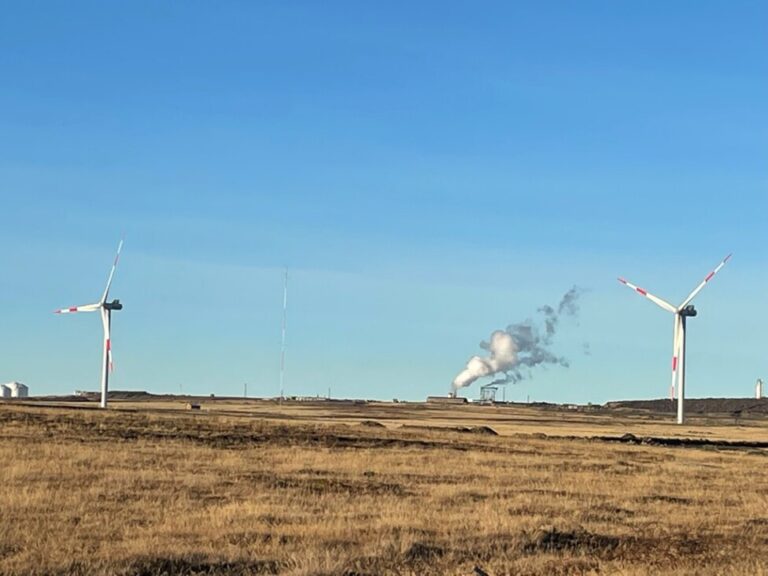
The administration of President Gabriel Boric, a self-described environmentalist, is facing a growing rift between scientists, social leaders and energy companies that have differences with regard to the production of green hydrogen in Magallanes. The first wind turbines have already been installed in the Magallanes region, in the far south of Chile, such as these in Laredo Bay, east of Cabo Negro, where companies are pushing green hydrogen projects in a scenario where environmental costs are beginning to take center stage. CREDIT: Courtesy of Erika Mutschke
SANTIAGO, Oct 12 2022 (IPS) – In Magallanes, Chile’s southernmost region, doubts and questions are being raised about the environmental impact of turning this area into the world’s leading producer of green hydrogen.
The projects require thousands of wind turbines, several desalination plants, new ports, docks, roads and hundreds of technicians and workers, with major social, cultural, economic and even visual impacts.
“The scale of production creates uncertainties, heightened because there is no baseline. The question is whether Chile currently has the capacity to carry out large-scale green hydrogen projects.” — Jorge Gibbons
This long narrow South American country of 19.5 million people sandwiched between the Andes Mountains and the Pacific Ocean has enormous solar and wind energy potential in its Atacama Desert and southern pampas grasslands. This has led to a steady increase in electricity generation from clean and renewable sources.
In 2013, only six percent of the country’s total electricity generation came from non-conventional renewable sources (NCREs) – a proportion that climbed to 32 percent this year. Installed NCRE capacity in September reached 13,405 MW, representing 40.7 percent of the total. Of the NCREs, solar energy represents 23.5 percent and wind power 12.6 percent.
In Chile, NCREs are defined as wind, small hydropower plants )up to 20 MW), biomass, biogas, geothermal, solar and ocean energy.
According to the authorities, the wind potential of Magallanes could meet 13 percent of the world’s demand for green hydrogen, with a potential of 126 GW.
Green hydrogen is generated by low-emission renewable energies in the electrolysis of water (H2O) by breaking down the molecules into oxygen (O2) and hydrogen (H2). It currently accounts for less than one percent of the world’s energy.
However, it is projected as the energy source with the most promising future to advance towards the decarbonization of the economy and the replacement of hydrocarbons, due to its potential in electricity-intensive industries, such as steel and cement, or in air and maritime transportation.
The National Green Hydrogen Strategy, launched in November 2021 by the second government of then right-wing President Sebastián Piñera (2018-2022), seeks to increase carbon neutrality, decrease Chile’s dependence on oil and turn this country into an energy exporter.
The government of his successor, leftist President Gabriel Boric, in office since March, created an Interministerial Council of the Green Hydrogen Industry Development Committee, with the participation of eight cabinet ministers.
A spokesperson from the Ministry of Energy told IPS that “this committee has agreed to bring forward, from 2025 to 2022, the update of the National Green Hydrogen Strategy and the new schedule for the allocation of state-owned land for these projects.”
“We will promote green hydrogen in a cross-cutting manner, with an emphasis on harmonious, fair and balanced local development. By bringing forward the update of the strategy, we seek to generate certainty for investors and to begin to create the necessary regulatory framework for the growth of this industry in our country,” he said.
In the area known as Cabo Negro, in the Chilean region of Magallanes, several companies have installed wind turbines to generate wind energy. The installation of thousands of turbines will affect the landscape of Magallanes and environmentalists believe it will impact many birds that migrate annually to this southern region. CREDIT: Courtesy of Erika Mutschke
Warnings from environmentalists
In a letter to the president, more than 80 environmentalists warned of the risk of turning “Magallanes y La Antarctica Chilena” – the region’s official name – into an environmental sacrifice zone for the development of green hydrogen.
“The energy transition cannot mean the sacrifice of migratory routes of birds that are in danger of extinction, otherwise it would not be a fair or sustainable transition,” said the letter, which has not yet received a formal response.
Environmentalists argue that the impact is not restricted to birds, but also affects whales that breed there, due to the effects of desalination plants, large ports and harbors.
Carmen Espoz, dean of science at the Santo Tomás University, who signed the letter, told IPS that “the main warning that we have tried to raise with the government, and with some of the companies with which we have spoken, is that there is a need for zoning or land-use planning, which does not exist to date, and for independent, quality baseline information for decision-making” on the issue.
Espoz, who also heads the Bahía Lomas Center in Magallanes, based in Punta Arenas, the regional capital, clarified that they are not opposed to the production of green hydrogen but demand that it be done right.
It is urgently necessary, she said in an interview in Santiago, to “stop making decisions at the central level without consultation or real participation of the local communities and to generate the necessary technical information base.”
The signatories asked Boric to create a Regional Land Use Plan with Strategic Environmental Assessment to avoid unregulated development of projects.
“We are not only talking about birds, but also about profound social, cultural and environmental impacts,” said Espoz, who argued that the model promoted by the government and green hydrogen developers “does not have a social license to implement it.”
Sunset at Laredo Bay in the Magallanes region where the Chilean government will have to decide on what changes in the grasslands are acceptable, in the face of a flood of requests to use the area for largescale green hydrogen projects. CREDIT: Courtesy of Erika Mutschke
The bird question
Prior to this letter to Boric, the international scientific journal Science published a study by Chilean scientists warning about potential impacts of wind turbines on the 40 to 60 species of migratory birds that visit Magallanes.
“It is estimated that the installation of wind turbines along the migratory paths of birds could affect migratory shorebird populations, which is especially critical in the cases of the Red Knot (Calidris canutus rufa) and the Magellanic Plover (Pluvianellus socialis),” said Espoz.
Both species, she said, “are endangered, as is the Ruddy-headed Goose (Chloephaga rubidiceps).”
She added that if 13 percent of the world’s green hydrogen is to be generated in southern Chile, some 2,900 wind turbines will have to be installed by 2027, “which could cause between 1,740 and 5,220 collisions with bird per year.”
Jorge Gibbons, a marine biologist at the University of Magallanes, based in Punta Arenas, said the big problem is that Magallanes does not have a baseline for environmental issues.
“The scale of production creates uncertainties, heightened because there is no baseline. The question is whether Chile currently has the capacity to carry out large-scale green hydrogen projects,” he told IPS from the capital of Magallanes.
Gibbons believes it would take about two years to update the data on the dolphin and Southern Right Whale (Eubalaena australis) populations
“The greatest risks to dolphins will be seen in the Strait of Magellan. I am talking about Commerson’s Dolphins (Cephalorhynchus commersonii), which are only found there in Chile and whose population is relatively small,” he said.
He proposed studying the route to ports and harbors of these species and to analyze how they breed and feed.
“The issue is how noise disturbs them or interrupts their routes. These questions are still unanswered, but we know some things because it is the best censused species in Chile,” he explained.
According to Gibbons, the letter to Boric is timely and will help reduce uncertainty because “the process is just beginning and the scientific and local community are now wondering if the plan will be well done.”
Conflict of interests
The partnership between HIF Chile and Enel Green Power Chile withdrew from the Environmental Evaluation System the study of the Faro del Sur Wind Farm project, involving an investment of 500 million dollars for the installation of 65 three-blade wind turbines on 3,791 hectares of land in Magallanes.
The study was presented in early August with the announcement that it was “a decisive step for the future of green hydrogen-based eFuels.”
But on Oct. 6, its withdrawal was announced after a series of observations were issued by the Magallanes regional Secretariat of the Environment.
“The observations of some public bodies in the evaluation process of this wind farm exceed the usual standards,” the consortium formed by the Chilean company HIF and the subsidiary of the Italian transnational Enel claimed in a statement.
The companies argued that “the authorities must provide clear guidelines to the companies on the expectations for regional development, safeguarding the communities and the environment.
“In light of these exceptional requirements, it is necessary to understand which requirements can be incorporated and which definitely make projects of this type unfeasible in the region,” they complained.
The government reacted by stating that it is important to remember that Faro del Sur is the first green hydrogen project submitted to the environmental assessment process in Magallanes.
“During the process, some evaluating entities made observations on the project, so the owners decided to withdraw it early, which does not prevent them from reintroducing it when they deem it convenient,” the Ministry of Energy spokesperson told IPS.
He added that the ministry stresses “the conviction to develop the green hydrogen industry in the country and that this means sending out signals, but in no case should this compromise environmental standards and citizen participation in the evaluation processes.”
World Food Day is celebrated on October 16, 2022, with the theme Leave NO ONE behind. During this week IPS will look at features that showcase better production, better nutrition, a better environment, and a better life.
Richard Mbaria makes a point at his potato in Kapsita village of Nakuru County, Kenya. The farmer has increased his production per acre thanks to training by a CARP+ project implemented in the area by Egerton University. Credit: Maina Waruru/IPS
Nairobi, Oct 11 2022 (IPS) – Until a few years ago, Kenyan potato farmer Richard Mbaria used to harvest just four tonnes of the crop from an acre of land thanks to poor quality seeds, combined with an attack on the crop by pests and diseases.
The middle-aged farmer would select seeds from his previous harvest, picking the smallest tubers that could not fetch good prices in the market. This was the practice every other smallholder farmer in his Kapsita village in Elburgon, Nakuru County in Kenya’s Rift Valley region and beyond would do too. The reason is that many rarely afford certified seeds, and those who could were unaware of the importance of using approved seeds.
“That was then and today, but today I get an average of nearly 8 tonnes of the produce from an acre of land and want to improve the harvests to 10 to 12 tonnes from the same land in the near future,” Mbaria proudly discloses.
The father of four did not transform his farming miraculously. He has been trained in better management of crops and also on the selection and preservation of healthy planting seeds, which he is now selling to local farmers.
Even more radical transformation has happened to his farming. He’s now on the journey to becoming qualified to produce certified tissue culture planting material, thanks to the training he has received from Egerton University’s Enhancing Access to High Quality Seed Potato for Improved Productivity and Income of Smallholder Farmers in Nakuru County (HQSPIPI), implemented under the Community Action Research Programme (CARP+).
Tissue culture is the cultivation of plant tissues or organs in specially formulated nutrient solution in a lab or a controlled environment using mainly sprouts or tissue-like leaves, which are grown in a medium with nutrients and disease-killing chemicals. This way, an entire plant is regenerated from a single tissue.
This is done in a controlled environment – usually in a lab or a greenhouse to produce plantlets, also known as apical root cuttings and mini tubers (tiny-sized potato seeds), but which are clean and free of disease, explains Professor Anthony Kibe, Associate Professor of Agronomy at Egerton University.
When transplanted in the field, the result is seed potatoes which can be sold to farmers for high productivity and at relatively affordable prices.
The resulting plantlet or its small tubers at the bottom of the roots can be transplanted in the fields. The crop is usually high-yield and also free of disease when properly managed.
“Tissue culture (also known as in vitro culture) offers an excellent way for the rapid propagation of seed potato offering high yielding disease-free planting material using hydroponics or aeroponics technologies,” says Kibe.
The technique, he says, is critical in the production of disease-free and high-yielding fruits and vegetables and is widely used in bananas in East Africa. In potatoes, it is mainly practiced by large commercial farms, seed companies, and government research institutions due to the costs and complexity for an ordinary farmer.
The implication is that certified seeds are relatively expensive and out of reach of most of the nearly 1 million smallholder farmers engaged in potato farming in Kenya.
The programme is one of the activities under Transforming African Agricultural Universities to meaningfully contribute to Africa’s growth and development (TAGDev), an initiative by Uganda-based Regional Universities Forum for Capacity Building in Agriculture (RUFORUM), in partnership with the MasterCard Foundation.
One of its aims is to train farmers to plant quality seeds, test their soils, effectively manage diseases and pests, among others, for increased productivity, and organize them in marketing cooperatives for higher incomes, explains Kibe.
“About ten years ago, the average yield for potatoes per hectare in Kenya was 22.5 tonnes; today, it has dropped to around seven tonnes a hectare due to, among others, the transmission of diseases through seeds,” he adds.
It is a concern that his farmers’ outreach project has been addressing by offering free advice, addressing the major constraints to the production of the critical food crop.
“One way of addressing the problem is by training a number of farmers to become producers of disease-free seeds for sale to their colleagues for increased yields and higher income,” he says. Sadly, he notes, only about 2% of Kenyan farmers who grow potatoes use certified seeds, compromising yields.
“This is in stark contrast with leading world producers such as the Netherlands producer, where 99% of farmers use certified seeds,” Kibe explains.
In Kenya, average yields are around 10 tonnes per hectare, while the crop’s potential is as high as 30 tonnes for the size. The lack of quality disease-free seeds of improved varieties is a major cause of this yield gap. This is in contrast to countries like Egypt and South Africa, where yields stand at 40 tonnes per hectare, he told IPS.
“The planting material many farmers use each season for a new crop is produced, stored, and traded by farmers without regulation,” says Kibe.
Farmers select the seeds from their previous harvest. Part of the challenge is that only a few privately-owned farms and a handful of state-owned seed enterprises produce certified seed potatoes.
Where new varieties have been produced and propagated under the technology, yields have been as high as 30 tons per hectare.
Potato, he notes, has been a low-priority food crop in Kenya’s research agricultural research system, despite its importance as a staple food and its potential contribution to the country’s food security.
Under his project, nearly 5,000 farmers have been reached and trained on good husbandry for higher yields since 2017.
Of the three roles bestowed on universities – teaching, research, and outreach, the latter has been the least applied, with universities doing research with the expectation that the extension arms in government would do the knowledge transfer, says Anthony Egeru, who heads TAGDeV project at RUFORUM.
“However, the universities need to have visibility and prove relevant to communities in which they operate and assert their roles as facilitators of development,” he says.
Under the initiative, farmers such as Mbaria are reached by the universities and benefit from the knowledge in their possession, which largely remains stored in journal publications. On their side, universities fulfill their obligation of giving back to society.
While hydroponics is a technology out of reach of many growers, it is essential for the fast multiplication of seeds, according to Michael Cherutich, a potato expert at Kenya’s Agriculture Development Corporation.
The seed producers, including the state corporation, can hardly meet the demand for certified seeds. One way of ensuring affordability has many seed producers in the villages in potato farming areas.
A video journalist covers a news event. Credit Unsplash/Jovaughn Stephens
Journalists and media workers are facing “increasing politicization” of their work and threats to their freedom to simply do their jobs, that are “growing by the day”, said UN Secretary-General Antonio Guterres, marking World Press Freedom Day, May 2022
NEW YORK, Oct 4 2022 (IPS) – “This woman sitting next to me, Maria Ressa, is a Nobel laureate and a convicted criminal,” said barrister Amal Clooney, who co-leads the international legal team representing Ressa. The founder of news website Rappler, Ressa has been targeted with a barrage of legal charges intended to stop her journalism in the Philippines.
During a conversation hosted by the Committee to Protect Journalists (CPJ) on the sidelines of the UN General Assembly high-level week, which concluded September 26, Clooney revealed that Ressa faces the possibility of imminent imprisonment in the Philippines.
“The only thing standing between her and a prison cell is one decision from the Philippines Supreme Court that could come as soon as in 21 days’ time,” said Clooney to an audience of news leaders, diplomats, and advocates.
She then appealed for prosecutors to drop the baseless charges and for newly elected President Ferdinand Marcos Jr. to issue a pardon. In May, CPJ wrote to Marcos requesting that he urgently take concrete steps to undo former President Rodrigo Duterte’s long campaign of intimidation and harassment of the press.
The conversation, led by CPJ President Jodie Ginsberg, also explored the broader misuse of laws increasingly deployed to silence the press across the world. Clooney and Ressa are both past recipients of CPJ’s Gwen Ifill Press Freedom award for their extraordinary and sustained achievement in the cause of press freedom.
UNGA week also served to gather legal experts, diplomats, and activists to discuss the plight of journalists forced to flee their homes and the responsibility of governments to provide safe refuge through special emergency visas.
During a high-level side-event hosted by the Czech Republic, CPJ’s Ginsberg joined Czech Foreign Minister Jan Lipavsky and deputy chairs of the High Level Panel of Legal Experts on Media Freedom to make the case for these visas.
CPJ has advocated for such visas in the past in line with recommendations by members of the Media Freedom Coalition, a group of 52 governments that support press freedom.
Ginsberg’s message: Governments must create special emergency visas for journalists to allow them to quickly evacuate and relocate to safety. The visas should be granted to individuals who are at risk due to their work keeping the public informed.
As Ginsberg noted, across the world, from Afghanistan to Nicaragua and Belarus to Myanmar, CPJ has worked on hundreds of cases of such journalists seeking safe refuge. There is no time to waste.
Journalists forced to flee often try to continue reporting in exile. Panelist Roman Anin, an exiled investigative journalist who runs news website iStories, shared his story of moving his newsroom out of Russia.
“When the war started, we had a choice between three options, either stay in Russia and stop our work, stay in Russia, continue our work and end up in jail, or relocate the newsroom,” he said. Anin said that in spite of the hardship of the relocation, his newsroom has been able to reach Russian audiences with stories on alleged war crimes committed in Ukraine.
Anin’s experience, and CPJ’s own work helping many other displaced journalists, demonstrate how critical it is for governments to prioritize emergency visas for swift relocation and safety. Refusing to do so not only impacts the lives of individual journalists, it is a blow to free expression and access to information globally.
In solidarity,
Gypsy Guillén Kaiser is CPJ Advocacy and Communications Director.
Protesters in Washington, DC, march against the alleged killing of Uyghur Muslims. June 2022. Credit: Unsplash/Kuzzat Altay
NEW YORK, Oct 3 2022 (IPS) – This week is a momentous one for the world’s premier human rights body. At stake is a resolution to decide whether the UN Human Rights Council in Geneva can hold a debate on a recently released UN report.
The report concludes that rights violations by China’s government in its Xinjiang region ‘may constitute international crimes, in particular crimes against humanity’.
Unsurprisingly, China’s government is doing everything in its power to scotch plans for a debate on the report’s contents. Its tactics include intimidating smaller states, spreading disinformation and politicising genuine human rights concerns – the very thing the Human Rights Council was set up to overcome.
The historic report, which affirms that the rights of Xinjiang’s Uyghur Muslim population are being violated through an industrial-level programme of mass incarceration, systemic torture and sexual violence, attracted huge controversy before it was released on 31 August 2022, minutes before the end of the term of the outgoing High Commissioner for Human Rights, Michelle Bachelet.
The report was supposedly ready in September 2021 but so great was the pressure exerted by the Chinese state that it took almost another year for it to be aired. Absurdly, the 46-page report includes a 122 page annex in the form of a rebuttal issued by China, rejecting the findings and calling into question the mandate of the Office of the High Commissioner for Human Rights.
The Office of the High Commissioner has asserted that the report is based on a rigorous review of documentary evidence with its credibility assessed in accordance with standard human rights methodology. The report’s recommendations are pretty straightforward: prompt steps should be taken to release all people arbitrarily imprisoned in Xinjiang, a full legal review of national security and counter-terrorism policies should be undertaken, and an official investigation should be carried into allegations of human rights violations in camps and detention facilities.
Nevertheless, a proposed resolution to hold a debate on the report’s contents in early 2023 is facing severe headwinds. A number of states inside and outside the Human Rights Council, united by their shared history of impunity for rampant human rights abuses – such as Cuba, Egypt, Laos, North Korea, Pakistan, Saudi Arabia, Syria and Venezuela – have already rallied to China’s defence in informal negotiations on the brief resolution.
What is most worrying is that China appears to be leaning on smaller states that make up the 47-member Human Rights Council by inverting arguments about politicisation of global human rights issues and projecting itself as the victim of a Western conspiracy to undermine its sovereignty.
If China were to have its way, it would be a huge setback for the Human Rights Council, which was conceived in 2006 as a representative body of states designed to overcome the flaws of ‘declining credibility and lack of professionalism’ that marred the work of the body it replaced, the UN Commission on Human Rights.
Former UN Secretary-General Kofi Annan, in his ground-breaking In Larger Freedom report, lamented that states sought membership ‘not to strengthen human rights but to protect themselves against criticism or to criticize others’.
Human Rights Council members are expected to uphold the highest standards in the protection and promotion of human rights. But our research at CIVICUS shows that eight of the Council’s 47 members have the worst possible civic space conditions for human rights defenders and their organisations to exist. In these countries – Cameroon, China, Cuba, Eritrea, Libya, Sudan, United Arab Emirates and Uzbekistan – human rights are routinely abused and anyone with the temerity to speak truth to power is relentlessly persecuted.
Regimes that serially abuse human rights may be motivated to block findings of investigations being aired on the international stage, but the international community has a collective responsibility to the victims. Civil society groups are urging Human Rights Council members to stand firm on the call for a debate on the China report.
Human Rights Council member states that assert the importance of human rights and democracy in their foreign policy are expected to vote in favour. Nevertheless, the influence of regional and geo-political blocs within the Council mean that the issue will essentially be settled by the decisions of states such as Argentina, Armenia, Benin, Brazil, Côte d’Ivoire, Gabon, Honduras, India, Indonesia, Malawi, Malaysia, Mexico, Paraguay, Senegal, Ukraine and Qatar.
China will undoubtedly pressure these states to try to get them to oppose or abstain in any vote that seeks to advance justice for the Uyghur people.
The stakes are particularly high for China’s mercurial leader, Xi Jinping, who is seeking to anoint himself as president for a third term – after abolishing term limits in 2018 – at the Chinese Communist Party’s Congress, which begins on 16 October.
Recognition of the systematic abuses to which Xi’s administration has subjected the Uyghur people would be considered an international affront to his growing power.
If China were to prevail at the Human Rights Council, it would be another blow to the legitimacy of the UN, which is already reeling from the UN Security Council’s inability to overcome Russia’s permanent member veto to block action on the invasion of Ukraine. So much – for the UN’s reputation, and for the hope that human rights violators, however powerful, will be held to account – is resting on the vote.
Mandeep S. Tiwana, is chief programmes officer and representative to the United Nations at global civil society alliance, CIVICUS.