Snowless Winter and a Climate Crisis: Kashmir’s ‘Unprecedented’ Weather

Asia-Pacific, Civil Society, Climate Change, Climate Change Justice, Editors’ Choice, Environment, Featured, Food and Agriculture, Food Security and Nutrition, Headlines, Natural Resources, Sustainable Development Goals, TerraViva United Nations

Climate Change

Local Muslims held special prayer ceremonies in January for snowfall. Credit: Umar Manzoor Shah/IPS

Local Muslims held special prayer ceremonies in January for snowfall. Credit: Umar Manzoor Shah/IPS

SRINAGAR, India, Feb 20 2024 (IPS) – Abdul Gani Malik, a 75-year-old goldsmith living in Kashmir’s capital, Srinagar, has witnessed eras of tranquility and turbulence in the Himalayan region. What he has not seen, however, is a snowless Kashmir during the winter.


Malik still works at his shop, located in one of the jam-packed markets of the old city area of Kashmir’s capital, intricately lacing colorful emeralds on dazzling gold necklaces. While conversing with IPS, he mentions that the winter in Kashmir has never been so terrible and terrifying as it has been this year.

He recalls how, during the 40-day harshest winter period from December 21 to January 30, snow would accumulate to about six or seven feet, freezing and making pathways treacherous even for city dwellers. In the mountainous region, according to Malik, the snow would last for several months, regulating temperatures during the summer and providing water and food.

“Now is a different tale. The mountains appear dry and dead. The rivers are carrying no water, and our woods are bereft of life. This is an absolute apocalypse,” Malik said.

The region of Kashmir is located in the north-western complex of the Himalayan ranges, with marked relief variation, snow-capped summits, antecedent drainage, complex geological structure, and rich temperate vegetation and fauna.

Kashmir’s winter is traditionally divided into three parts: Chilay Kalan (old man winter), Chilay Khuarud (young winter), and Chilay Bacha (kiddy winter). The coldest part, called Chilay Kalan, starts on December 21 and ends at the end of January. It is during this period that snowfall is expected.

“The temperatures during this period plummet to even minus 8 to 10 degrees Celsius, and when it snows, it accumulates in glaciers. The snowfall in the later period is of no use,” says Abdul Ghani Malik.

He was part of the congregational prayers held across Kashmir for snowfall. Local Muslims, who constitute more than 90 percent of the local population, decided in January to hold special prayers for snowfall in all major mosques. “We prayed, and we hope God listens to our plight.”

According to Abid Ali, a student of environmental sciences from Kashmir, Kashmir’s livelihood depends on snowfall, and if it doesn’t snow, things are going to take a terrible shape.

“The region’s electricity system, agriculture, and tourism are all dependent on snowfall. The dry winter will prove catastrophic for the local populace,” Abid said.

Kashmir, as per estimates, reported a 79 percent precipitation deficit through December of last year. Indian meteorologists claim that unusual weather is linked to global warming and El Niño, the sporadic climate phenomenon that can create warm, dry conditions in the Indian subcontinent and other parts of Asia.
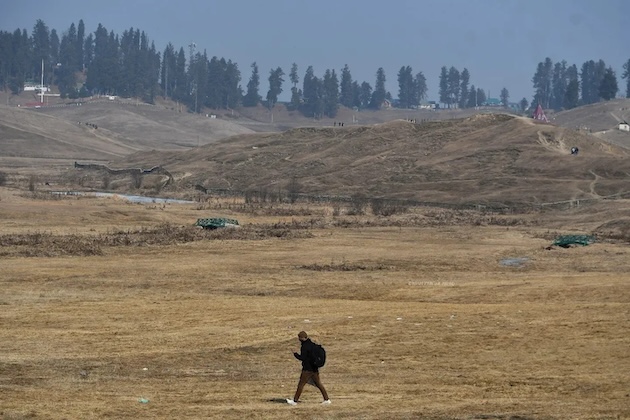
A man walks through an area in Kashmir where low snowfall is causing concern as the region’s economy is highly dependent on it. Credit: Umar Manzoor Shah/IPS

A man walks through an area in Kashmir where low snowfall is causing concern as the region’s economy is highly dependent on it. Credit: Umar Manzoor Shah/IPS

Threat to Agriculture

In Kashmir, 60 percent of the state’s revenue comes from agriculture and horticulture, and about 80 percent of the population lives in rural areas.

However, over the years, the valley has experienced irregular patterns of precipitation. In the first five months of 2022, Kashmir saw a 38 percent rain shortage, according to data provided by the Meteorological Department (MeT) in Srinagar.

The data reveals that the Kashmir Valley has experienced a significant lack of pre-monsoon precipitation over the years. From March 1 to May 31, 2022, the region got 99.5 mm of rain, 70 percent lower than average.

Comparatively, between March and May of each of the following years—2017, 2018, 2019, 2020, and 2021—there was a deficit of 16, 28, 35, and 26 percent, respectively. The dry winter this year is already throwing life out of gear for the farmers.

Abdul Karim Ganaie, a farmer hailing from south Kashmir’s Pulwama, says the threats are menacingly looming large, and people cannot do anything other than watch helplessly as the crisis unfolds.

When IPS contacted Choudhary Mohammad Iqbal, the director of agriculture in Kashmir, he stated that the department was closely monitoring the situation and would be issuing a warning to the farmers in the coming months.

“We accept that the situation is going to prove worrisome for Kashmir’s farming community, but we have to adopt a strategy to ensure minimal losses. We are working on that front,” Choudhary said.

Tourism under Cloud

The famous tourist destinations in Kashmir are also witnessing a dip in tourist arrivals, putting the people associated with this business in dire straits. In January, the famous tourist resorts recorded the lowest arrival of foreign and domestic tourists, with only 30 percent occupancy in hotels.

It snows at last but too little, too late!

Finally, in the first week of February, when the harshest 40-day-long spell was already over, it snowed in most of the areas of Kashmir. However, according to experts, the snow would yield the fewest results as it is not possible to accumulate for an extended period.

What is important, says Mehraj Ahmad, a research scholar working on climate change in Kashmir, is that the snow must accumulate in the higher reaches for as long as possible until the arrival of summers.

“The snowfall of February or March carries the least significance when compared with the snowfall of January. Therefore, we really are keeping our fingers crossed and praying for the safeguard of our lives against the dark, dreadful effects of climate change,” Ahmad said.

IPS UN Bureau Report

IPS UN Bureau, IPS UN Bureau Report, India, Kashmir

  Source

The Ghost of Oil Haunts Mexico’s Lacandona Jungle

Civil Society, Conservation, Development & Aid, Economy & Trade, Editors’ Choice, Energy, Environment, Featured, Headlines, Human Rights, Indigenous Rights, Integration and Development Brazilian-style, Latin America & the Caribbean, Natural Resources, Projects, Regional Categories

Energy

Lacandona, the great Mayan jungle that extends through the state of Chiapas in southern Mexico, is home to natural wealth and indigenous peoples' settlements that are once again threatened by the probable reactivation of abandoned oil wells. Image: Ceiba

Lacandona, the great Mayan jungle that extends through the state of Chiapas in southern Mexico, is home to natural wealth and indigenous peoples’ settlements that are once again threatened by the probable reactivation of abandoned oil wells. Image: Ceiba

MEXICO CITY, Jan 19 2024 (IPS) – The Lacandona jungle in the southern Mexican state of Chiapas is home to 769 species of butterflies, 573 species of trees, 464 species of birds, 114 species of mammals, 119 species of amphibians and reptiles, and several abandoned oil wells.


The oil wells have been a source of concern for the communities of the great Mayan jungle and environmental organizations since the 1970s, when oil prospecting began in the area and gradually left at least five wells inactive, whether plugged or not.

“The situation is always complex, due to legal loopholes that do not delimit the jungle, the natural protected areas are not delimited, it has been a historical mess. The search for oil has always been there.” — Fermín Domínguez

Now, Mexico’s policy of increasing oil production, promoted by the federal government, is reviving the threat of reactivating oil industry activity in the jungle ecosystem of some 500,000 hectares located in the east of the state, which has lost 70 percent of its forest in recent decades due to deforestation.

A resident of the Benemérito de las Américas municipality, some 1,100 kilometers south of Mexico City, who requested anonymity for security reasons, told IPS that a Mexican oil services company has contacted some members of the ejidos – communities on formerly public land granted to farm individually or cooperatively – trying to buy land around the inactive wells.

“They say they are offering work. We are concerned that they are trying to restart oil exploration, because it is a natural area that could be damaged and already has problems,” he said.

Adjacent to Benemérito de las Américas, which has 23,603 inhabitants according to the latest records, the area where the inactive wells are located is within the 18,348 square kilometers of the protected Lacandona Jungle Region.

It is one of the seven reserves of the ecosystem that the Mexican government decreed in 2016 and where oil activity in its subsoil is banned.

Between 1903 and 2014, the state-owned oil company Petróleos Mexicanos (Pemex) drilled five wells in the Lacandona jungle, inhabited by some 200,000 people, according to the autonomous governmental National Hydrocarbons Commission (CNH), in charge of allocating hydrocarbon lots and approving oil and gas exploration plans. At least two of these deposits are now closed, according to the CNH.

The Montes Azules Biosphere Reserve, in the Lacandona jungle in the southern Mexican state of Chiapas, faces the threat of oil exploration, which would add to phenomena such as deforestation, drought and forest fires that have occurred in recent years. Image: Semarnat

The Montes Azules Biosphere Reserve, in the Lacandona jungle in the southern Mexican state of Chiapas, faces the threat of oil exploration, which would add to phenomena such as deforestation, drought and forest fires that have occurred in recent years. Image: Semarnat

The Lacantun well is located between a small group of houses and the Montes Azules Biosphere Reserve (RBMA), the most megadiverse in the country, part of Lacandona and near the border with Guatemala. The CNH estimates the well’s proven oil reserves at 15.42 million barrels and gas reserves at 2.62 million cubic feet.

Chole, Tzeltal, Tzotzil and Lacandon Indians inhabit the jungle.

Other inactive deposits in the Benemérito de las Américas area are Cantil-101 and Bonampak-1, whose reserves are unknown.

In the rural areas of the municipality, the local population grows corn, beans and coffee and manages ecotourism sites. But violence has driven people out of Chiapas communities, as has been the case for weeks in the southern mountainous areas of the state due to border disputes and illegal business between criminal groups.

In addition, the Zapatista National Liberation Army (EZLN), an indigenous organization that staged an uprising on Jan. 1, 1994 against the marginalization and poverty suffered by the native communities, is still present in the region.

Chiapas, where oil was discovered at the beginning of the 20th century, is among the five main territories in terms of production of crude oil and gas in this Latin American country, with 10 hydrocarbon blocks in the northern strip of the state.

In November, Mexico extracted 1.64 million barrels of oil and 4.9 billion cubic feet of gas daily. The country currently ranks 20th in the world in terms of proven oil reserves and 41st in gas.

Historically, local communities have suffered water, soil and air pollution from Pemex operations.

As of November, there were 6,933 operational wells in the country, while Pemex has sealed 122 of the wells drilled since 2019, although none in Chiapas, according to a public information request filed by IPS.

Since taking office in December 2018, leftist President Andrés Manuel López Obrador has strengthened Pemex and the also state-owned Federal Electricity Commission by promoting the extraction and consumption of fossil fuels, to the detriment of renewable energy.

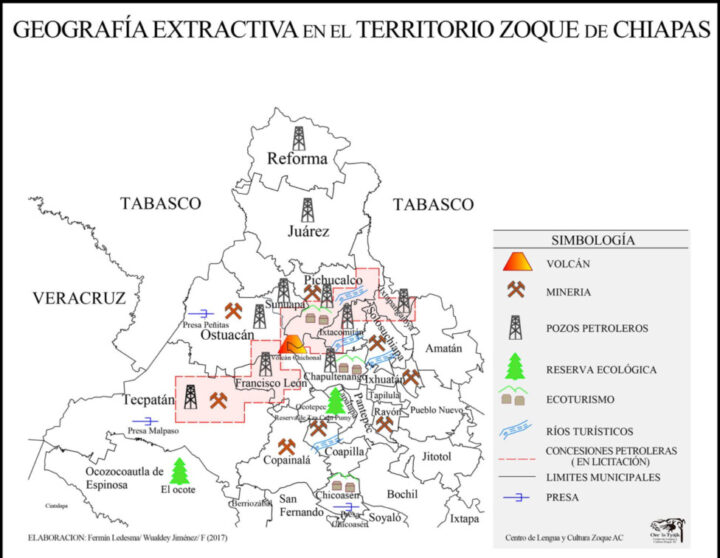
The state of Chiapas is home to hydroelectric power plants, mining projects, hydrocarbon exploitation blocks and a section of the Mayan Train, the most emblematic megaproject of the current Mexican government. Image: Center for Zoque Language and Culture AC

The state of Chiapas is home to hydroelectric power plants, mining projects, hydrocarbon exploitation blocks and a section of the Mayan Train, the most emblematic megaproject of the current Mexican government. Image: Center for Zoque Language and Culture AC

Territory under siege

The RBMA is one of Mexico’s 225 natural protected areas (NPAs) and its 331,000 hectares are home to 20 percent of the country’s plant species, 30 percent of its birds, 27 percent of its mammals and 17 percent of its freshwater fish.

Like all of the Lacandona rainforest, the RBMA faces deforestation, the expansion of cattle ranching, wildlife trafficking, drought, and forest fires.

Fermín Ledesma, an academic at the public Universidad Autónoma Chapingo, said possible oil exploration could aggravate existing social and environmental conflicts in the state, in addition to growing criminal violence and the historical absence of the State.

“The situation is always complex, due to legal loopholes that do not delimit the jungle, the natural protected areas are not delimited, it has been a historical mess. The search for oil has always been there,” he told IPS from Tuxtla Gutiérrez, the capital of Chiapas.

The researcher said “it is a very complex area, with a 50-year agrarian conflict between indigenous peoples, often generated by the government itself, which created an overlapping of plans and lands.”

Ledesma pointed to a contradiction between the idea of PNAs that are depopulated in order to protect them and the historical presence of native peoples.

From 2001 to 2022, Chiapas lost 748,000 hectares of tree cover, equivalent to a 15 percent decrease since 2000, one of the largest sites of deforestation in Mexico, according to the international monitoring platform Global Forest Watch. In 2022 alone, 26,800 hectares of natural forest disappeared.

In addition, this state, one of the most impoverished in the country, has suffered from the presence of mining, the construction of three hydroelectric plants and, now, the Mayan Train, the Mexican government’s most emblematic megaproject inaugurated on Dec. 15, one of the seven sections of which runs through the north of the state.

But there are also stories of local resistance against oil production. In 2017, Zoque indigenous people prevented the auction of two blocks on some 84,000 hectares in nine municipalities that sought to obtain 437.8 million barrels of crude oil equivalent.

The anonymous source expressed hope for a repeat of that victory and highlighted the argument of conducting an indigenous consultation prior to the projects, free of pressure and with the fullest possible information. “With that we can stop the wells, as occurred in 2017. We are not going to let them move forward,” he said.

Ledesma the researcher questioned the argument of local development driven by natural resource extraction and territorial degradation as a pretext.

“They say it’s the only way to do it, but that’s not true. It leaves a trail of environmental damage, damage to human health, present and future damage. It is much easier for the population to accept compensation or give up the land, because they see it is degraded. A narrative is created that they live in an impoverished area and therefore they have to relocate. This has happened in other areas,” he said.

  Source

Biodiversity Credits: Solution or Empty Promise for Latin America?

Biodiversity, Civil Society, Climate Action, Climate Change, Climate Change Finance, Conservation, Development & Aid, Economy & Trade, Editors’ Choice, Environment, Green Economy, Headlines, Latin America & the Caribbean, Natural Resources, Regional Categories, Sustainable Development Goals, TerraViva United Nations

Climate Change Finance

In the Bosque de Niebla, located in the department of Antioquia in northwestern Colombia, biodiversity bonds have emerged to push for protection of the ecosystem from threats such as deforestation and rising temperatures. But these instruments are still very green in Latin America. CREDIT: Courtesy of Terraso - Unlike offsets for environmental damage due to infrastructure projects, biodiversity credits are an economic instrument that can be used to finance actions that result in measurable positive outcomes through the issuance and sale of biodiversity units

In the Bosque de Niebla, located in the department of Antioquia in northwestern Colombia, biodiversity bonds have emerged to push for protection of the ecosystem from threats such as deforestation and rising temperatures. But these instruments are still very green in Latin America. CREDIT: Courtesy of Terraso

MEXICO CITY, Aug 28 2023 (IPS) – Located in northwestern Colombia, the Bosque de Niebla is home to 154 species of plants, 120 bird species, 21 species of mammals, 16 water springs and five hectares of wetlands.


Forming part of the Cuchilla Jardín-Támesis Integrated Management District in the department of Antioquia, the ecosystem provides water and climate regulation to the entire northwestern region of the country.

“Not all ecosystem services are the same, it has to be a very judicious system. And there have to be local regulations, from green taxonomies (classification of activities) to regulations. Therein lies the dilemma of where the sector has to go.” — Lía González

For this reason, an innovative financing scheme, biodiversity bonds, seeks to strengthen the protection of this area for 30 years, in the face of threats such as deforestation, drought and rising temperatures due to the climate crisis.

Private Colombian investor Terraso and Spanish carbon offset seller ClimateTrade, a climate solutions company that utilizes blockchain technology to facilitate large-scale decarbonization efforts through innovation, created voluntary biodiversity bonds for the Bosque de Niebla in May 2022.

The aim is to care for 340 hectares registered as a habitat bank by the Ministry of Environment and Sustainable Development of Colombia, one of the 10 most biologically diverse countries in the world.

Habitat banks are areas where conservation initiatives are aggregated and ecosystem preservation, enhancement or restoration actions are implemented to generate quantifiable biodiversity gains.

Each biodiversity credit represents 10 square meters of threatened, conserved or restored land. Technical, financial and legal guarantees will sustain the project for at least 30 years. Each bond, worth 30 dollars, corresponds to 30 years of conservation and/or restoration.

But the scheme raises concerns about the commercialization of wildlife and the pursuit of profit over ecological benefits.

Patricia Balvanera, an academic at the Institute for Research on Ecosystems and Sustainability of the public National Autonomous University of Mexico, said the financial market approach does not address the full spectrum of environmental, cultural and social issues, which can cloud the vision of the integral importance of nature.

“Other non-integrated values have to do with social, ethical principles that have developed around nature. We have bought ourselves an image as a factory of resources at the service of people and we have discarded the role of nature and society through a relationship of care and reciprocity,” she told IPS from the northern Mexican city of San Luis Potosí.

The expert is co-author of the study “Diverse values of nature for sustainability”, published on Aug. 9, which addresses a more holistic view of care.

Unlike offsets for environmental damage due to infrastructure projects, biodiversity credits are an economic instrument that can be used to finance actions that result in measurable positive outcomes through the issuance and sale of biodiversity units.

The buyers of biodiversity bonds gain in reputational aspects, by promoting the restoration and protection of ecosystems, and obtain funds by reselling the bonds, as it is a voluntary market.

These are different from carbon credits, where companies and individuals can buy the reduced emissions credits in what is known as the voluntary carbon market, to offset their polluting emissions: each one represents the elimination of one metric ton of carbon from the atmosphere.

For the carbon dioxide equivalent trapped and stored in ecosystems such as forests, project owners can issue certificates for sale in national and international markets to national and international corporations and individuals who want to reduce their polluting emissions.

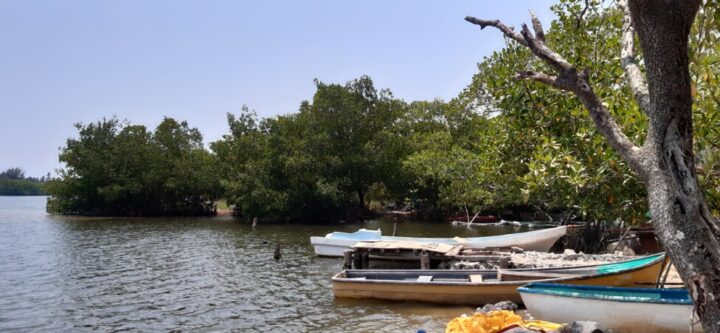
Mangroves, such as these in the municipality of Paraíso in the southeastern Mexican state of Tabasco, are candidates for biodiversity bonds because of the services they provide and the need to protect them, like other ecosystems. But these credits still need international standards, verification and monitoring guidelines, as well as tangible results. CREDIT: Emilio Godoy / IPS - Unlike offsets for environmental damage due to infrastructure projects, biodiversity credits are an economic instrument that can be used to finance actions that result in measurable positive outcomes through the issuance and sale of biodiversity units

Mangroves, such as these in the municipality of Paraíso in the southeastern Mexican state of Tabasco, are candidates for biodiversity bonds because of the services they provide and the need to protect them, like other ecosystems. But these credits still need international standards, verification and monitoring guidelines, as well as tangible results. CREDIT: Emilio Godoy / IPS

On hold

In Honduras, a project similar to the Colombian one is advancing in Cusuco National Park, in the northwestern department of Cortés.

In the 22,200-hectare forest, decreed in 1987, the international alliance of environmental organizations rePlanet seeks the conservation of 1,883 hectares in 25 years in the face of threats such as deforestation and the risk to 24 species.

The project could issue bonds this year.

Lía González, director for Latin America of the Belgian social impact investment firm Incofin, said the instrument involves several challenges, such as monetization, assigning value to the blocks of land, the creation of standards for measurement, verification, monitoring and issuance, as well as the involvement of the communities.

“Not all ecosystem services are the same, it has to be a very judicious system. And there have to be local regulations, from green taxonomies (classification of activities) to regulations. Therein lies the dilemma of where the sector has to go,” she told IPS from Bogotá.

The executive stressed that the scheme should avoid the carbon credits model and learn from its mistakes, such as inaccurate calculation of carbon sequestration and violations of community rights.

In 2022, Incofin’s portfolio covered 111 clients in 14 Latin American countries for a total of 400 million dollars in segments such as sustainable agriculture and microfinance. In Colombia, it supported eight clients and totaled 44.3 million dollars.

The company focuses on medium-term investments, so that beneficiaries have an additional source of income within the area being protected or restored.

So far, so-called green bonds have fallen short in financing for the conservation of natural wealth and sustainable land use, according to a 2020 report by the Luxembourg Green Exchange and the Global Landscapes Forum, entitled: “How can Green Bonds catalyse investments in biodiversity and sustainable land-use projects?”

Colombia and Honduras are the countries that have moved forward with these instruments, because they have regulations and several financial instruments related to biodiversity, although bonds are still a rarity.

In this regard, the Organisation for Economic Co-operation and Development (OECD), which groups the world’s 38 most developed economies, noted in its 2021 report “Tracking Economic Instruments and Finance for Biodiversity” that, despite the progress made, the substantial potential depends on increasing the use and ambition of biodiversity-relevant economic instruments.

In its Sixth National Biodiversity Report 2020, Honduras recognized the need to improve the monetary and non-monetary valuation of environmental services.

Financing schemes are essential to the development of the United Nations Decade on Ecosystem Restoration 2021-2030, adopted by the U.N. General Assembly in 2019, which seeks to prevent, halt and reverse the degradation of terrestrial and marine ecosystems, to eradicate poverty, combat climate change and prevent the mass extinction of species.

Moving towards a take-off?

In order for it to be successful, the mechanism requires integrity of the projects and the inclusion of all stakeholders, according to the World Economic Forum, dedicated to multinational business lobbying.

The Colombian Bosque de Niebla initiative has already placed 62,063 credits and has 61,773 available.

The investor Terraso has seven other habitat banks in various areas of Colombia that could generate more bonds.

Balvanera warned of perverse incentives that could undermine protection.

“If we think about financial schemes, the link should not only be transactional. There must be involvement of different stakeholders who collectively identify the mechanism that promotes conservation, respects the vision of care and maintains the livelihoods of the inhabitants of these areas,” she said.

The academic argued that “this generates a circular system that connects forest protection, water care, food production and sustainable consumption.”

For her part, González was open to analyzing these investments.

“Water could be a viable focus for climate resilience and its impact on the region’s climate. We are interested in learning about monetization and that additional sources of income can benefit protection processes, so that it is complementary to what we do,” she said.

Last December, the 15th Conference of the Parties (COP15) to the Convention on Biological Diversity (CBD) adopted the Kunming-Montreal Global Biodiversity Framework, which includes cumulative biodiversity funding of at least 200 billion dollars by 2030 from public and private sources.

One of its goals is to encourage innovative schemes such as payment for environmental services, green bonds, offsets, biodiversity credits and benefit-sharing mechanisms that include environmental and social safeguards.

To meet these objectives, the 196 States Parties to the CBD created the Global Biodiversity Framework Fund, which is managed by the Global Environment Facility and whose governing council was approved in June in Brazil.

In addition, the agreement includes the complete or partial restoration of at least 30 percent of degraded terrestrial and marine ecosystems by 2030, as well as the reduction of the loss of areas of high biological importance to almost zero.

  Source

European Court of Justice Ruling on Beneficial Ownership, a Major Blow to the Fight Against Environmental Crimes

By Matti Kohonen
LONDON, Dec 12 2022 (IPS)

The European Court of Justice on November 22, 2022, made a ruling that reversed much of the progress we have made in a decade in the fight against corruption, economic and natural resource crimes, tax abuses and other forms of illicit financial flows across the world. In the ruling, the court declared invalid the part of the European Union’s Anti Money Laundering Directive that allowed public access to registries about companies’ beneficial owners (that is, the real people who own or actually control them).


This has a direct impact in the fight against environmental crimes, particularly illegal, unreported and unregulated (IUU) fishing which is devastating the world’s fisheries resources, accounting for up to one-fifth of global catches.

The financial secrecy surrounding the owners of vessels is a key driver of IUU fishing as secrecy makes it harder to catch the real perpetrators of this illegal trade. In a report published by the Financial Transparency Coalition in October 2022, we discovered that among the top 10 operators of vessels reported to be engaged in this illicit practice, one was based in Spain while a total of 30 vessels were flagged to Italy, making it the highest European flag jurisdiction for IUU fishing. In total, we found that 12.8% of all vessels engaged in IUU fishing were flagged to a European country.

Matti Kohonen

The ECJ ruling makes it impossible for a member of the public to investigate these linkages further. In Spain and Italy, the commitment to open up the registry was made in principle but remains unimplemented. This decision takes all pressure off to implement open beneficial ownership registries in these two countries that are most responsible for IUU fishing in the continent.

This is a welcome present to owners of IUU fishing vessels who often use complex corporate structures to hide their identities and evade punishment. Underscoring this problem, in our investigation we found the individual shareholder data was only available for 16% of industrial and semi-industrial vessels engaged in IUU fishing.

But the ECJ’s ruling impact will be felt well beyond Europe’s borders. Most of the world’s IUU fishing takes place in Africa which loses US$11.5bn in illicit financial flows linked to IUU fishing every year. A significant proportion of this illicit catch in Africa is caught in West Africa, with US$9.5bn losses in this region alone, with much of the fish caught there by foreign fleets ending up in Europe. In total, the European continent imports some US$14bn worth of seafood from the global South each year, making it a key market for seafood products.

The court’s decisions rested on a narrow interpretation of the purpose of the beneficial ownership registry, limited to fighting money laundering and terrorist financing. Fishing related offences are not yet recognised as ‘natural resource crimes’ by the Financial Action Task Force (FATF), the global anti-money laundering regulator, while illegal logging and illegal wildlife trade (IWT) related offences are already included in their definition of what constitutes money laundering. If this were to be upgraded by FATF, we could claim most, if not all, IUU fishing offences as money laundering crimes.

The ECJ decision also rests on a narrow interpretation of the ‘right to private life’ as a fundamental civil right as subscribed in the EU Charter of Fundamental Rights of the European Union that partly lays the legal foundation for the EU. Worryingly, the court did not consider any evidence of the benefits of public access to beneficial ownership information in both fighting money laundering and terrorist financing, let alone the risks that natural resource crimes pose to other rights, such as the right to a healthy environment recognised as a human right by the UN General Assembly in 2022.

Ultimately, the real winners of this ruling are the thousands of companies engaged in IUU fishing and other environmental crimes across the world, and which benefit from money laundering at the tune of billions of euros per year. The ruling undermines collective action to make the money trail of these crimes more traceable, at a time when countries especially in the global South are desperate for funds amid a cost of living crisis and high inflation.

Reacting to the ruling, the European Council signalled that member states should ensure that any natural or legal person demonstrating a legitimate interest has access to information held in the beneficial ownership registers, including especially journalists and civil society organisations as long as they can demonstrate legitimate interest in relation with fighting money laundering and terrorist financing.

However, this is insufficient since this will likely only apply to journalists and civil society in the same country as the registry, and application processes generally take a long time. Also one will need to know the company of interest before accessing any information, blocking the option of looking through public registries to spot risks and red flags.

The EU Parliament should be expected to start negotiations on a new anti-money laundering directive next spring. It must not allow the ECJ ruling to stand, for everyone’s sake.

IPS UN Bureau


!function(d,s,id){var js,fjs=d.getElementsByTagName(s)[0],p=/^http:/.test(d.location)?’http’:’https’;if(!d.getElementById(id)){js=d.createElement(s);js.id=id;js.src=p+’://platform.twitter.com/widgets.js’;fjs.parentNode.insertBefore(js,fjs);}}(document, ‘script’, ‘twitter-wjs’);  

Excerpt:

The author is Executive Director, Financial Transparency Coalition Source

Women Advocates for Harvesting Rainwater in Salinity-Affected Coastal Bangladesh

Asia-Pacific, Climate Change, Development & Aid, Editors’ Choice, Environment, Featured, Headlines, Humanitarian Emergencies, Innovation, Natural Resources, TerraViva United Nations

Humanitarian Emergencies

Lalita Roy now has access to clean water and also provides a service to her community by working as a pani apa (water sister), looking after the community's rainwater harvesting plants. Credit: Rafiqul Islam/IPS

Lalita Roy now has access to clean water and also provides a service to her community by working as a pani apa (water sister), looking after the community’s rainwater harvesting plants. Credit: Rafiqul Islam/IPS

KHULNA, Bangladesh, Sep 23 2022 (IPS) – Like many other women in Bangladesh’s salinity-prone coastal region, Lalita Roy had to travel a long distance every day to collect drinking water as there was no fresh water source nearby her locality.


“In the past, there was a scarcity of drinking water. I had to travel one to two kilometers distance each day to bring water,” Roy, a resident of Bajua Union under Dakope Upazila in Khulna, told IPS.

She had to collect water standing in a queue; one water pitcher was not enough to meet her daily household demand.

“We require two pitchers of drinking water per day. I had to spend two hours each day collecting water. So, there were various problems. I had health complications, and I was unable to do household work for lack of time,” she said.

After getting a rainwater harvesting plant from the Gender-response Climate Adaptation (GCA) Project, which is being implemented by United Nations Development Programme (UNDP), Roy is now collecting drinking water using the rainwater harvesting plant, which makes her life easier.

“I am getting the facilities, and now I can give two more hours to my family… that’s why I benefited,” she added.

Shymoli Boiragi, another beneficiary of Shaheber Abad village under Dakope Upazila, said women in her locality suffered a lot in collecting drinking water in the past because they had to walk one to three kilometers every day to collect water.

“We lost both time and household work. After getting rainwater harvesting plants, we benefited. Now we need not go a long distance to collect water so that we can do more household work,” Boiragi said.

Shymoli revealed that coastal people suffered from various health problems caused by consuming saline water and spent money on collecting the water too.

“But now we are conserving rainwater during the ongoing monsoon and will drink it for the rest of the year,” she added.

THE ROLE OF PANI APAS

With support from the project, rainwater harvesting plants were installed at about 13,300 households under 39 union parishads in Khunla and Satkhira. One pani apa (water sister) has been deployed in every union from the beneficiaries.

Roy, now deployed as a pani apa, said the GCA project conducted a survey on the households needing water plants and selected her as a pani apa for two wards.

“As a pani apa, I have been given various tools. I go to every household two times per month. I clean up their water tanks (rainwater plants) and repair those, if necessary,” he added.

Roy said she provides services for 80 households having rainwater harvesting plants, and if they have any problem with their water tanks, she goes to their houses to repair plants.

“I go to 67 households, which have water plants, one to two times per month to provide maintenance services. If they call me over the cellphone, I also go to their houses,” said Ullashini Roy, another pani apa from Shaheber Abad village.

She said a household gives her Taka 20 per month for her maintenance services while she gets Taka 1,340 (US$ 15) from 67 households, which helps her with family expenses.

Ahoke Kumar Adhikary, regional project manager of the Gender-Response Climate Adaptation Project, said it supported installing rainwater harvesting plants at 13,300 households. Each plant will store 2,000 liters of rainwater in each tank for the dry season.

The water plants need maintenance, which is why the project has employed pani apas for each union parishad (ward or council). They work at a community level on maintenance.

“They provide some services, and we call them pani apas. The work of pani apas is to go to every household and provide the services,” Adhikary said.

He said the pani apas get Taka 20 from every household per month for providing their services, and if they need to replace taps or filters of the water plants, they replace those.

The pani apas charge for the replacements of equipment of the water plants, he added.

NO WATER TO DRINK

The coastal belt of Bangladesh is one of the most vulnerable areas to climate change as it is hit hard by cyclones, floods, and storm surges every year, destroying its freshwater sources. The freshwater aquifer is also being affected by salinity due to rising sea levels.

Ullashini Roy said freshwater was unavailable in the coastal region, and people drinking water was scarce.

“The water you are looking at is saline. The underground water is also salty. The people of the region cannot use saline water for drinking and household purposes,” Adhikary said.

Ahmmed Zulfiqar Rahaman, hydrologist and climate change expert at Dhaka-based think-tank Center for Environmental and Geographic Information Services (CEGIS), said if the sea level rises by 50 centimeters by 2050, the surface salinity will reach Gopalganj and Jhalokati districts – 50 km inside the mainland from the coastal belt, accelerating drinking water crisis there.

PUBLIC HEALTH AT RISK

According to a 2019 study, people consuming saline water suffer from various physical problems, including acidity, stomach problems, skin diseases, psychological problems, and hypertension.

It is even being blamed for early marriages because salinity gradually changes girls’ skin color from light to gray.

“There is no sweet water around us. After drinking saline water, we suffered from various waterborne diseases like diarrhea and cholera,” Ullashini said.

Hypertension and high blood pressure are common among coastal people. The study also showed people feel psychological stress caused by having to constantly collect fresh water.

Shymoli said when the stored drinking water runs out in any family; the family members get worried because it’s not easy to collect in the coastal region.

SOLUTIONS TO SALINITY

Rahaman said river water flows rapidly decline in Bangladesh during the dry season, but a solution needs to be found for the coastal area.

The hydrologist suggested a possible solution is building more freshwater reservoirs in the coastal region through proper management of ponds at a community level.

Rahaman said low-cost rainwater harvesting technology should be transferred to the community level so that coastal people can reserve rainwater during the monsoon and use this during the dry season.

He added that the government should provide subsidies for desalinization plants since desalinizing salt water is costly.

IPS UN Bureau Report

  Source

Indian Agriculture Towards 2030

Asia-Pacific, Biodiversity, Civil Society, Climate Change, Combating Desertification and Drought, Environment, Food and Agriculture, Food Security and Nutrition, Food Sustainability, Headlines, Natural Resources, TerraViva United Nations, Trade & Investment, Water & Sanitation

Opinion

KATHMANDU, Nepal, Apr 4 2022 (IPS) – India began its journey as an independent nation in 1947 with fresh memory of the Bengal Famine of 1943 which claimed 1.5 to 3 million lives. Against this backdrop, the First Five Year Plan (1951-56) prioritized agriculture which, however, shifted to heavily industrialization in the second Plan.


Shyam Khadka

The mid-1960s was a difficult time when consecutive droughts hit food production and India had to import about 11 million metric ton (MMT) of wheat per year – about 15% of its domestic food grain production – under US Public Law 480. With the availability of high yielding miracle seeds of wheat and rice accompanied by increasing use of chemical fertilisers, provision of minimum support price (MSP) for rice and wheat, expansion in irrigated area, and gradual mechanization of farms, Indian agri-food system fortunately took a definitive positive turn beginning late 1960s. As a result, India has become the largest producer of milk (187.7 MMT in 2019-20) and cotton (37.5 million bales in 2019-20) and the second largest producer of rice (117.5 MMT in 2019-20) and wheat (106.2 MMT in 2019-20), fruits (97.97 MMT in 2018-19) and vegetables (183.17 MMT in 2018-19). India today is not only food self-sufficient but also a net exporter of agricultural produce. In short, the success of Indian agriculture in last six decades has been nothing less than spectacular.

The success, however, has come with significant costs. The resource intensification that the Green Revolution requires has adversely affected natural resources and environment. India pumped 245 million cubic meters – about 25 percent of total groundwater withdrawn globally – for irrigation in 2011. As a result, ground water in 1,034 blocks (16% of total blocks) are over-exploited. Worse, ground water table has become critical in 4% and semi-critical in 10% of the blocks. Similarly, some 37% of land area in the country (120.4 mn ha) is affected by various types of land degradation. Subsidy policy-induced non-judicious use of fertilizers has led to the chemicalization of soil and pollution of water through leaching and run-off. Despite abundant supply of food grains, in 2020 41.7% of under-5 children suffered from stunting. India is home to 208.6 million – or over a quarter – of world’s undernourished people. Other challenges that Indian agriculture faces today include uneven regional growth, rising fiscal constraints, mounting and unsustainable level of subsidies, small holding size and further fragmentation of holdings and accompanying land tenurial issues, and low resource use efficiency, particularly of water. These factors act as serious impediments for sustained agricultural growth and farmers’ livelihoods.

Amidst the success and emerging challenges NITI Aayog, the apex public policy think tank of the Government of India and the Food and Agricultural Organization of the United Nations (FAO) decided to facilitate a national dialogue among key stakeholders including government agencies, academia, civil society organisations, farmers, private sector, international organizations, media and others to articulate a vision for 2030 and pathways for the remandating of agriculture in India. To this end, 10 thematic papers were commissioned from distinguished professionals. A 3-day national dialogue entitled, ‘Indian Agriculture Towards 2030: Pathways for enhancing Farmers’ Income, Nutritional Security and Sustainable Food and Farm Systems” was held in January 2021. NITI Aayog and FAO have now come up with a publication with the same title (Chand, R., Joshi, P, and Khadka, S., Editors (2022), Springer).

In addition to the challenges enumerated above the books also deals with issues of climate change and its impact on agricultural production and farmers’ incomes and the strategies to mitigate such change; growing incidence of pests, pandemics, and transboundary diseases and threat to biosecurity affecting agricultural production; and alternative farming systems for transformative and sustainable agroecology and biodiverse future. The role of science, technology and innovation is identified as key to sustainable and resilient agriculture. Similarly, role of structural reforms and governance are discussed in detail and the role of price policies, market reforms and institutions are being highlighted for an efficient, inclusive and sustainable agriculture.

The National Dialogue identified pathways for transformation with emphasis on remandating Indian agriculture in a way that makes it more productive, efficient, resilient, resource conserving, nutrition centered and globally focused. These transformational outcomes are to be achieved by focusing on following pathways:

    • Increasing investment in agriculture, first to reverse the declining trend and then achieving ‘efficient’ growth rather than growth alone, increased adoption of improved technology, reorienting agricultural science, technology and innovations, applying digital solutions and artificial intelligence, better use of information and communication technology, application of One Health concept;
    • Making Indian agriculture globally-focused, shifting attention from self-sufficiency to adding value through increased processing and achieving a high rate of export growth
    • Enhancing the efficiency of the water and other resources, mainly by correcting distorted water pricing, adopting water conserving technologies and agro-ecological approach, changes in the cropping pattern, and reversing neglect of rainfed areas;
    • Making agriculture climate resilient, by adopting several no-regret technological and institutional options as well as by undertaking more targeted research, use of big data analytics, and adoption of a science-based and green growth approach;
    • Tackling nutrition and food safety, by diversifying diet, reducing post-harvest losses, encouraging bio-fortifications, empowering women, enforcing food safety standards, improving water sanitation and hygiene, and promoting food safety awareness and nutrition education;
    • Focusing sharply on innovations, incentives and institutions that contribute to enhance productivity, enhance resilience to climate change, incentivize water and energy conservation, and by adopting more conducive regulatory environment such as for exploiting ground water; and
    • Adopting appropriate policies and improving governance such as by reducing distortion caused by the MSP, accelerating rural infrastructure creation, ensuring greater engagement of the state governments, enhancing access to credit and extension services, and expansion of contract farming.

As emphasised by Honourable M. Venkaiah Naidu, Vice-President of India in his foreword, the book ‘provides a sound basis for reflection because they distil important lessons and present an array of policy options for the government to choose from’.

Shyam Khadka is a former senior official of the Food and Agriculture Organization of the United Nations who served as representative in India (2015-18) and was Senior Portfolio Manager in United Nations International Fund for Agricultural Development (1997-2014). An international development professional, Khadka works on policies, programs and projects that aim at developing agriculture, ensuring food security, and reducing poverty globally.

IPS UN Bureau

  Source