New Era: Unlocking Africa’s Agriculture Potential Through CGIAR TAAT Model

Africa, Biodiversity, Civil Society, Climate Change, COP28, Development & Aid, Editors’ Choice, Featured, Food and Agriculture, Food Security and Nutrition, Food Sustainability, Headlines, Human Rights, Humanitarian Emergencies, Population, Poverty & SDGs, Sustainable Development Goals, TerraViva United Nations, Trade & Investment

Food and Agriculture

Transforming food systems is key to solving food insecurity on the African continent. A powerful and unified effort is needed to ensure food systems are transformed to be robust enough to support the population. Credit: Joyce Chimbi/IPS

Transforming food systems is key to solving food insecurity on the African continent. A powerful and unified effort is needed to ensure food systems are transformed to be robust enough to support the population. Credit: Joyce Chimbi/IPS

NAIROBI, Jan 16 2024 (IPS) – As hunger and food insecurity deepen, Africa is confronting an unprecedented food crisis. Estimates show that nearly 282 million people on the continent, or 20 percent of the population, are undernourished. Numerous challenges across the African continent threaten the race to achieve food security; research and innovative strategies are urgently needed to transform current systems as they are inadequate to address the food crisis.


Transforming food systems is key. A powerful and unified effort is needed to equip food systems to advance human and planetary health to their full potential. This was the message as CGIAR entered a new era under the leadership of Dr Ismahane Elouafi, the Executive Managing Director. Named one of the most influential Africans of 2023, she continues to stress the need to use science and innovation to unlock Africa’s potential to meet its food needs.
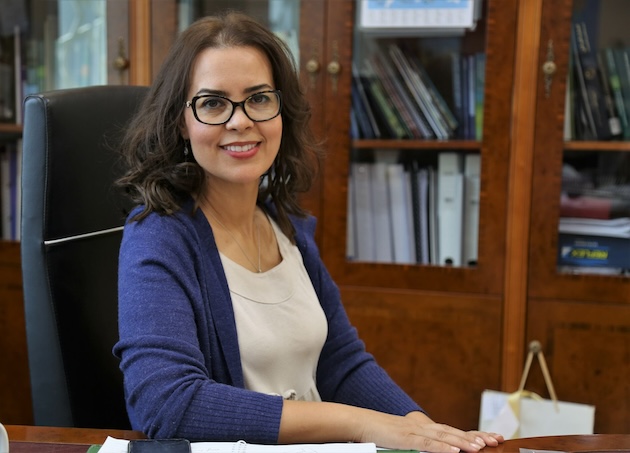
Dr Ismahane Elouafi, the CGIAR’s newly appointed Executive Managing Director. Credit: FAO

Dr Ismahane Elouafi, the CGIAR’s newly appointed Executive Managing Director. Credit: FAO

During her inaugural field visit to an IITA center in Ibadan, Nigeria, alongside Dr Simeon Ehui, IITA’s Director General and CGIAR Regional Director for Continental Africa, she oversaw extensive discussions on transforming food systems and leveraging science and technology.

“At COP28 in Dubai, UAE, there was high-level recognition and a wonderful spotlight on science and innovation. CGIAR has an opportunity to represent science and innovation at large, representing the whole community at large. We can cut down poverty and stop malnutrition, and we have the tools—we just need to bring them to the farmers,” she said.

CGIAR continues to create linkages between agricultural and tech stakeholders, emphasizing digital innovation for agricultural development. CGIAR-IITA explores leveraging ICTs to tackle agricultural challenges, boost productivity, ensure sustainability, and enhance food security, featuring presentations, discussions, workshops, and networking across sectors.

There was a significant focus on the CGIAR TAAT model as a tool to use technology to address Africa’s worsening food crisis. TAAT Technologies for African Agricultural Transformation (TAAT) is a key flagship programme of the African Development Bank’s Feed Africa strategy for 2016 to 2025.

“We have the technology, and all hands are on deck to ensure that no one sleeps hungry. There are severe food insecurities on the continent today, deepening rural poverty and malnutrition. We have the capacity to achieve food security,” Ehui emphasized.

IITA’s Dr Kenton Dashiell spoke about TAAT in the context of strategic discussions around policy and government engagement. Emphasizing the need for the government, private sector, and other key stakeholders to create effective and efficient food systems transformation paths. As a major continent-wide initiative designed to boost agricultural productivity across the continent by rapidly delivering proven technologies to millions of farmers, TAAT can deliver a food-secure continent.

Elouafi stressed the need to ensure that technology is in the hands of farmers. in line with TAAT, which aims to double crop, livestock, and fish productivity by expanding access to productivity-increasing technologies to more than 40 million smallholder farmers across Africa by 2025. In addition, TAAT seeks to generate an additional 120 million metric tons.

IITA’s Bernard Vanlauwe spoke about sustainable intensification with the aim of increasing production and improving the livelihoods of smallholder farmers in sub-Saharan Africa. Farmers are increasingly dealing with higher temperatures and shorter rainy seasons, affecting the production of staple foods such as maize. Further stressing the need for improved crop varieties to meet Africa’s pressing food insecurities.

Elouafi stressed that the needs are great, in particular, eliminating extreme poverty, ending hunger and malnutrition, turning Africa into a net food exporter, and positioning Africa at the top of the agricultural value chains. She emphasized the need to leverage progress made thus far, building on the commitments of Dakar 1, the 1st Summit of the World’s Regions on Food Security held in Dakar in January 2010, where representatives and associations of regional governments from the five continents noted that the commitments made at the World Food Summit in 2002 had had little effect and that the food crisis had only worsened.

Elouafi said the UN Food System Summit in 2021 and the 2023 Dakar 2 Summit, with an emphasis on building sustainable food systems and aligning government resources, development partners, and private sector financing to unleash Africa’s food production potential, were important meetings to build on. The commitments made at these high-level meetings had already created a pathway towards ending hunger, food insecurity, and malnutrition and transforming food systems to meet the most pressing food needs today.

It is estimated that Africa’s agricultural output could increase from USD 280 billion per year to USD 1 trillion by 2030. The visit and ensuing discussions highlighted how investing in raising agricultural productivity, supporting infrastructure, and climate-smart agricultural systems, with private sector investments, government support, and resources from multinational financial institutions, all along the food value chain, can help turn Africa into a breadbasket for the world. Private sector actors will be particularly urged to commit to the development of critical value chains.

IPS UN Bureau Report

  Source

Amidst a Horrendous 2023, Civil Society is Fighting Back Society

Armed Conflicts, Biodiversity, Civil Society, Climate Change, Climate Change Justice, COP28, Economy & Trade, Education, Environment, Featured, Global, Green Economy, Headlines, Health, Human Rights, TerraViva United Nations

Opinion

TORONTO, Canada, Dec 22 2023 (IPS) – The year 2023 has brought so much tragedy, with incomprehensible loss of lives, whether from wars or devastating ‘natural’ disasters, while our planet has seen yet more records broken as our climate catastrophe worsens.

And so as the clock ticks towards the (mostly western) New Year, readers are traditionally subjected by media outlets like ours to the ‘yearender’ – usually a roundup of main events over the previous 12 months, one horror often overshadowed by the next.


Farhana Haque Rahman

So forgive us if for 2023 IPS takes a somewhat different approach, highlighting how humanity can do better, and how the big depressing picture should not obscure the myriad small but positive steps being taken out there.

COP28, the global climate conference held this month in Dubai, could neatly fit the ‘big depressing’ category. Hosted by a petrostate with nearly 100,000 people registered to attend, many of them lobbyists for fossil fuels and other polluters, it would be natural to address its outcomes with scepticism.

However, while Yamide Dagnet, Director for Climate Justice at the Open Society Foundations, described COP28 as “imperfect”, she said it also marked “an important and unprecedented step forward in our ‘course correction’ for a just transition towards resilient and greener economies.”

UN climate chief Simon Stiell acknowledged shortcomings in the compromise resolutions on fossil fuels and the level of funding for the Loss and Damages Fund. But the outcome, he said, was also the “beginning of the end” for the fossil fuel era.

Imperfect as it was and still based on old structures, COP28 hinted at the possible: a planetary approach to governance where common interests spanning climate, biodiversity and the whole health of Earth outweigh and supersede the current dominant global system of rule by nation states.

As we have tragically witnessed in 2023, the existing system – as vividly reflected in the repetitive stalemate among the five veto-bearing members of the UN Security Council – is failing to find resolution to the major conflicts of this year, Russia-Ukraine and Israel-Gaza. Not to mention older and half-forgotten conflicts in places like Myanmar (18.6 million people in need of humanitarian aid) and in eastern Democratic Republic of Congo (seven million displaced).

The unrestrained destruction of Gaza and the disproportionate killings of over 17,000, (now the death toll is “at least 20,000 people” according to Palestinian officials) mostly civilians– in retaliation for 1,200 killings by Hamas and 120 hostages in captivity– have left the Palestinians in a state of deep isolation and weighed down by a feeling of being deserted by the world at large.

The United Nations and the international community have remained helpless– with UN resolutions having no impact– while American pleas for restrained aerial bombings continue to be ignored by the Israelis in an act of defiance, wrote IPS senior journalist Thalif Deen.

The hegemony of the nation-state system is surely not going to disappear soon but – without wanting to sound too idealistic — its foundations are being chipped away by civil society where interdependence prevails over the divide and rule of the existing order. And so for a few examples encountered in our reporting:

CIVICUS Lens, standing for social justice and rooted in the global south, offers analysis of major events from a civil society perspective, such as its report on the security crisis gripping Haiti casting doubt over the viability of an international plan to dispatch a Kenya-led police contingent.

Education Cannot Wait, a global fund for education in emergencies and protracted crises, lobbied at COP28 for a $150 million appeal to support school-aged children facing climate shocks, such as the devastating drought in Somalia and Ethiopia, and floods in Pakistan where many of the 26,000 schools hit in 2022 remain closed.

Leprosy, an ancient but curable disease, had been pegged back in terms of new case numbers but the onset of the COVID-19 pandemic in 2020 made it harder for patients to get treatment and for new cases to be reported. Groups such as the Sasakawa Health Foundation are redoubling efforts to promote early detection and treatment.

With 80 percent of the world’s poorest living closer to the epicenters of climate-induced disasters, civil society is hammering at the doors of global institutions to address the challenges of adaptation and mitigation.

Lobbying on the sidelines of COP28 in Dubai was activist Joshua Amponsem, co-director of the Youth Climate Justice Fund who questioned why weather-resilient housing was not yet a reality in Mozambique’s coastal regions despite the increasing ferocity of tropical cyclones.

“My key message is really simple. The clock is ticking for food security in Africa,” Dr Simeon Ehui told IPS as the newly appointed Director General of the International Institute of Tropical Agriculture which works with partners across sub-Saharan Africa to tackle hunger, poverty and natural resource degradation.

Dr Alvaro Lario, President of the International Fund for Agricultural Development (IFAD), which has received record-breaking pledges in support of its largest ever replenishment, warns that under current trends 575 million people will still be living in extreme poverty in 2030.

“Hunger remains a political issue, mostly caused by poverty, inequality, conflict, corruption and overall lack of access to food and resources. In a world of plenty, which produces enough food to feed everyone, how can there be hundreds of millions going hungry?” he asked.

Empowering communities in a bid to protect and rejuvenate the ecosystems of Pacific communities is the aim of the Unlocking Blue Pacific Prosperity conservation effort launched at COP28 by Palau’s President Surangel Whipps who noted that the world was not on track to meet any of the 17 sustainable development goals or climate goals by 2030.

A scientist with a life-long career studying coral reefs, David Obura was appointed this year as the new chair of IPBES, the Intergovernmental Science-Policy Platform on Biodiversity and Ecosystem Services (IPBES).

We really have reached planetary limits and I think interest in oceans is rising because we have very dramatically reached the limits of land,” says Dr Obura, “What the world needs to understand is how strongly nature and natural systems, even when highly altered such as agricultural systems, support people and economies very tangibly. It’s the same with the ocean.”

An ocean-first approach to the fight against climate change is also the pillar of a Dalhousie University research program, Transforming Climate Action, launched last May and funded by the Canadian government. Traditional knowledges of Indigenous People will be a focus.

As Max Roser, an economist making academic research accessible to all, reminds us: for more people to devote their energy to making progress tackling large global problems, we should ensure that more people know that it is possible.

Focusing on the efforts of civil society and projecting hope amidst all the heartbreak of 2023 might come across as futile and wasted, but in its coverage IPS will continue to highlight efforts and successes, big and small, that deserve to be celebrated.

Farhana Haque Rahman is the Executive Director of IPS Inter Press Service Noram and Senior Vice President of IPS; she served as the elected Director General of IPS from 2015 to 2019. A journalist and communications expert who lived and worked in Africa, Asia, Europe and North America, she is a former senior official of the United Nations Food and Agriculture Organization FAO and the International Fund for Agricultural Development IFAD.

IPS UN Bureau

  Source

How to Defend the Environment and Survive in the Attempt, as a Woman in Mexico

Active Citizens, Biodiversity, Civil Society, Climate Action, Conservation, Crime & Justice, Editors’ Choice, Environment, Featured, Gender, Headlines, Human Rights, Latin America & the Caribbean, Regional Categories, TerraViva United Nations, Water & Sanitation, Women & Climate Change

Human Rights

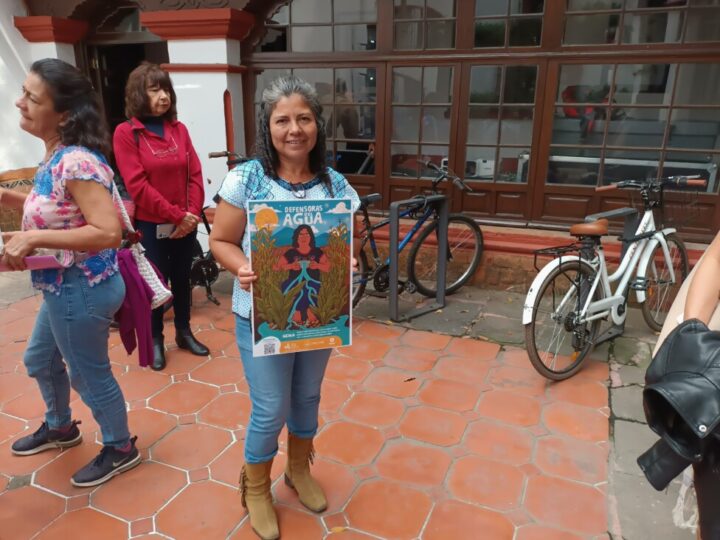
Dozens of women environmentalists participated in Mexico City in the launch of the Voices of Life campaign by eight non-governmental organizations on Oct. 12, 2023, which brings together hundreds of activists in five of the country's 32 states. CREDIT: Emilio Godoy / IPS

Dozens of women environmentalists participated in Mexico City in the launch of the Voices of Life campaign by eight non-governmental organizations on Oct. 12, 2023, which brings together hundreds of activists in five of the country’s 32 states. CREDIT: Emilio Godoy / IPS

MEXICO CITY, Oct 24 2023 (IPS) – The defense of the right to water led Gema Pacheco to become involved in environmental struggles in the southern Mexican state of Oaxaca, an area threatened by drought, land degradation, megaprojects, mining and deforestation.


Care “means first and foremost to value the place where we live, that the environment in which we grow up is part of our life and on which our existence depends,” said Pacheco, deputy municipal agent of San Matías Chilazoa, in the municipality of Ejutla de Crespo, some 355 kilometers south of Mexico City.

“We are in the phase of seeing how the Escazú Agreement will be applied. The most important thing is effective implementation. It is something new and it will not be ready overnight.” — Gisselle García

A biologist by profession, the activist is a member of the Local Committee for the Care and Defense of Water in San Matías Chilazoa, which belongs to the Coordinating Committee of Peoples United for the Care and Defense of Water (Copuda).

The local population is dedicated to growing corn, beans and chickpeas, an activity hampered by the scarcity of water in a country that has been suffering from a severe drought over the past year.

To deal with the phenomenon, the community created three water reservoirs and infiltration wells to feed the water table.

“Women’s participation has been restricted, there are few women in leadership positions. The main challenge is acceptance. There is little participation, because they see it as a waste of time and it is very demanding,” lamented Pacheco.

In November 2021, the 16 communities of Copuda obtained the right to manage the water resources in their territories, thus receiving water concessions.

But women activists like Pacheco face multiple threats for protecting their livelihoods and culture in a country where such activities can pose a lethal risk.

For this reason, eight organizations from five Mexican states launched the Voices of Life campaign on Oct. 12, involving hundreds of habitat protectors, some of whom came to the Mexican capital for the event, where IPS interviewed several of them.

Involvement in the defense of water led Gema Pacheco to become an environmental activist, participating in the Voices of Life campaign in Mexico, which seeks to bring visibility and respect to this high-risk activity in Mexico. CREDIT: Emilio Godoy / IPS

Involvement in the defense of water led Gema Pacheco to become an environmental activist, participating in the Voices of Life campaign in Mexico, which seeks to bring visibility and respect to this high-risk activity in Mexico. CREDIT: Emilio Godoy / IPS

The initiative seeks to promote the right to a healthy environment, facilitate environmental information, protect and recognize people and organizations that defend the environment, as well as learn how to use information and communication technologies.

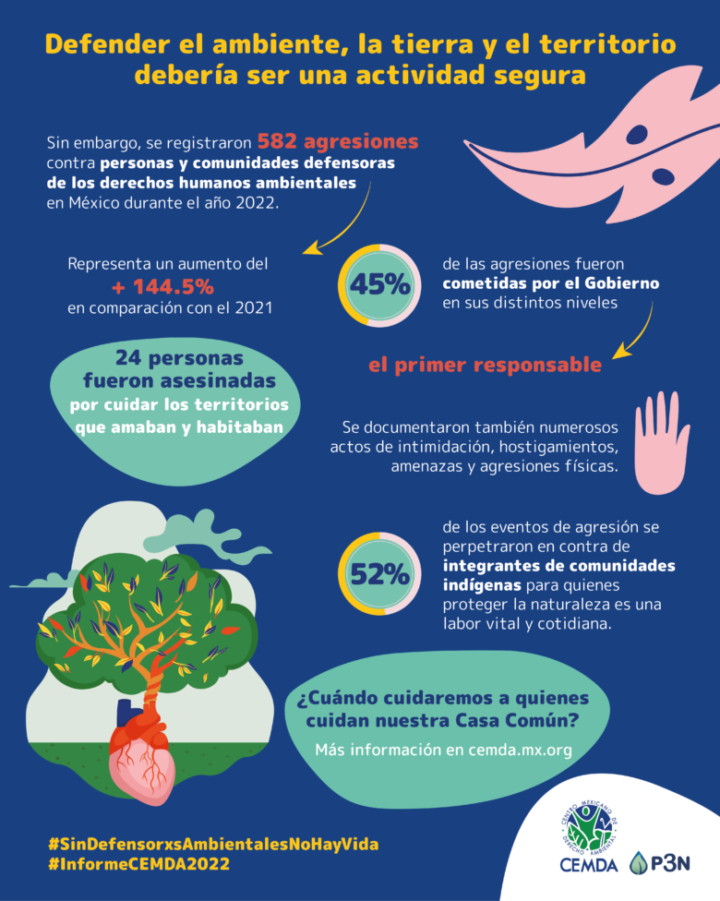
In 2022, Mexico ranked number three in Latin America in terms of murders of environmental activists, with 31 killed (four women and 16 indigenous people), behind Colombia (60) and Brazil (34), out of a global total of 177, according to the London-based non-governmental organization Global Witness.

A year earlier, this Latin American country of almost 129 million inhabitants ranked first on the planet, with 54 killings, so 2022 reflected an improvement.

“The situation in Mexico remains dire for defenders, and non-fatal attacks, including intimidation, threats, forced displacement, harassment and criminalization, continued to greatly complicate their work,” the report says.

The outlook remains serious for activists, as the non-governmental Mexican Center for Environmental Law (Cemda) documented 582 attacks in 2022, more than double the number in 2021. Oaxaca, Mexico City and the northern state of Chihuahua reported the highest number of attacks.

Urban problems

The south of Mexico City is home to the largest area of conservation land, but faces growing threats, such as deforestation, urbanization and irregular settlements.

Protected land defines the areas preserved by the public administration to ensure the survival of the land and its biodiversity.

Social anthropologist Tania Lopez said another risk has now emerged, in the form of the new General Land Use Planning Program 2020-2035 for the Mexican capital, which has a population of more than eight million people, although Greater Mexico City is home to more than 20 million.

“There was no public consultation of the plan based on a vision of development from the perspective of native peoples. In addition, it encourages real estate speculation, changes in land use and invasions,” said López, a member of the non-governmental organization Sembradoras Xochimilpas, part of the Voices of Life campaign.

Mexico is one of the most dangerous countries in the world for environmental defenders. In 2022, 31 activists were murdered, the third highest number in the region behind Colombia and Brazil. CREDIT: Cemda

Mexico is one of the most dangerous countries in the world for environmental defenders. In 2022, 31 activists were murdered, the third highest number in the region behind Colombia and Brazil. CREDIT: Cemda

Apart from the failure to carry out mandatory consultation processes, activists point out irregularities in the governmental Planning Institute and its technical and citizen advisory councils, because they are not included as members.

The conservation land, which provides clean air, water, agricultural production and protection of flora and fauna, totals some 87,000 hectares, more than half of Mexico City.

The plan stipulates conservation of rural and urban land. But critics of the program point out that the former would lose some 30,000 hectares, destined for rural housing.

The capital’s legislature is debating the program, which should have been ready by 2020.

Gisselle García, a lawyer with the non-governmental Interamerican Association for Environmental Defense, said attacks on women activists occur within a patriarchal culture that limits the existence of safe spaces for women’s participation in the defense of rights.

“It’s an entire system, which reflects the legal structure. If a woman files a civil or criminal complaint, she is not heard,” she told IPS, describing the special gender-based handicaps faced by women environmental defenders.

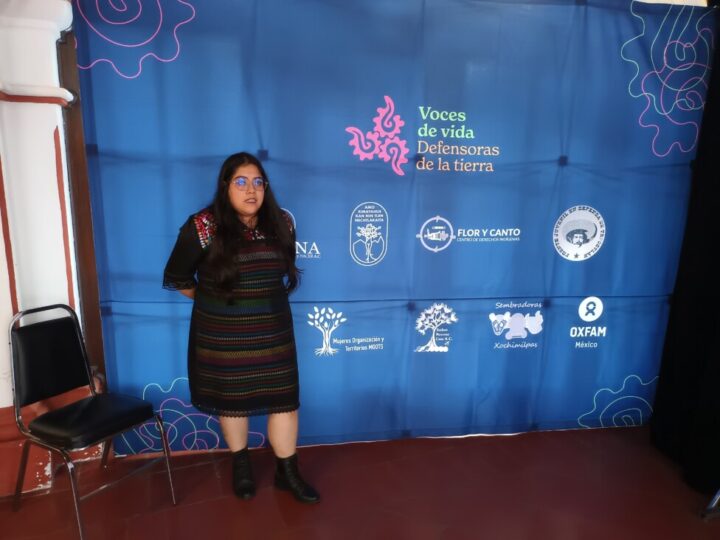
Social anthropologist Tania López is one of the members of the Voices of Life campaign, launched by eight non-governmental organizations on Oct. 12, 2023 to highlight the work of women environmental defenders in Mexico. CREDIT: Emilio Godoy / IPS

Social anthropologist Tania López is one of the members of the Voices of Life campaign, launched by eight non-governmental organizations on Oct. 12, 2023 to highlight the work of women environmental defenders in Mexico. CREDIT: Emilio Godoy / IPS

Still just an empty promise

This risky situation comes in the midst of preparations for the implementation of the Regional Agreement on Access to Information, Public Participation and Justice in Environmental Matters in Latin America and the Caribbean, known as the Escazú Agreement, an unprecedented treaty that aims to mitigate threats to defenders of the environment, in force since April 2021.

Article 9 of the Agreement stipulates the obligation to ensure a safe and enabling environment for the exercise of environmental defense, to take protective or preventive measures prior to an attack, and to take response actions.

The treaty, which takes its name from the Costa Rican city where it was signed, guarantees access to environmental information and justice, as well as public participation in environmental decision-making, to protect activists.

The Escazú Agreement has so far been signed by 24 Latin American and Caribbean countries, 15 of which have ratified it as well.

But its implementation is proceeding at the same slow pace as environmental protection in countries such as Mexico, where there are still no legislative changes to ensure its enforcement.

In August, the seven-person Committee to Support the Implementation of and Compliance with the Escazú Agreement took office. This is a non-contentious, consultative subsidiary body of the Conference of the Parties to the agreement to promote and support its implementation.

Meanwhile, in Mexico, the Escazú National Group, made up of government and civil society representatives, was formed in June to implement the treaty.

During the annual regional Second Forum of Human Rights Defenders, held Sept. 26-28 in Panama, participants called on the region’s governments to strengthen protection and ensure a safe and enabling environment for environmental protectors, particularly women.

While the Mexican women defenders who gathered in Mexico City valued the Escazú Agreement, they also stressed the importance of its dissemination and, even more so, its proper implementation.

Activists Pacheco and Lopez agreed on the need for national outreach, especially to stakeholders.

“We need more information to get out, a lot of work needs to be done, more people need to know about it,” said Pacheco.

The parties to the treaty are currently discussing a draft action plan that would cover 2024 to 2030.

The document calls for the generation of greater knowledge, awareness and dissemination of information on the situation, rights and role of individuals, groups and organizations that defend human rights in environmental matters, as well as on the existing instruments and mechanisms for prevention, protection and response.

It also seeks recognition of the work and contribution of individuals, groups and organizations that defend human rights, capacity building, support for national implementation and cooperation, as well as a follow-up and review scheme for the regional plan.

García the attorney said the regional treaty is just one more tool, however important it may be.

“We are in the phase of seeing how the Escazú Agreement will be applied. The most important thing is effective implementation. It is something new and it will not be ready overnight,” she said.

As it gains strength, the women defenders talk about how the treaty can help them in their work. “If they attack me, what do I do? Pull out the agreement and show it to them so they know they must respect me?” one of the women who are part of the Voices of Life campaign asked her fellow activists.

  Source

Toothless Global Financial Architecture Fuelling Africa’s Climate Crisis

Africa, Biodiversity, Climate Action, Climate Change, Climate Change Finance, Climate Change Justice, Conferences, Editors’ Choice, Environment, Featured, Food and Agriculture, Headlines, Humanitarian Emergencies, Sustainable Development Goals, TerraViva United Nations

Climate Change Justice

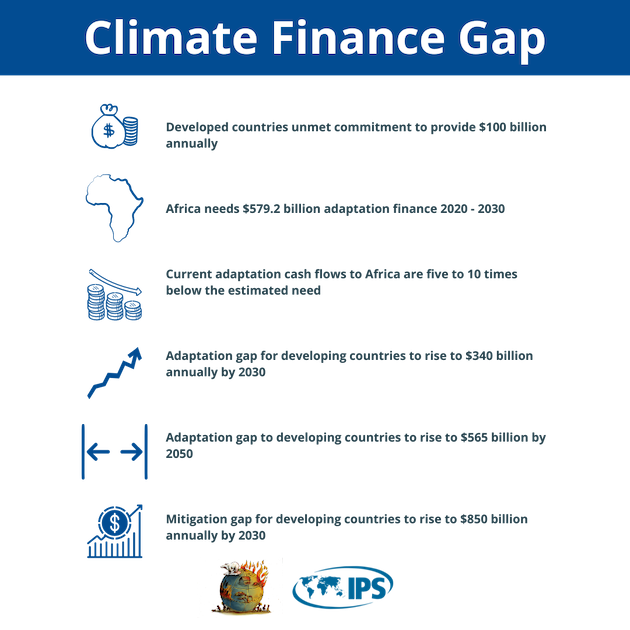
Africa needs approximately USD 579.2 billion in adaptation finance over the period 2020 to 2030, and yet the current adaptation flows are five to 10 times below estimated needs.
 

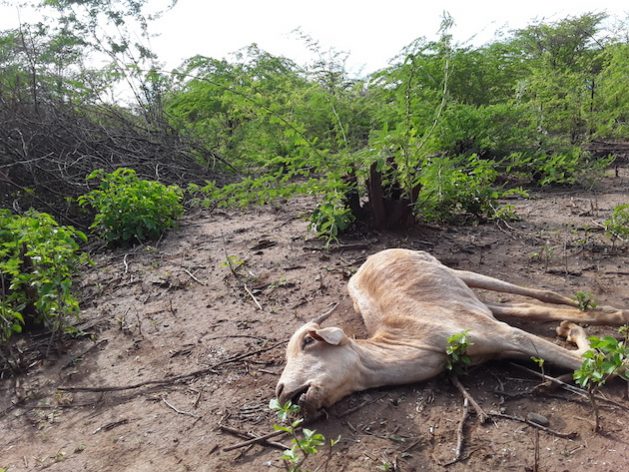
This goat died of starvation while surrounded by an inedible invasive plant. Lives hang in the balance as Kenya’s dryland is ravaged by a severe prolonged drought. Credit: Joyce Chimbi/IPS

This goat died of starvation while surrounded by an inedible invasive plant. Lives hang in the balance as Kenya’s dryland is ravaged by a severe prolonged drought. Credit: Joyce Chimbi/IPS

NAIROBI, Sep 5 2023 (IPS) – As thousands convene in Kenya’s capital, Nairobi, for the Africa Climate Summit, the first time the African Union has summoned its leaders to solely discuss climate change under the theme ‘Driving Green Growth and Climate Finance Solutions for Africa and the World’, the backdrop is a country on the frontlines of a climate crisis.


The severe, sharp effects of climate change are piercing the very heart of an economy propped up by rainfed agriculture and tourism – sectors highly susceptible to climate change. After five consecutive failed rainy seasons, more than 6.4 million people in Kenya, among them 602,000 refugees, need humanitarian assistance – representing a 35 per cent increase from 2022.

It is the highest number of people in need of aid in more than ten years, says Ann Rose Achieng, a Nairobi-based climate activist. She tells IPS that Kenya is hurtling full speed towards a national disaster in food security as “at least 677,900 children and 138,800 pregnant and breastfeeding women in Kenya’s arid and semi-arid regions alone are facing acute malnutrition. Nearly 70 per cent of our wildlife was lost in the last 30 years.”

Despite Kenya contributing less than 0.1 per cent of the global greenhouse gas emissions per year, the country’s pursuit of a low carbon and resilient green development pathway produced a most ambitious Nationally Determined Contribution (NDC) to cut greenhouse gasses by 32 per cent by 2030 in line with the Paris Agreement.

But as is the case across Africa, there are no funds to actualise these lofty ambitions. Africa needs approximately USD 579.2 billion in adaptation finance over the period 2020 to 2030, and yet the current adaptation flows to the continent are five to ten times below estimated needs. Globally, the estimated gap for adaptation in developing countries is expected to rise to USD 340 billion per year by 2030 and up to USD 565 billion by 2050, while the mitigation gap is at USD 850 billion per year by 2030.

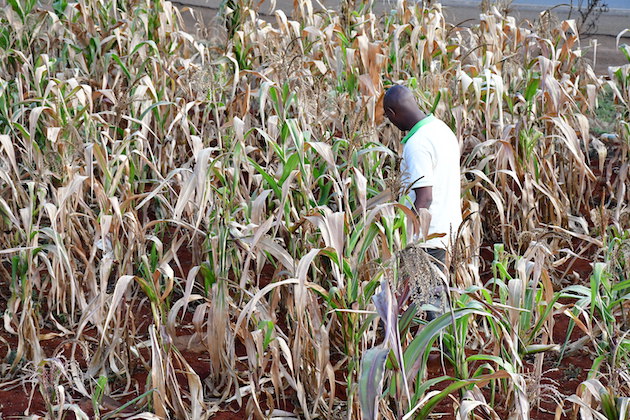
After five consecutive failed rainy seasons, food insecurity is expected to escalate as maize crop has failed to flourish due to erratic weather patterns. Credit: Joyce Chimbi/IPS

After five consecutive failed rainy seasons, food insecurity is expected to escalate as maize crop has failed to flourish due to erratic weather patterns. Credit: Joyce Chimbi/IPS

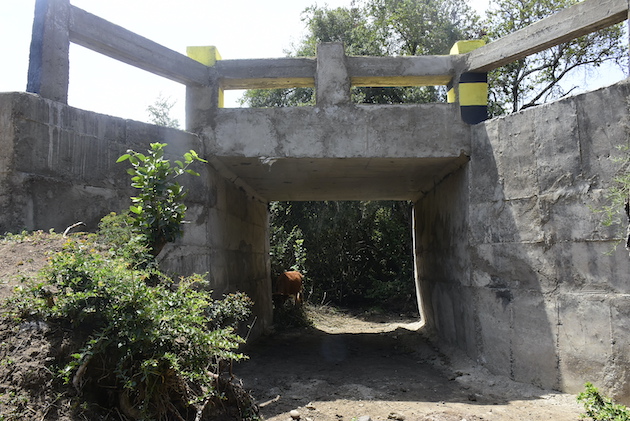
As dams and rivers dry up, Kenya will continue to be on the frontlines of a climate crisis unless climate change adaptation and mitigation efforts are escalated. Credit: Joyce Chimbi/IPS

As dams and rivers dry up, Kenya will continue to be on the frontlines of a climate crisis unless climate change adaptation and mitigation efforts are escalated. Credit: Joyce Chimbi/IPS

Frederick Kwame Kumah, Vice President of Global Leadership African Wildlife Foundation, tells IPS a big part of the problem is Africa’s burgeoning gross public debt which increased from 36 per cent of Gross Domestic Product (GDP) to 71.4 per cent of GDP between 2010 and 2020 – a drag on its development progress and a disincentive for climate finance flows.

“There is a concern that climate finance, if and when provided, will be used to first service Africa’s debt burden. The first step to addressing Africa’s Climate Finance must be action towards debt relief for Africa. Freeing up debt servicing arrangements will release resources for continued development and climate finance purposes,” Kumah explains.

He says there is an urgent need to challenge the existing unfair paradigm for financing by developing countries. It is very expensive for developing countries to borrow for development purposes. Africa must then leverage its natural capital towards seeking innovative financing mechanisms such as green bonds and carbon credits to address its development and climate change challenges.

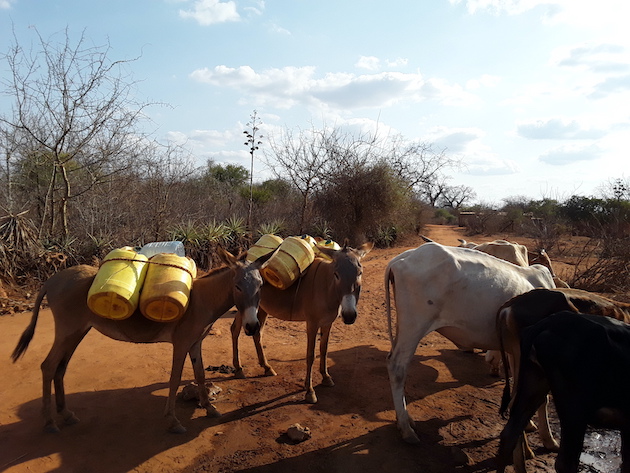
Nearly half, 23 out of 47 counties in Kenya, are classified as arid and semi-arid. Livelihoods are at risk as pastoralists are unable to cope with drastic weather changes. Credit: Joyce Chimbi/IPS

Nearly half, 23 out of 47 counties in Kenya, are classified as arid and semi-arid. Livelihoods are at risk as pastoralists are unable to cope with drastic weather changes. Credit: Joyce Chimbi/IPS

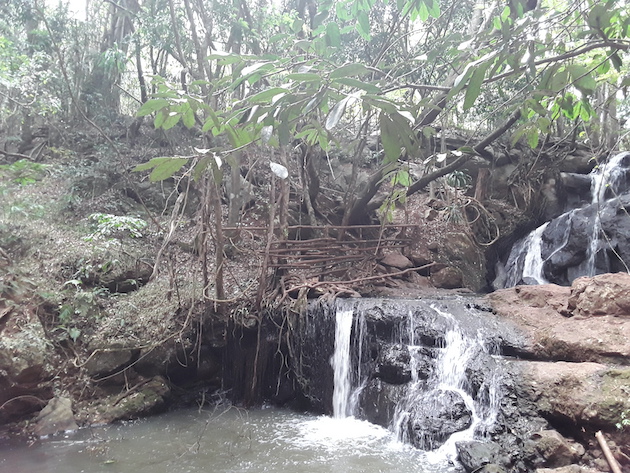
This waterfall is on the verge of drying up. Kenya's economy is heavily dependent on tourism and agriculture. The two sectors are highly susceptible to climate change. Credit: Joyce Chimbi/IPS

This waterfall is on the verge of drying up. Kenya’s economy is heavily dependent on tourism and agriculture. The two sectors are highly susceptible to climate change. Credit: Joyce Chimbi/IPS

“Climate finance was, as expected, a key part of COP27. It is a grave concern for Africa that developed countries’ commitment to provide $100 billion annually has yet to be met, even though the need for finance is becoming increasingly obvious. In COP27, we noted that new climate finance pledges were more limited than expected. Countries such as those in Africa are still waiting for previous pledges to be fulfilled,” says Luther Bois Anukur, Regional Director, IUCN (International Union for Conservation of Nature).

Meanwhile, Anukur tells IPS negotiations on important agenda items, most notably the new finance target for 2025, stalled. In COP27, Parties concentrated on procedural issues – deferring important decisions about the amount, timeframe, sources, and accountability mechanisms that may be relevant to a new finance goal in the future. African countries and many other vulnerable countries are in the fight for our lives, and sadly they are losing.

Anukur stresses that Africa’s natural resources are depleted, eroded, and biodiversity lost due to extreme effects of climate change leading to loss of lives and ecosystem services and damage to infrastructure at an alarming rate. Yet climate finance pledges have not materialised. The Africa Climate Summit should be the platform for Africa and developing partners to address existing finance gaps with clear programmatic and project approaches.

Africa must use the Summit to assess and prepare their position for the COP28 in the United Arab Emirates towards strengthening partnerships for the delivery of desired climate finance. Kumah adds that the principle of equal but differentiated responsibilities of nations must be adhered to for climate justice and to enable developing countries, who are least responsible for the effects of climate, to have much-needed resources to cope and adapt to biodiversity loss and climate change.

“In that respect, the creation of a dedicated funding mechanism to address loss and damage and another for adaptation and mitigation to redress historical and continued inequities in contributions towards biodiversity loss and climate change. We must rethink how private investments can be reshaped and harnessed for the benefit of biodiversity and climate action,” Kumah expounds.

“Private investments can be scaled through green bonds, carbon markets, sustainable agricultural, forestry and other productive sector supply chains.  Transformative financing architecture is necessary at the domestic and international levels to bring the private and public sectors together to secure the critical backbone of Africa’s natural infrastructure.”

Climate finance gap. Graphic: Joyce Chimbi & Cecilia Russell

Climate finance gap. Graphic: Joyce Chimbi & Cecilia Russell

While developing countries submitted revised and ambitious National Adaptation Plans and NDCs as requested, Anukur says complicated processes to access financing for their climate actions persist. Stressing the need for reforming the international financial architecture, starting with multilateral development banks.

“The 2023 Summit for New Global Financing Pact held in Paris committed to a coalition of 16 philanthropic organizations to mobilize investment and support UN’s SDG priorities by unlocking new investment for climate action in low- and middle-income countries while reducing poverty and inequality,” Anukur observes.

Civil society organizations and activists such as Achieng have expressed concerns that such announcements are insufficient considering the scale of the challenges facing planet Earth. The Summit will have failed if the global financial architecture is not overhauled in line with the needs of the African continent, she says.

Anukur says the Summit must therefore propel Africa to new heights of climate financing to help reduce Africa’s vulnerability to climate change and increase its resilience and adaptive capacity in line with the Global Goal on Adaptation. Ultimately expressing optimism that the opportunity to unlock the potential of climate financing – breaking the shackles of debt and building a climate-resilient and prosperous Africa is, at last, in sight.

IPS UN Bureau Report


Civil Society Organizations Unite to Urge Public Development Banks to Change the Way Development Is Done

Biodiversity, Civil Society, Climate Change, Development & Aid, Economy & Trade, Energy, Environment, Green Economy, Headlines, Human Rights, Latin America & the Caribbean, TerraViva United Nations

Opinion

CARTAGENA, Colombia, Sep 4 2023 (IPS) – In the midst of a complex web of crises, spanning climate change, biodiversity depletion, constraints on civic space and mounting debt burdens, civil society organizations and human rights defenders from over 50 countries have united their voices to call for immediate and impactful action from Public Development Banks (PDBs).


The global coalition’s message is clear: when it comes to financing for development, principles of rights, justice, sustainability, transparency, accountability and dignity for all cannot remain mere slogans. They must form the core of all projects undertaken by all Public Development Banks.

The Finance in Common Summit has become a pivotal platform for Public Development Banks from around the world. The fact that this year’s summit is taking place in Cartagena, Colombia, the deadliest country in the world in 2022 for human rights, envrionmental and indigenous activists, development banks must acknowledge and integrate the protection of human rights into their projects.

“Development banks are advocating to play an even bigger role in the global economy. But are they truly fit for this purpose? Unfortunately, the stories of communities around the world show us that development banks are failing to address the root causes of the very problems they claim to solve. We need to hold them accountable for this,” says Ivahanna Larrosa, Regional Coordinator for Latin America at the Coalition for Human Rights in Development.

“When PDB projects cause harm to people and the environment, PDBs must remedy these harms. All PDBs should implement an effective accountability mechanism to address concerns with projects and should commit to preventing and fully remediating any harm to communities,” adds Stephanie Amoako, Senior Policy Associate at Accountability Counsel.

The ongoing crises demand a transformation in the quality of financing and a power shift to include the voices of communities. The existing financial architecture not only impedes governments’ ability to safeguard both their citizens and the environment but also contributes to the escalating issue of chronic indebtedness. Policy-based lending and conditionalities enforced by International Financial Institutions have steered countries toward privatization of essential services, reduced social spending and preferential treatment for the private sector. This burdens the population with higher taxes, inflation, and weakened social safety nets.

“The same multinational companies that have polluted and violated human rights in Latin America are now obtaining financing from development banks for energy transition projects. Another example is the development of the green hydrogen industry in Chile, which carries a very high environmental and social risk,” says Maia Seeger, director of the Chilean civil society organization Sustentarse.

Addressing these issues requires a comprehensive and sustainable transformation of the financial architecture as well as holistic reforms and synergies with civil society and communities. Environmental and neo-colonial debts need to be a thing of the past and equitable reforms the thing of the present.

Global civil society, in response to these challenges, demands bold and decisive actions in a collective declaration signed by over 100 organisations. The demands are the result of a 4-year process in which a coalition of civil society organisations has come together to call on all PDBs at the Finance in Common Summit to embrace tangible actions that genuinely prioritize and protect people.

Just last month we have seen that change is possible when communities are involved, as the people of Ecuador voted to ban oil drilling in one of the most biodiverse places on the planet, the Yasuní National Park in the Amazon rainforest.

“The global financial system needs not just a rethink but a surgical operation, and that requires bold action. Governments and institutions such as the Public Development Banks must cancel the debt of the countries that require it and put in place concrete and immediate measures to put an end to public financing of fossil fuels, to have financing based on subsidies so as not to fall into the debt trap once again. It is time for the rich countries, the biggest polluters and creditors, to offer real solutions to the multiple crises we are currently experiencing,” says Gaïa Febvre, International Policy Coordinator at Réseau Action climat France.

“Public and Multilateral Development Banks must divest from funding false climate solutions and projects that harm forests, biodiversity and communities. Instead, they should redirect finance to support gender just, rights based and ecosystems approaches that contribute to transformative changes leading to real solutions that address climate change, loss of biodiversity and create sustainable livelihoods for Indigenous Peoples, women in all their diversities and local communities. Public funds must support community governed agroecological practices, small scale farming and traditional animal rearing practices instead of large scale agri-business which perpetuates highly polluting and emitting industrial agriculture and unsustainable livestock production, the root cause for deforestation and food insecurity,” adds Souparna Lahiri, Senior Climate and Biodiversity Policy Advisor at the Global Forest Coalition (GFC).

The call to action emphasizes that achieving the Sustainable Development Goals (SDGs), effective climate action aligned with the Paris Agreement and successful implementation of the Kunming-Montreal Global Biodiversity Framework require Public Development Banks to pivot from a top-down profit-driven approach to one that prioritizes community-led involvement and human rights-based approaches.

“It is important that civil society participation be strengthened at the Finance in Common Summit (FICS). In previous years, civil society has been sidelined. Clearly, there is still some room for improvement for civil society participation to become truly meaningful. The lack of civil society representative on the opening panel this year is just one example of that. PDBs should promote and support an enabling environment for civil society and systematically incorporate civic space, human rights and gender analysis. This year, we are working towards ensuring that civil society voices, including those from communities are heard at the FICS. In collaboration with the FICS Secretariat, Forus seeks to establish a formal mechanism between civil society and PDBs and to ensure that civil society is recognised as an official engagement group,” says Marianne Buenaventura Goldman, Project Coordinator, Finance for Development at the global civil society network Forus.

IPS UN Bureau

  Source

Biodiversity Credits: Solution or Empty Promise for Latin America?

Biodiversity, Civil Society, Climate Action, Climate Change, Climate Change Finance, Conservation, Development & Aid, Economy & Trade, Editors’ Choice, Environment, Green Economy, Headlines, Latin America & the Caribbean, Natural Resources, Regional Categories, Sustainable Development Goals, TerraViva United Nations

Climate Change Finance

In the Bosque de Niebla, located in the department of Antioquia in northwestern Colombia, biodiversity bonds have emerged to push for protection of the ecosystem from threats such as deforestation and rising temperatures. But these instruments are still very green in Latin America. CREDIT: Courtesy of Terraso - Unlike offsets for environmental damage due to infrastructure projects, biodiversity credits are an economic instrument that can be used to finance actions that result in measurable positive outcomes through the issuance and sale of biodiversity units

In the Bosque de Niebla, located in the department of Antioquia in northwestern Colombia, biodiversity bonds have emerged to push for protection of the ecosystem from threats such as deforestation and rising temperatures. But these instruments are still very green in Latin America. CREDIT: Courtesy of Terraso

MEXICO CITY, Aug 28 2023 (IPS) – Located in northwestern Colombia, the Bosque de Niebla is home to 154 species of plants, 120 bird species, 21 species of mammals, 16 water springs and five hectares of wetlands.


Forming part of the Cuchilla Jardín-Támesis Integrated Management District in the department of Antioquia, the ecosystem provides water and climate regulation to the entire northwestern region of the country.

“Not all ecosystem services are the same, it has to be a very judicious system. And there have to be local regulations, from green taxonomies (classification of activities) to regulations. Therein lies the dilemma of where the sector has to go.” — Lía González

For this reason, an innovative financing scheme, biodiversity bonds, seeks to strengthen the protection of this area for 30 years, in the face of threats such as deforestation, drought and rising temperatures due to the climate crisis.

Private Colombian investor Terraso and Spanish carbon offset seller ClimateTrade, a climate solutions company that utilizes blockchain technology to facilitate large-scale decarbonization efforts through innovation, created voluntary biodiversity bonds for the Bosque de Niebla in May 2022.

The aim is to care for 340 hectares registered as a habitat bank by the Ministry of Environment and Sustainable Development of Colombia, one of the 10 most biologically diverse countries in the world.

Habitat banks are areas where conservation initiatives are aggregated and ecosystem preservation, enhancement or restoration actions are implemented to generate quantifiable biodiversity gains.

Each biodiversity credit represents 10 square meters of threatened, conserved or restored land. Technical, financial and legal guarantees will sustain the project for at least 30 years. Each bond, worth 30 dollars, corresponds to 30 years of conservation and/or restoration.

But the scheme raises concerns about the commercialization of wildlife and the pursuit of profit over ecological benefits.

Patricia Balvanera, an academic at the Institute for Research on Ecosystems and Sustainability of the public National Autonomous University of Mexico, said the financial market approach does not address the full spectrum of environmental, cultural and social issues, which can cloud the vision of the integral importance of nature.

“Other non-integrated values have to do with social, ethical principles that have developed around nature. We have bought ourselves an image as a factory of resources at the service of people and we have discarded the role of nature and society through a relationship of care and reciprocity,” she told IPS from the northern Mexican city of San Luis Potosí.

The expert is co-author of the study “Diverse values of nature for sustainability”, published on Aug. 9, which addresses a more holistic view of care.

Unlike offsets for environmental damage due to infrastructure projects, biodiversity credits are an economic instrument that can be used to finance actions that result in measurable positive outcomes through the issuance and sale of biodiversity units.

The buyers of biodiversity bonds gain in reputational aspects, by promoting the restoration and protection of ecosystems, and obtain funds by reselling the bonds, as it is a voluntary market.

These are different from carbon credits, where companies and individuals can buy the reduced emissions credits in what is known as the voluntary carbon market, to offset their polluting emissions: each one represents the elimination of one metric ton of carbon from the atmosphere.

For the carbon dioxide equivalent trapped and stored in ecosystems such as forests, project owners can issue certificates for sale in national and international markets to national and international corporations and individuals who want to reduce their polluting emissions.

Mangroves, such as these in the municipality of Paraíso in the southeastern Mexican state of Tabasco, are candidates for biodiversity bonds because of the services they provide and the need to protect them, like other ecosystems. But these credits still need international standards, verification and monitoring guidelines, as well as tangible results. CREDIT: Emilio Godoy / IPS - Unlike offsets for environmental damage due to infrastructure projects, biodiversity credits are an economic instrument that can be used to finance actions that result in measurable positive outcomes through the issuance and sale of biodiversity units

Mangroves, such as these in the municipality of Paraíso in the southeastern Mexican state of Tabasco, are candidates for biodiversity bonds because of the services they provide and the need to protect them, like other ecosystems. But these credits still need international standards, verification and monitoring guidelines, as well as tangible results. CREDIT: Emilio Godoy / IPS

On hold

In Honduras, a project similar to the Colombian one is advancing in Cusuco National Park, in the northwestern department of Cortés.

In the 22,200-hectare forest, decreed in 1987, the international alliance of environmental organizations rePlanet seeks the conservation of 1,883 hectares in 25 years in the face of threats such as deforestation and the risk to 24 species.

The project could issue bonds this year.

Lía González, director for Latin America of the Belgian social impact investment firm Incofin, said the instrument involves several challenges, such as monetization, assigning value to the blocks of land, the creation of standards for measurement, verification, monitoring and issuance, as well as the involvement of the communities.

“Not all ecosystem services are the same, it has to be a very judicious system. And there have to be local regulations, from green taxonomies (classification of activities) to regulations. Therein lies the dilemma of where the sector has to go,” she told IPS from Bogotá.

The executive stressed that the scheme should avoid the carbon credits model and learn from its mistakes, such as inaccurate calculation of carbon sequestration and violations of community rights.

In 2022, Incofin’s portfolio covered 111 clients in 14 Latin American countries for a total of 400 million dollars in segments such as sustainable agriculture and microfinance. In Colombia, it supported eight clients and totaled 44.3 million dollars.

The company focuses on medium-term investments, so that beneficiaries have an additional source of income within the area being protected or restored.

So far, so-called green bonds have fallen short in financing for the conservation of natural wealth and sustainable land use, according to a 2020 report by the Luxembourg Green Exchange and the Global Landscapes Forum, entitled: “How can Green Bonds catalyse investments in biodiversity and sustainable land-use projects?”

Colombia and Honduras are the countries that have moved forward with these instruments, because they have regulations and several financial instruments related to biodiversity, although bonds are still a rarity.

In this regard, the Organisation for Economic Co-operation and Development (OECD), which groups the world’s 38 most developed economies, noted in its 2021 report “Tracking Economic Instruments and Finance for Biodiversity” that, despite the progress made, the substantial potential depends on increasing the use and ambition of biodiversity-relevant economic instruments.

In its Sixth National Biodiversity Report 2020, Honduras recognized the need to improve the monetary and non-monetary valuation of environmental services.

Financing schemes are essential to the development of the United Nations Decade on Ecosystem Restoration 2021-2030, adopted by the U.N. General Assembly in 2019, which seeks to prevent, halt and reverse the degradation of terrestrial and marine ecosystems, to eradicate poverty, combat climate change and prevent the mass extinction of species.

Moving towards a take-off?

In order for it to be successful, the mechanism requires integrity of the projects and the inclusion of all stakeholders, according to the World Economic Forum, dedicated to multinational business lobbying.

The Colombian Bosque de Niebla initiative has already placed 62,063 credits and has 61,773 available.

The investor Terraso has seven other habitat banks in various areas of Colombia that could generate more bonds.

Balvanera warned of perverse incentives that could undermine protection.

“If we think about financial schemes, the link should not only be transactional. There must be involvement of different stakeholders who collectively identify the mechanism that promotes conservation, respects the vision of care and maintains the livelihoods of the inhabitants of these areas,” she said.

The academic argued that “this generates a circular system that connects forest protection, water care, food production and sustainable consumption.”

For her part, González was open to analyzing these investments.

“Water could be a viable focus for climate resilience and its impact on the region’s climate. We are interested in learning about monetization and that additional sources of income can benefit protection processes, so that it is complementary to what we do,” she said.

Last December, the 15th Conference of the Parties (COP15) to the Convention on Biological Diversity (CBD) adopted the Kunming-Montreal Global Biodiversity Framework, which includes cumulative biodiversity funding of at least 200 billion dollars by 2030 from public and private sources.

One of its goals is to encourage innovative schemes such as payment for environmental services, green bonds, offsets, biodiversity credits and benefit-sharing mechanisms that include environmental and social safeguards.

To meet these objectives, the 196 States Parties to the CBD created the Global Biodiversity Framework Fund, which is managed by the Global Environment Facility and whose governing council was approved in June in Brazil.

In addition, the agreement includes the complete or partial restoration of at least 30 percent of degraded terrestrial and marine ecosystems by 2030, as well as the reduction of the loss of areas of high biological importance to almost zero.

  Source