Tanzanian Students Drive Climate Action Through Tree Planting

Active Citizens, Africa, Civil Society, Climate Action, Climate Change, Climate Change Finance, Climate Change Justice, COP29, Development & Aid, Editors’ Choice, Education, Environment, Featured, Food and Agriculture, Headlines, Sustainable Development Goals, TerraViva United Nations, Youth Thought Leaders

Climate Change Justice

The act of planting trees offers more than shade and fruit. It symbolizes a deeper mission—restoring soil, preserving water, and, for these students, living in Tanzania’s northern Rorya district, delivering a form of climate justice. The reforestation efforts are in step with Tanzania’s broader plans to fortify its agriculture and water systems against the advancing climate crisis.

Faiza Ally, a pupil at Mtoni Primary School in Mara Region, plants a tree. Credit: Kizito Makoye/IPS

Faiza Ally, a pupil at Mtoni Primary School in Mara Region, plants a tree. Credit: Kizito Makoye/IPS

MUSOMA, Tanzania, Oct 30 2024 (IPS) – At Gabimori primary school, located at Nyamagaro ward in Tanzania’s northern Rorya district, a 15-year-old  Florence Sadiki kneels among polyethylene bags, carefully examining the seedlings she and her classmates  have nurtured from tiny sprouts “We’ve planted many trees to make our school look better and to help fight climate change,” she says.


Sadiki is part of an inspiring grassroots movement in the east African country where students, teachers, and community members team up to fight environmental degradation through reforestation. In Rorya district, nestled on the shores of Lake Victoria, rampant deforestation driven by charcoal production has left the land barren. But the efforts of school environmental clubs, supported by the Lake Community Program (LACOP), are working to repair the damage.

The reality in Rorya is grim. Erratic rainfall and prolonged droughts have changed swathes of once-fertile land into dry savannas, a trend that has only accelerated since the initiative began in 2022. Spearheaded by the global charity World Neighbors and the Lake Community Development Foundation (LACODEFO), this initiative empowers students to plant trees and learn the entire process of growing them.

Daudi Lyamuru speaks during a village meeting to mobilize the community to plant trees and support the climate mitigation project. Credit: Kizito Makoye/IPS

Daudi Lyamuru speaks during a village meeting to mobilize the community to plant trees and support the climate mitigation project. Credit: Kizito Makoye/IPS

Pupils at Mwenge primary school pose for a photo after tree planting exercise. Credit: Kizito Makoye/IPS

Pupils at Mwenge primary school pose for a photo after tree planting exercise. Credit: Kizito Makoye/IPS

“We’re teaching students to set up their own nurseries,” says Idrisa Lema, the project officer. “It’s not enough to hand out seedlings. They need to learn the whole process—choosing drought-resistant species, improving soil with organic manure, and using techniques like mulching.” This holistic approach  promotes sustainability and equips students with transferable skills that can help them for the rest of their lives.

In the past two years, the students have successfully planted 2,800 trees across five villages, a remarkable achievement that has already begun to bear fruit. Some once-dry water springs are starting to flow again. Yet challenges remain, particularly in Nyamagaro and neighboring Kyangasaga villages, where erratic rainfall and drought continue to hinder progress.

“Watering the trees is tough,” admits Alex Lwitiko, an environmental teacher at Rorya Girls’ School. “We’ve had to be strict with the students—otherwise, the trees wouldn’t survive.”

To adapt, students have switched to innovative solutions like bottle irrigation and even drilled water wells to support their young trees. “We focus on drought-resistant species and organic farming methods to give the trees the best chance,” Lwitiko says, emphasizing the program’s commitment to teaching sustainability.

Sadiki herself has learned to adapt. “I know how to graft trees and grow them in tough conditions now,” she says. “These trees are our future. They fight climate change, provide shade, and even improve soil fertility.”

A government official, Aloycia Mdeme, plants a tree to signify the launch of the school environmental club. Credit: Kizito Makoye/IPS

A government official, Aloycia Mdeme, plants a tree to signify the launch of the school environmental club. Credit: Kizito Makoye/IPS

Mtoni primary school pupils plant trees, this project has become central to the region's contribution to climate change mitigation. Credit: Kizito Makoye/IPS

Mtoni Primary School pupils plant trees; this project has become central to the region’s contribution to climate change mitigation. Credit: Kizito Makoye/IPS

In Tanzania, the impact of climate change is becoming increasingly severe. The country aims to reduce greenhouse gas emissions by 30 to 35 percent by 2030, a goal outlined in its Nationally Determined Contributions (NDCs). Despite its low carbon footprint—just 0.22 tons per capita compared to the global average of 7.58—Tanzania is reeling from climate-related disasters. Droughts, floods, and erratic weather patterns disrupt agriculture, drying up water sources and threatening economic stability.

For the rural poor, especially those who rely on farming—the backbone of the economy, making up 28 percent of GDP—the stakes are higher. But in places like Nyagisya and Rorya Girls Secondary Schools, students have taken up the fight. Through tree planting, they have become unlikely climate crusaders, tackling environmental degradation while improving food security and boosting local livelihoods.

The act of planting trees offers more than shade and fruit. It symbolizes a deeper mission—restoring soil, preserving water, and, for these students, delivering a form of climate justice. The reforestation efforts are in step with Tanzania’s broader plans to fortify its agriculture and water systems against the advancing climate crisis.

As these student-led initiatives flourish, they mirror Tanzania’s urgent call for global support. With limited resources, the country is striving to fulfill its commitments yet it recognizes that the battle against climate change is a collective endeavor that requires unity on a global scale.

Despite the promising efforts in Tanzania, significant challenges remain. One of the main hurdles is the unpredictability of funding. Tree-planting initiatives and climate adaptation programs require sustained financial support, but resources are often limited, local analysts say.

Without consistent funding, scaling up projects and maintaining long-term impact becomes difficult.

Community members plant trees in Rorya district. Credit: Kizito Makoye/IPS

Community members plant trees in Rorya district. Credit: Kizito Makoye/IPS

While students have embraced environmental stewardship, not all local households are on board. In some areas, livestock continues to graze on young saplings, undoing the hard work of reforestation. Additionally, cultural and economic pressures, such as the reliance on charcoal for income and firewood for cooking, contribute to ongoing deforestation, making conservation efforts harder.

Erratic rainfall and worsening drought conditions present another barrier. Water scarcity makes it harder to nurture newly planted trees, despite innovative solutions. These conditions also strain local agriculture, which many families depend on, increasing the urgency of balancing conservation with survival needs.

While Tanzania has ambitious climate goals, the gap between policy and practical implementation remains wide, particularly in rural areas where the effects of climate change are felt most acutely. 

At Gabimori Primary School, students have embraced their role as environmental stewards. “They’ve seen how conservation affects their daily lives,” says teacher Witinga Mattambo. “They now understand the link between the trees and the food they eat.”

The impact is vivid for students like Sadiki. “I never realized trees were this important,” she says. “They bring rain and improve our environment.”

For Lema, this is only the beginning. By fostering leadership skills and engaging the broader community, the program is building a new generation of Tanzanians dedicated to environmental protection. “We’ve even seen parents get involved,” Lwitiko says. “They’re starting to plant trees in their own yards.”

Still, the program faces hurdles. Some households allow their livestock to graze on young saplings, undoing the hard work of the students. “It’s frustrating,” admits Lwitiko, “but we’re making progress, step by step.”

Lema has ambitious plans to expand the initiative.

“We’re training students to pass on their knowledge,” he says. “As they move on, they’ll teach younger students, and we’ll spread this effort to other schools.” But scaling the program will require more funding.

“We’re working on securing more resources and partnering with local governments to enforce tree-planting bylaws,” Lema explains. There are also plans to set up household tree nurseries, allowing families to earn extra income while contributing to conservation.

For Sadiki, the program’s impact is lasting.

“We have the duty to plant trees and protect our environment. It’s something we’ll carry with us for the rest of our lives.”

IPS UN Bureau Report

  Source

Scientific Research Can Play a Key Role in Unlocking Climate Finance

Civil Society, Climate Change, Climate Change Finance, Climate Change Justice, COP29, Development & Aid, Editors’ Choice, Environment, Headlines, Latin America & the Caribbean, Sustainable Development Goals, TerraViva United Nations

Opinion

Climate finance will come under intense scrutiny during COP29, and its distribution aligned with scientific analysis of the impacts of climate change, but the methodology ignores the inequality in research networks of the Global South.

More than 700 authors representing 90 different nationalities written the AR6 for IPCC | Credit: Margaret López/IPS

More than 700 authors representing 90 different nationalities written the AR6 for IPCC | Credit: Margaret López/IPS

CARACAS, Oct 29 2024 (IPS) – Climate finance will be at the epicenter of the discussion at the UN Climate Change Conference 2024 (COP29). The focus will be on strengthening the fund and defining the conditions under which the countries of the Global South will be able to access this money. However, little is said about the scientific research that is required to gather the evidence and data to prove the loss and damage caused by the impact of climate change in developing countries.


One of the points under discussion is the need for countries of the Global South to provide comprehensive, scientifically backed reports on how they are being directly affected by the impacts of climate change. This requirement guarantees that money will flow to the most affected countries, but it ignores the inequality present in scientific research networks in the Global South.

Floods and the effects of storms or hurricanes are not the only topics we are discussing.  For example, will Latin American countries, such as Brazil or Argentina, be ready to provide data and evidence of how global warming precipitated an increase in dengue cases among their citizens in 2024?

Dengue cases in Latin America tripled compared to the same period in 2023. The Pan American Health Organization (PAHO) compiled reports of more than 12 million cases of dengue fever in the region up to middle October and, undoubtedly, this additional health burden is part of the less talked about impacts of climate change.

Research centers in Brazil or Argentina, two of the countries with the best scientific networks in the region, can surely deliver the studies to support a financial request to cover these health-related damages. But the scenario is very different if we look at the scientific networks of other Latin American countries such as Colombia, Ecuador, Peru, Paraguay, or my native Venezuela.

More than 3,000 Venezuelan scientists have left the country for lack of support and financial problems in its laboratories since 2009, according to the follow-up done by researcher Jaime Requena, a member of the Academy of Physical, Mathematical and Natural Sciences (Acfiman, its acronym in Spanish). This is equivalent to half of the Venezuelan scientific force, considering that Venezuela had 6,831 active researchers in the Researcher Promotion Program (PPI) in 2009.

Only 11 Venezuelan scientists participated as authors in all the reports of the Intergovernmental Panel on Climate Change (IPCC). In AR6, the most recent IPCC report, only three authors were Venezuelan.

Colombia, Peru, and Uruguay were also represented by three researchers in AR6, while other countries such as Paraguay and Bolivia did not even manage to add a scientist to the group of more than 700 authors.

Climatologist Paola Andrea Arias was part of the Colombian representation. She is one of those promoting that the IPCC broaden the diversity of authors in the next report on the effects of climate change in the world.

“We all do science with different perspectives; we will follow the same methods and the same standards, but we have different perspectives. We ask different questions and have different priorities. We see in science the possibility of answering or solving different problems and, obviously, that will be very focused on your reality, the world in which you live, the country or city where you are,” said Arias when I asked her about her participation in AR6.

The low participation of Latin American scientists in global research on climate change, such as that of the IPCC, also means less space and dissemination for those studies that try to track the impacts of climate change in the region. This pattern is also repeated in Africa and Asia.

Promoting more research on the damages and impacts of climate change in the Global South, in the end, is not something that can be separated from climate finance. A clear example is that the Development Bank of Latin America (CAF) has just created a scientific committee for its biodiversity conservation fund, as announced during COP16 on biodiversity in Cali, Colombia.

CAF explained that this new biodiversity committee will have “a key role” with recommendations based on scientific evidence to invest in environmental projects. The first tasks of this scientific committee will be focused on providing recommendations for conservation, restoration, and sustainable use of ecosystems in the Amazon, Cerrado, and Chocó, a program that will have access to 300 million dollars.

The creation of a scientific committee to deliver climate finance can be a first step, as shown by CAF’s experience in biodiversity. To move forward on this path, however, it is necessary to promote more funding for Latin American, African, and Asian scientists to do more local research on the impacts of climate change. It’s the only way to gather the scientific evidence to support the contention that the climate crisis represents an obstacle to development in those countries with the largest populations and the greatest number of disadvantages.

This opinion piece is published with the support of Open Society Foundations.
IPS UN Bureau Report

  Source

Salt: Bangladesh Communities On the Frontline of Climate Change

Asia-Pacific, Climate Change, Climate Change Justice, Conferences, COP29, Editors’ Choice, Environment, Featured, Headlines, Human Rights, Humanitarian Emergencies, Sustainable Development Goals, TerraViva United Nations, Water & Sanitation, Women & Climate Change

COP29

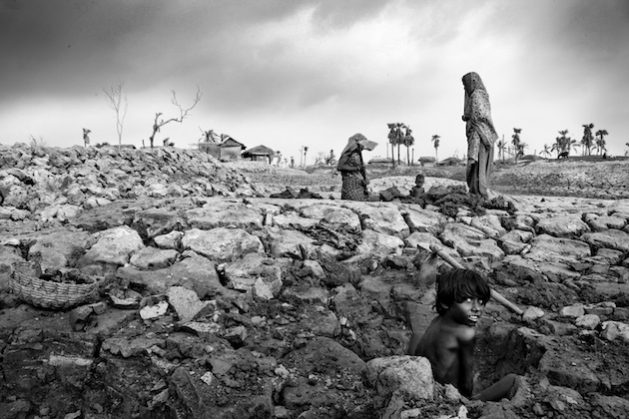
A young girl digs deep into soil saturated with salt water, hoping to find logs to burn as fuel. Two years on from Cyclone Aila, the communities along Bangladesh’s southwest coastline are starting to rebuild their lives. In the course of the cyclone, which struck in May 2009, surges of water up to three meters high battered the coast along the Bay of Bengal in Khulna district. Cyclone Sidr, the worst ever in the area, had already weakened the area. Aila only needed to hit a small amount to destroy the defenses. Credit: Mohammad Rakibul Hasan

A young girl digs deep into soil saturated with salt water, hoping to find logs to burn as fuel. Two years on from Cyclone Aila, the communities along Bangladesh’s southwest coastline are starting to rebuild their lives. In the course of the cyclone, which struck in May 2009, surges of water up to three meters high battered the coast along the Bay of Bengal in Khulna district. Cyclone Sidr, the worst ever in the area, had already weakened the area. Aila only needed to hit a small amount to destroy the defenses. Credit: Mohammad Rakibul Hasan

DHAKA, Oct 22 2024 (IPS) Global warming has far-reaching effects, and certain countries, particularly those with low lying coastal regions, are more vulnerable than others. Bangladesh, the largest delta in the world, is at the forefront of the global warming crisis. Its coastal areas are increasingly exposed to rising sea levels, natural disasters, and salinization, all of which have devastating effects on its population.


Nijhum Dwip is a 20-kilometer-long offshore island in the Bay of Bengal, nearby the South of Hatia Island. The World Wildlife Fund (WWF) has warned that the sea is rising more dramatically and may rise 11.2 inches by 2070, resulting in the shrinkage of this island by 96% within half a century (WWF 2010). Credit: Mohammad Rakibul Hasan

Nijhum Dwip is a 20-kilometer-long offshore island in the Bay of Bengal, nearby the South of Hatia Island. The World Wildlife Fund (WWF) has warned that the sea is rising more dramatically and may rise 11.2 inches by 2070, resulting in the shrinkage of this island by 96% within half a century (WWF 2010). Credit: Mohammad Rakibul Hasan

The rise in natural calamities, such as cyclones and tidal surges, worsens the already fragile ecosystem. In this context, Bangladesh serves as a case study of how climate change disproportionately affects some regions, despite their minimal contribution to global emissions.

Bangladesh’s vulnerability to global warming is linked to its geography and socioeconomic structure. The nation’s low-lying coastal regions are particularly vulnerable to sea level rise, which cyclones and tidal floods exacerbate. Two significant cyclones, Sidr in 2007 and Aila in 2009, ravaged Bangladesh’s coastal zones, including the districts of Satkhira, Barguna, Patuakhali, Khulna, and Bagerhat. These events highlighted the urgent need for climate action. 

Water and soil salinity in Satkhira, the most climate-prone district in Bangladesh, is trying to adapt, but the land is adverse to growing crops; people are fleeing to the other districts to save their livelihood even in 2021. The COVID-19 pandemic fueled climate migration more as the supply and growth of food sources have become very minimal. Credit: Mohammad Rakibul Hasan

Water and soil salinity in Satkhira, the most climate-prone district in Bangladesh, is trying to adapt, but the land is adverse to growing crops; people are fleeing to the other districts to save their livelihood even in 2021. The COVID-19 pandemic fueled climate migration more as the supply and growth of food sources have become very minimal. Credit: Mohammad Rakibul Hasan

Cyclone Aila, which struck on May 27, 2009, serves as a stark reminder of the destructive potential of climate-induced disasters. The cyclone claimed 330 lives and left over 8,000 missing. It caused extensive destruction in the coastal district of Satkhira, particularly in the village of Gabura, which was near the Sundarbans mangrove forest. Aila displaced over 1 million people, destroyed natural resources, and wiped out crucial infrastructure. Moreover, a deadly outbreak of diarrhea followed, infecting over 7,000 people, with fatalities reported within days of the cyclone.

The economic cost of Cyclone Aila was staggering. The total damage was estimated at USD 552.6 million. The cyclone also exposed the vulnerability of Bangladesh’s public health infrastructure, with millions at risk of post-disaster diseases due to inadequate resources and medical attention.

This woman lost almost everything when the cyclone Aila hit the territory. She is a widow and lives with her son. Women in developing countries like Bangladesh living around the coastline areas are mostly experiencing poverty and natural disasters. These are making them more vulnerable, affecting their livelihoods and security. Water and soil salinity in Satkhira, the most climate-prone district in Bangladesh, is trying to adapt, but the land is adverse to growing crops; people are fleeing to the other districts to save their livelihood even in 2021. The COVID-19 pandemic fueled climate migration more as the supply and growth of food sources have become very minimal. Credit: Mohammad Rakibul Hasan

This woman lost almost everything when the cyclone Aila hit the territory. She is a widow and lives with her son. Poverty and natural disasters have an impact on women in developing nations like Bangladesh who live near the coastline. These are making them more vulnerable, affecting their livelihoods and security. In Satkhira, the most climate-prone district in Bangladesh, water and soil salinity are a problem and while the region is trying to adapt, crops don’t grow there and people are fleeing to the other districts to save their livelihoods. Credit: Mohammad Rakibul Hasan

One of the long-term effects of climate change in Bangladesh is the rising sea levels, which are already encroaching on the country’s coastal areas. As sea levels rise, Bangladesh’s coastal regions face increased salinity in both soil and water. The reduced flow of freshwater from upstream rivers during the dry season exacerbates this issue.

Saline water now reaches as far as 240 kilometers inland, rendering agricultural activities increasingly difficult. Farmers, once able to produce several crops per year, are struggling to sustain their livelihoods as crop productivity plummets.

Much of the flood damage caused by Cyclone Aila was to the water and sanitation systems the Bangladeshi villagers depend on. Floodwaters seeped into supplies used for drinking and washing, and latrines were washed away, allowing raw sewage to increase the threat to diseases such as cholera. This young boy in Gabura, one of the worst-hit villages in the Satkhira district, has access to safe drinking water – but has to cross a river to collect it. Livelihoods have also been lost: freshwater with sewage and saltwater, and seawater continues to flood farmlands at high tide two years on, making it impossible to grow crops.

Much of the flood damage caused by Cyclone Aila was to the water and sanitation systems the Bangladeshi villagers depend on. Floodwaters seeped into supplies used for drinking and washing, and latrines were washed away, allowing raw sewage to increase the threat to diseases such as cholera. This young boy in Gabura, one of the worst-hit villages in the Satkhira district, has access to safe drinking water—but has to cross a river to collect it. Livelihoods have also been lost: freshwater with sewage and saltwater, and seawater continues to flood farmlands at high tide two years on, making it impossible to grow crops. Credit: Mohammad Rakibul Hasan

The saline intrusion has also led to a shift in the region’s economy, with shrimp farming becoming one of the few viable industries. Shrimp farming, however, brings its own set of environmental challenges, as it requires large-scale land conversion and disrupts natural ecosystems, further trapping seawater in agricultural lands. The transformation of agricultural lands into shrimp farms has also altered the social fabric, contributing to food insecurity and economic hardship.

A laborer who finished his work with others to build a dam to protect the border of the river. Every year, more or less, cyclones hit Gabura and its surrounding areas, high tides hit the land and drown houses, and destroy crop fields. And often, it kills lives. A young girl digs deep into soil saturated with salt water, hoping to find logs to burn as fuel. Two years on from Cyclone Aila, the communities along Bangladesh’s southwest coastline are starting to rebuild their lives. In the course of the cyclone, which struck in May 2009, surges of water up to three meters high battered the coast along the Bay of Bengal in Khulna district. It was already weakened by Cyclone Sidr, the worst ever in the region. Aila needed a tiny hit to destroy the defenses. Much of the flood damage caused by Cyclone Aila was to the water and sanitation systems the Bangladeshi villagers depend on. Floodwaters seeped into supplies used for drinking and washing, and latrines were washed away, allowing raw sewage to increase the threat to diseases such as cholera. This young boy in Gabura, one of the worst-hit villages in the Satkhira district, has access to safe drinking water – but has to cross a river to collect it. Livelihoods have also been lost: freshwater with sewage and saltwater, and seawater continues to flood farmlands at high tide two years on, making it impossible to grow crops. Credit: Mohammad Rakibul Hasan

A laborer building a dam to protect the border of the river. Every year, more or less, cyclones hit Gabura and its surrounding areas; high tides hit the land and drown houses and crop fields. And often, it kills lives. Credit: Mohammad Rakibul Hasan

The Sundarbans, the largest tidal halophytic mangrove forest in the world, play a crucial role in protecting Bangladesh’s coastal communities from climate-induced disasters. Sixty percent of the forest lies within Bangladesh, primarily in the districts of Khulna and Satkhira, while the rest extends into West Bengal, India. The Sundarbans act as a natural buffer, absorbing the impact of cyclones and tidal waves. Despite its protective function, the forest is under threat from both environmental degradation and human activities.

As agricultural lands diminish, more people are forced into the forest to collect honey, firewood, and other resources, putting them at greater risk of attacks by wildlife, including the Royal Bengal Tigers. Additionally, pirates and illegal loggers roam the forest, further endangering the livelihoods of those who depend on the Sundarbans for survival.

An agent from the shrimp farm is checking good quality baby shrimp in the shrimp market. Many people are involved in catching and trading baby shrimps. They catch baby shrimps from the nearby rivers and sell them to earn a living. Shrimp farming is widespread around the coastal area of Satkhira. It is a profitable business, but the businessmen are grabbing land from the farmers for a longtime contract for shrimp farming. This farming requires saltwater to cultivate shrimps, and the salt goes deep into the soil day by day, and after a few years, the whole area gets affected by salinity. No crops or trees cannot grow in that territory in the long run. Biodiversity and natural ecosystems get interrupted. Mohammad Rakibul Hasan

An agent from the shrimp farm is checking good quality baby shrimp in the shrimp market. Many people are involved in catching and trading baby shrimps. They catch baby shrimps from the nearby rivers and sell them to earn a living. Shrimp farming is widespread around the coastal area of Satkhira. It is a profitable business, but businessmen are grabbing land from the farmers for longtime contracts for shrimp farming. This farming requires saltwater to cultivate shrimps, and the salt goes deep into the soil day by day, and after a few years, the whole area gets affected by salinity. No crops or trees cannot grow in that territory in the long run. Biodiversity and natural ecosystems get interrupted. Mohammad Rakibul Hasan

The impacts of climate change in Bangladesh have forced many coastal inhabitants to migrate in search of safer living conditions and economic opportunities. These displaced individuals, often referred to as “climate refugees,” migrate to urban centers or across international borders, particularly into India. The migration is mostly unregulated, leading to significant challenges for both migrants and the host communities.

The story of the coastal communities of Bangladesh reflects a grim reality: climate change has not only stripped them of their homes and livelihoods but also made life increasingly unbearable. As the fairy tale of the king and his daughter suggests, life without salt is flavorless, but for these climate refugees, salt—in the form of increased salinity—is the bitter reality of their lives. The same salt that infiltrates their lands also fills their tears.

Despite the severity of the crisis, it is not too late to take meaningful action to mitigate the effects of climate change on Bangladesh and other vulnerable nations. International cooperation is essential, as the effects of climate change transcend borders. Developed countries, which are historically responsible for the majority of greenhouse gas emissions, must provide financial and technical support to countries like Bangladesh. Without adequate assistance, the human and economic toll of climate change will continue to rise.

Efforts to combat climate change must focus on both mitigation and adaptation. Coastal defenses, improved infrastructure, and sustainable agricultural practices can help protect vulnerable populations. Additionally, international policies must prioritize climate-induced migration, ensuring that displaced persons are treated with dignity and provided with the resources they need to rebuild their lives.

Bangladesh’s experience with climate change serves as a stark reminder of the global implications of environmental degradation. The country with its vulnerable coastal areas is emblematic of the challenges that face many developing nations as they struggle to adapt to rising sea levels, increased salinity, and more frequent natural disasters. International cooperation and policy reforms are critical to ensuring that Bangladesh and other nations can withstand the growing pressures of climate change.

IPS UN Bureau Report

  Source

The Future of Food Security Lies Beyond COP29’s Negotiation Tables

Biodiversity, Climate Action, Climate Change, Climate Change Justice, Conferences, COP29, Economy & Trade, Environment, Food and Agriculture, Food Security and Nutrition, Food Sustainability, Global, Green Economy, Headlines, Natural Resources, TerraViva United Nations

Opinion


ASUNCION, Paraguay, Oct 21 2024 (IPS) – Climate change has thrown our food systems into chaos. Extreme weather events and dramatic climate variations are hammering food production and supply chains across the world. As global leaders gear up for COP29, there’s plenty of buzz about climate action. But can we really expect these slow-moving, bureaucratic negotiations to deliver tangible and swift results to decarbonize and insulate our agri-food systems? Most likely not. But do not despair. While the COP29 talks unfold, crucial climate solutions for transforming food systems are already taking root on the ground.


Jesus Quintana

In the exhilarating, Oscar-winning movie “Everything Everywhere All at Once”, the leading characters are surrounded by overwhelming chaos and complexity. Yet, within this confusion, small actions, and the determination of people behind them, spark powerful change. In stunning similarity, the climate crisis —particularly in food systems— feels like an insurmountable challenge with everything, droughts, floods, storms, hunger and other interlocked crises, striking everywhere, and all at once.

Urgent action is needed. Where do we turn? COP 29 will likely be stuck in slow-paced discussions. Meanwhile, transformative solutions are taking shape on the ground. Across the globe, communities, farmers, sponsors and innovators are quietly building resilience in their food systems, demonstrating that true progress often emerges from the margins, not the center of chaos. Just like in the metaphoric film, finding purpose and action amid disorder is where meaningful change begins.

Grassroots solutions for climate-resilient food systems

While world leaders talk and officials try to turn decisions into workable policies, local communities are already acting. Across the Global South, where the effects of climate change are being felt most acutely, smallholder farmers and grassroots organizations are implementing innovative practices that build resilience to climate shocks.

In regions like Sub-Saharan Africa and parts of Latin America, agroecology is gaining traction as a powerful tool for both mitigating and adapting to climate change. This farming approach, which draws on traditional knowledge and emphasizes sustainable, low-emission methods, is helping communities adapt to changing weather patterns while improving food security. Agroecology promotes biodiversity, improves soil health, and reduces dependency on chemical inputs, all of which enhance the resilience of agricultural systems to climate impacts and helps decarbonize them.

The private sector’s role in transforming food systems

Community movements and local governments are playing a vital role, but the private sector is also increasingly driving climate solutions in food systems. Market forces are pushing companies to innovate in ways that reduce agriculture’s climate footprint. The plant-based food revolution is an example of how the private sector is responding to the need for more sustainable diets that lower greenhouse gas emissions. Similarly, alternative protein food-tech startups are leading the way towards a sustainable and tasty food future. These unconventional substitutes for traditional livestock farming offer a glimpse of how innovation can drive systemic changes in food production.

In addition to product innovation, there is growing corporate investment in regenerative agriculture—a practice that rebuilds soil health, captures carbon, and improves biodiversity. Large food companies, driven by consumer demand for sustainable products, are making commitments to source ingredients from regenerative farms, contributing to both climate mitigation and long-term food security.

Climate finance outside the COP processes

One of the most significant barriers to transforming food systems in the face of climate change is the lack of adequate financing. While COPs have made important commitments, such as the creation of the Green Climate Fund, the flow of funds has been slow and insufficient to meet the needs of vulnerable communities. In response, philanthropy and private finance are stepping in.

Some patrons and foundations are funding initiatives that help smallholder farmers adapt to climate change, while impact investors are supporting agri-tech innovations that boost productivity in a sustainable way. These efforts, although outside the COP framework, are critical in scaling climate-resilient food systems and achieving global net-zero targets.

Real solutions are happening now

While COP29 will no doubt produce important global agreements, the truth is that many of the solutions to the climate crisis—especially when it comes to food—are already in motion. Farmers, local communities, philanthropies and private companies are building a food system that is more resilient, sustainable, and low-carbon.

Global leaders must take notice. Yes, we need ambitious targets and international commitments. But we also need to support and scale the grassroots movements and private-sector innovations that are already leading the way. Real food security in a climate-challenged world will not be achieved through top-down solutions alone—it will come from empowering those on the frontlines.

As COP29 approaches, let’s not lose sight of what is happening beyond the negotiation tables. The future of food security depends on action today, led by those who can’t afford to wait.

Jesus Quintana is Senior Advisor on Sustainable Food Systems and former Director General, CIAT

IPS UN Bureau


Building Water Security for the Next Generation in the Pacific Territories

Aid, Asia-Pacific, Biodiversity, Civil Society, Climate Action, Climate Change, Climate Change Justice, Conservation, Development & Aid, Editors’ Choice, Environment, Featured, Natural Resources, PACIFIC COMMUNITY, Pacific Community Climate Wire, Small Island Developing States, Sustainability, Sustainable Development Goals, TerraViva United Nations

PACIFIC COMMUNITY

Pacific Community’s PROTÉGÉ Project strives to advance climate resilient development. Credit: SPC

Pacific Community’s PROTÉGÉ Project strives to advance climate resilient development. Credit: SPC

SYDNEY, Oct 14 2024 (IPS) – The Pacific Islands region is both the frontline of the wrath that climate change is lashing on the environment and human life and the drive for innovation and solutions to stem the destruction and strengthen island environments for the future. The survival of life, even nations, in the Pacific depends on it.


“The world has much to learn from you… Plastic pollution is choking sea life. Greenhouse gases are causing ocean heating, acidification and rising seas. But Pacific Islands are showing the way to protect our climate, our planet and our ocean,” United Nations Secretary-General António Guterres, said during his visit to Tonga in August.

And the Pacific Community’s PROTÉGÉ Project (the name means ‘protect’ in French) is doing just that. Launched six years ago with funding by the European Development Fund (EDF), it is striving to advance climate resilient development through protecting and better managing biodiversity and natural renewable resources, such as freshwater, in the three French overseas territories of New Caledonia, French Polynesia and Wallis and Futuna, as well as the British overseas territory of Pitcairn, in the Pacific. To achieve this, it has brought together provincial and local-level governments, consulting firms, non-government organizations, and local communities and is led and coordinated by science and development experts from the regional development organization, Pacific Community (SPC), that works for 22 Pacific island governments and territories.

It honors the interconnected nature of island ecosystems through the four focus areas of the project: agriculture and forestry, coastal fisheries and aquaculture, invasive species and water. For instance, “in an integrated watershed management approach, what happens in the mountains ends up in the rivers and eventually in the sea,” Peggy Roudaut, SPC’s PROTÉGÉ Project Manager in Noumea, New Caledonia, told IPS.

A community worker, replants and maintains the forest. Reforestation develops long-term climate-resilient environments. Credit: SPC

A community worker replants and maintains the forest. Reforestation develops long-term climate-resilient environments. Credit: SPC

Healthy forests are the lungs of flourishing natural ecosystems and biodiversity and restoring and maintaining forests is at the heart of the PROTÉGÉ Project. Credit: SPC

Healthy forests are the lungs of flourishing natural ecosystems and biodiversity, with forest maintenance at the heart of the PROTÉGÉ Project. Credit: SPC

“The water theme is central,” she continued. “By working on the sustainability of water resources and supporting the water policies of the territories, while also promoting actions to make aquaculture and agriculture more sustainable, we contribute to making the overseas countries and territories more resilient to the effects of climate change.”

While the Pacific Islands are surrounded by a vast 161.76 million square kilometers of ocean, their sources of freshwater are fragile. Most islanders who live in rural areas have to choose from limited groundwater lenses, streams or rainwater harvesting. Ninety-two percent of Pacific islanders living in urban centers have access to clean drinking water, declining to 44 percent in rural communities, reports the Pacific Community (SPC).

Improving water security is a priority in the national development goals of Pacific Island countries, but real progress is being undermined by population growth, which is rapidly increasing demand, and the worsening impacts of climate change. Rising air and sea temperatures, more heatwaves and unreliable rainfall with rising sea levels that are driving coastal erosion are all taking their toll on the region, reports the Intergovernmental Panel on Climate Change (IPCC).

In the western Pacific, temperatures are predicted to increase by 2-4.5 degrees Celsius by 2100, while most Pacific Island states will witness a sea level rise 10-30 percent higher than the global mean, which is projected to be 38 centimeters by the end of the century, according to the United Nations.

And then there’s pollution. “For many rural and remote and even urban communities, water sources that were once safe to drink or use for farming have become unsafe due to pollutants, including improper waste disposal and agricultural runoff,” Professor Dan Orcherton, Professor in Sciences at the University of Fiji, told IPS, emphasizing “that freshwater security in the Pacific Islands is quite precarious, reflecting a complex interplay of natural and human induced factors.”

The Pacific Community (SPC) is working to protect, manage and support countries to monitor freshwater reserves across the entire Pacific region.  PROTÉGÉ, specifically focused on Pacific territories, has been supporting this work by regenerating forests and vegetation in their vicinity and developing long-term climate-resilient management plans.

The quality of drinking water is also being improved through closely studying detrimental factors, such as construction and development, and decontaminating rivers and wells that are polluted by waste and landfills.

Healthy forests are the lungs of flourishing natural ecosystems and biodiversity that, in turn, regulate the local climate, protect natural watersheds and prevent soil erosion. Forests cover 43.7 percent of the five archipelagos in French Polynesia, which is regularly battered by cyclones, droughts and sea level rise. Meanwhile, in Wallis and Futuna, a small group of volcanic islands in the central Pacific with scarce freshwater, deforestation due to forest clearing, and soil erosion are serious problems.

Closer to the east coast of Australia, forest covers 45.9 percent of the islands of New Caledonia. Here, water resources are being affected by nickel mining, forest fires and soil erosion. Scientists forecast that, against predicted climate change impacts, 87-96 percent of native tree species in New Caledonia could decline by 2070.

The broader community, including children, are also involved in the reforestation projects. Credit: SPC

The broader community, including children, are also involved in the reforestation projects. Credit: SPC

The World Wildlife Fund (WWF) is a partner in a project being rolled out in the district of Dumbea, north of the capital, Noumea. Credit: SPC

The World Wildlife Fund (WWF) is a partner in a project being rolled out in the district of Dumbea, north of the capital, Noumea. Credit: SPC

Roudaut spoke of three projects in New Caledonia that, together, boosted the reforestation of 27 hectares, the replanting of vegetation around drinking water supply catchments and put in place 3,460 meters of fencing around water sources that will prevent damage, whether by fires or wildlife, such as deer and wild boars. Local communities were vital to their success, with 190 islanders, many of whom were women and youths, involved in making the projects a reality on the ground.

The World Wildlife Fund (WWF) is a partner in one being rolled out in the district of Dumbea, north of the capital, Noumea. The project focuses on the Montagne des Sources upstream of the Dumbea dam, which provides water to 110,000 people, or 40 percent of New Caledonia’s population.

Solène Verda, Head of WWF’s Forestry Program in the territory, told IPS that the incidence of forest fires, as well as floods and droughts, which also affect water security, will only intensify with climate change. “Every year in New Caledonia, fires destroy around 20,000 hectares of vegetation, which is a disaster regarding the islands’ surface; in ten years, 10 percent of the main island has already burned,” she said. “The predictions are not cheery for New Caledonian forests and, thus, the freshwater resources.”

Improving water security is a priority in the national development goals of Pacific Island countries. Credit: SPC

Improving water security is a priority in the national development goals of Pacific Island countries. Credit: SPC

The PROTÉGÉ initiative is tackling one of the greatest inhibitors to combating climate damage, which is limited technical and management capacity. Due to “the remoteness of these islands and small populations… combined with the emigration of skilled professionals out of the region, there is minimal capacity within regional countries to respond to the day-to-day vulnerability threats, let alone the frequent natural disasters experienced,” reports the United Nations Environment Program (UNEP).

“Thanks to SPC’s PROTÉGÉ, we had the opportunity to test different forest restoration techniques on our degraded watersheds… and it has given us a clearer idea of the methods best suited to our context,” Verda said.

It is a key issue understood by the EU, which has supported the initiative with 36 million euros, in addition to 128,000 euros contributed by the three French territories.

PROTÉGÉ is part of our “commitment to environmental sustainability, climate resilience and sustainable economic autonomy for these small, often vulnerable island territories in line with the Green Deal,” Georges Dehoux, Deputy Head of the Office of the European Union (EU) in the Pacific in Noumea, told IPS. The Green Deal is the EU’s ambition to achieve net zero emissions and non-resource equitable economic growth to become the world’s first climate-neutral continent by 2050.

All Pacific Island countries and territories “are facing the same environmental and economic challenges, and a combined and coordinated response at the regional level will ensure better resilience to these challenges,” Dehoux added.

Those working with the project have a sense of urgency about what they are aiming to achieve. For, as the International Monetary Fund (IMF) advises, “We can still reverse some of the damage we have inflicted on our precious planet. But time is running out. If we don’t take decisive action in the next 10-20 years, the damage will have passed irreversible tipping points.”

IPS UN Bureau Report

  Source

With Climate Change, Government Apathy, Who Should Kerala’s Fishworkers Turn To?

Asia-Pacific, Civil Society, Climate Change, Climate Change Justice, Development & Aid, Economy & Trade, Editors’ Choice, Featured, Food and Agriculture, Human Rights, Labour, Natural Resources, Sustainable Development Goals, TerraViva United Nations, Trade & Investment

Opinion

Fishworkers are often invisible in discussions about climate change, yet they are at the heart of food security, feeding millions while struggling to feed their own families. Their fight for survival is not just about tradition or livelihood—it’s about justice. Shouldn’t their futures be at the forefront of climate justice debates?

The iconic Chinese fishing nets along the Kerala coast offer a picturesque scene that draws tourists from around the world. However, the fishworkers that have used them for centuries livelihoods are in peril. Credit: Aishwarya Bajpai/IPS

The iconic Chinese fishing nets along the Kerala coast offer a picturesque scene that draws tourists from around the world. However, the fishworkers that have used them for centuries livelihoods are in peril. Credit: Aishwarya Bajpai/IPS

KOCHI, India, Oct 10 2024 (IPS) – Every morning before dawn, fishworkers along the shores of Kochi, Kerala, head out to sea, casting their nets in the shadow of the iconic Cheenavala—the Chinese fishing nets that have become a symbol of their community. I witnessed this time-honored tradition, once a reliable means of survival, now a daily gamble, a fight against unpredictable seas and shrinking fish populations. 


The COVID-19 pandemic exposed how vulnerable they are; despite being classified as essential workers, they were left without the protections they needed.

And now, as climate change tightens its grip, these fishworkers find themselves on the front lines of a new crisis. Rising sea temperatures, erratic weather, and depleting fish stocks have pushed them further into despair, forcing them to navigate a future as uncertain as the waters they depend on.

Martin, a fishworker from Kochi, Kerala, who smiled and invited me on his boat, has been fishing for over 25 years, reflecting on the mounting hardships. After a while explaining to me about the huge boat and the process of fishing, he said, “In these difficult times, when the government should be supporting us after generations of families have relied on fishing, we are left with nothing and are desperate for help. We purchase our tools and equipment for fishing, yet there’s no assistance from the government for education or healthcare.”

Fishworkers face uncertain future due to climate change and a lack of support from government. Credit: Aishwarya Bajpai/IPS

Fishworkers face uncertain future due to climate change and a lack of support from government. Credit: Aishwarya Bajpai/IPS

Martin continued, “Five to six people work on a boat, and money has to be given to the owner as well. We have started to rely on tourism now, where we invite tourists, especially foreigners, onto our boats (private property) to explain our craft and fishing process, for which we sometimes get compensated. Some are generous, and some are not! This used to be the only way of earning in the rough season (Monsoon Fishing Ban), but now, after the climate change, this has become the only source of income for us.”

Kochi, once known as Cochin, was a major global trading hub. It drew merchants from Arabia and China in the 1400s, and later the Portuguese established Cochin as their protectorate, making it the first capital of Portuguese India in 1530.

Today, the city’s rich architectural heritage, along with the iconic Cheenavala (Chinese fishing nets), are major tourist attractions. Fishermen here use these Chinese fishing nets as a traditional method of fishing.

Believed to have been introduced by the  Chinese explorer Zheng He from the court of Kublai Khan, these iconic nets became a part of Kochi’s landscape between 1350 and 1450 AD. The technique, which is quite impressive to witness, involves large, shore-based nets that are suspended in the air by bamboo/teakwood supports and lowered into the water to catch fish without the need to venture out to sea. The entire structure is counterbalanced by heavy stones, making it an eco-friendly practice that preserves marine life and vegetation, relying solely on natural materials without harmful gadgets.

Once a vital tool for sustaining the livelihoods of Kochi’s fishworkers, the traditional Cheenavala fishing nets have now become a symbol of a deepening crisis. Climate change, particularly the warming of the Arabian Sea, has drastically reduced fish populations.

Ironically, the government profits from promoting this iconic symbol even as the seafood industry faces closures, with four export-oriented fish processing units shutting down in Kerela in recent months due to the shortage of fish. This stark contrast highlights the growing disconnect between tradition and survival in the face of climate change.

The walls of Kerala are adorned with graffiti advocating for fishworkers and marine biodiversity. In Kochi, a mural reads, “Save the largest fish on Earth,” calling attention to the need for conservation. Credit: Aishwarya Bajpai/IPS

The walls of Kerala are adorned with graffiti advocating for fishworkers and marine biodiversity. In Kochi, a mural reads, “Save the largest fish on Earth,” calling attention to the need for conservation. Credit: Aishwarya Bajpai/IPS

Despite the Chinese fishing nets being a major tourist attraction, the government has shown little or no interest in preserving them. The process started in 2014 when a Chinese delegation, led by Hao Jia, a senior official of the Chinese embassy in India, met with Kochi’s then-mayor, Tony Chammany, to help renovate the nets and proposed constructing a pavement along Fort Kochi beach.

KJ Sohan, former mayor of Kochi and president of the Chinese Fishing Net Owners’ Association, expressed his support for the Chinese initiative to preserve the traditional fishing nets. He emphasized that such large nets, rooted in ancient techniques, are unique to this region. However, he also highlighted the significant governmental neglect of these nets. Insurance companies refuse to cover them, and they need to be replaced twice a year, which incurs substantial costs.

The Tourism Department later instructed the Kerala Industrial and Technology Consultancy Organisation (KITCO) to refurbish 11 of these nets and allotted 2.4 crore rupees (24 million), along with teakwood and Malabar for the repairs.

The authorities had initially refused to release funds directly, requiring the owners to start the refurbishment first, with promises of staggered payments. It has recently come to light that the boat owners, many of whom took out high-interest loans to begin the renovation, are now in financial distress as they have yet to receive the promised government funds, despite completing the work over a year ago.

 A Chinese fishing net on the coast of Kochi, Kerala (India). Credit: Aishwarya Bajpai/IPS

A Chinese fishing net on the coast of Kochi, Kerala (India). Credit: Aishwarya Bajpai/IPS

Many took out loans and installed new coconut timber stumps, but even after nearly finishing the work, they are still waiting for the funds. This has left the fishworkers in debt while authorities cite GST-related issues for the delay. The owners argue they are exempt from the tax.

Fishworkers, both men and women, are often invisible in discussions about climate change, yet they are at the heart of food security, feeding millions while struggling to feed their own families. Their fight for survival is not just about tradition or livelihood—it’s about justice. If the government continues to turn a blind eye, Kerala’s fishworkers may have no choice but to seek support elsewhere, from international bodies, non-governmental organizations, or global climate finance mechanisms. Their struggles must be recognized, and their voices amplified in the push for climate justice.

Kerala’s fishworkers are not just battling the seas—they are fighting for their future. Without immediate action and meaningful support, we risk losing not only their livelihoods but an entire way of life. If the government cannot rise to the occasion, the world must step in to ensure that these communities do not slip into obscurity.

IPS UN Bureau Report

  Source