Japanese organization Nihon Hidankyo waws today awarded the Nobel Peace Prize. Credit: Niklas Elmehed/Nobel Prize
UNITED NATIONS, Oct 11 2024 (IPS) – The United Nations Secretary General António Guterres congratulated grassroots Japanese organization Nihon Hidankyo on being awarded the 2024 Nobel Peace Prize.
“The atomic bomb survivors from Hiroshima and Nagasaki, also known as the hibakusha, are selfless, soul-bearing witnesses of the horrific human cost of nuclear weapons,” he said in a statement.
“While their numbers grow smaller each year, the relentless work and resilience of the hibakusha are the backbone of the global nuclear disarmament movement.”
The Norwegian Nobel Committee awarded the 2024 Peace Prize for “its efforts to achieve a world free of nuclear weapons and for demonstrating through witness testimony that nuclear weapons must never be used again.”
The committee said the global movement arose in response to the atom bomb attacks of August 1945.
“The testimony of the Hibakusha—the survivors of Hiroshima and Nagasaki—is unique in this larger context. These historical witnesses have helped to generate and consolidate widespread opposition to nuclear weapons around the world by drawing on personal stories, creating educational campaigns based on their own experience, and issuing urgent warnings against the spread and use of nuclear weapons. The Hibakusha help us to describe the indescribable, to think the unthinkable, and to somehow grasp the incomprehensible pain and suffering caused by nuclear weapons.”
It singled out Nihon Hidankyo, who reportedly cried following the announcement and other representatives of the Hibakusha to have contributed greatly to the establishment of the “nuclear taboo.”
The Norwegian Nobel Committee acknowledged one encouraging fact: “No nuclear weapon has been used in war in nearly 80 years.”
The award comes as the world prepares to mark 80 years since two American atomic bombs killed an estimated 120 000 inhabitants of Hiroshima and Nagasaki. A comparable number died of burn and radiation injuries in the months and years that followed.
“Today’s nuclear weapons have far greater destructive power. They can kill millions and would impact the climate catastrophically. A nuclear war could destroy our civilization,” the committee said.
“The fates of those who survived the infernos of Hiroshima and Nagasaki were long concealed and neglected. In 1956, local Hibakusha associations along with victims of nuclear weapons tests in the Pacific formed the Japan Confederation of A- and H-Bomb Sufferers Organizations. This name was shortened in Japanese to Nihon Hidankyo. It would become the largest and most influential Hibakusha organisation in Japan.”
The Nobel Peace Prize for 2024 fulfills Alfred Nobel’s desire to recognize efforts of the greatest benefit to humankind.
Guterres said he would “never forget my many meetings with them over the years. Their haunting living testimony reminds the world that the nuclear threat is not confined to history books. Nuclear weapons remain a clear and present danger to humanity, once again appearing in the daily rhetoric of international relations.”
He said the only way to eliminate the threat of nuclear weapons is to eliminate them altogether. IPS UN Bureau Report
Biodiversity is key to food security and nutrition. IPBES has warned that loss of biodiversity is accelerating around the world, with 1 million animal and plant species threatened with extinction. Credit: Busani Bafana/IPS
BULAWAYO, Oct 11 2024 (IPS) – A holistic approach and transformative change of systems are needed to tackle biodiversity loss and to put the world on a sustainable path, an assessment by the Intergovernmental Science-Policy Platform on Biodiversity and Ecosystem Services (IPBES) has recommended.
The world is facing an interconnected crisis of unprecedented biodiversity loss, food insecurity, and environmental degradation that can no longer be tackled through fragmented and piecemeal solutions, a forthcoming assessment by IPBES will show, calling for holistic approaches instead.
IPBES is set to launch two scientific assessments, the Nexus Assessment and Transformative Change Assessment, in December 2024, which recommend holistic solutions to tackling the connected and converging crises of biodiversity, water, food, health, and climate change because’ “siloed” approaches are proving unsuccessful.’
In addition, the assessment calls for urgent “transformative change” by intergovernmental bodies, private sector organizations and civil society to respond to the nature and climate crises.
IPBES is an intergovernmental organization established to improve the interface between science and policy on issues of biodiversity and ecosystem services.
The historic IPBES Global Assessment Report of 2019 found that meeting global sustainability targets for 2030 and beyond requires a fundamental, system-wide reorganization, including new paradigms.
IPBES Head of Communications, Rob Spaull, said the assessments represent the best science evidence for critical action to tackle biodiversity loss available to policymakers.
“This is the most ambitious science report we have done because these five issues by themselves are complex and this assessment pulls them together,” Spaull said in a pre-report launch media briefing this week.
The Nexus Assessment identifies important trade-offs and opportunities within the multi-dimensional polycrisis: To what extent do efforts to address one crisis add to others? And which policy options and actions would produce the greatest benefits across the board? The report will offer an unprecedented range of responses to move decisions and actions beyond single-issue silos. The report was produced over three years by 101 experts in 42 countries.
“Global crises in biodiversity, water, food, health and climate change often intensify each other when addressed separately and should therefore be tackled together,” said Paula Harrison, co-chair of the IPBES Nexus Assessment report, in a statement.
“The Nexus Assessment is among the most ambitious work ever undertaken by the IPBES community, offering an unprecedented range of response options to move decisions and actions beyond single issue silos.”
The Transformative Change Assessment looks at the underlying causes of biodiversity loss, determinants of transformative change and options for achieving the 2050 Vision for Biodiversity. The report also assesses the determinants of transformative change, the biggest obstacles it faces and how it occurs. It also identifies achievable options to foster, accelerate and maintain transformative change towards a sustainable world and the steps to achieve global visions for transformative change.
A statement by IPBES notes that the Transformative Change Report will provide decision-makers, including policymakers, with “the best available evidence, analysis and options for actions leading to transformative change and build an understanding of the implications of the underlying causes of biodiversity loss for achieving the Paris Climate Agreement, global biodiversity targets under the Kunming-Montreal Global Biodiversity Framework, the Sustainable Development Goals and other major international development objectives.”
The 11th session of the IPBES Plenary, the first ever to take place in Africa from December 10 to 16, will discuss and approve the reports. IPBES represents nearly 150 governments and seeks to strengthen the science-policy interface for biodiversity and ecosystem services.
Spaull said the assessments underline the need to find holistic solutions to addressing biodiversity loss.
“The assessments are looking at how when you try and fix one part of the system you have unintended consequences in other parts of the system; for instance, in many countries there is a big push to plant trees to mitigate climate change and for carbon sequestration and with (unintended) consequences for biodiversity. For example, planting one kind of tree may be damaging to the ecology or water supply and also have an impact on health, so it means there is a need to find a balance.”
He said the reports also highlight responding to issues simultaneously, which is also the emphasis on meeting the SDGs, which have to be addressed systematically rather than in silos.
“For example, there has been a big increase in the volume of food production in past decades and an increase in caloric output that has helped global health but on the other hand, this has resulted in biodiversity loss because the massive food production has been done through intensive agriculture methods that deplete water and have massive gas emissions,” said Spaull.
Furthermore, IPBES has influenced and shaped national and international biodiversity policy through providing policymakers with clear, scientifically based recommendations and helping governments make informed decisions about conservation, sustainable development, and environmental protection.
Through its assessments, IPBES highlights the interconnectedness of biodiversity, human health, economic stability, and environmental sustainability, making it a critical player in the global response to the biodiversity crisis.
Spaull noted that IPBES work has been instrumental in informing progress assessments on biodiversity-related SDGs.
Fishworkers are often invisible in discussions about climate change, yet they are at the heart of food security, feeding millions while struggling to feed their own families. Their fight for survival is not just about tradition or livelihood—it’s about justice. Shouldn’t their futures be at the forefront of climate justice debates?
The iconic Chinese fishing nets along the Kerala coast offer a picturesque scene that draws tourists from around the world. However, the fishworkers that have used them for centuries livelihoods are in peril. Credit: Aishwarya Bajpai/IPS
KOCHI, India, Oct 10 2024 (IPS) – Every morning before dawn, fishworkers along the shores of Kochi, Kerala, head out to sea, casting their nets in the shadow of the iconic Cheenavala—the Chinese fishing nets that have become a symbol of their community. I witnessed this time-honored tradition, once a reliable means of survival, now a daily gamble, a fight against unpredictable seas and shrinking fish populations.
The COVID-19 pandemic exposed how vulnerable they are; despite being classified as essential workers, they were left without the protections they needed.
And now, as climate change tightens its grip, these fishworkers find themselves on the front lines of a new crisis. Rising sea temperatures, erratic weather, and depleting fish stocks have pushed them further into despair, forcing them to navigate a future as uncertain as the waters they depend on.
Martin, a fishworker from Kochi, Kerala, who smiled and invited me on his boat, has been fishing for over 25 years, reflecting on the mounting hardships. After a while explaining to me about the huge boat and the process of fishing, he said, “In these difficult times, when the government should be supporting us after generations of families have relied on fishing, we are left with nothing and are desperate for help. We purchase our tools and equipment for fishing, yet there’s no assistance from the government for education or healthcare.”
Fishworkers face uncertain future due to climate change and a lack of support from government. Credit: Aishwarya Bajpai/IPS
Martin continued, “Five to six people work on a boat, and money has to be given to the owner as well. We have started to rely on tourism now, where we invite tourists, especially foreigners, onto our boats (private property) to explain our craft and fishing process, for which we sometimes get compensated. Some are generous, and some are not! This used to be the only way of earning in the rough season (Monsoon Fishing Ban), but now, after the climate change, this has become the only source of income for us.”
Kochi, once known as Cochin, was a major global trading hub. It drew merchants from Arabia and China in the 1400s, and later the Portuguese established Cochin as their protectorate, making it the first capital of Portuguese India in 1530.
Today, the city’s rich architectural heritage, along with the iconic Cheenavala (Chinese fishing nets), are major tourist attractions. Fishermen here use these Chinese fishing nets as a traditional method of fishing.
Believed to have been introduced by the Chinese explorer Zheng He from the court of Kublai Khan, these iconic nets became a part of Kochi’s landscape between 1350 and 1450 AD. The technique, which is quite impressive to witness, involves large, shore-based nets that are suspended in the air by bamboo/teakwood supports and lowered into the water to catch fish without the need to venture out to sea. The entire structure is counterbalanced by heavy stones, making it an eco-friendly practice that preserves marine life and vegetation, relying solely on natural materials without harmful gadgets.
Once a vital tool for sustaining the livelihoods of Kochi’s fishworkers, the traditional Cheenavala fishing nets have now become a symbol of a deepening crisis. Climate change, particularly the warming of the Arabian Sea, has drastically reduced fish populations.
Ironically, the government profits from promoting this iconic symbol even as the seafood industry faces closures, with four export-oriented fish processing units shutting down in Kerela in recent months due to the shortage of fish. This stark contrast highlights the growing disconnect between tradition and survival in the face of climate change.
The walls of Kerala are adorned with graffiti advocating for fishworkers and marine biodiversity. In Kochi, a mural reads, “Save the largest fish on Earth,” calling attention to the need for conservation. Credit: Aishwarya Bajpai/IPS
Despite the Chinese fishing nets being a major tourist attraction, the government has shown little or no interest in preserving them. The process started in 2014 when a Chinese delegation, led by Hao Jia, a senior official of the Chinese embassy in India, met with Kochi’s then-mayor, Tony Chammany, to help renovate the nets and proposed constructing a pavement along Fort Kochi beach.
KJ Sohan, former mayor of Kochi and president of the Chinese Fishing Net Owners’ Association, expressed his support for the Chinese initiative to preserve the traditional fishing nets. He emphasized that such large nets, rooted in ancient techniques, are unique to this region. However, he also highlighted the significant governmental neglect of these nets. Insurance companies refuse to cover them, and they need to be replaced twice a year, which incurs substantial costs.
The Tourism Department later instructed the Kerala Industrial and Technology Consultancy Organisation (KITCO) to refurbish 11 of these nets and allotted 2.4 crore rupees (24 million), along with teakwood and Malabar for the repairs.
The authorities had initially refused to release funds directly, requiring the owners to start the refurbishment first, with promises of staggered payments. It has recently come to light that the boat owners, many of whom took out high-interest loans to begin the renovation, are now in financial distress as they have yet to receive the promised government funds, despite completing the work over a year ago.
A Chinese fishing net on the coast of Kochi, Kerala (India). Credit: Aishwarya Bajpai/IPS
Many took out loans and installed new coconut timber stumps, but even after nearly finishing the work, they are still waiting for the funds. This has left the fishworkers in debt while authorities cite GST-related issues for the delay. The owners argue they are exempt from the tax.
Fishworkers, both men and women, are often invisible in discussions about climate change, yet they are at the heart of food security, feeding millions while struggling to feed their own families. Their fight for survival is not just about tradition or livelihood—it’s about justice. If the government continues to turn a blind eye, Kerala’s fishworkers may have no choice but to seek support elsewhere, from international bodies, non-governmental organizations, or global climate finance mechanisms. Their struggles must be recognized, and their voices amplified in the push for climate justice.
Kerala’s fishworkers are not just battling the seas—they are fighting for their future. Without immediate action and meaningful support, we risk losing not only their livelihoods but an entire way of life. If the government cannot rise to the occasion, the world must step in to ensure that these communities do not slip into obscurity.
Edward Mukiibi, President, Slow Food. Credit: Busani Bafana/IPS
TURIN, Italy, Oct 8 2024 (IPS) – Edward Mukiibi, President of Slow Food, champions agroecology as a transformative answer to the world’s most pressing crises: food insecurity, climate change, and violent conflicts.
In a world where these challenges intersect, Mukiibi called for an urgent rethink of our approach to food systems.
Agroecology, a practice already embraced by millions of farmers worldwide, is emerging as a sustainable alternative to the industrialized agriculture model that dominates today. It emphasizes biodiversity, environmental stewardship, and equitable livelihoods—elements that Mukiibi insists are key to addressing the multifaceted crises facing our planet.
Speaking ahead of the highly anticipated Terra Madre 2024 event in Turin, Mukiibi called for immediate global action to end the misuse of food as a weapon in war-torn regions like Gaza and Ukraine, where food scarcity is exacerbating human suffering.
“Slow Food strongly advocates for an end to all violence in the ongoing conflicts, from the Gaza Strip to Sudan, from Lebanon to the Democratic Republic of Congo, from Ukraine to Yemen, and opposes the use of food as a weapon of war, said Mukiibi, calling for immediate negotiations to achieve a just solution that ensures the dignity of all people and fosters a peaceful future for everyone.
With global crises growing more complex, Mukiibi stresses that agroecology is not just about farming techniques—it is a framework for building more resilient societies.
Carlo Petrini, Founder, Slow Food. Credit: Busani Bafana/IPS
The Power of Agroecology
As climate change accelerates, its devastating impacts—melting glaciers, rising sea levels, extreme weather events, and shifting ecosystems—are becoming harder to ignore. Mukiibi linked these environmental crises directly to our food systems, calling industrial agriculture a “leading culprit.” He argues that agroecology offers a path toward resilience, citing its ability to regenerate soil health, reduce social inequality, and provide local communities with economic opportunities.
Mukiibi’s call for change comes as 3,000 international delegates convene at the biennial Terra Madre event to explore solutions for sustainable food systems. He argues that agroecology not only regenerates soil fertility and promotes environmental health but also strengthens local economies, reduces social inequalities, and builds resilience against climate-induced disasters.
“As climate change intensifies, agroecology offers a path to more resilient and equitable food systems,” Mukiibi declared. “This situation compels us to reflect on the transformation needed if we want to achieve a food system that feeds all people well, regenerates and protects the environment, and allows local cultures to survive and prosper.”
A Call for Global Food System Reset
Carlo Petrini, the founder of Slow Food, echoed Mukiibi’s sentiments, calling for nothing less than a complete reset of the global food system.
“The current global food system is not only unfair but is criminal because it destroys our mother earth, it destroys biodiversity and is based on waste and it has turned food into a price, not into a value,” said Petrini. “We need to restore the value of food because food represents our common good; with food we can establish relations with each other, we can establish reciprocity.”
Petrini emphasized the political significance of food in shaping our future, asserting that the fight for sustainable food systems is inherently tied to larger social and environmental battles.
Petrini also condemned multinational corporations that prioritize profit over the health of the planet, calling on them to stop polluting ecosystems through unsustainable food production methods. He called for an ecological transition.
Food and Humanity
Pope Francis, head of the Catholic Church, also weighed in, highlighting the spiritual and cultural dimensions of food.
In a message to the Terra Madre network, the Pope criticized the commodification of agriculture, noting that it is being manipulated for profit at the expense of both the environment and human dignity.
The Pope praised Terra Madre for fostering a movement that respects the integrity of both food and culture. He argued that only through recognizing the value of food and promoting food education can humanity move towards a future of universal fraternity—a future where diversity is celebrated rather than a cause of division.
The Food Revolution
Launched 20 years ago, Terra Madre has sparked a global food revolution. Over the past two decades, it has united small-scale producers, farmers, and consumers committed to creating a better, cleaner, and fairer food system.
Mukiibi said Terra Madre 2024 serves as a reflection point, a moment to assess the progress made and chart a course for the future.
Coinciding with Terra Madre, the G7 Agriculture Ministers met in Sicily, where Slow Food has urged governments to place food at the center of global political agendas. The call is clear: food must be recognized as a cornerstone of fundamental rights and environmental sustainability.
Mukiibi underscored that millions of farmers around the world are already practicing agroecology, ensuring food sovereignty, food security, and healthy diets. He emphasized the need to build on these successes by expanding the Slow Food network and empowering more farmers to take up agroecological practices.
Agroecology is a path forward for resilient local food systems, Mukiibi noted, explaining that Slow Food was building a network of Slow Food Farms to empower farmers and make them central to future sustainable food systems.
A Hopeful Vision for the Future
Mukiibi’s message is agroecology is not just a farming method—it’s a movement with the potential to tackle some of the most profound challenges of our time.
“Agroecology is the solution, not just for a more sustainable food system, but for addressing inequality, social injustice, and the global environmental crisis.”
As the world grapples with the devastating impacts of climate change, violent conflict, and food insecurity, the vision laid out by Slow Food offers a hopeful path forward—one where food is not a weapon, but a source of unity, resilience, and renewal.
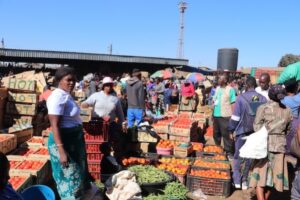
Farmers, traders and consumers at the Mbare Musika Territorial Market in Harare, Zimbabwe. Credit: Isaiah Esipisu/IPS
HARARE, Oct 4 2024 (IPS) – African policymakers, local leaders and the private sector have been asked to create an enabling environment that will help African traders and farmer folks build reliable systems for food security and resilience through territorial markets.
During a week-long 2024 Africa Agroecological Entrepreneurship and Seed Festival in Harare, Zimbabwe, experts observed that persistent crises have shown the importance of resilient close-to-home ‘territorial’ markets that feed billions of people every day—from public markets and street vendors to cooperatives, from urban agriculture to online direct sales, and from food hubs to community kitchens.
“For instance, following Russia’s invasion of Ukraine, global food prices spiked by 15 percent, forcing policymakers around the world to question how to reduce dependency on volatile global markets and strengthen food self-sufficiency,” said Dr. Million Belay, the General Coordinator at the Alliance for Food Sovereignty in Africa (AFSA).
“Further, questions have been raised about how people are actually fed and by whom, prompting us to ask: in this century of crisis, what kinds of food supply chains and markets can build resilience and help fulfill the right to food—nourishing people around the world more sustainably and equitably?” asked Belay.
To answer the question, experts are calling for policies and a sound working environment that will empower territorial markets that promote dietary diversity and affordable nutritious foods for all, allow producers and food workers to retain control over their livelihoods, and produce food that is adaptable to climate change shocks and emerging crises.
These markets have been broadly defined as markets that are centered on small-scale agroecological food producers and business owners that produce and sell a variety of commodities, and often meet the preferences of the majority of farmers, traders and consumers.
Studies have shown that these markets play a crucial role in making food accessible and affordable, especially for low-income populations in the Global South, allowing for the purchase of small and flexible quantities of food, price bargaining, informal credit arrangements, and being located in or near low-income neighborhoods.
A new study launched on the sidelines of the Harare event that culminated into the fifth Biennial Africa Food Systems Conference, however, shows that profit-oriented corporate value chains are highly concentrated in Africa’s market places.
The report, titled ‘Food from Somewhere,’ by the International Panel of Experts on Sustainable Food Systems (IPES Food), finds that just seven grain traders control at least 50 percent of the global grain trade, six major corporations control 78 percent of the agrochemical market, the top eight carriers of freight account for more than 80 percent of the market for ocean freight capacity and globally, 1 percent of the world’s largest farms control 70 percent of the world’s farmland.
This, according to experts, amounts to a corporate capture of Africa’s food systems.
The report is therefore advocating for a paradigm shift, urging governments to reinvest in local and regional supply infrastructure, relocalize public purchasing and develop food security strategies for a more resilient and equitable approach to food security.
“The problem for smallholders is not of being connected to markets (most are already involved in markets) but rather the conditions of their access and the rules and logics by which markets operate—who determines prices and on what criteria, who controls the costs of production, who holds market power, among other issues,” said Mamadou Goïta, a member of IPES and the lead author.
A spot check at the Mbare Musika territorial market in Harare found a variety of foodstuffs sourced from all eight regions of Zimbabwe, among others from neighboring countries, such as apples and other fruits from South Africa, fish and ginger from Mozambique, groundnuts from Malawi, sorghum from Botswana, as well as grapes from Egypt and tamarind from Tanzania, among others.
“This is the central hub for smallholder farmers and traders, supporting over seven million people from all over Zimbabwe and other parts of the continent,” said Charles Dhewa, Chief Executive Officer, Knowledge Transfer Africa (KTA), whose flagship known as eMkambo (eMarket) is to create a physical and web-based market for agriculture and rural development, integrating the use of mobile phones and the internet to create, adapt and share knowledge.
Mbare Musika Market, which is in the outskirts of Harare, is located next to the main bus-park, through which food is brought in using informal means such as passenger buses and vans from different parts of the country, in small and big quantities, and of different varieties and qualities.
“The evidence is clear—localized food systems are vital for feeding an increasingly hungry planet and preventing food insecurity and famine,” said Shalmali Guttal, the Executive Director of Focus on the Global South. “They provide nutritious, affordable food and are far more adaptable to global shocks and disruptions than industrial supply chains,” she added.
Jennifer Clapp, professor and Canada Research Chair in Global Food Security and Sustainability at the University of Waterloo, Canada, pointed out that during this time of rising hunger and ecological fragility, global industrial food chains will be catastrophically liable to break down under the strain of frequent crises.
“To have a chance of reaching the world’s zero hunger goal by 2030, we need to re-imagine our food systems, and we need to bolster the food markets that serve the poor,” she said.
Reem Alsalem, the UN Special Rapporteur on Violence Against Women and Girls, at a press conference in which she discusses her findings on prostitution. Credit: Naureen Hossain/IPS
UNITED NATIONS, Oct 3 2024 (IPS) – Reem Alsalem, the UN Special Rapporteur on Violence Against Women and Girls, calls prostitution a “system of violence” that does not benefit society at all, especially the women and girls forced into this system.
Alsalem spoke at the Roosevelt Public Policy House in New York on Wednesday, October 2, to discuss her special report in which she posits that prostitution is a form of violence against women and girls. The report was first made public in June 2024, where it was presented to the Human Rights Council in Geneva. Over 60 member states endorsed the report and its findings, including but not limited to Ghana, South Africa, Egypt, Norway, Sweden, Colombia, France, Bangladesh, India, and Nigeria.
Alsalem received over 300 submissions for the report from multiple stakeholders, including civil society groups, academia, experts, policymakers, and, importantly, women from around the world with lived experience.
Across the world, the exploitation of women and girls through prostitution and sex trafficking is a pervasive issue that threatens their safety and rights. Alsalem remarked that many systems of prostitution are built on patriarchal norms that position the abuse of power at the hands of mostly men, who are largely the ‘buyers’ or the profiteers in the sex trade. Deeper economic inequalities and the complexities of emergency humanitarian situations have only further displaced women and girls from systems that would have protected and empowered them.
Alsalem remarked that efforts to normalize or recognize prostitution as a form of labor, such as referring to it as “sex work,” do more harm by gaslighting the women who have experienced it, and it fails to consider the serious human rights violations that can occur within the system, such as the physical and psychological harm they experience under this umbrella of “labor.”
Pornography should also be classified as a form of prostitution and violence against women at large, according to Alsalem. She noted that its proliferation has only normalized acts of violence and harmful attitudes towards women and girls. Alsalem told IPS that the online platforms that host pornographic material only further incentivize and promote these acts and other forms of coercive and nonconsensual sexual acts.
Regardless of the platform, how it is branded or how one enters the trade, the system of prostitution is based on the commodification of the body to undergo physical activity and under that there cannot be consent, Alsalem argues.
“Trying to pretend that there is somehow consent in prostitution, that women want to do this, is actually meaningless in context like prostitution because the concept of consent is actually not relevant when there are systems of exploitation and violence,” she said. “And when the term of consent is being weaponized while we fully know that whatever notions of agreement that women may have—or at least some of them—is extorted through physical coercion, manipulation, and violence.”
When it comes to the legal frameworks around prostitution, this also reveals the contradictions within countries on the letter of the law versus its regulation in practice. The report indicates that under certain approaches, little is actually done to de-incentivize “buyers” or “organizers” in engaging in prostitution systems.
Criminalizing prostitution is more likely to punish the prostituted persons through persecution and incarceration, social ostracization, and even further abuse at the hands of law enforcement. In fact, under this approach, it is rare that the ‘buyers’ are punished or that the third parties are held accountable. Under the regulation approach, legal prostitution ensures control to the state through commercial establishments and federal or national laws, including tax laws that they profit from, often at the expense of the sex workers. Decriminalizing prostitution allows for all parties to operate without the fear of persecution; however, this has also resulted in an increased demand, and it does not stop exploitative parties from profiting off vulnerable women and girls and leading them into the sex trade.
The report speaks in favor of the abolition approach, otherwise known as the “Equality model” or the “Nordic model.” Under this model, third parties (the ‘organizers’) and the buyers are criminalized for engaging in the buying and promotion of sex, while the sex workers do not face criminal persecution. Instead, more investments are made in exit pathways for sex workers to ensure alternative work, economic stability, housing, and support to address trauma and even substance abuse where needed. In the report, Alsalem notes that the Nordic model maintains the international standard on sexual exploitation and trafficking in persons by criminalizing third parties, and that it recognizes the majority of prostitutes are women and girls.
This approach could have its limitations, however, as one report from the London School of Economics (LSE) notes that sex trade legislation still varies across the different countries that implement this model, the safety of sex workers remains uncertain and they still face the risk of policing. For migrant sex workers, their status prevents them from accessing social protections, and under immigration laws, prostitution can be grounds for deportation.
The issues present in the current legal models for prostitution reflect some of the institutional structures that maintain the status quo where sex workers are exploited and left unprotected. At the same time, they also reflect a wider cultural issue on how prostitution, and more broadly, sex, is discussed and perceived.
“In addition to being a human rights violation that needs legal solutions, what is mentioned very clearly in the report is that we are dealing with a cultural issue,” said Taina Bien-Aimé, Executive Director of Coalition Against Trafficking in Women. She added that other acts of violence against women, such as intimate partner violence, sexual violence, and harassment, are now recognized as forms of abuse.
“But for some reason, because money is exchanged in prostitution, somehow it is seen outside of the context of male violence and discrimination, particularly against women and girls.”
In her report, Alsalem offers recommendations to governments on how they can reshape their legislation and policies on prostitution towards a direction that is more conscionable of human rights and that centers the experiences of the women and girls who are forced to participate. Governments also need to take measures to address the root causes behind prostitution and the factors that leave women and girls at a higher risk of it.
“The importance of this report is in its recommendations as well, where the Special Rapporteur is asking jurisdictions and member states around the world to find legislative and policy solutions to this egregious human rights violation,” said Bien-Aimé.
When asked to elaborate on the steps that need to be taken by international actors like the United Nations, Alsalem referred to the recommendation that UN agencies should also adopt a rights-based approach to prostitution. Alsalem commented that she had reached out to several UN agencies. In particular, she is having “continuous conversations” with the World Health Organization (WHO) and the International Labour Organization (ILO), on her recommendation for these agencies to conduct studies into the wider impacts of prostitution on survivors within their focus of health and labor.
Nongovernmental organizations (NGOs) such as the Frontline Women’s Fund, and local civil society groups play an important role in spotlighting the issue. Alsalem told IPS that they need to come together to listen to the survivors of prostitution, as well as engage with all actors working on the matter.
“We see that in decision-making places, including governments, parliaments, whenever the issue is discussed, the law is being prepared or the policy is being revised, some have privileged access to these decision-making places, and that can be those that are advocating for full legalization of all aspects. Whereas those that are advocating for the abolition model… cannot get the same access, and that includes survivors.”